Everything You Need to Know About Thai Boxing
A form of close-combat fighting
A form of close-combat fighting
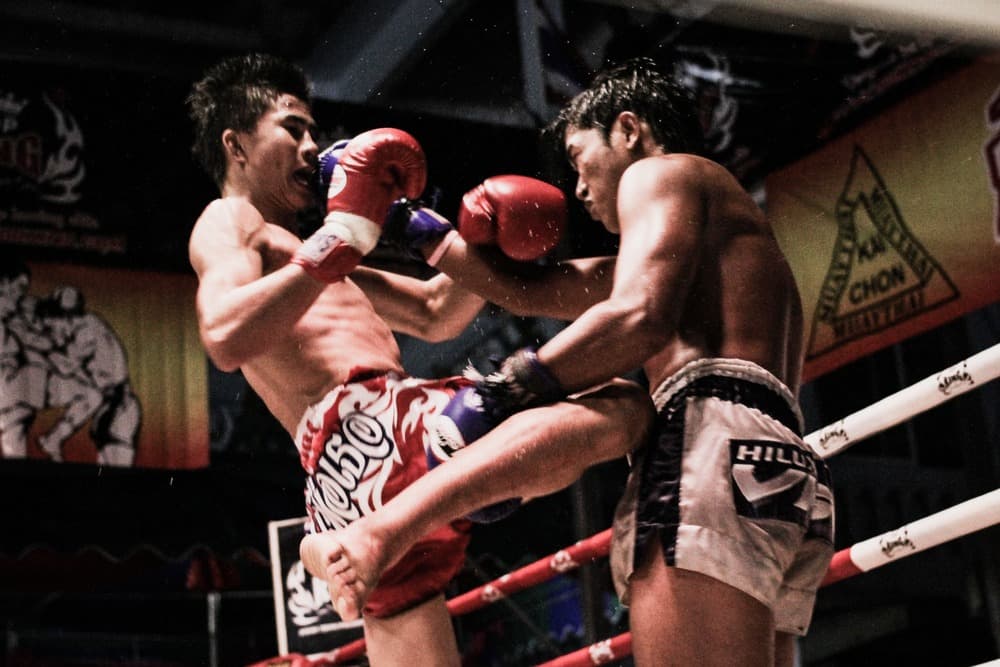
You've likely heard about, or seen on television, those relentless punches and kicks, those biting elbow strikes, those powerful clinches, and those subtle feints. But witnessing the spectacle of fighters competing amid roaring crowds, accompanied by an ensemble of percussion and wind instruments, is something else entirely. Welcome, then, to the world of Thai boxing (Muay Thai), a unique martial art that is the pride of all Thai people.
Its history is intimately linked to that of the Thai people. Peaceful by nature, they have had to, throughout the centuries, defend their territory from external aggression. They developed a form of bare-handed close-combat adapted to the fierce battles they had to wage across all terrains. Over time, it became a rite of passage for Thais to train in this martial art. It is said that King Naresuan the Great (1555-1605), one of the most celebrated war heroes, was himself an excellent boxer. Under his leadership, Thai boxing became military training. Another defining moment in its history was the triumph of Nai Khanom Tom over 10 Burmese boxers in 1767. A prisoner following Thailand's defeat in 1767, he was chosen to fight in the presence of the Burmese king. After his victory, he was released and returned home a hero.
Once a dangerous sport with no protective equipment, simple ropes wrapped around boxers' fists served as gloves. Over the years, rules were introduced to bring the sport in line with international boxing regulations. Recently, this sport has attracted numerous supporters outside the country; training courses are now organized as far as the United States and the former Soviet republics.
In 1995, the World Thai Boxing Council was established to promote this national heritage domestically and internationally. At the conference held that year, 78 member countries voted to create a training school devoted to teaching all aspects of this sport. The Muay Thai Institute was founded in 1997 and is the only institution accredited by the Ministry of Education.
A passion without borders
Thai boxing is, alongside football, the most popular sport in the country. Television broadcasts fights five days a week, with results from major matches featured in newspapers. Classical boxing is also very popular; the country has produced several world champions, all of whom began in Thai boxing. It is therefore no surprise that a seven or eight-year-old boy wishes to train with the hope of becoming one of them, and many do so in training centers throughout the country. Most provincial capitals have their own boxing rings, but every young boxer's dream is to fight in Bangkok, at Lumpini Stadium or Ratchadamnoen Stadium, the largest in the country.
Fights are organized every night, alternating between one stadium or the other. Ticket prices average 220, 440, and 1,000 baht, though on certain evenings they can climb to 2,000 baht. On special evenings at Ratchadamnoen, attractive discounts are offered, with tickets priced at 500 baht. Fights begin at 6:30 p.m., starting with matches between less experienced boxers, with the main event beginning around 9 p.m.
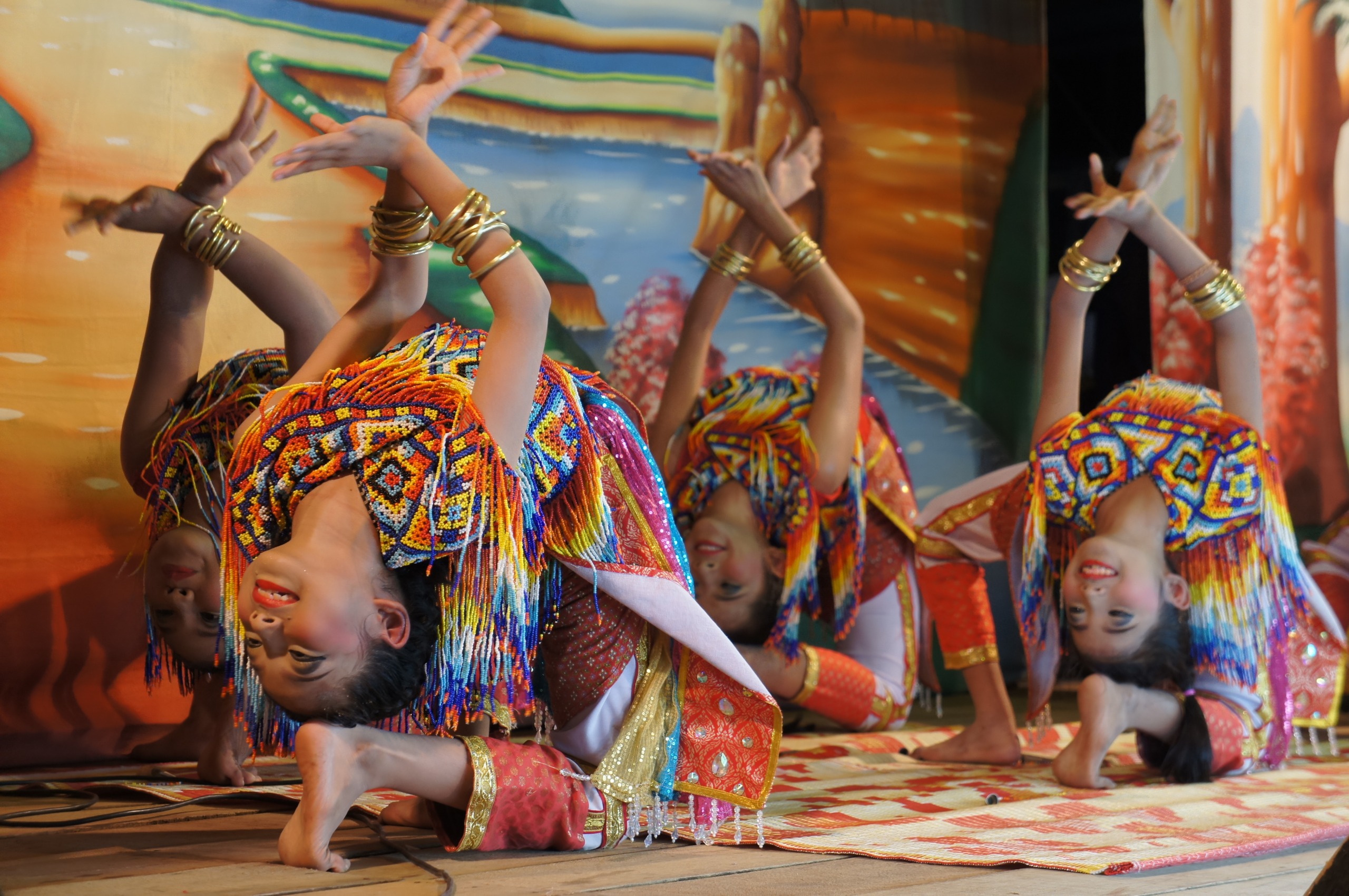
The bout consists of 5 rounds of 3 minutes, separated by 2-minute breaks. Before the fight, boxers perform a dance called "wai kru" (respect to the Master) to show their respect for their trainer. This symbolic dance is also an excellent warm-up exercise. You will notice that boxers wear a headband around their forehead and arms. The forehead band is called "mongkhol" and is believed to bring good luck, having been blessed by a monk or trainer. In Thai life, respect for Buddhism and the teaching profession hold an important place. The forehead band, both a lucky charm and a sacred object, is removed after the wai kru by the trainer alone. The arm bands, believed to offer protection to the boxers, are removed at the end of the fight.
The match is won either by knockout or on points. Three judges decide who won the round, and whoever won the most rounds is the victor. The referee plays an important role, as the safety of the fighters depends on his decisions.
At one side of the ring stands a traditional orchestra of Javanese flute, drums, and cymbals. It accompanies the fight from the wai kru dance to the end. The tempo accelerates according to how the fight unfolds. The musicians, mostly elderly men, must follow what happens in the ring, and their music makes hearts beat even faster. It is said that this music is the song of a siren and that authentic Thai boxing cannot resist it.
On competition nights at the major stadiums, particularly at Lumpini and Ratchadamnoen, tourists occupy a significant portion of the seating, and their numbers continue to grow. Most choose seats facing the ring to see the action up close!
On big fight nights, it is wise to reserve in advance. It is possible to book through your hotel or travel agencies.