The Tuol Sleng Genocide Museum
The Tuol Sleng Genocide Museum
A former secondary school transformed into S-21 prison by the Khmer Rouge, the Tuol Sleng Genocide Museum in Phnom Penh preserves cells, archives and testimonies.
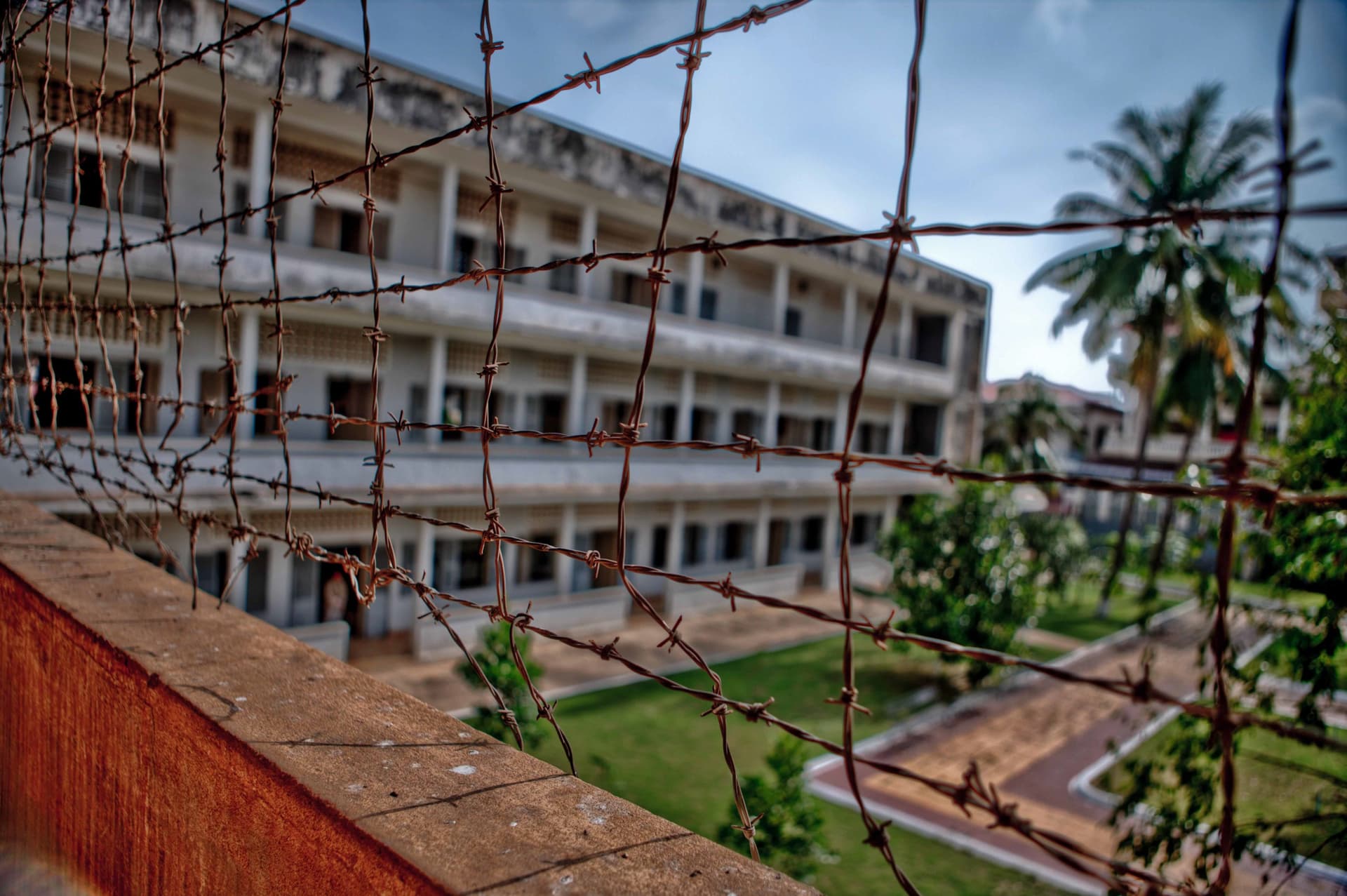
South of central Phnom Penh, the Tuol Sleng Genocide Museum occupies the buildings of the former Tuol Svay Prey secondary school. Between 1975 and 1979, the Khmer Rouge regime installed its principal political prison here, known as S-21. The site, open to the public since 1980, preserves the cells, interrogation instruments and photographic archives left behind by the torturers.
Why visit Tuol Sleng
Tuol Sleng, alongside the Choeung Ek memorial, is the central location for understanding the machinery of repression deployed by Pol Pot's regime. The museum is not a reconstruction: the rooms, barbed wire, iron bedsteads, thousands of prisoner portraits are original elements, preserved as they were. The visit, emotionally demanding, is essential for any serious engagement with Cambodia's recent history.
History of the site
Before 1975, the complex housed the Tuol Svay Prey secondary school. After the Khmer Rouge captured Phnom Penh in April of that year, the buildings were emptied, windows barred and electrified, classrooms partitioned into cells. The site was renamed "Security Prison 21", or S-21.
Between 1975 and 1979, approximately 17,000 people were registered, interrogated and, in the vast majority of cases, executed. The prison held between 1,000 and 1,500 detainees permanently. The first victims came from the ousted Lon Nol regime: soldiers, civil servants, doctors, students. As the regime turned inward, purged Communist cadres joined the cells, such as Khoy Thoun or Vorn Vet, sometimes with their entire families.
In January 1979, the Vietnamese army entered Phnom Penh and rediscovered the site. Vietnamese journalist Ho Van Tay was the first to document the place, photographing the bodies still present and the archives left by the penitentiary staff. As early as January 1980, the People's Republic of Kampuchea government opened the site under the name Khmer Genocide Museum.
What to see on site
The complex consists of four main buildings arranged around a central courtyard, along with ancillary structures.
- Building A: large individual cells where the bodies of the last victims were found when the site was liberated.
- Building B: photographic gallery, mainly in black and white. It displays the portraits methodically taken upon each detainee's arrival, as well as photographs of staff members.
- Building C: makeshift brick cells built inside the former classrooms. The smallest measure 1.5 m² and could hold three to four people. The wooden doors still bear the directives intended for prisoners.
- Building D: torture instruments, leg irons, iron bars with cast-iron rings used in communal detention (up to fifty people shackled to the floor per room). The building also displays paintings by Vann Nath, a former detainee and artist, who recreated after his release the torture scenes he witnessed.
The former classrooms in Building B also served as individual interrogation rooms, equipped with iron bedsteads. Confessions were extracted under torture, most often bearing no relation to reality: fictitious membership in the CIA, KGB or Vietnamese regime.
A video screening room is installed on the third floor and presents testimonies from survivors. An additional exhibition space occupies the second floor.
S-21 personnel
The prison was directed by Kang Kek Ieu, known as Duch, who was tried and convicted in 2010 by the Cambodia tribunal. His deputies included Kim Vat (alias Ho), deputy commander, Peng, head of guards, Mam Nai (Chan), head of the interrogation unit, and Tang Sin Hean (Pon), interrogator. The staff numbered approximately 1,720 people, including 300 administrative and 1,400 workers. A significant proportion of the guards were between 10 and 15 years old, recruited young by the regime.
Foreign prisoners and survivors
Among the detainees, 79 foreigners are recorded: 488 Vietnamese (captured notably at sea by the Khmer Rouge navy), 31 Thai, 1 Laotian, 1 Arab, 1 British, 4 French, 2 Americans, 1 New Zealander, 2 Australians, 1 Indonesian. No Indian or Pakistani nationals survived.
Of the 17,000 prisoners, only seven survivors are identified. The most well-known are Chum Mey, a former machine repairman, Bou Meng, an artist spared to create portraits of Pol Pot, Chim Math, spared because she came from the same district as Duch, and Vann Nath, whose paintings are displayed in Building D. Vann Nath died on September 5, 2011. Chum Mey and Bou Meng are sometimes present on site to bear witness.
Practical information
- Hours: open daily, in the morning and afternoon (to be confirmed on site, the museum closes between noon and 2pm).
- Entrance fee: moderate admission charge. An English-speaking audio guide is available for an additional fee; it is highly recommended to follow the visit with historical context.
- Duration of visit: allow 1.5 to 2.5 hours depending on whether you take the audio guide or not.
- Dress code: appropriate attire, as for any memorial site. Photography is permitted in most areas, unless otherwise indicated.
- Audience: a challenging visit, best suited to aware adult or teenage visitors. The exhibited content (torture instruments, victim portraits, photographs of bodies) can be disturbing.
Nearby attractions
Most visitors combine Tuol Sleng with other memorial and heritage sites in Phnom Penh:
- The Choeung Ek memorial (the "Killing Fields"), approximately 15 km south of the city, where S-21 prisoners were taken for execution.
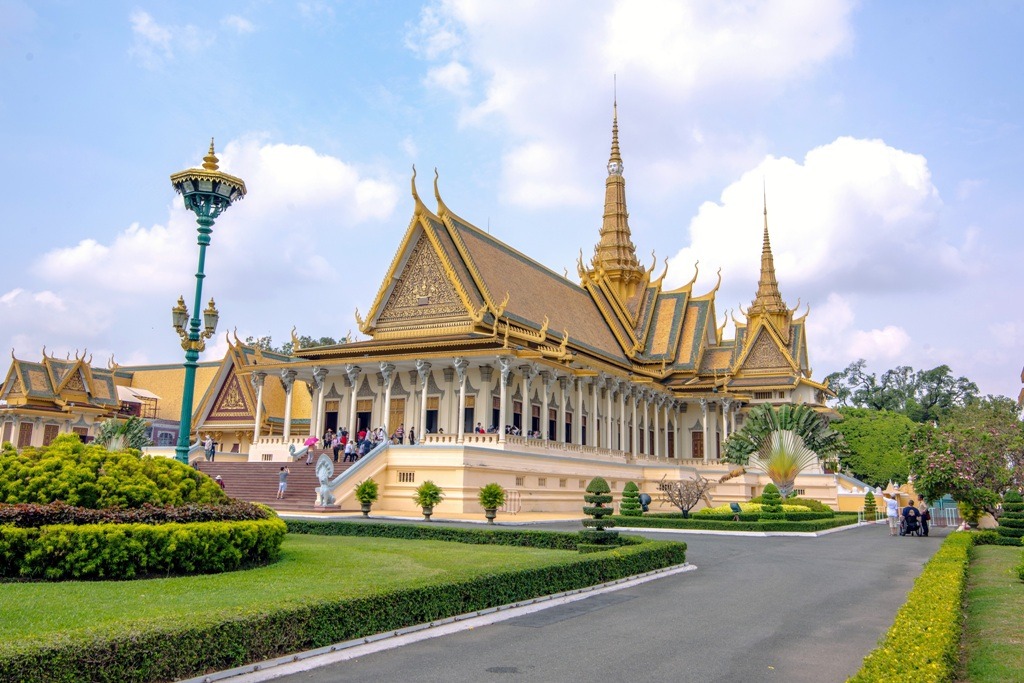
- The Royal Palace and Silver Pagoda, in the city centre.
- The National Museum of Cambodge, dedicated to Khmer art.
To extend your historical discovery of the country, you can then head to Siem Reap and the Angkor site, notably the Bayon temple and the Terrace of Elephants.
How to get there
The museum is located in the Boeung Keng Kang district, south of Phnom Penh's historic centre. From the Tonlé Sap waterfront or the Royal Palace, allow about ten minutes by tuk-tuk. Ride-hailing apps such as PassApp or Grab work well in the capital and allow you to reach the site at a fixed rate. Many travellers combine a visit to Tuol Sleng in the morning and Choeung Ek in the afternoon on the same day, negotiating a half-day or full-day tuk-tuk package.
Frequently asked questions
Frequently asked questions
Allow 1.5 to 2.5 hours if you take the audio guide, which contains detailed testimonies from survivors and staff members. A quick visit without a guide can be done in an hour, but loses much of the weight of the place.
The generally recommended order is Tuol Sleng in the morning then Choeung Ek in the afternoon, which follows the chronology: interrogation at S-21, then execution at Choeung Ek. The two visits are complementary.
The museum is not recommended for young children. The images, torture instruments and recorded accounts can be traumatic. For aware teenagers, the visit can be considered with adult accompaniment.
Chum Mey and Bou Meng, two of the seven known survivors, are sometimes present at the museum to sign their books and interact with visitors. Their presence is not guaranteed and depends on their state of health.
Yes in most areas, but with restraint. The museum asks visitors to respect the portraits of victims and to refrain from behaving inappropriately at the site.
Planning your trip
Tuol Sleng naturally fits into an itinerary that alternates recent history, ancient Khmer heritage and discovery of Cambodian landscapes. To build a customised journey integrating Phnom Penh, Angkor and southern regions, consult our Cambodia trips.
Interested in this visit?
We can include it in your personalised itinerary.