Kep
Kep
Blue crab, colonial villas and Rabbit Island: everything you need to plan your stopover in Kep, the most tranquil beach resort in southern Cambodia.
Kep is a municipality that also holds provincial status. It is equally a coastal resort, one of Cambodia's most popular and prestigious destinations. Through its beautiful seaside beaches and timeless rhythm, it breathes tranquility and renewal. Whether you are a nature lover, adventurer, or devotee of tropical ambiance, embark on a journey to Kep and discover the beauty of Khmer landscapes!
History
Formerly known as Kep-sur-Mer, the town of Kep was founded in 1908 during the French protectorate. French and Cambodian elites would spend long vacations here. In 1960, they gathered for the renovation of the town and the creation of a beautiful beach resort. Shortly thereafter, with the aim of building a golf course, Prince Norodom Sihanouk decided to revitalize the resort.
Under the rule of the Khmer Rouge, the town experienced difficult times. Many French colonial houses and villas were destroyed and abandoned.
Geography
Kep is located 173 km southwest of Phnom Penh and 25 km from Kampot, a few kilometers from Ha Tien, a border crossing between Cambodia and Vietnam. Spanning over 336 km² of territory, its natural landscapes consist primarily of agricultural plantations.
Today
The town's economy is largely based on local production from the land and sea. Agriculture remains the primary activity of its residents. The town is part of the Kampot pepper production zone. It also possesses an abundant quantity of marine resources. Fishermen represent just over 4% of its active population. Beyond fish, squid, and shrimp, blue crabs are extremely abundant here. For enthusiasts of these products, Kep appears as a paradise.
With an average population density of 119 inhabitants per km², Kep's population was estimated at just over 40,000 residents in 2009. These residents, renowned for their friendliness and hospitality, lead a simple and modest way of life.
Recently, the town's leaders have begun developing the tourism sector. By 2015, more than 80 hotels and several bungalows had established themselves here. Within a peaceful and rustic atmosphere, the town allows you to discover Khmer culture, appreciate the beauty of its landscapes, and enjoy the various tourist activities, the most celebrated in the region.
Colonial Houses
Destroyed by the Khmer Rouge during the civil war, the majority of Kep's colonial houses today reveal only ruins. Among these ruins are more than a hundred old dilapidated and abandoned houses. They stand as examples of colonial architectural art and witnesses to a flourishing period in the town's history.
The Beach
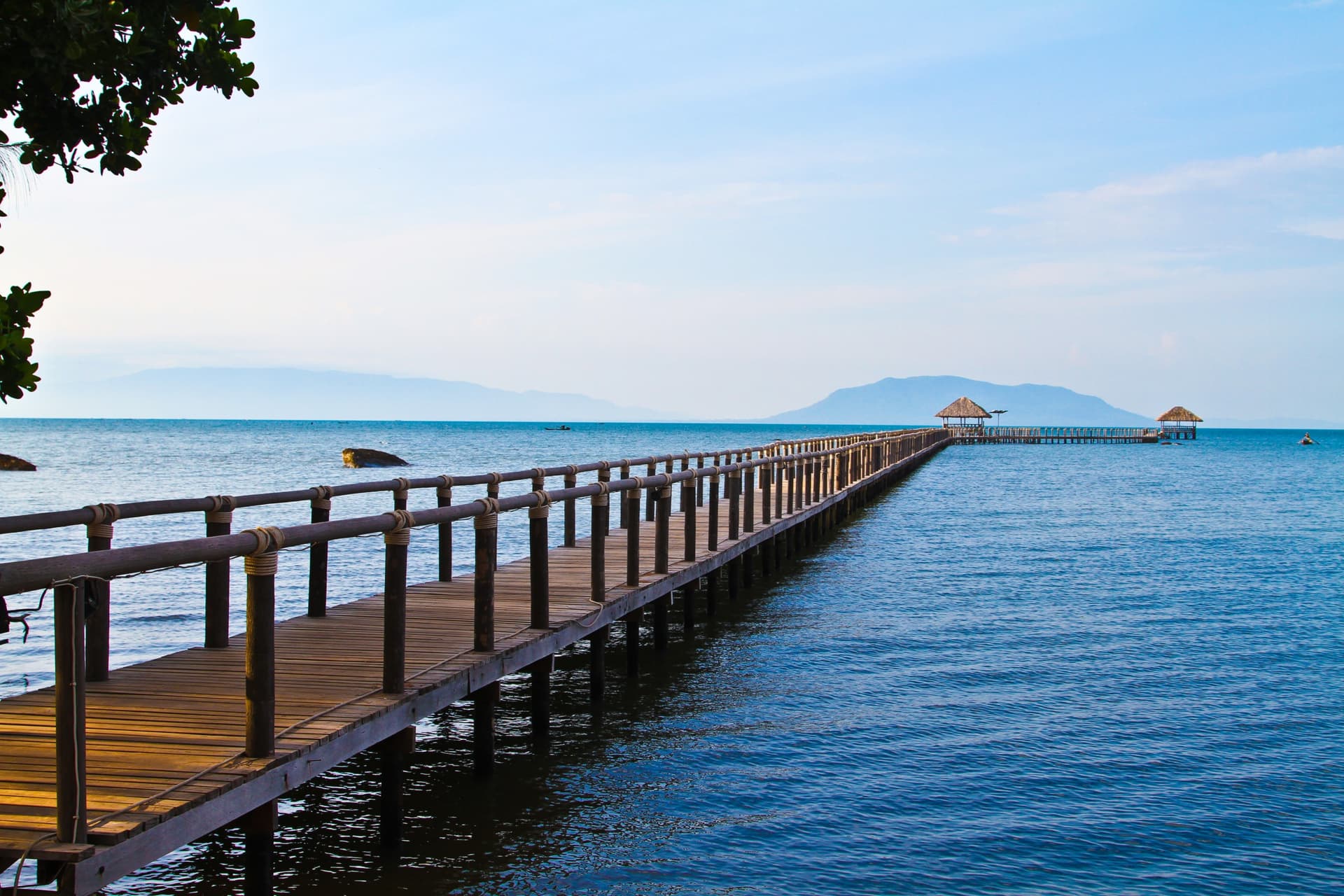
Extending for more than 100 meters in length, Kep's beaches consist primarily of mangrove, black rocks, and very fine white sand like that found in Sihanoukville. The main beach is located near Rabbit Island (Koh Tonsay). Beneath Kep's blue sky, with its soft sand, azure waters, and the sound of waves crashing against the shore, it easily captivates passing travelers. With a gentle slope, the sea here is shallow. It is therefore perfect for a stroll or a swim. Deserted during the week, the beach is packed on weekends. Seafood restaurants and fruit vendors line the road behind the beach. After a stroll and a swim, the tasting of seafood is among the highlight activities of the place.
Kep National Park
Kep National Park is one of the town's most celebrated attractions. Well-maintained, the park is very easy to explore. Several signs are installed throughout to guide you and point out different points of interest. Tourists come here to explore the national park and appreciate the sunset over a lush forest. Following an 8 km-long trail, they discover the region's biodiversity.
Blue Crabs
Kep is first and foremost a fishing town. It is crowned by a statue of a woman waiting for the return of her man who has gone fishing. Kep is thus known for its seafood, particularly blue crabs. Along its coast, a gigantic blue crab statue bears witness to this reputation. Blue crabs fried with Kampot pepper sauce is one of the famous local specialties. Lined with numerous seafood restaurants, the town's market called Phsar Kdam is specially dedicated to blue crabs. You can observe cooks directly boiling crabs fresh from the water. It is a true privilege to witness this culinary spectacle and taste these delicious fresh products directly.
Koh Tonsay or Rabbit Island
Also called the "Rabbit Island," Koh Tonsay is a small coastal island in the Kep region. From the beach, you can visit the island by taking a boat excursion or venture on foot through the mangroves to discover the island's biodiversity. At very affordable prices, bungalows are the best places to enjoy beautiful sea views. For those who enjoy exploration, they can find limestone caves, some of which are sacred sanctuaries.
Climate
The Kep region enjoys a hot and humid tropical climate with a very short dry season. During the monsoon, rainfall here is very significant. Average annual precipitation reaches 2,188mm. With a minimum temperature of 16°C, it records an average temperature of 27°C.
Bus
Located 25 km from Kampot, Kep is accessible via National Road No. 3. Following this paved road, buses connect the two towns in 20 to 40 minutes.
From Phnom Penh, several bus and minibus networks depart regularly for Kep.
Motorcycle Taxi
From Ha Tien in Vietnam, the town of Kep is accessible by motorcycle taxi.
Tuk-tuk
The town of Kep is served by a tuk-tuk network. It is the most common means of transportation for getting around.
Bicycle
In Kep, it is also very practical and common to rent motorcycles or bicycles. You can find them almost everywhere in town. Some travel agencies offer them for visiting the countryside.
What to Do?
- Visit the colonial houses to relive the town's ancient history.
- Immerse yourself in a tropical ambiance by strolling along the beach.
- Taste the celebrated blue crabs.
Want to discover this destination?
Our local advisors design your tailor-made trip.