The City of Kratié
The City of Kratié
Kratié, a charming colonial town in northeastern Cambodia, is home to the last remaining Irrawaddy dolphins. Discover what to do, when to visit and how to get there.
Name: Kratié
Cambodian Name: ក្រចេះ
Status: city
Province: Kratié Province
Area: 11,094 km²
Population: 35,964 inhabitants in 2008
A visit to the city of Kratié offers travelers a wonderful opportunity to enjoy tranquility and rejuvenate. Visitors will have the chance to discover numerous historical and cultural remnants dating from the medieval and colonial periods. Other activities await you, such as observing Mekong dolphins or visiting the small villages bordering the river. Don't miss the opportunity to visit the city of Kratié and take time to savor the memorable moments you'll spend there.
History
The history of the city of Kratié can be understood through that of its province. The province was once the ancient city of Sambupura, near the village of Sambor as it exists today. The oldest inscription found at its site dates from 598, during the reign of Bhavavarman I. Other inscriptions from the 7th and 8th centuries also testify to the city's endurance as an important urban center. The region was also once a meeting point between the kingdoms of Chenla and Fu Nan. In the 11th century, the city of Sambupura was invaded and devastated by the Chams and suffered significant damage. Until the 17th century, it still held an important place in the country. But Sambupura was besieged and conquered again by a Siamese invasion in 1840 and never recovered from this conflict. When the French established the Protectorate, they settled in the city of Sambupura starting in 1886, which was subsequently renamed Kratié, and they gave the same name to the province.
Today
Kratié is a small city located in northeastern Cambodia, downstream from the Mekong Rapids. Although the city is quite small, it is the capital of the province of the same name—Kratié.
The charm of the city
The city of Kratié is best known as the former seat of the Chenla royal kingdom. The city possesses an incomparable charm among other regions of Cambodia. To this day, Kratié has preserved its remnants and traces of its glorious past as well as its rich French colonial heritage. Several colonial monuments dating from the colonial era have been restored and preserved by the city for its visitors.
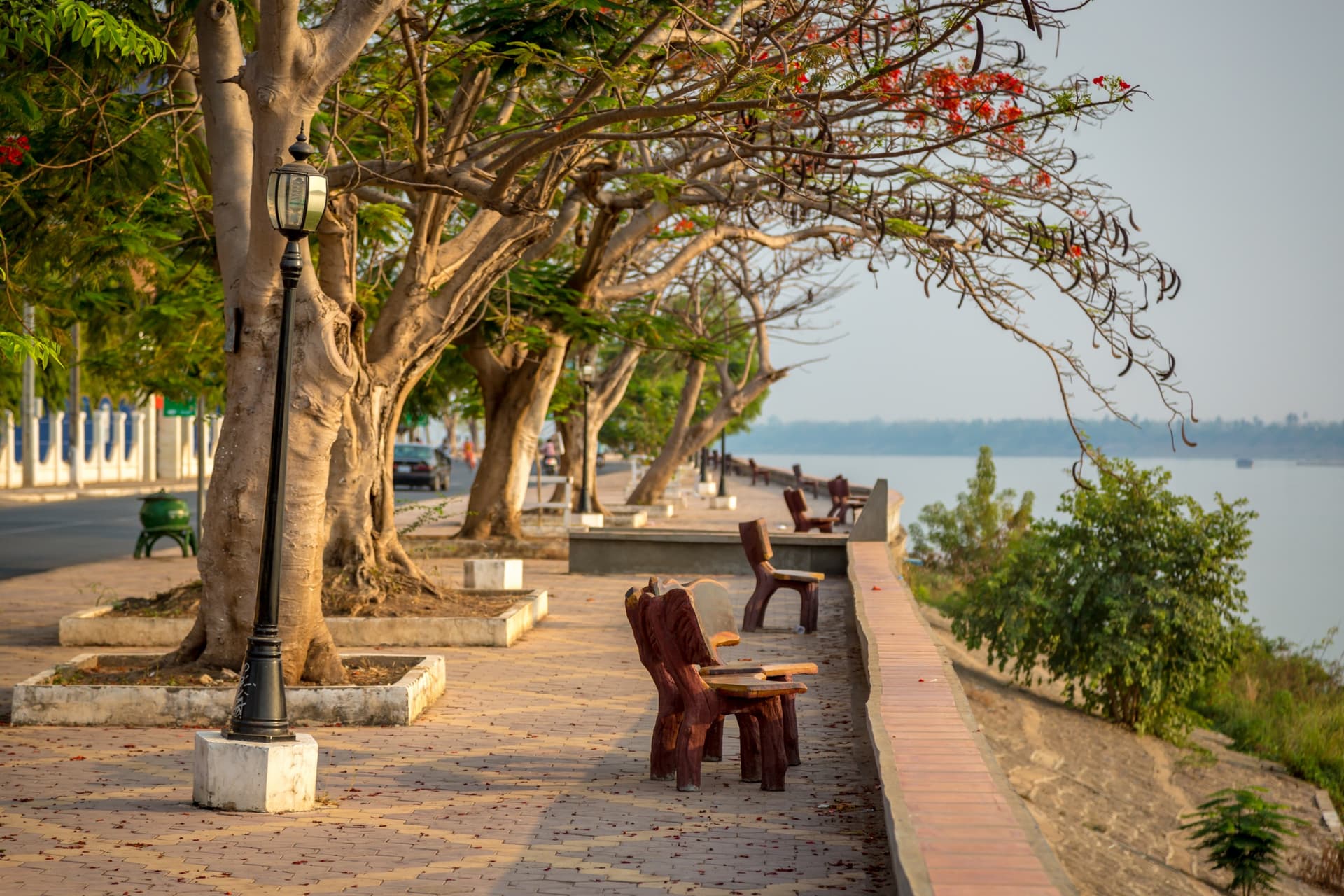
Given the small size of the city, visitors can explore the entire city on foot through its narrow streets. Kratié also stands out for its peaceful atmosphere and virtually empty streets. Indeed, few vehicles circulate through the city, and low-rise houses line the streets. Old tropical trees decorate every corner, providing inhabitants and visitors with shade from the intense sun.
Throughout the streets of the city, a rural landscape unfolds, reflecting Cambodia's authenticity. Haystacks, ox-drawn carts, abundantly cultivated fields, tobacco drying sheds, schoolchildren returning home by bicycle, and carts laden with merchandise bring the city to life at its own pace.
The small villages bordering the Mekong give Kratié a unique charm. With their stilt houses, villagers living according to the rhythm of harvest and fishing, lush and exotic nature—all of this will immerse you in an atmosphere of serenity and provide you with memories to treasure for years to come.
Attractions in the city
• Weaving villages
During your visit to Kratié, one of the must-do activities is visiting the 3 weaver villages near the city. The most well-known products from these villages are woven baskets and handicrafted items. The largest of these villages is Cham Chheu Teil Ploch with its 4,000 residents.
• Ministry of Culture and Fine Arts
The Ministry of Culture and Fine Arts is an unmissable destination located in the city center that you should visit during your stay in Kratié. You can view numerous exhibitions and occasionally enjoy traditional and Western musical performances.
• Mekong villages
When visiting the city of Kratié, you can make stops in villages bordering both sides of the Mekong. You can undertake a day excursion and visit all the villages by renting a motorcycle or tuk-tuk.
• Kampi
Kampi is a natural site composed of dozens of small islands and aquatic plants. It is located 15 kilometers north of Kratié. Its bridge, the Prek Kampi, offers magnificent views of the entire river and allows you to admire the Irrawaddy dolphins.
• Wat Sarsar Mouy Roy
Wat Sarsar Mouy Roy is a temple located in Sambor commune, 36 kilometers north of Kratié, in the city of Sambupura. The temple was built on the former site of the royal palace during the Chenla era.
• Phnom Sambok
Phnom Sambok is a natural and historical site located in Thma Kre commune, approximately 11 kilometers from Kratié. The site offers magnificent scenery with panoramic views of the rural villages along the Mekong.
• Phnom Preah
Phnom Preah is a famous tourist site in the city of Kratié. It is located 30 kilometers from the city. It is a nature reserve where you can admire numerous species of birds and mammals.
• See the Irrawaddy dolphins
Visitors can observe the Irrawaddy freshwater dolphins on the river stretch around Kratié. Seeing the Mekong dolphins is a popular tourist attraction for those visiting Kratié. The Irrawaddy dolphins are now an endangered species in Cambodia. These cetaceans are unique in their form and size. The species measures over 2 meters in length, has a rounded head shape, and a short dorsal fin. The best times to see the Mekong dolphins are in the morning around 6:00 AM and in the late afternoon or early evening.
Climate
Kratié has a savanna climate with a dry winter. Rainfall in Kratié is more abundant in summer than in winter. Precipitation averages 2,295.2 mm annually. Throughout the year, the average temperature in Kratié is 28.6°C. March is the warmest month while December is the coldest month of the year.
The city of Kratié is located 250 km northeast of the capital Phnom Penh. Here are some transportation options you can use to travel between the two cities:
Bus from Phnom Penh to Kratié
Several buses connect Phnom Penh to Kratié daily. Generally, they pass through Kampong Cham in the morning and depart around 1:00 PM. The journey takes approximately 5 hours and costs 8 USD per person. Phnom Penh Sorya buses depart at 7:00 AM, 8:30 AM, 9:30 AM, 11:30 AM, and 2:30 PM.
Taxi from Kratié to Phnom Penh
Taxis connect Kratié to Phnom Penh. They generally depart in the morning between 6:00 AM and 8:00 AM and in the afternoon. Taxis are shared and cost 10 USD per trip. The journey will take between 4 and 5 hours.
Express Minivan from Phnom Penh to Kratié
Taking a minivan is one of the most comfortable and fastest ways to travel between the two cities. The journey takes approximately 4 hours and costs 8 USD per trip.
The city of Kratié is quite small, so there's no need to take a bus or rent a tuk-tuk to explore it—you can walk everywhere. However, you can also rent a moto-taxi to tour the entire city and visit sites outside of Kratié. Depending on the trip duration, you should expect to pay between 3 and 5 USD.
The best way to visit the city would be to rent a bicycle. You can rent one from a local family for 1 USD or 4,000 Riels per day.
You can also rent a motorcycle from a hotel or guesthouse. Renting a Honda 110 CC, for example, costs 6 USD per day.
What to do in Kratié?
• Enjoy the serene atmosphere of Kratié while taking in the sunset over its waterfront.
• Visit the city's historical monuments by renting a tuk-tuk or simply walking through the city.
• Participate in the tourist attractions that make Kratié famous, such as observing Mekong dolphins and visiting the small floating villages that border the river.
• Take part in a cultural visit by going to the Ministry of Culture and Fine Arts in Kratié.
Best times to visit Kratié
The best times to visit Kratié are in January, February, and December. However, if you want to enjoy sunny weather, the sunniest and warmest months in Kratié are February, March, April, May, and June.
Want to discover this destination?
Our local advisors design your tailor-made trip.