Nong Khai
Nong Khai
On the Mekong across from Vientiane, Nong Khai blends temples, cross-border markets and the mysterious phenomenon of Naga Fireballs. A key stop in Isan.
Nestled on the right bank of the Mekong, 23 km across from Vientiane, Nong Khai has long played the role of gateway between Thailand and Laos. This border town of 50,000 inhabitants lives to the rhythm of the river, festivals, and a cultural syncretism rare in Isan.
Far from the beach circuits of the south, Nong Khai captivates those seeking a quiet Thailand, one shaped by the river and oriented toward its Lao neighbor. Walks along the Mekong, Buddhist temples, cross-border markets, and monumental statues of Sala Keoku make up a stop that deserves far more than a simple crossing.
At a Glance
| Region | Isan (northeast Thailand) |
|---|---|
| Population | ~50,000 inhabitants |
| Distance to Vientiane | 23 km (Lao-Thai Friendship Bridge) |
| Distance from Bangkok | 620 km (11h by train, 1h by plane via Udon Thani) |
| Recommended duration | 1 to 2 days on site |
| Best time to visit | November to March (dry season) |
| Must-see | Sala Keoku, Wat Pho Chai, Tha Sadet market, Naga Fireballs in October |
History
Nong Khai was long part of the Kingdom of Vientiane, oscillating between independence and submission to Lan Xang and then to Siam. In 1893, French colonizers separated Laos from Siam: Nong Khai was cut off from its historical kingdom and attached to Thailand, becoming an outpost on the new river frontier.
During the 1970 communist revolution, Thailand welcomed thousands of Lao royalists seeking refuge in Nong Khai. At the same time, during the Vietnam War, the city also housed many Vietnamese fleeing the conflict. This dual migration explains the city's culinary and religious diversity today.
On April 8, 1994, the Lao-Thai Friendship Bridge was inaugurated a few kilometers from the center. This first bridge across the Mekong between the two countries symbolizes their cooperation and remains the main border crossing to Vientiane.
Today: a Festival Town on the Mekong
Nong Khai has transformed its border position into a cultural asset. The city's calendar is marked by a succession of Buddhist and popular festivals:
- Songkran (April) — Thai New Year and water battles on the riverbank
- Rocket Festival Bun Bang Fai (May) — to call for rain
- Candle Festival (July) — start of the Buddhist Lent
- Loy Kratong (November) — floating of small flower rafts on the Mekong
- Naga Fireballs Festival (October) — the most emblematic
The Naga Fireballs phenomenon, glowing red spheres that surge from the Mekong at the full moon in October, attracts tens of thousands of curious visitors each year. Tradition attributes them to the Naga, a mythical serpent of the river; science suggests a spontaneous gas release. The mystery remains, and that is precisely what draws crowds to the banks between Nong Khai and Phon Phisai.
Discovering Nong Khai
Sala Keoku, the Park of Spiritual Giants
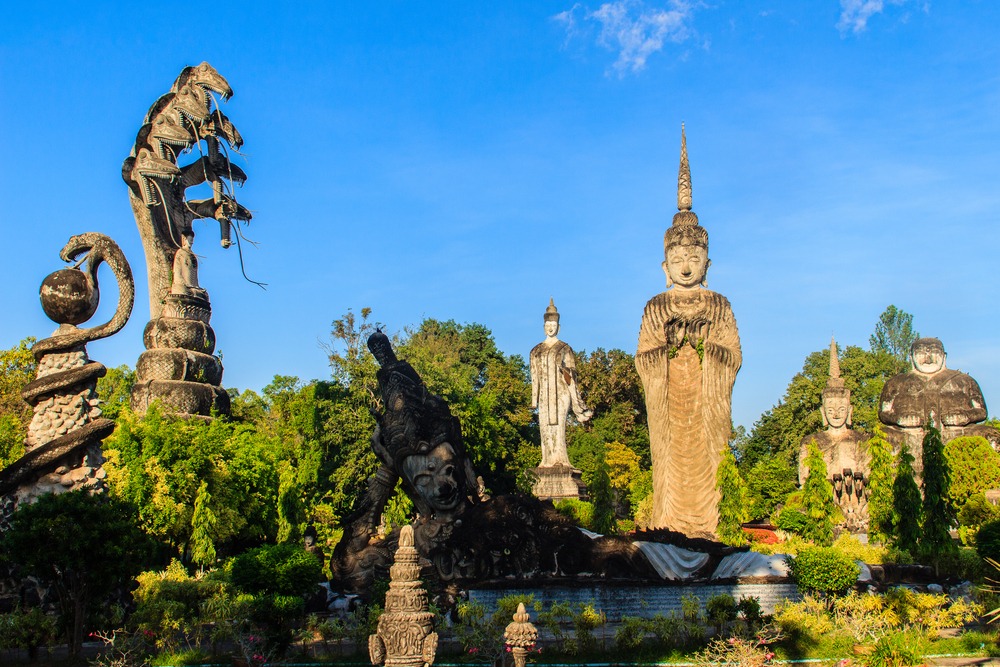
Four kilometers east of the center, Sala Keoku (or Wat Khaek) is a park of monumental concrete sculptures imagined in the 1970s by mystic Bunleua Sulilat. Giant Buddhas, seven-headed Nagas, scenes from the cycle of rebirths: the ensemble blends Buddhist, Hindu, and folkloric iconography in an dreamlike atmosphere. Allow 1.5 hours for your visit, and climb inside the large hollow sculpture for a view of the park.
Wat Pho Chai and its Golden Buddha
In the heart of the city, Wat Pho Chai houses the Luang Pho Phra Sai, a statue of Buddha in solid gold brought from Vientiane in the 19th century. It is the most venerated sanctuary in Nong Khai: people come to pray before a journey, especially before crossing the border.
A Walk Along the Mekong
The landscaped riverbank stretches for more than 2 km. In late afternoon, you will encounter Thai families, monks out for a stroll, and grilled skewer stands. The sunset over Laos from the riverside cafés around 6 p.m. is worth the detour.
Tha Sadet Market
Near the port (Sadet Pier), this cross-border market is a meeting place for bargain hunters from Laos and all of Isan. Artisan stalls, Lao textiles, electronics, spicy local cuisine: open daily, especially lively on Saturday evenings.
Friendship Bridge and Lotus Lake
The Friendship Bridge can be crossed on foot or by shuttle to reach Vientiane (standard border crossing). About twenty kilometers away, the lotus lake is covered with pink flowers between October and February: a photo stop popular with locals.
When to Visit Nong Khai?
A savanna climate dominates the region: hot year-round, very rainy in summer, dry in winter. The average annual temperature reaches 28°C and precipitation averages 2,421.8 mm — one of the highest figures in the country.
- November to February: dry season, temperatures rarely below 23°C, ideal for riverside walks and temple visits.
- March to May: very hot, up to 32.6°C in April. Songkran (mid-April) compensates with its festive atmosphere.
- June to October: monsoon, lush landscapes but frequent showers. October remains the window for Naga Fireballs.
To combine pleasant weather and events, November (Loy Kratong) is probably the best compromise.
How to Get to Nong Khai?
Bangkok is the hub for all connections. Three options depending on your budget and time:
- By air: flight Bangkok → Udon Thani (1h), then 60 km by bus or train to Nong Khai (1h). The quickest option.
- By train: from Hua Lamphong station, Northeastern line to the Nong Khai terminus. A 11-hour journey via Ayutthaya, Nakhon Ratchasima, Khon Kaen, and Udon Thani. The overnight sleeper train is an experience in itself.
- By bus: from Mo Chit terminal, around twenty departures daily. Expect 10 to 11 hours of travel.
From Vientiane, crossing the Friendship Bridge takes 30 to 45 minutes by shuttle or tuk-tuk, including border formalities. Thai visas are issued on arrival for most European nationalities; for Laos, a visa on arrival is available on the Lao side (bring USD in cash and an ID photo).
Getting Around Nong Khai
The center can be explored on foot without difficulty. For Sala Keoku or peripheral sites, several options:
- Tuk-tuk: plentiful, negotiate the price before departure (expect 80-150 THB to Sala Keoku).
- Bicycle: daily rental at guesthouses, ideal for exploring the Mekong riverbank.
- Scooter: 200-300 THB/day, perfect for exploring villages and the lotus lake.
Where to Stay in Nong Khai?
The accommodation remains personal and intimate in scale. No large resorts: most lodgings line the Mekong or the historic center.
- Guesthouses (€15-30/night): wooden houses on the riverside, personal service, local breakfasts. Perfect for meeting other travelers headed to Laos.
- Boutique hotels (€60-120/night): recent addresses blending Isan architecture and modern comfort, often with a pool and Mekong terrace.
- Upscale lodges (€150 and above): a few rural properties on the outskirts, set in rice fields, for those seeking absolute peace and attentive service.
Booking in advance is wise in October (Naga Fireballs) and November (Loy Kratong), when the town fills up.
Insider Tips
- Ideal duration: one night is enough for the essentials, two nights if you want to take time for the Mekong and an excursion to the lotus lake.
- Food: try som tam pla ra (papaya salad with fermented fish sauce), a specialty of Isan, and khao piak sen inherited from the Lao community. Riverside restaurants offer the best value for money.
- Border: cross the bridge early in the morning to avoid queues, especially on weekends. Always keep some baht and kip in cash.
- Naga Fireballs: book accommodation and transport at least two months in advance for the October full moon. The banks at Phon Phisai (50 km east) offer the best viewing points.
- Dress: cover shoulders and knees for Wat Pho Chai and all active temples.
For Whom?
- Travelers heading to Laos: a logical stop before Vientiane, much quieter than Bangkok for a break.
- Isan authenticity enthusiasts: local markets, spicy food, temples far from tourist crowds.
- Spirituality seekers: Sala Keoku and Wat Pho Chai offer an original perspective on Theravada Buddhism tinged with animism.
- Slow travelers: those who like to drop anchor, rent a bicycle, and observe life in a river town.
Also Worth Discovering
Nong Khai naturally fits into an itinerary in Isan or toward the Upper Mekong:
- Chiang Khan (120 km) — small wooden town on the Mekong, very photogenic
- Loei (127 km) — gateway to the northeast mountains
- Phu Kradung National Park (139 km) — highland plateau and emblematic trekking
- Khon Kaen (149 km) — cultural capital of Isan
- Dan Sai (176 km) — famous for its Phi Ta Khon ghost festival
- Nakhon Phanom (196 km) — another major stop on the Mekong
For a complete immersion, the itinerary Freestyle journey through the heart of Isan (12 days, from €990) includes Nong Khai in a route blending royal relics, high plateaus, and forgotten traditions.
Frequently Asked Questions
Frequently asked questions
One full day is enough for Sala Keoku, Wat Pho Chai, and the Mekong walk. Plan two days if you want to include Tha Sadet market on Saturday evening, the lotus lake, and a leisurely dinner by the river.
Crossing is done via the Lao-Thai Friendship Bridge, 4 km from the center. An official shuttle crosses the bridge (pedestrians are not allowed). Lao visas are issued on arrival for most European nationalities: bring 30-40 USD in cash and an ID photo. Allow 30 to 45 minutes to reach Vientiane, formalities included.
These are glowing red spheres that spontaneously surge from the Mekong around the full moon in October, at the end of Buddhist Lent. Tradition attributes them to the Naga, a mythical serpent of the river; science suggests spontaneous combustion of gases rising from the Mekong's bottom. The phenomenon attracts thousands of curious visitors each year between Nong Khai and Phon Phisai.
November to February: the dry season offers pleasant temperatures (rarely below 23°C) and an ideal Mekong level for walks. November also features the Loy Kratong festival. Avoid April (up to 32.6°C) and the monsoon from June to September, unless you're aiming for the Naga Fireballs in October.
Three options: fly to Udon Thani (1h flight + 1h drive), take the night train from Hua Lamphong (Northeastern line, 11 hours to the Nong Khai terminus), or bus from Mo Chit terminal (10-11 hours, around twenty departures daily). The night train remains the preferred option for travelers.
Plan Your Trip to Nong Khai
Our local expert at Nomadays helps you integrate Nong Khai into a custom trip to Thailand, Isan, or Laos. Discover the agency.
Photos
Want to discover this destination?
Our local advisors design your tailor-made trip.