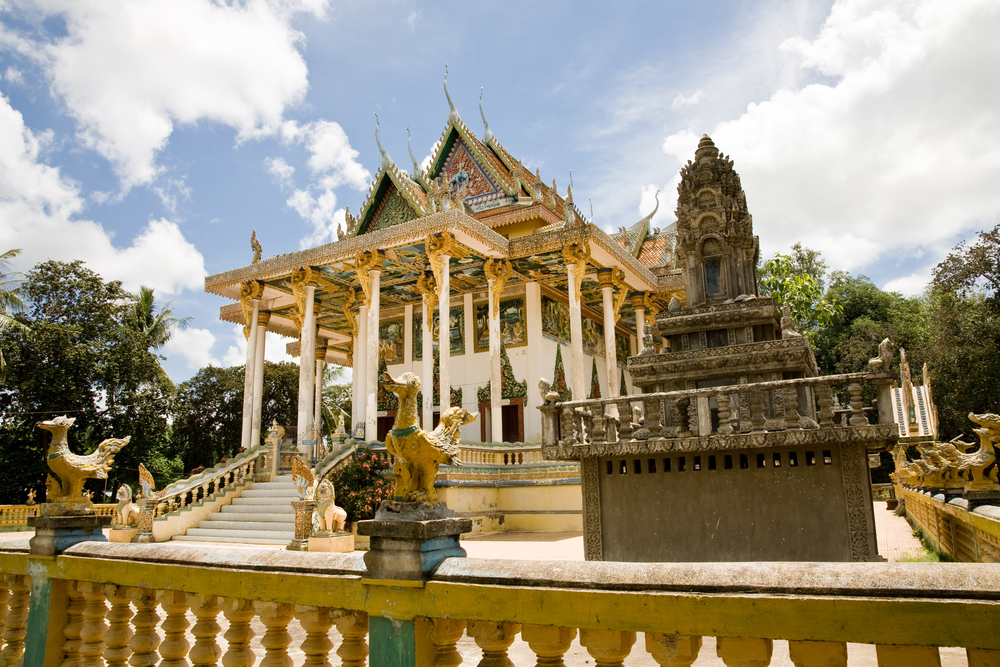
Phra That Narai Cheng Weng
Phra That Narai Cheng Weng is an 11th-century Khmer prang built in red sandstone, located in Sakon Nakhon (Isan). Its carved lintels depicting Vishnu and its atmosphere as an active place of worship make it a rare archaeological site, away from the usual crowds.
Phra That Narai Cheng Weng is an 11th-century Khmer chedi located in Mueang district, Sakon Nakhon, in northeastern Thailand (Isan). Built from red sandstone and laterite, it stands as a testament to the influence of the Khmer Empire in this region long before the rise of Thai kingdoms. The site, still active as a Buddhist place of worship, attracts pilgrims and Khmer archaeology enthusiasts off the beaten tourist track.
Practical Information at a Glance
- Access: a few kilometers from Sakon Nakhon town center, reachable by tuk-tuk or personal vehicle.
- Dress code: modest attire required (shoulders and knees covered) — active place of worship.
- Suggested duration: 30 to 45 minutes.
- Admission: free for Thai visitors; a modest contribution may be requested from foreigners.
What to See
The central monument is a red sandstone sanctuary tower (prang) in classical Khmer style, adorned with carved lintels depicting Hindu deities — notably Narai (Vishnu), whose name appears in the site's designation. The bas-reliefs, though partially weathered, retain remarkable finesse. Around the main prang, a laterite enclosure marks the sacred space.
History and Context
Erected in the 11th century under the influence of the Angkor Khmer Empire, the sanctuary was originally dedicated to Shaivite and Vaishnavite Hindu worship. As Theravada Buddhism expanded throughout the region, the site was gradually integrated into local Buddhist practice—a syncretism common in Isan. The name "Cheng Weng" refers to a legendary local figure associated with the monument's founding.
Highlights of Your Visit
The Carved Lintels
The sandstone lintels depicting Narai (Vishnu) reclining on the serpent Ananta constitute the site's iconic masterpiece. Their style is comparable to Khmer productions from the Baphuon period.
The Atmosphere of a Living Place of Worship
Monks and devotees regularly visit the site. Observing the daily offerings and rituals adds a living dimension to this archaeological monument.
Etiquette and Visiting Rules
- Shoulders and knees covered — bring a sarong or light scarf.
- Remove your shoes before entering covered sacred spaces.
- Speak in hushed tones; ceremonies may take place at any time.
- Do not touch the sculptures and bas-reliefs.
Photography Tips
Morning light (before 9 a.m.) is ideal: the rising sun illuminates the eastern facade of the prang directly and brings out the warm color of the red sandstone. Avoid midday, when contrast is too harsh. The carved lintels photograph best in diffuse or slightly raking light.
Location and Access
The site is located on the outskirts of Sakon Nakhon, the capital of a northeastern Thai province. The city is served by domestic flights from Bangkok (Don Mueang). From the town center, a tuk-tuk or moto-taxi will take you to the site. Nong Han Lake, the largest natural lake in the northeast, is in the immediate vicinity of the city.
Nearby Attractions
- Wat Phra That Choeng Chum — a major Buddhist temple in the heart of Sakon Nakhon, also home to a Khmer prang.
- Nong Han Lake — a vast natural lake bordering the city, pleasant for a sunset stroll.
- Wat Pa Sutthawat — a forest temple linked to the venerated monk Ajahn Man Phurithatto, a major figure in Thai forest Buddhism.
Frequently asked questions
The dry season (November to February) is most pleasant: moderate temperatures and clear skies. Avoid the rainy season (July-October) if you want to photograph the site in good conditions.
Yes. The site is an active place of worship: covered shoulders and knees are required. Bring a sarong or light scarf if you are wearing short clothing.
Yes. Wat Phra That Choeng Chum, in the town center, and Wat Pa Sutthawat are easily visited on the same day. Allow half a day for all three sites.
Photography is generally permitted within the outer grounds. Be discreet during ceremonies and avoid photographing monks without their consent.
A tuk-tuk or moto-taxi from the town center is the most practical option. Renting a vehicle also allows you to visit multiple sites in a single day.
Give it a go!
Our local experts arrange this activity for you.