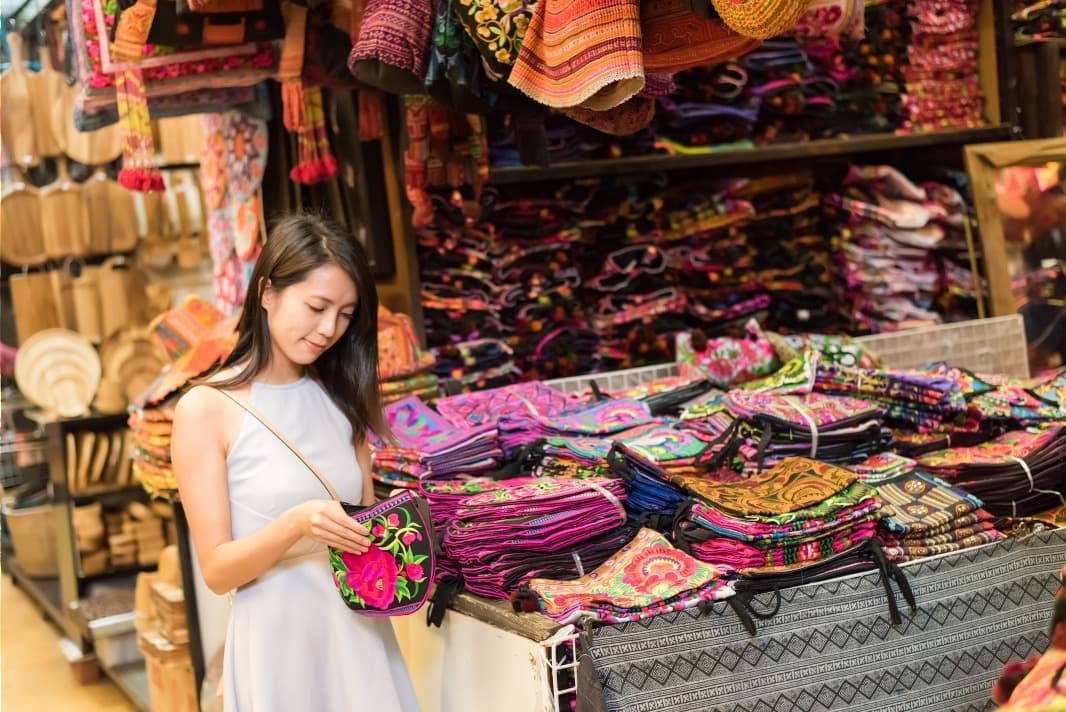
Negotiating in Thailand: Do's and Don'ts
Negotiating in Thailand, yes, but not just any way. Discover best practices, mistakes to avoid and places where discussing prices remains possible while traveling.
13 Nov. 2019
Ah, negotiating while traveling—it's quite an art form! While some are seasoned experts at it, others feel far more hesitant when it comes to bringing prices down. The difference between negotiation and haggling, the principles of ethical negotiation, tips for negotiating well… Let's break down what to do and what not to do when you want to negotiate in Thailand!
1. Negotiate, don't haggle!
The line between haggling and negotiation can sometimes blur. Yet these are two distinctly different things. With the first approach, both parties must, in a friendly manner, reach an agreement that is fair for both sides. This is what's called the win-win principle. With the second, it's more of an abusive transaction. In other words, there's inevitably a loser. So it's in the form of negotiation that we recommend you ask for a price reduction during your shopping in Thailand.
While it's common to be able to negotiate prices in Thailand, always keep in mind that you'll get a good deal anyway! Indeed, Western salaries remain consistently higher than those of locals. So, remember to convert the amounts in question and take a step back! You're not going to fight over a few cents, are you?
2. The golden rules for negotiating
The first thing to do if you want to negotiate on an item is to have a real sense of its price. Generally, you'll see that markets and tourist sites sell largely the same products. So, take a stroll and ask several vendors to get an idea of the average price.
Once you've chosen your spot, it's time to enter negotiations. But before that, make the effort to speak a few words in Thai (Hello: sawadee kha or krap if you're a woman or a man, and How much does it cost: Rakha thao raï…). You'll see that locals will appreciate the gesture and be more inclined to listen! And most importantly, always keep smiling and show courtesy! The Thai people don't tolerate aggression in any form. It would be a shame to come across as disrespectful and lose points before you even begin.
Negotiation tricks to remember: Generally speaking, it's common to start negotiating at 50% of the asking price before working your way up. Also know that you'll have a better chance of getting a price reduction if you buy multiple copies of the same item. Finally, if you think (after studying the market carefully) that the price is still unreasonable, try a last gambit by politely leaving the stand. The vendor might just catch up with you and lower their price. If not, remember what we said in the first section: take a step back and buy the item anyway, or tell yourself it simply wasn't meant for you!
In conclusion, we can only recommend you see negotiation as a game and not a competition. Have fun with the locals, take the opportunity to chat with them and learn more about the country's culture and the history of the items you're interested in… Your purchase will become a true souvenir and not just a vacation trinket!
3. Where and what can you negotiate in Thailand?
Contrary to popular belief, not everything is negotiable in Thailand! Forget this approach in tourist boutiques and supermarkets where prices are fixed and non-negotiable. On the other hand, street markets and local shops are ideal places to negotiate. This is especially true at tourist sites but far less so in off-the-beaten-path areas where profit margins are much smaller!
When it comes to transport, while prices for buses, trains, planes and ferries are fixed, tuk-tuk fares are negotiable. Always make sure to agree on the price before your ride! As for taxis, we recommend you choose companies with a meter (taxi meter) to be sure you won't get ripped off.
Florine Dergelet
Florine Dergelet
A web writer for over 10 years, Florine Dergelet is a traveler driven by the desire to discover the world with an open heart. Each of her articles is an invitation to slow down, to listen, to understand. Because for her, traveling isn't about checking countries off a map, but rather weaving connections (often invisible but always powerful) with places, peoples and all sorts of creatures from the animal kingdom. Her motto? Advise travelers with ethics, awaken their consciousness about animal welfare, respect for cultures, and the importance of humble and sustainable tourism. Because the most beautiful memories often emerge far from the spotlight, in the shadow of a path, in the midst of a conversation, or in the quiet breath of a world we finally take the time to hear…