Visiting Chi Jungle Man: A Day with Elephants near Chiang Mai
What does a day with elephants in Thailand really look like? Join us behind the scenes at Chi Jungle Man to discover an experience that invites you, above all, to let the elephants lead the way.
Located about 1.5 hours from Chiang Mai, Chi Jungle Man is an elephant refuge or rather a "place of life" for pachyderms as its founders, Marie-Anne and Chi, like to describe it. It's a human-scaled space where it's the visitors who adapt to the rhythm of the animals, not the other way around.
To understand their approach, we went to meet them. How did this project come about? What does a day with the elephants look like? What do visitors do? Why did the founders choose to stop bathing with elephants? Follow us behind the scenes at Chi Jungle Man to discover an experience that above all invites you to let the elephants show the way...
Why did Marie-Anne and Chi create Chi Jungle Man?
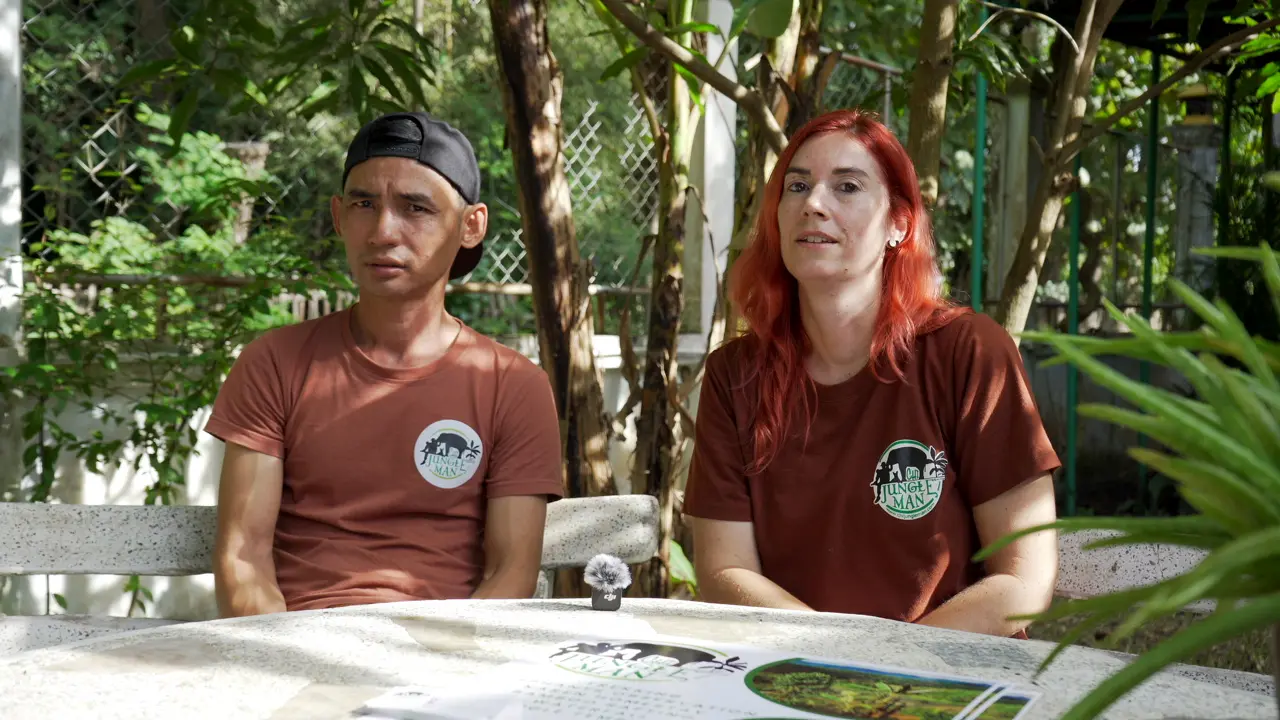
Before becoming a place of life for elephants, Chi Jungle Man is above all the story of an encounter and shared passion between Marie-Anne, who arrived in Thailand over ten years ago, and Chi, a member of the White Karen ethnic group.
While Marie-Anne discovers elephants upon her arrival in Thailand, Chi grew up at their side. Born in a small Karen village bordering the Salween River, at the border between Thailand and Myanmar (Burma), Chi grew up alongside his family's elephant, caring for it from the age of 9. It was there that his unconditional love for Asia's giant was born. From the age of 12, he left to learn the trade of mahout (elephant keeper) in the province of Mae Hong Son, then settled in the Mae Wang National Park, where he lived and worked alongside the pachyderms.
In 2018, he partnered with Marie-Anne to found Chi Jungle Man. Their ambition? To drive forward, on their scale, the way travelers encounter elephants while supporting owners who wish to embrace this transition toward more respectful tourism.
"We decided to create Chi Jungle Man to be able to make things evolve for the elephants, especially."
Aware that decades of tradition cannot be transformed overnight, Marie-Anne and Chi approach their project as continuous learning. Their choices have been refined over the years, guided by careful observation of elephant behavior and a constant desire to adapt their methods to put animal welfare at the heart of their approach. All this, without ever claiming to have found a perfect solution, but always doing their best...
Observe Rather Than Interfere: Why Chi Jungle Man Stopped Bathing with Elephants?
From the creation of Chi Jungle Man in 2018, the elimination of elephant rides (riding) with howdahs or harnesses was an obvious choice. But Marie-Anne and Chi's reflection on animal welfare goes much further very quickly. After a year of operation, careful observation led them to take another major step: put an end to bathing sessions with elephants and visitors.
As Marie-Anne explains: " At the beginning, when tourists came to see the elephants, they could bathe with them, but that meant every mahout had to order the elephant to sit and so control it to keep it sitting or lying in the water. And around each elephant, there were about ten people throwing buckets of water, scrubbing them with brushes, and it always ended in a water fight with screaming. Each elephant was separated and it was quite disturbing for them. "
By choosing to eliminate this activity in favor of simple observation from the riverbank, the change in the elephants' behavior was immediate and striking:
" When we stopped bathing after a year to focus only on observation, it was a turning point. We saw them return to the river together, gather as a family. They rubbed themselves with sand (you should know that the river water serves them to wash their skin and remove parasites), the little ones climbed on top of each other to play...".
"I realized that before that, they were almost like zombies. There, they were finally free to be themselves and to be together, as a family."
For Marie-Anne and Chi, this evolution perfectly sums up the philosophy of the place: let elephants express their natural behavior rather than ask them to interact with visitors. This is also why Marie-Anne now prefers to speak of a "place of life" rather than a "sanctuary." A choice of vocabulary that reflects their mindset: never claim to have found the perfect solution, but continue to observe the elephants, learn from them, and evolve their practices.
What Does a Day with Elephants at Chi Jungle Man Look Like?
To preserve the tranquility of the animals and offer an intimate encounter, visits at Chi Jungle Man are carefully limited to 15 people per day. Far from mass tourism, this small group size allows time to observe the animals, ask questions, and discover their daily life without rushing.
Chi Jungle Man's 3 Residents:
Chi Jungle Man does not own its elephants: it is their owners who chose to trust them to provide a peaceful environment. They include:
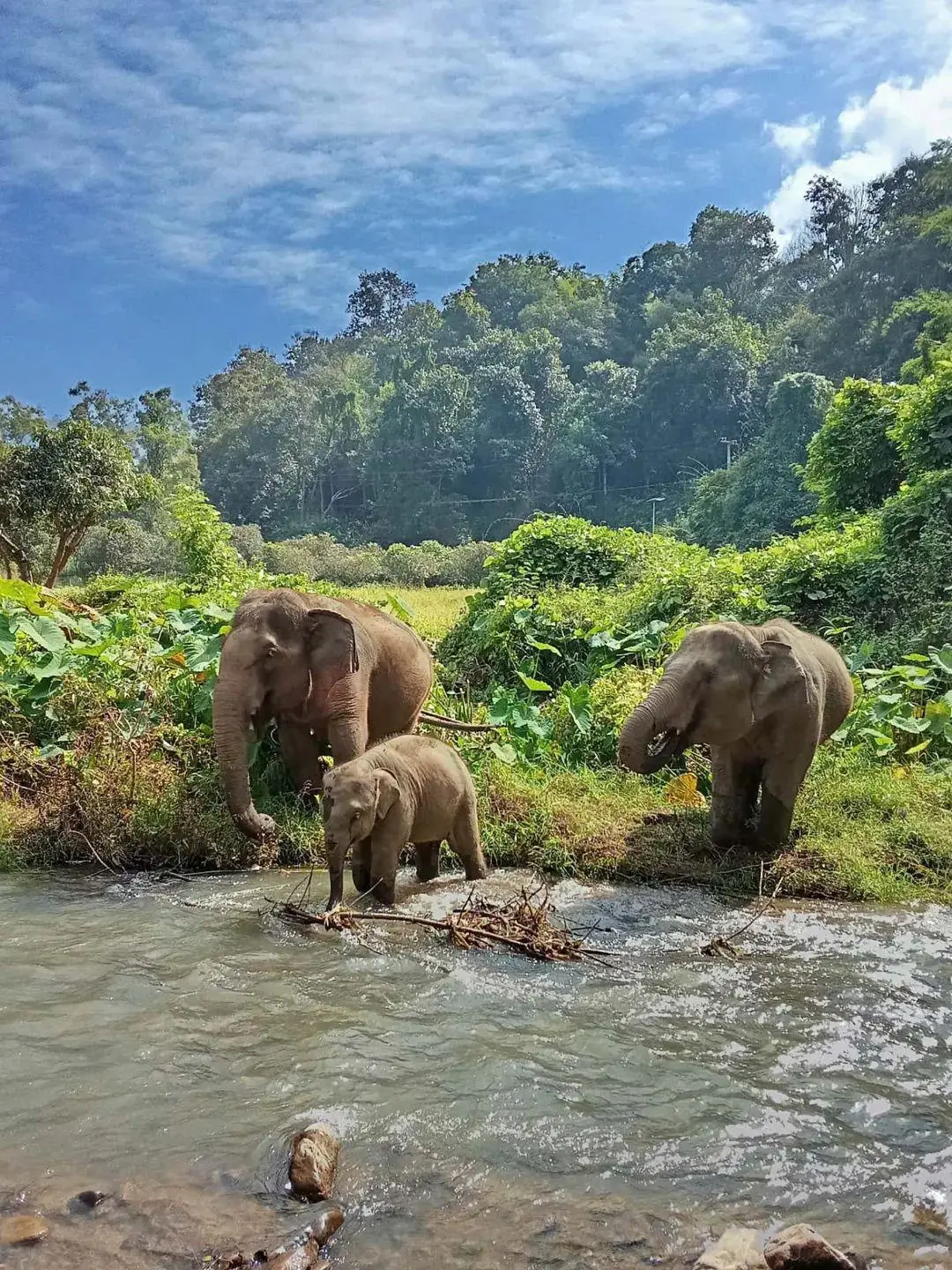
Mae Lou (68 years old): The matriarch and everyone's favorite. Blind in one eye from a forest injury, the grandmother of the group moves at her own pace, with infinite gentleness. She is always searching with her trunk and checking what's ahead of her.
Buatong (23 years old): A young, very attentive mother with a gentle but firm temperament, who knows perfectly well how to educate and set boundaries for her baby when needed. Fun fact: despite her size, Buatong is terrified of... cows!
Bai Boua (1.5 years old): Born in January 2025, Buatong's daughter and the youngest of the group. It's wonderful to see her learning from her mother and beyond. Very curious and playful, she overflows with energy and loves playing with her mahout or exploring her surroundings.
1. First Contact and Morning Treats
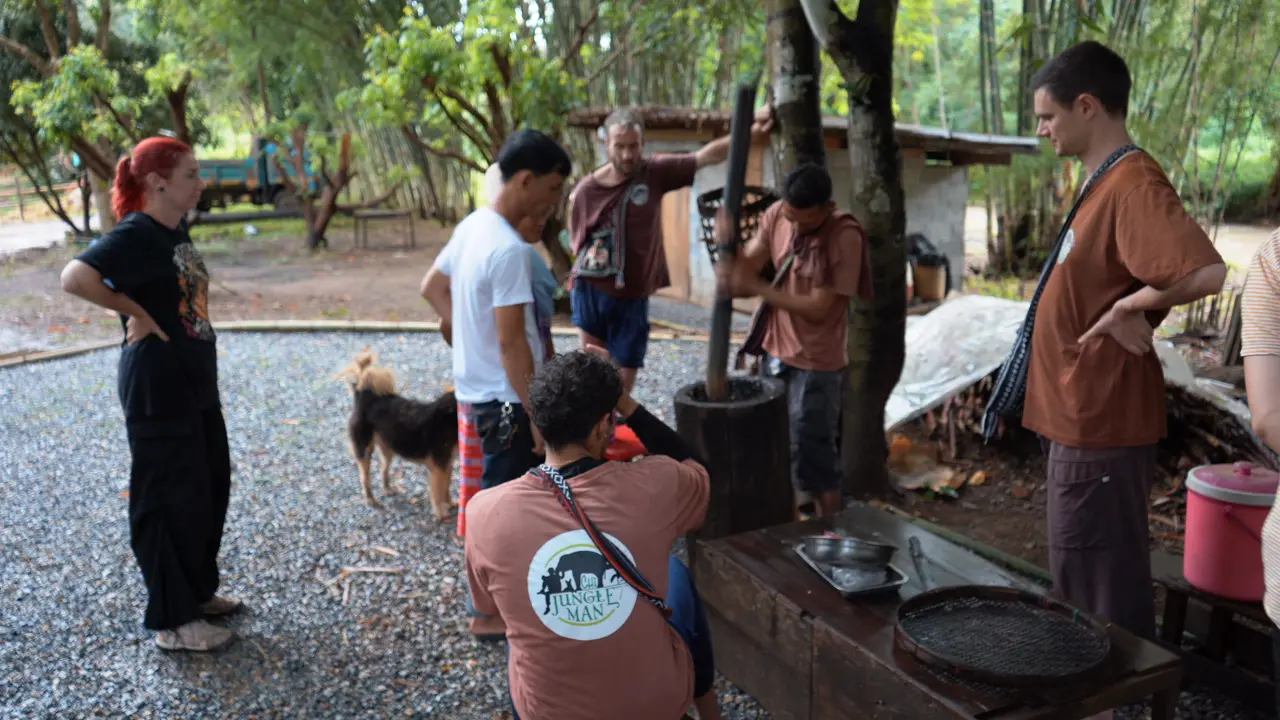
The day begins at the main center with a warm welcome. After putting on appropriate jungle clothing, visitors benefit from a briefing session to understand the history of elephants in Thailand. "We give them information about elephants in general, elephants in Thailand, their history, and then more specifically about our elephants, their story and who they are" Marie-Anne explains.
Next comes the moment to prepare snacks such as sugar cane and bananas, for example. These few treats are mainly a first contact, gently, between visitors and elephants: "we'll go see the elephants to say hello and have a first contact with them."
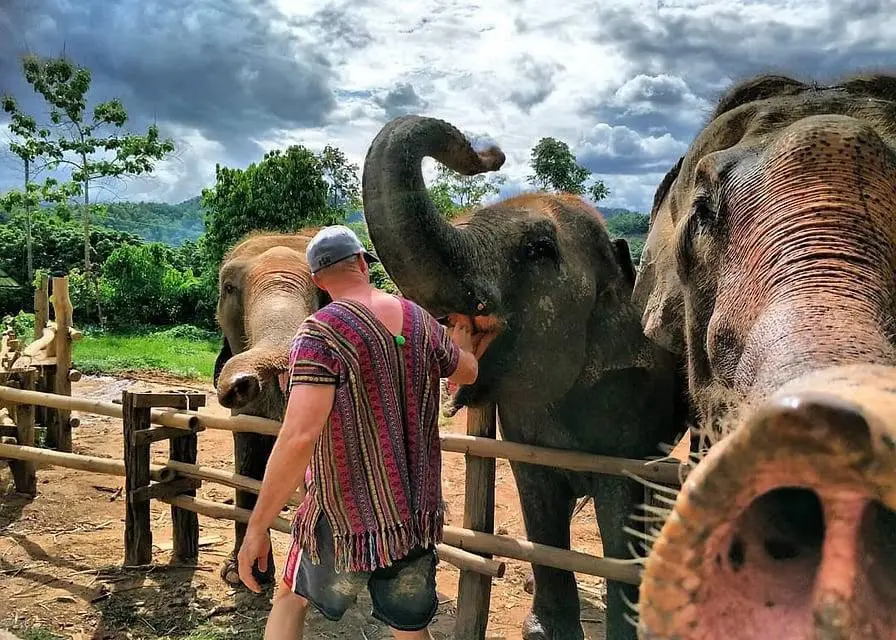
For many travelers, finding themselves face to face with a two-ton animal triggers strong emotion and a hint of apprehension. "Very often, when visitors are in front of the elephants, they think 'oh it's big' and many actually feel some apprehension". This first food exchange allows them to become comfortable with the animal's size and establish a first peaceful connection, both for visitors and the pachyderms.
2. Forest Immersion: Observation Walk
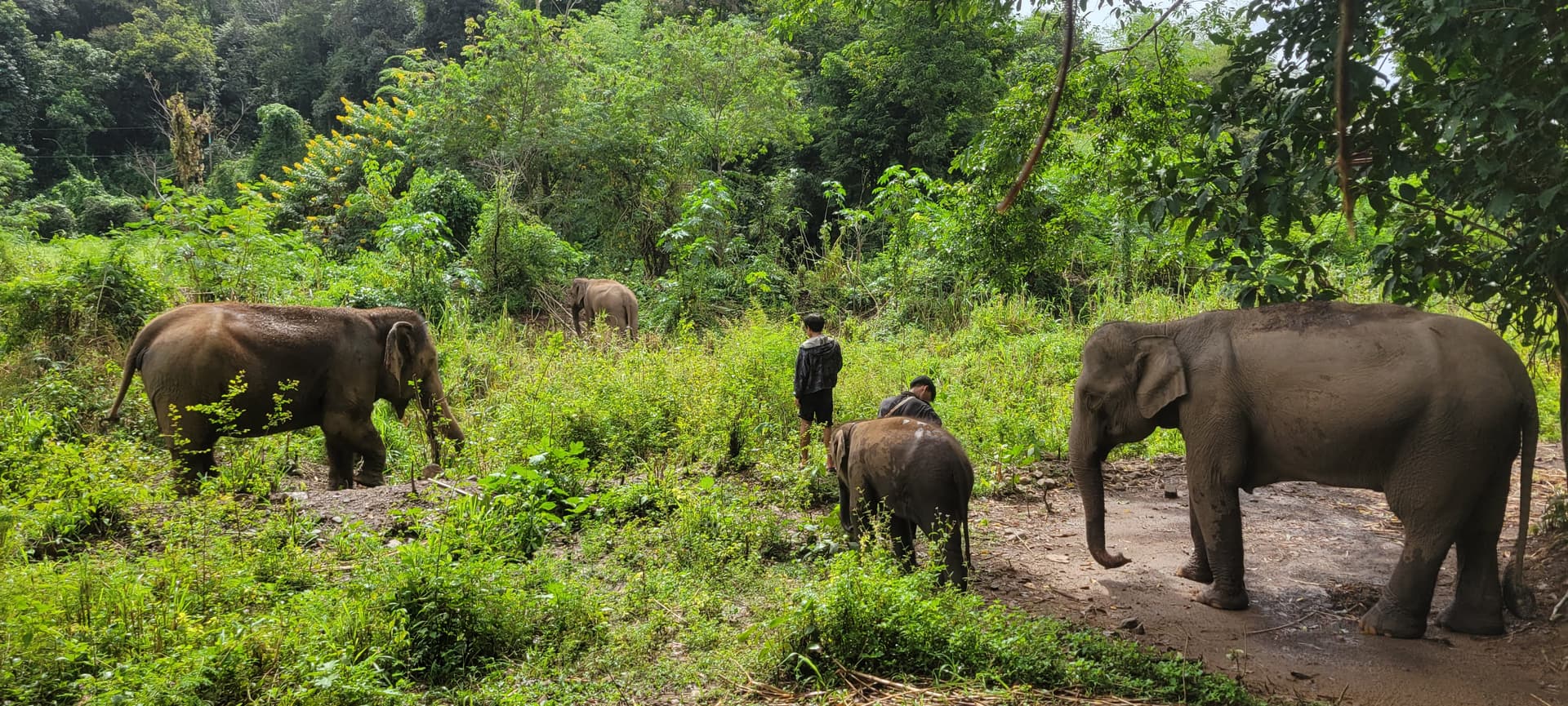
Once the first contact is established, it's time to observe them in nature. "We start by crossing a small river to reach the forest, and there, we'll observe them eating, it's their main and favorite activity" Marie-Anne explains. As they progress, the elephants eat bamboo, grass, leaves, bark, and banana plants.
"We also observe them interact with each other." Marie-Anne adds. You can see them scratching against trees, rubbing themselves with a stick, and rolling in the dirt. They communicate a lot in freedom and are very attentive to the slightest sound. It's an excellent opportunity to learn more about their behaviors and habits.
"We prefer to observe them from a distance and limit interactions so they feel comfortable and reveal their personality to us. We want to give them back a semblance of wild life."
Good to know
Elephants eat between 16 to 18 hours a day. Weighing about 2 tons on average, these forest giants consume approximately 10% of their body weight daily, or nearly 200 kilos of food every day (nothing to sneeze at!).
3. Lunch Break & Preparing Health Supplements
Back at the center, it's time to rest and have lunch: "we come back to the center to eat ourselves and rest a bit because at Chi Jungle Man, it's very 'sabaï sabaï': we like to take our time, and we want people to enjoy nature, to relax."
It's also the time to prepare dietary supplements. Elephants having a very delicate digestive system and being prone to intestinal blockages, their digestion is monitored daily through observation of their droppings. When needed, caregivers and visitors participate in making balls of health supplements to maintain their hydration and promote good digestion:
"We prepare a mixture of medicinal herbs to help them digest. (...) It can be made with banana, corn, rice, salt, and tamarind. All these elements provide the minerals and fiber necessary for their digestion" Marie-Anne explains.
The "Sabaï Sabaï" Spirit at Chi Jungle Man:
In Thailand, the expression "sabaï sabaï" embodies a way of life: taking your time, releasing stress, and living in harmony with your surroundings. At Chi Jungle Man, it's the very philosophy of the place. The experience is designed away from crowds and the frantic pace of mass tourism attractions. We take time to observe, listen to nature, and move at the pace of the jungle's giants...
4. Afternoon by the Water and Observing Bath Time
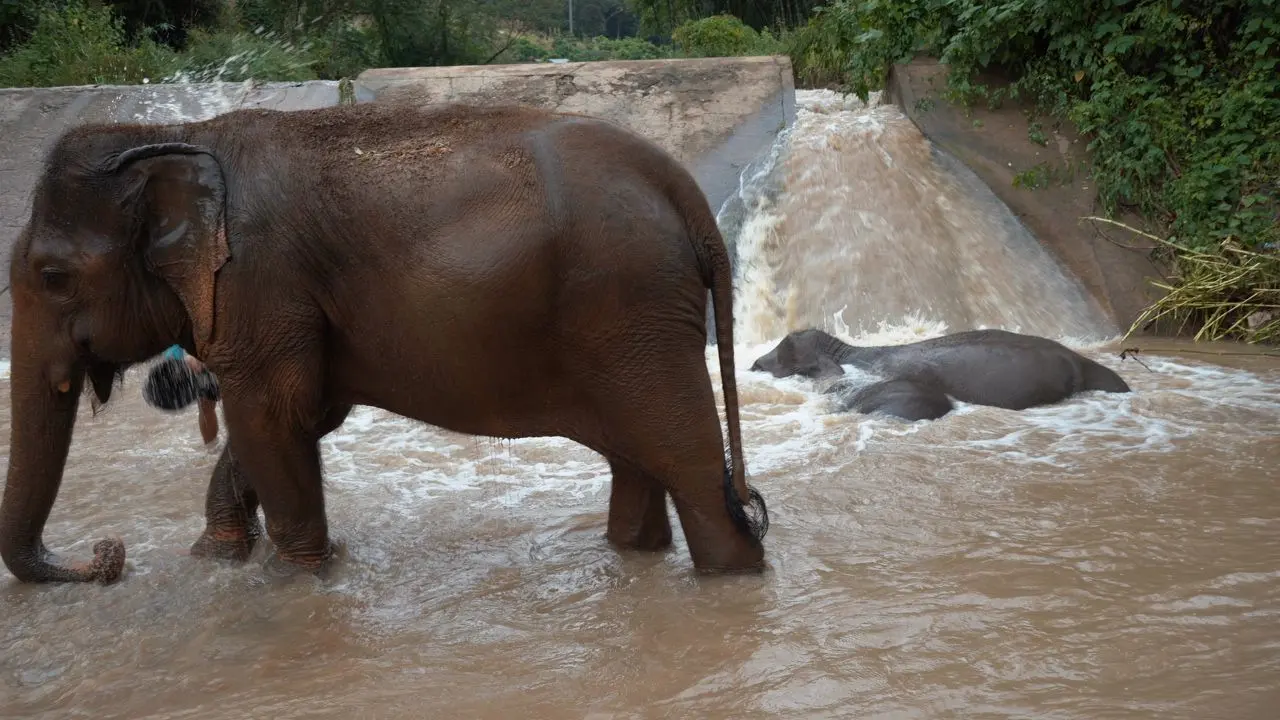
Throughout the day, elephants spray dirt and mud on their backs to protect themselves from the sun and insects. An accumulation of too much dirt can, however, promote parasites.
The group accompanies the three she-elephants to the river. Comfortably settled on the riverbank, visitors observe the elephants immerse themselves in the water of their own accord, rub themselves with sand to clean themselves, and play with each other, without any human constraint.
As the day gently comes to an end by the water's edge, the experience ends for some or continues for others. Indeed, travelers who opt for a multi-day program can extend the adventure by venturing into the mountains to sleep with local residents in the heart of a Karen village (see rest of article), or combine their visit with other local activities offered by Chi Jungle Man.
A Solidarity Project Rooted in the Karen Community
Behind the elephants are also the women and men who bring Chi Jungle Man to life every day. Chi belongs to the White Karen ethnic group, a mountain community settled for generations in northern Thailand. For him as for Marie-Anne, protecting elephants is inseparable from supporting the people who live alongside them.
"The Karens are the local ethnic group who live in the mountains, and Chi is part of them. We work essentially with them to help them preserve their culture," Marie-Anne explains.
This commitment translates into very concrete actions every day: when elephants need supplemental food, fruits and vegetables are bought as much as possible from neighboring Karen farms. The guides who accompany travelers also come from surrounding villages, as do the drivers used for certain excursions.
But the village's involvement goes far beyond local employment. Every new project is discussed with the community before it comes to life. When Marie-Anne and Chi wanted to open their new place of life for the elephants, they first asked permission from the village chief. He then gathered all the inhabitants so everyone could voice their opinion.
"There was a meeting with all the villagers. Everyone voted by a show of hands to say whether they agreed or not with opening the center. It shows how much this project also belongs to the village."
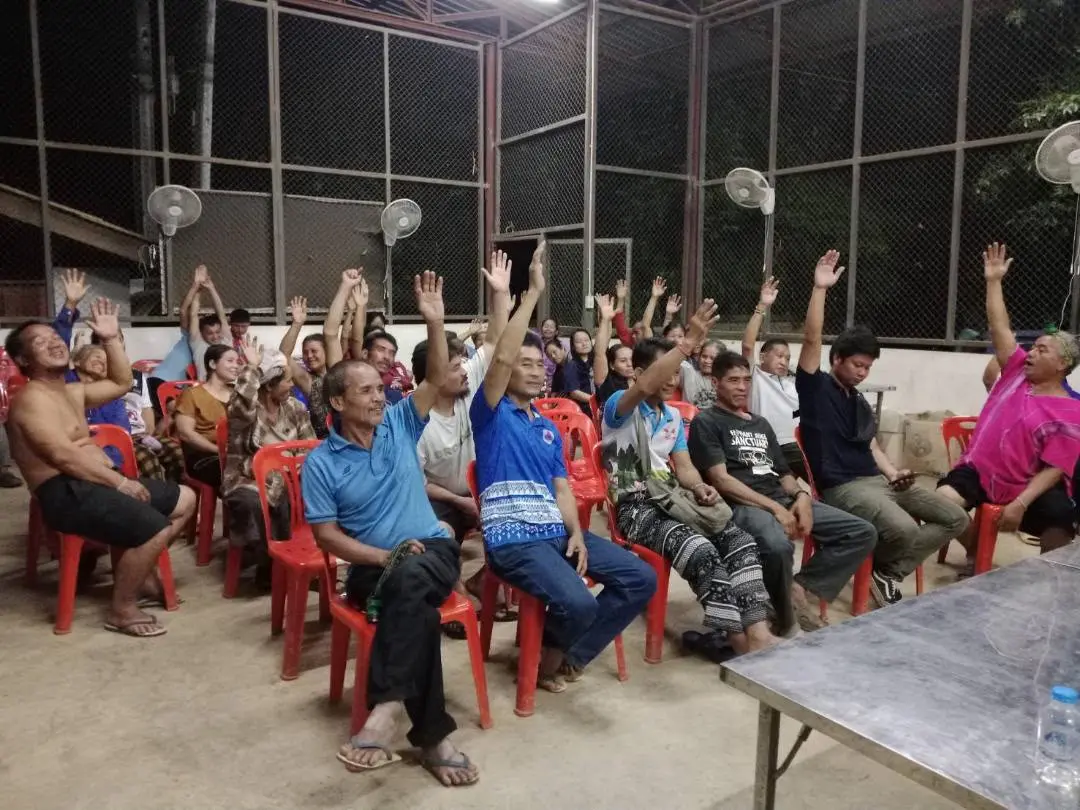
This collective approach reflects Chi Jungle Man's philosophy: develop tourism that benefits elephants as much as the people living on this territory, without imposing decisions from outside.
Practical Info
Other experiences offered by Chi Jungle Man:
"Beyond the elephants, we have other activities that allow you to stay in a Karen village, to see where they live, the rice fields... " To extend your immersion and discover the wild beauty of Mae Wang National Park, several complementary experiences can be integrated into your stay:
Mountain Trekking and Waterfalls: Hikes suited to all levels through forests, rice fields, and plantations. Along the trails, you stop at the foot of secluded waterfalls to cool off and enjoy a meal prepared on the spot in the heart of the jungle;
Traditional Bamboo Rafting: Let yourself be carried along the Mae Wang River on long bamboo rafts. A peaceful journey to admire the surrounding nature in complete serenity;
Night with Local Hosts (Chi Jungle Man Homestay): An authentic immersion in the heart of a Karen village located 1.5 hours from Chiang Mai. You stay in simple wooden and bamboo bungalows and share dinner with your Karen hosts. This is where you'll sleep if you opt for a multi-day visit to Chi Jungle Man.;
Cultural Visit to Wat Luang Khun Win Temple: Nestled at the top of a mountain in the middle of the forest, this magnificent wooden complex offers a serene setting conducive to meditation. Thai people come here on special occasions for ceremonies.
These experiences can be combined over several days to discover another facet of northern Thailand.
Visiting Chi Jungle Man: What Concretely Does Visitor Money Do for the Elephants?
Chi Jungle Man is not an association; it's a private structure. It therefore does not operate thanks to donations, but through deliberately limited eco-tourism with a small number of visitors. This model makes it possible to finance the elephants' needs while maintaining a human-scaled experience.
"We welcome visitors, among other things, so they can meet elephants in an ethical way, so we can inform them well, and it's their money that allows us to meet the elephants' needs: for food, for shelter and all construction, it also allows us to pay a salary to their mahouts, to support the Karen community that works with us..." Marie-Anne details.
Welcoming visitors is thus the essential economic engine that makes it possible to offer a peaceful life to the elephants and to fairly compensate local communities. Because caring for an animal of this size represents a colossal daily investment. Between abundant food, veterinary care, infrastructure development, and 24/7 mahout presence:
"You have to count 30,000 baht per month per elephant, which is just under 1,000 euros (depending on the baht exchange rate)."
Welcoming more visitors would generate more revenue, but that would go against the philosophy of the place: "We try to find a balance between what we need financially, so the number of people that will allow us to support our entire community: the animals and the people who work with us and the local Karen community. We don't want to run a big business, but we can't take only 2 people a day either because we wouldn't survive and we couldn't continue the project."
Practical Info
Pricing:
Day with elephants: 2,500 baht per person (2,000 baht for children under 10 and free for children under 2);
Trekking day (excluding elephants): 2,200 baht per person (1,700 baht for children under 10 and free for children under 2).
Note that rates are discounted from 3 days onwards (2 days with elephants and one night in a Karen village will cost you, for example, 4,500 baht per person).
Complementary activities:
Bamboo rafting: 200 baht;
Temple visit in the jungle: 300 baht;
Trek to the waterfall: 200 baht;
Night with a local host in a Karen village: 600 baht.
What the rates include:
Round-trip transportation from Chiang Mai;
All meals and drinking water;
Accommodation for overnight stays (for 2+ day stays);
On-site insurance.
Visiting Chi Jungle Man, Much More Than an Encounter with Elephants...
It is difficult to faithfully describe what a day at Chi Jungle Man is like. It is only once there that one truly measures what makes the place unique: the calm and sabaï sabaï spirit, the time taken to observe and understand the elephants without ever disturbing them, the many conversations with Marie-Anne, Chi, and their passionate team, or the feeling of never being just another visitor...
By choosing to visit Chi Jungle Man, you do more than discover elephants with respect for animal welfare. You also contribute, in your own way, to supporting a local project that benefits both the animals and the humans who care for them, and more broadly, the entire Karen community that surrounds them.
Ready to experience it?
Learn about the project: to find out more about Marie-Anne, Chi's story, and the she-elephants living with them, visit the Chi Jungle Man official website.
Plan your trip: Dream of discovering Thailand differently and meeting elephants ethically? Our English-speaking advisors at Sawa Discovery can integrate this stop into a custom itinerary, designed according to your wishes, your pace, and your budget. https://www.voyagethailande.fr/contact
Find the interview videos on Instagram https://www.instagram.com/sawadiscovery/
Also discover
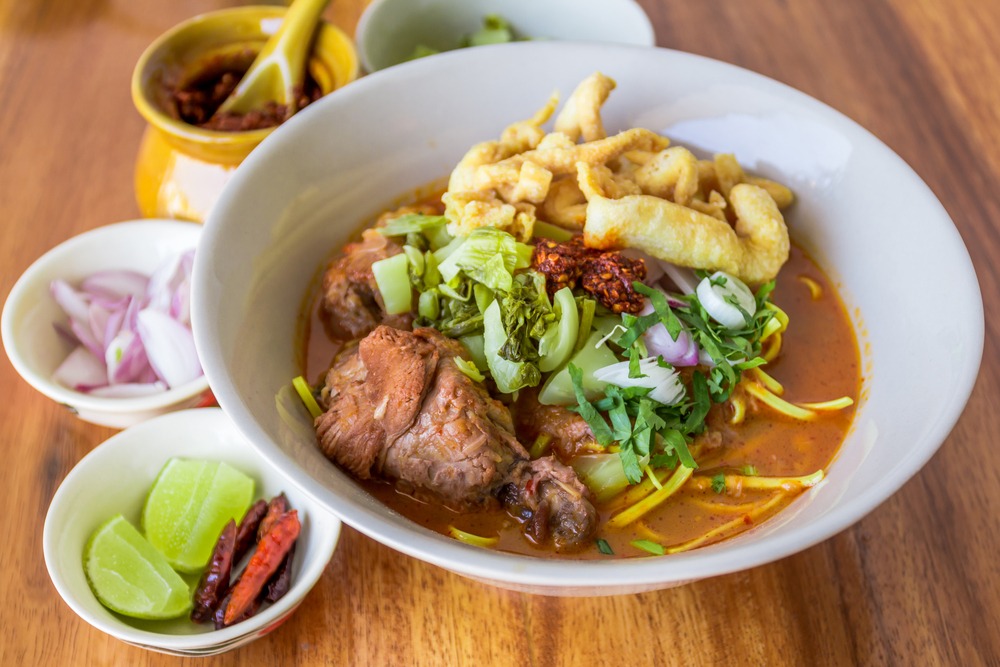
How to Prepare Khao Soi? The Authentic Recipe of Chiang Mai's Emblematic Curry
Discover the authentic recipe for Khao Soi, the emblematic soup of northern Thailand, blending creamy curry, crispy noodles and the distinctive flavors of Chiang Mai.
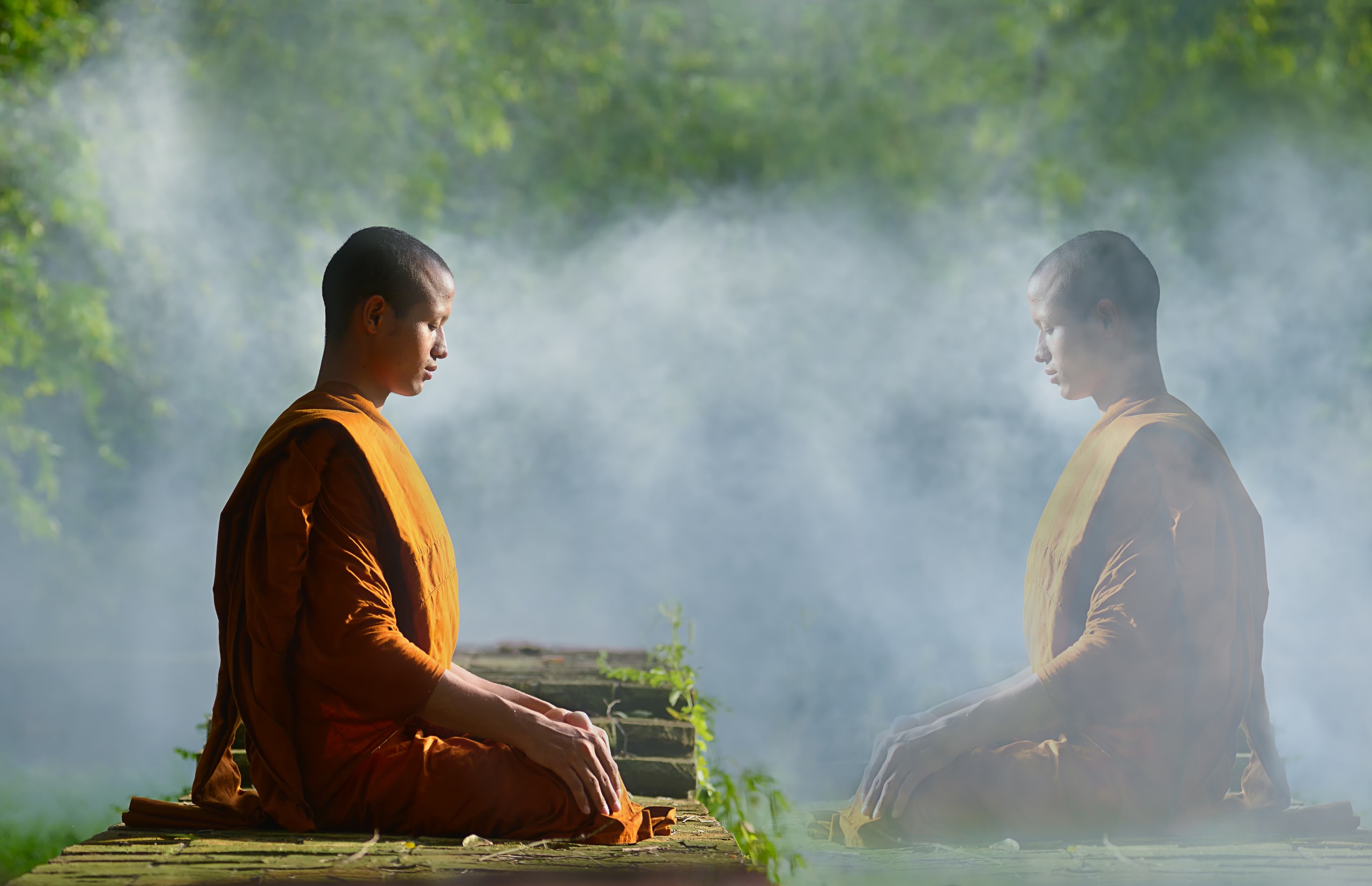
A Beginner's Guide to Meditation During a Spiritual Retreat in Thailand
Looking to truly slow down during your Thailand trip? Discover what a meditation retreat entails—silence, Buddhist rituals, and monastic life.
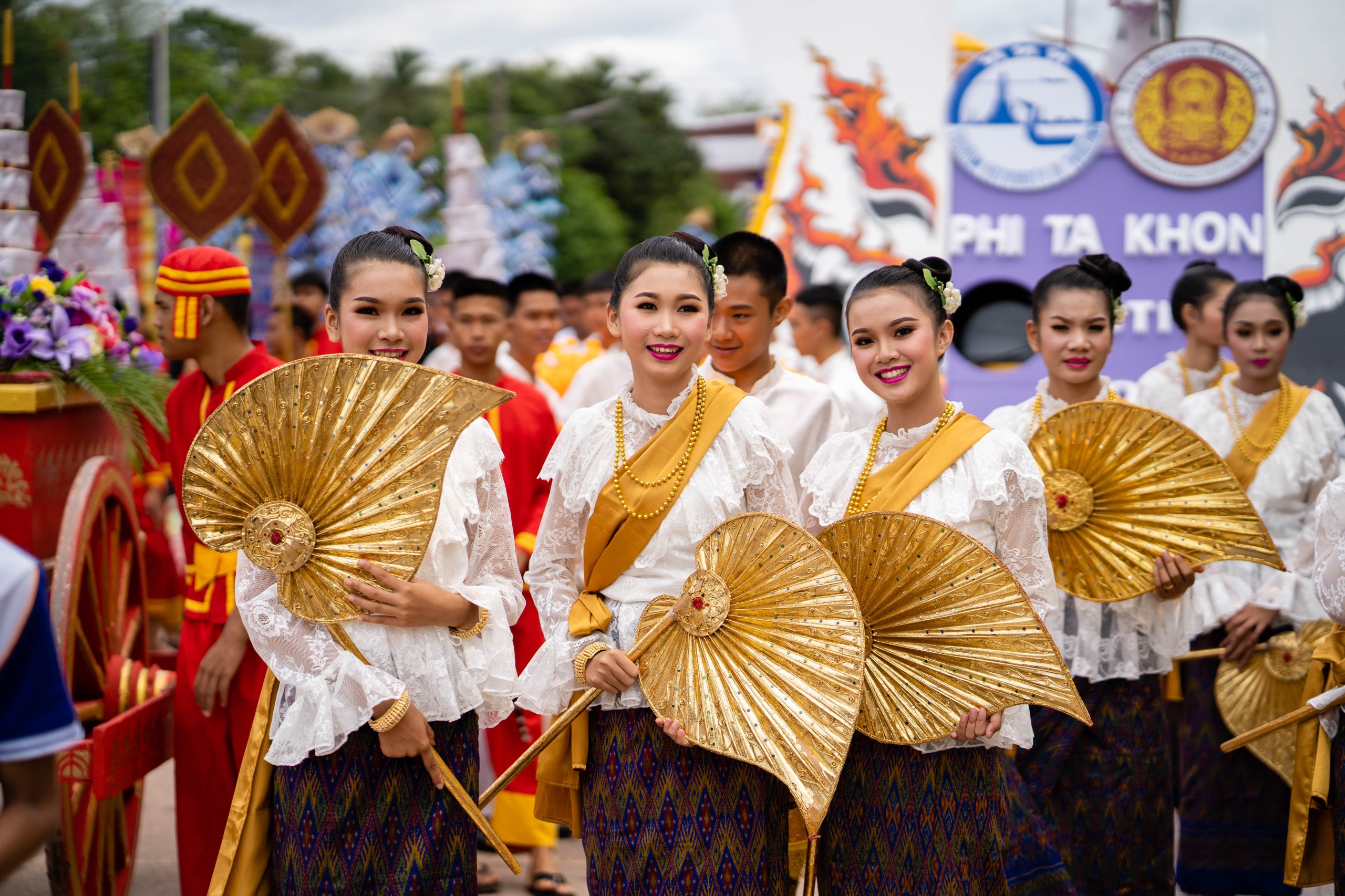
Thai Festivals and Celebrations Month by Month
Traveling to Thailand? Discover the festivals and celebrations not to miss depending on the month, from Buddhist observances to major traditions, royal events, and popular festivities.