Traveling to Thailand in Summer (July-August)
Planning a trip to Thailand in July or August? Here's where to go, which regions to choose, what to expect weather-wise, and which activities to prioritize.
Are you planning a trip to Thailand during the summer holidays and worried about the weather? Let's break down Thai weather patterns and regional differences to help you get a clearer picture. Discover the best destinations to visit and activities available during a stay in Thailand in July and August.
What's the weather like in Thailand in July and August?
The Thai climate is influenced by the southwest and northeast monsoons. There are 3 distinct seasons in Thailand:
The rainy season which runs from May to October;
The dry season which occurs from November to February;
The hot season stretches from March to May.
As you can see, July and August fall right in the middle of the rainy season. But this doesn't necessarily mean you'll experience constant rain. In fact, each region has its own unique climate characteristics. So it can be raining heavily in one part of the country while the weather is absolutely beautiful elsewhere.
What weather should you expect in Thailand during summer by region?
Northern Thailand in Summer
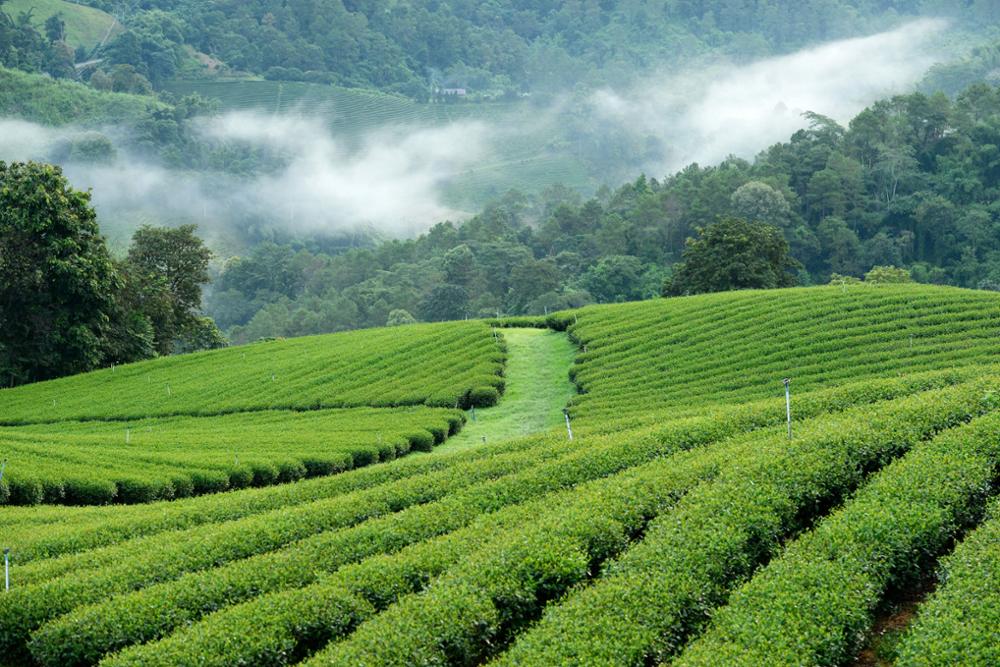
Northern Thailand experiences a rainy season between May and October. During this time of year, temperatures are cooler and rainfall is more frequent. That said, rainfall is less intense than in other parts of the country. Moreover, you'll often encounter intermittent showers rather than continuous precipitation. Additionally, this season still enjoys periods of plenty of sunshine (between showers), with rain tending to fall in the late afternoon or at night rather than during the day.
Central Thailand in Summer
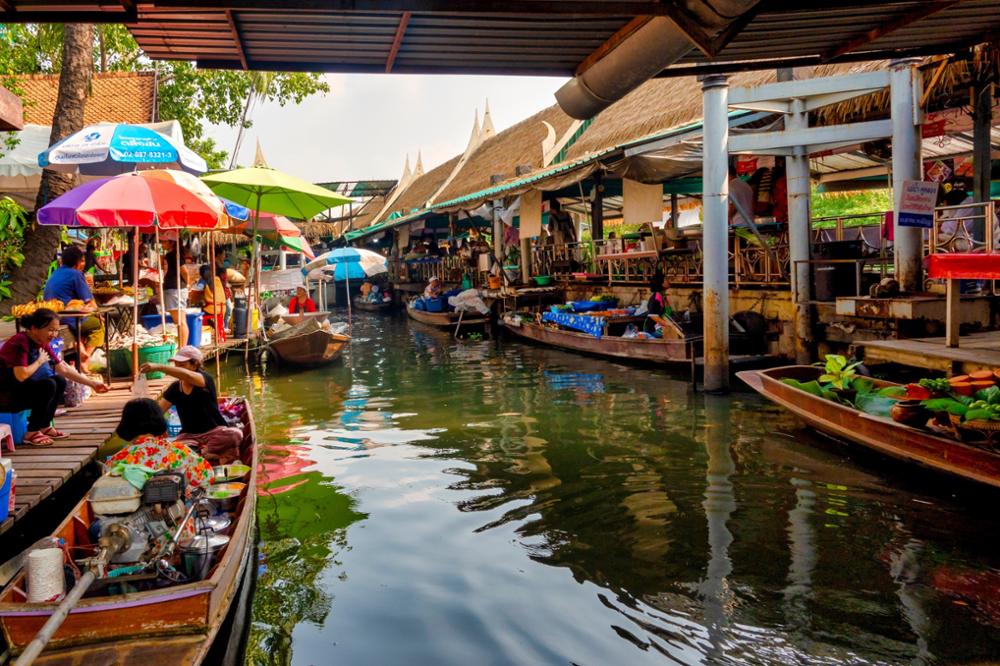
Central Thailand, home to Bangkok, also experiences rainy periods during July and August. But again, it's entirely possible to plan a visit to the region at this time of year. Rainfall is intense, but brief, and typically occurs late in the day. Additionally, precipitation is heavier toward the end of summer, around late August and September. It's worth noting that Thailand's capital experiences high humidity levels during this period.
Southern Thailand in Summer
The rainy season doesn't affect the southeast and southwest of Thailand in the same way. While the monsoon brings significant rainfall to the western part of the country along the Andaman Sea coasts and islands (Phuket, Koh Lanta, Koh Phi Phi...), it barely touches the Gulf of Thailand where rainfall remains very rare during July and August.
Does it rain all the time during Thailand's rainy season?
As we've just seen, the rainy season affects much of Thailand, but at different times and intensities. So it's entirely possible to plan a summer trip to Thailand, provided you choose your destinations carefully based on your desired activities.
However, if there's one period to avoid when traveling to Thailand, it's September, when rainfall is heaviest throughout the country. That's why it's associated with typhoon season.
Where to Travel in Thailand in July/August?
Which part of Thailand should you visit in summer?
Wondering where to go in Thailand during a summer trip? Among the best destinations to discover in July and August, we recommend:
Chiang Mai, Chiang Rai and Pai (Northwest)
Northwestern Thailand is renowned for its majestic mountains, lush jungles, countless temples, and ethnic villages. While summer coincides with the beginning of the rainy season, the region can still be visited at this time. In fact, it's one of the best times of year to enjoy the verdant landscapes of northern Thailand.
This is because it's from late June and early July that rice is transplanted in the rice paddies of Northern Thailand. It's also when vegetation is at its most lush. Not to mention the rivers and waterfalls that start filling up, offering excellent terrain for canyoning and rafting activities.
Must-see attractions in Northwestern Thailand during summer include:
The cities of Chiang Mai and Chiang Rai: renowned for their cultural identities and countless temples;
The charming town of Pai: nestled between mountains where many Thai ethnic minorities live;
The village of Ban Pa Pong Piang: home to Thailand's most beautiful terraced rice paddies;
The village of Mae Salong: nicknamed the Little Switzerland of Thailand, it's known for its tea plantations;
To learn more, discover our complete itinerary for visiting Northwestern Thailand.
Isaan (Northeast)
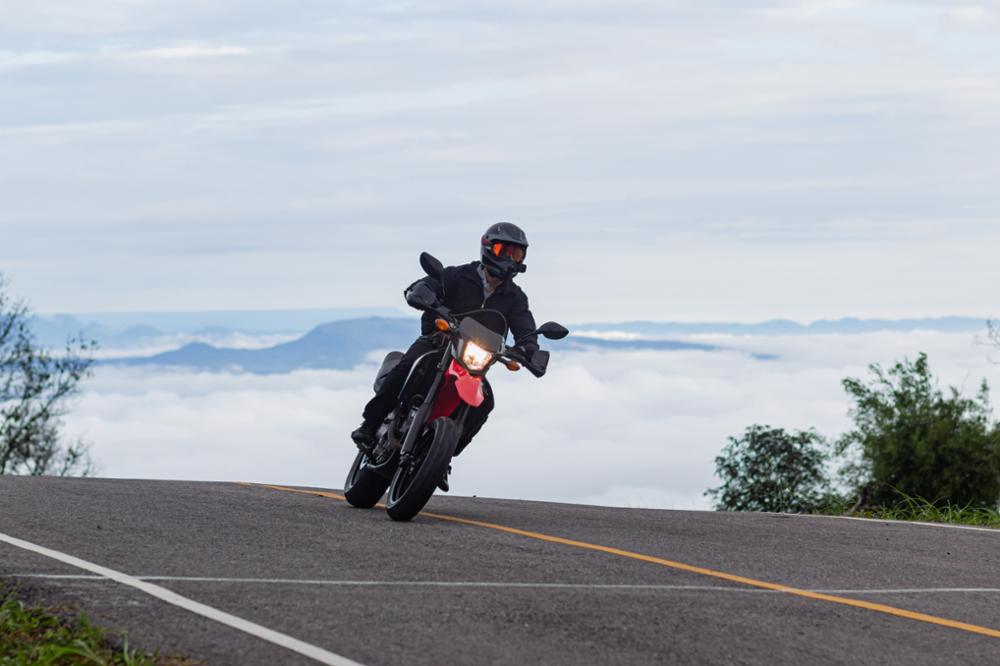
Often overlooked by tourists, Isaan is one of Thailand's most authentic regions. Located in the Northeast, bordering Laos and Cambodia, it's THE destination for travelers seeking to venture off the beaten path. The good news? The region enjoys a relatively dry climate during the rainy season.
Not only is summer an ideal time to visit the region, but it's also when the Siamese tulips bloom. Also known as Dok Krachiao, they flower each year at the start of the rainy season, making the landscapes of Chaiyaphum province even more enchanting. July also marks two of Thailand's most beautiful festivals: the Ghost Festival in Dan Sai and the Candle Festival in Ubon Ratchathani (see end of article).
Must-see attractions in Northeast Thailand during summer include:
The Prasat Hin Phimai temple: Thailand's largest Khmer temple;
The Ban Chiang archaeological site: a historical treasure that bears witness to an agro-pastoral civilization dating back more than four thousand years;
Sai Thong National Park, Pa Hin Ngam National Park, and Phu Ruea National Park: where you can admire the blooming of Siamese tulips;
The Pha Taem National Park: renowned for its rock art, lush flower fields, and panoramic views of the Mekong;
The Sam Phan Bok: literally translated as the "gorge with three thousand holes", it's said to be Thailand's Grand Canyon...
Discover all the wonders of Isaan!
Sukhothai and Ayutthaya (Central)
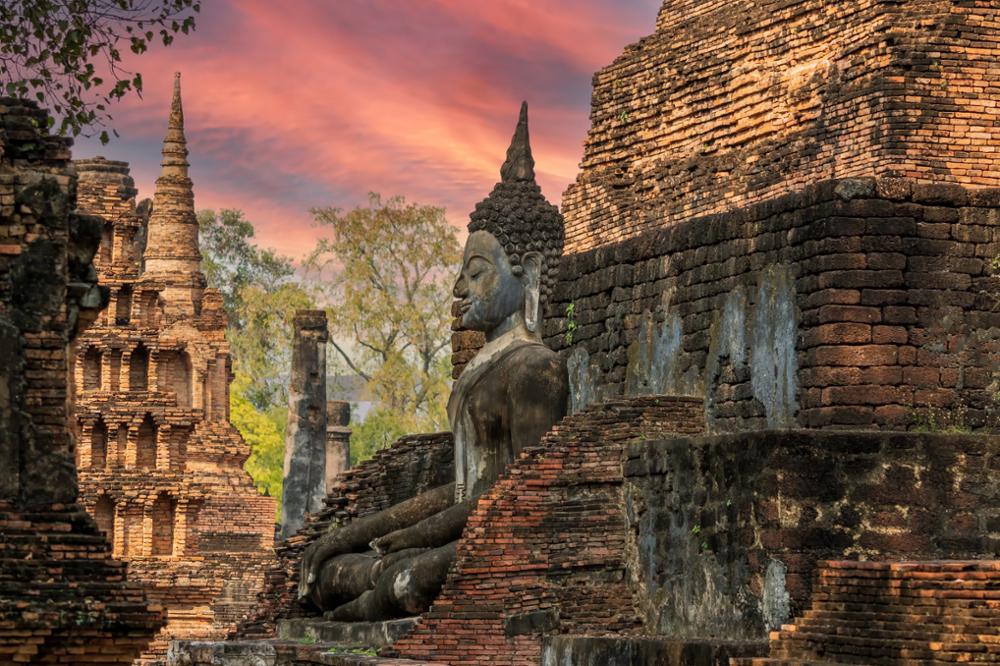
As mentioned earlier, central Thailand is among the least humid areas during the rainy season. And even if rainfall may occur late in the day, it won't prevent you from sightseeing. This is an opportunity to discover two emblematic cities from the history of the Siamese Kingdom: Sukhothai and Ayutthaya. These two cities, which successively served as the first capitals of the Siamese Kingdom, boast historical heritage among the most important in the country.
Considered open-air museums, both are inscribed as UNESCO World Heritage Sites. You'll find numerous vestiges and ruins of palaces, temples, monasteries, and statues that you can explore on foot or during a bicycle or tuk tuk excursion. Located just 80 km north of Bangkok, Sukhothai and Ayutthaya are must-see cities on any Thailand itinerary.
Discover our one-day excursion to Ayutthaya from Bangkok.
Bangkok (Central)
The main gateway to the country, the Thai capital deserves to be explored for at least a few days. If you're planning a summer trip to Thailand, you can certainly consider spending time in Bangkok. During this period, the weather is typically nice during the day, with rain appearing only late in the evening. You'll have plenty of time to visit the city's main attractions.
For travelers who struggle with the heat and humidity, you can always adapt your itinerary to stay comfortable and find some coolness. For example, you can plan a romantic boat cruise on the Chao Phraya, visit the island of Bang Kachao considered Bangkok's green lung, explore the city's museums, or go shopping in the major malls.
Must-see attractions in Bangkok during summer include:
Visit Bangkok's most beautiful temples including Wat Pho and Wat Arun;
Visit the iconic Grand Palace;
Enjoy the lively atmosphere of the Chinatown district;
Visit Jim Thompson's house;
Try one of Thailand's street food specialties;
Explore Bangkok's most beautiful floating markets...
To learn more, discover our 3-day itinerary to discover Bangkok.
Kanchanaburi (Central)
Located just 2 hours from the capital, Kanchanaburi is among the emblematic destinations of central Thailand. The city is known worldwide for its history with the famous Bridge over the River Kwai. Many visitors come to ride the Death Railway to understand and relive the dark hours of World War II.
Beyond its historical sites, the region offers beautiful nature escapes for lovers of the outdoors. Indeed, it's home to one of Thailand's most beautiful waterfalls: the Erawan Waterfalls. Located in Erawan National Park, rainfall here is relatively moderate, as the park area is sheltered by mountains, yet sufficient to fill the waterfalls and allow multiple water activities such as rafting.
Take a day trip to Kanchanaburi.
The Gulf of Thailand (South)

Dreaming of relaxing on Thailand's most beautiful beaches during your stay? Wondering which Thai island to visit in July and August?
As mentioned, it's best to avoid the west coast and Andaman Sea islands at this time of year, risking being soaked all day. If you want to relax on the islands while enjoying plenty of sunshine, favor the gulf islands instead, namely:
You can relax on the beaches, go scuba diving, visit Ang Thong Marine National Park on a day excursion, practice yoga, party...
On the mainland, the beach destinations to favor for a summer stay are:
Khanom,
Pranburi,
To learn more, discover our 2-week itinerary through the Gulf of Thailand islands.
Interested in 2 weeks in the Gulf of Thailand islands?
What events and festivities shouldn't you miss in summer in Thailand?
Thai traditional celebrations can also influence your travel itinerary. Among Thailand's events and festivities not to miss in summer, you'll find:
The Ghost Festival (Phi Ta Khon) in Dan Sai in Isaan
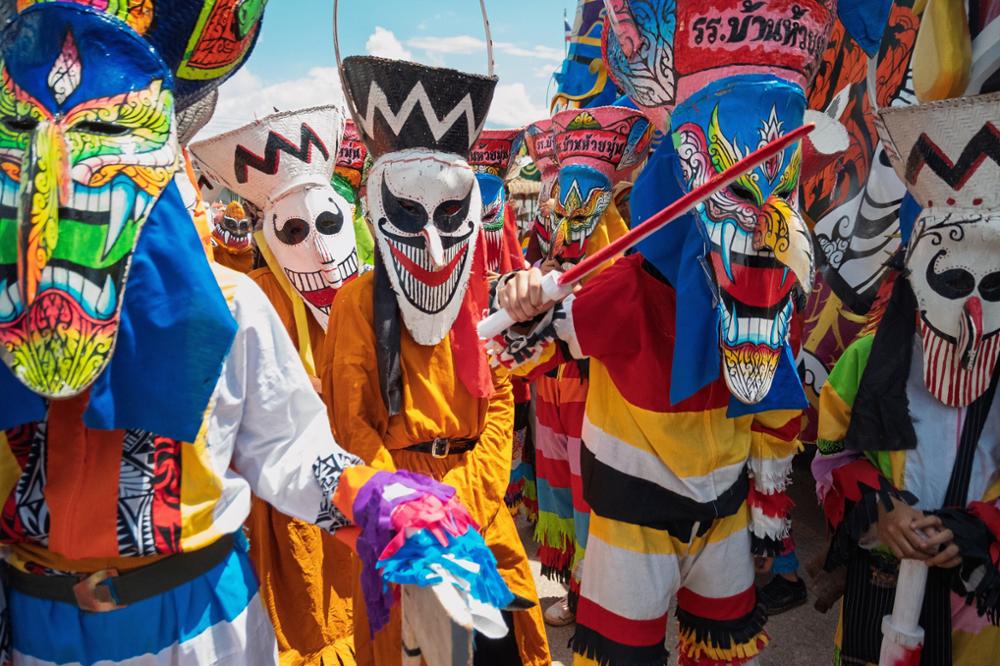
The Phi Ta Khon (or Ghost Festival) is among Thailand's best festivals. It's a festival held during the Boun Bhavet event which honors one episode of Buddha's life. The festival takes place every year between March and July (according to the lunar calendar) in Dan Sai, a small village in Lan Soei Province, in the Isaan region.
For 3 days, residents wear ghost costumes to commemorate Prince Siddharta's return after a long journey. Dances, animistic rituals, mask parades, rocket contests, and spiritual reverence are all part of the program.
Ghost Festival dates in Dan Sai for 2025: June 28-30, 2025.
The Candle Festival in Ubon Ratchathani in Isaan
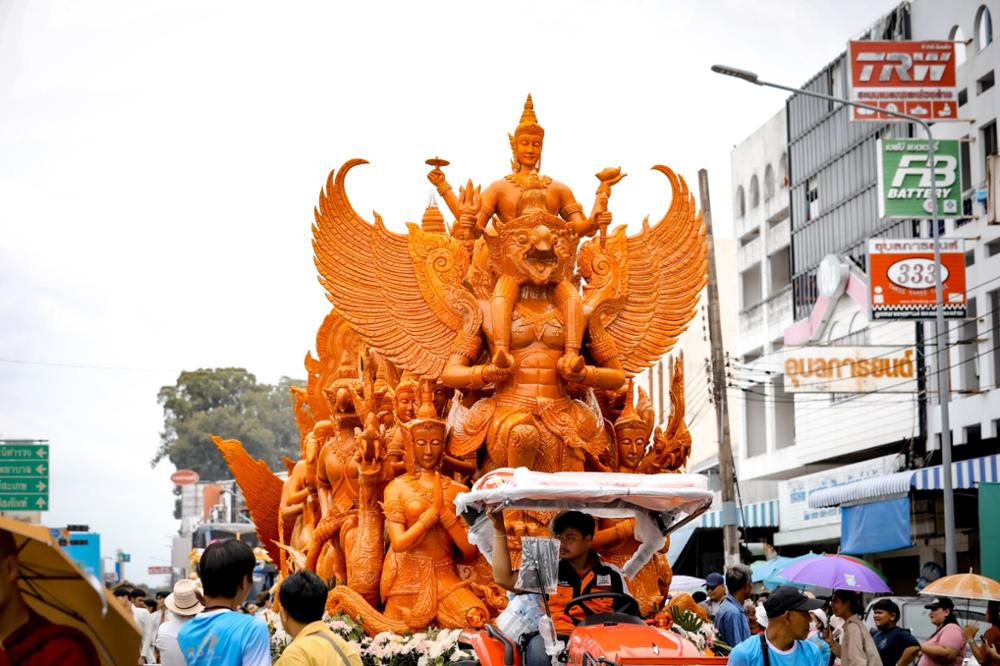
Another major festival also takes place around mid-July. This is the Candle Festival in Ubon Ratchathani. The event takes place annually according to the lunar calendar during Wan Asanha Bucha (a public holiday commemorating the day Buddha delivered his first sermon) to mark the start of Buddhist Lent.
Originally, tradition dictated offering candles to temples as offerings. This ritual is now celebrated at a festival where thousands of locals gather and artists compete to present their most beautifully carved candles. The event includes performances of traditional dance and music. While the festival takes place in several cities across the country, it's in Ubon Ratchathani, in Isaan, that the festival is most impressive.
Candle Festival dates in Ubon Ratchathani for 2025: no official dates have yet been announced, but the event typically takes place in mid-July.
In summary: is traveling to Thailand in summer a good idea or a bad one?
A summer trip to Thailand is entirely feasible even though the period coincides with the rainy season. As we've seen, you just need to choose destinations where rainfall is least abundant or adapt your activities accordingly.
Traveling at this time also means benefiting from the advantages of a low-season trip to Thailand. On one hand, you'll discover tourist sites without being overwhelmed by crowds (peak tourist season is more in December/January/February), and on the other hand, you can enjoy numerous services (accommodations, transport, excursions) at lower prices. It's also an opportunity to meet locals who, during this period, are less overwhelmed by mass tourism and thus have more time to interact with visitors.
Our tips for traveling to Thailand in summer

Here are our best tips for organizing a stay in Thailand in July/August:
Don't book all your accommodations in advance and leave yourself the possibility of changing plans if you're unsure about weather conditions. This will let you switch destinations as needed when facing unpredictable weather changes;
Check weather forecasts before planning your next destination;
Pack rain gear for all your outdoor activities;
Bring both sandals and waterproof hiking shoes;
Find indoor activities in case of persistent rain: traditional Thai massage sessions, yoga classes and retreats, Thai cooking classes, Muay Thai (Thai boxing) classes or shows, learn meditation...;
Contact a local travel agency like Sawa'discovery to get the best advice without worrying about organizing your trip. An opportunity also to benefit from assistance if needed…
To learn more, discover our articles on the same topic:
Frequently asked questions
No, rainfall is generally intermittent and occurs mainly late in the day. Mornings are often sunny.
Favor the Gulf islands (Koh Samui, Koh Tao, Koh Phangan) which are less affected by the monsoon than the Andaman islands.
Yes, it's the low tourist season. Accommodations and activities are generally 20-30% cheaper than in high season.
Pack light clothing, a raincoat, waterproof shoes, and sandals. Don't forget sunscreen and a compact umbrella.