Khao Ok Thalu
Khao Ok Thalu
Khao Ok Thalu ตำบล คูหาสวรรค์ อำเภอเมืองพัทลุง พัทลุง 93000, Thaïlande
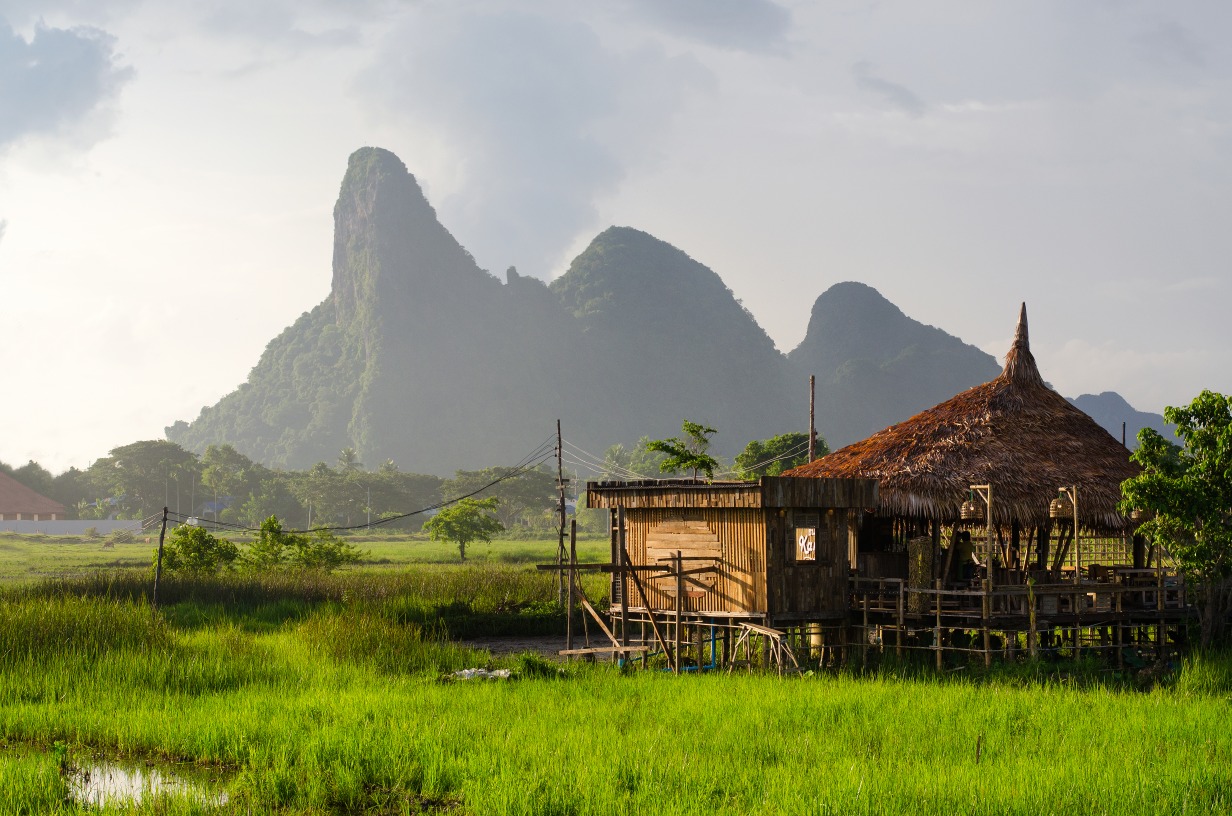
A 250 m karst hill pierced by a cavity at its summit, Khao Ok Thalu dominates Phatthalung and houses the Buddhist temple Wat Sukha Watdi.
Recognizable by the cavity piercing its summit, Khao Ok Thalu overlooks the city of Phatthalung, in southern Thailand. This limestone formation, which rises to 250 metres, is the symbol of the province and one of the landmarks visible as you exit Phatthalung railway station.
Why climb Khao Ok Thalu
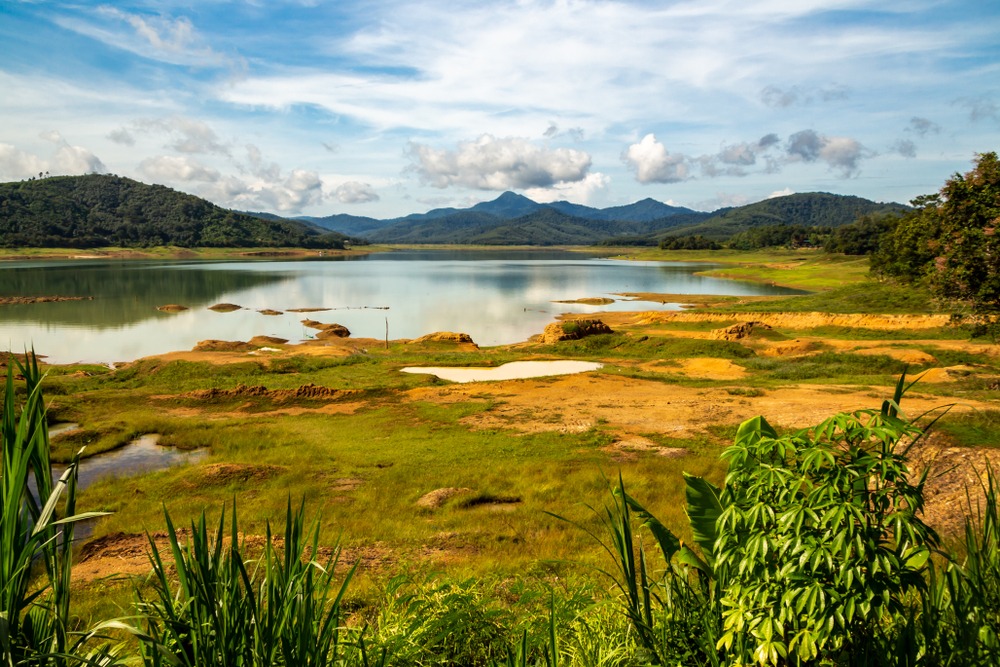
Located 1.7 km from the city centre, the hill combines two experiences in one location: a pilgrimage trail leading to a Buddhist temple halfway up, and a more demanding ascent to the pierced limestone peak that gives the place its name ("pierced chest"). From the cavity at the summit, views stretch over Thaolé Soap lake and the surrounding countryside.
The site is also popular for its forested setting, its immediate proximity to the city, and the fact that it offers a half-day walk accessible to travellers passing through.
The legend of the mountain
The name Khao Ok Thalu, which literally means "pierced chest", is rooted in a local legend. A villager, married to a beloved woman, fell in love with a second companion. When the two rivals came to blows, the man stepped in and took a pestle blow directly to the chest. Frozen in place, he was transformed into a mountain, whose cavity at the summit is said to recall the mortal wound. The hill is also more rarely called Khao Chai Buri.
What to see on site
Wat Sukha Watdi temple
Halfway up, the left-hand trail leads to Wat Sukha Watdi, a forest sanctuary whose entrance is guarded by two three-headed nagas, those protective serpents venerated in Buddhism. The temple serves both as a place of prayer and as a meditation centre, and you may encounter monks in walking meditation or recitation.
A garden precedes the sanctuary's façade. Beyond that are a picnic area and access to a grotto decorated with stalactites: a switch to the right of the entrance allows you to turn on the interior lighting. Outside, a statue of a Great Buddha sitting represents access to nirvana.
The ascent to the summit
The second route, more demanding, scales the limestone peak via 1,066 steps. The stairway is less well-maintained than the temple route, and the climb requires good stamina. At the summit, the natural cavity that pierces the rock offers a visual opening onto the plain and the lake. On clear days, the unobstructed view justifies the effort; in cloudy weather, much of the panorama is hidden by mist and the canopy.
Practical information
- The site is open daily and access to the Buddhist temple is free.
- No shops on site: bring water, snacks and mosquito repellent.
- Covering clothing (shoulders and knees) required to enter the sanctuary.
- Allow 1h30 to 2 hours return trip to the temple, longer if you continue to the summit.
- Walking shoes recommended, particularly on the route to the peak.
When to visit
Southern Thailand experiences a marked monsoon, particularly between September and December on the east side, where Phatthalung is exposed to heavy rains. For hiking, choose the dry season (January to April): the steps are less slippery and visibility from the cavity at the summit is much better. Early morning departures are preferable, before temperatures rise and clouds form at altitude.
How to get there
Khao Ok Thalu is located about 1.7 km from Phatthalung city centre, in Amphoe Mueang. Access by car or tuk-tuk is via Route 4047 heading towards Wat Tham Khuha Sawan, located immediately nearby. The hill is visible from Phatthalung railway station, which simplifies orientation for travellers arriving by train from Bangkok or Hat Yai.
What to see nearby
- Wat Tham Khuha Sawan: neighbouring cave temple, easily combined with a visit to Khao Ok Thalu.
- Thale Noi Waterbird Park: wetland area renowned for its lotus flowers and birdlife, about thirty kilometres away.
- Kaeo Surakan Cave: another karst formation in the province.
- Khao Luang: an iconic peak in the region, for more experienced hikers.
Frequently asked questions
Allow 1h30 to 2 hours return trip to Wat Sukha Watdi temple halfway up. The full ascent to the cavity at the summit, via 1,066 steps, takes longer depending on your pace.
The trail to the temple is accessible to children in good shape. The ascent to the summit is reserved for hikers capable of tackling multiple flights of stairs on an uneven staircase.
The dry season, from January to April, offers the best conditions. The monsoon, between September and December, makes steps slippery and limits visibility from the summit.
Access to the hill and the Buddhist temple is free. Since there are no shops on site, bring water, snacks and mosquito repellent.
To include Khao Ok Thalu in a broader itinerary in southern Thailand, check out our Thailand travel suggestions.
Photos
Nearby

Also discover
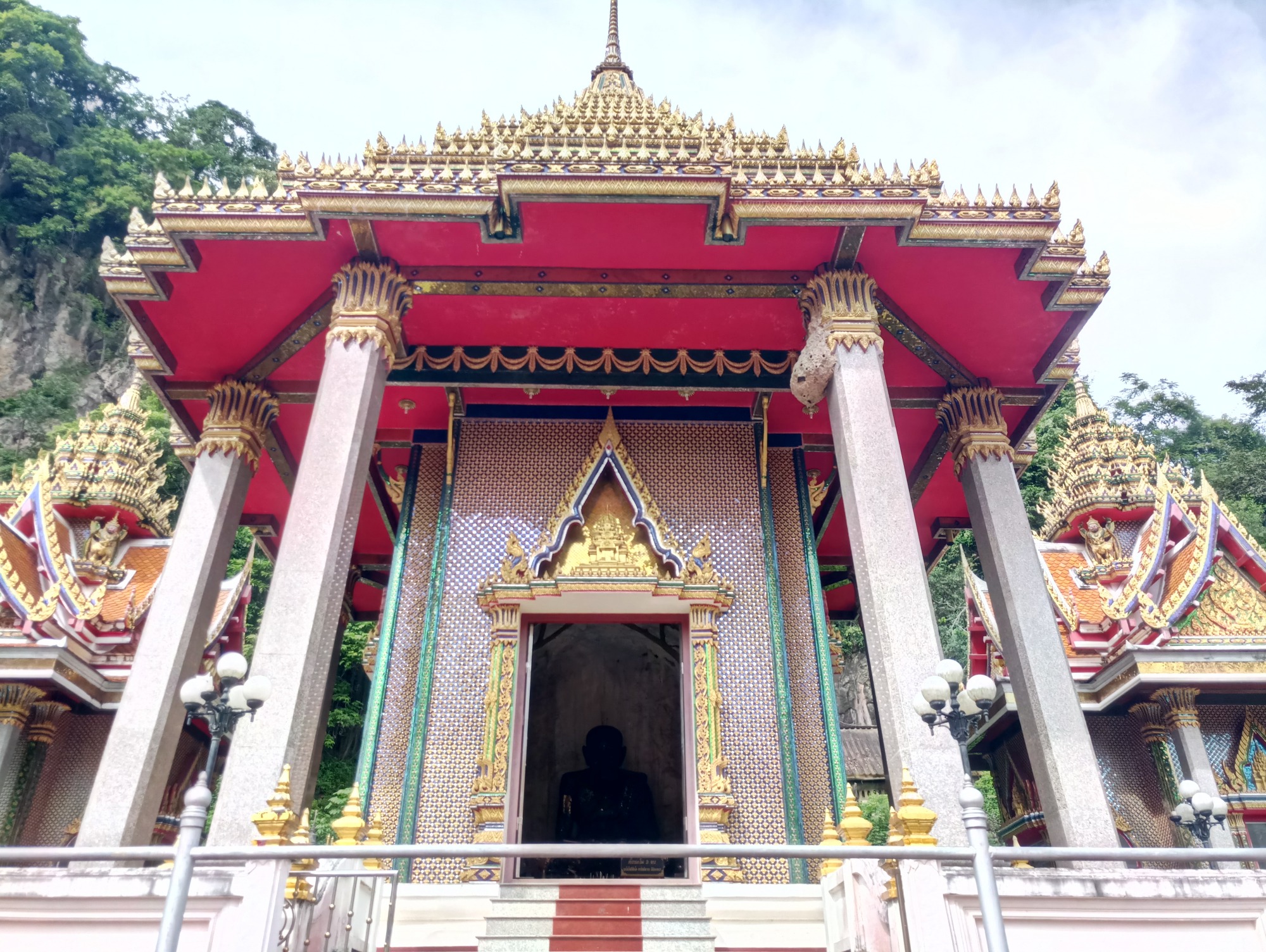
Wat Tham Khuha Sawan
Located 10 km from Phang Nga, Wat Tham Khuha Sawan combines a 5-meter golden reclining Buddha, limestone caves, and colonies of macaque monkeys.
Phatthalung
A discreet province in southern Thailand, Phatthalung reveals Thale Noi and its pink lotus flowers, the Nang Talung shadow theatre and unspoiled nature far from the crowds.
Interested in this visit?
We can include it in your personalised itinerary.