Champassak
Champassak
Champassak, a small colonial town in southern Laos, overlooks the Mekong River facing the island of Don Daeng. A departure point for Wat Phou (UNESCO), it captivates with its Khmer and Lao heritage.
Champassak is a small historic city in southern Laos, perched on the west bank of the Mekong, in the province that bears its name. Once the capital of a Khmer and later Lao kingdom, it retains an intact French colonial atmosphere and serves as a gateway to the temple complex of Wat Phou, a UNESCO World Heritage site. The pace is slow here, the streets quiet, and the landscape dominated by Phou Kao mountain.
Practical Information at a Glance
Access: from Paksé, approximately 40 km to the south; boats and roads connect the two cities.
Recommended duration: a full day for the city and Wat Phou; two days to explore the surroundings.
Dress code: covered clothing recommended for temple visits (shoulders and knees covered).
What to See
Downtown Champassak lines old French colonial houses with weathered facades, a few neighborhood Buddhist temples, and a lively morning market. The main street runs along the Mekong and offers clear views of the river and islands across the water. The atmosphere is that of a town frozen in time, far from mass tourism.
History and Context
Champassak was the capital of an independent Lao kingdom from the 18th century until French annexation in the late 19th century. Before that, the region was a center of Khmer power, as evidenced by Wat Phou, built between the 5th and 12th centuries. The city retains traces of both legacies: colonial architecture and Khmer foundations.
Highlights of Your Visit
Wat Phou
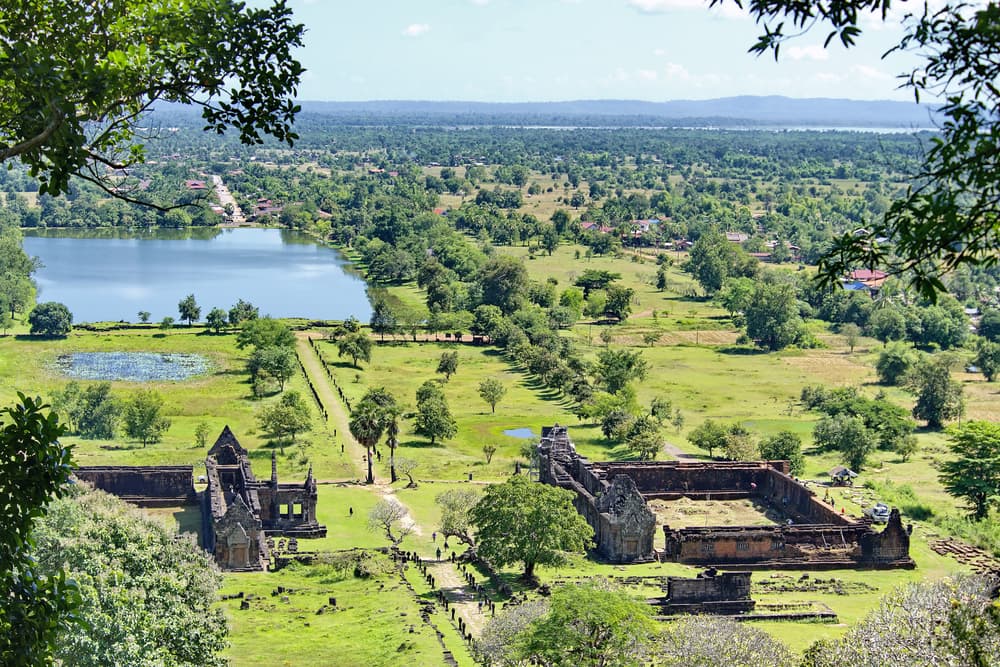
The Wat Phou archaeological site, a few kilometers north of the city, is the region's main attraction. This complex of Hindu and later Buddhist temples terraces the slopes of Phou Kao. The processional avenue, sacred basins, and main sanctuary offer a clear understanding of pre-Angkorian Khmer architecture.
The Mekong Waterfront
A stroll along the river, especially in late afternoon, lets you observe local life: fishermen, ferries crossing to Don Daeng, children playing on the banks. The sunset over the Mekong is particularly striking from Champassak's open shores.
Don Daeng Island
Opposite Champassak, Don Daeng Island is accessible by boat in a few minutes. It offers bicycle circuits through villages, far from heavy tourist infrastructure.
Etiquette and Visit Guidelines
Shoulders and knees covered to enter temples and the Wat Phou site.
Remove your shoes before entering sanctuaries.
Avoid touching statues and offerings.
Speak quietly in active worship areas.
Photography Tips
Morning light is ideal at Wat Phou: it illuminates bas-reliefs head-on and avoids harsh shadows. On the Mekong waterfront, dusk provides warm light on the river. Colonial facades on the main street photograph best mid-morning, before the sun climbs too high.
Location and Access
Champassak is in southern Laos, approximately 40 km south of Paksé, the provincial capital. Paksé has an airport with connections to Vientiane and a few regional destinations. From Paksé, minibuses and shared tuk-tuks serve Champassak. A ferry crosses the Mekong from the east bank. The city is also accessible from the Four Thousand Islands (Si Phan Don) by heading north.
In the Area
Wat Phou — UNESCO-listed Khmer temple complex, a few kilometers north of the city.
Don Daeng — peaceful island across from Champassak, ideal for cycling and village exploration.
Paksé — the province's main city, transit and service hub.
Four Thousand Islands (Si Phan Don) — river archipelago to the south, known for Irrawaddy dolphins and sandy beaches.
Frequently Asked Questions
Frequently asked questions
The dry season, from November to April, is most pleasant: manageable heat, passable roads, and low Mekong levels. Avoid the monsoon (July-September) when some roads may be impassable.
Yes. Covered shoulders and knees are mandatory to access the site's sacred areas. Pack a sarong or lightweight garment to slip into your bag.
Yes, it's a common itinerary in southern Laos. Champassak and Wat Phou take one to two days, then head south to Si Phan Don by road or boat.
One day is enough for the city and Wat Phou. Two days allow you to add Don Daeng and savor the slow pace of the Mekong shore.
Photography is generally permitted on site. Inside active sanctuaries, check signage before photographing statues or offerings.
Also discover
Want to discover this destination?
Our local advisors design your tailor-made trip.