Khao Yai National Park
Khao Yai National Park
Thailand's vast national park and UNESCO World Heritage Site, Khao Yai is home to wild elephants, spectacular waterfalls and 440 bird species, just 200 km from Bangkok.
Khao Yai National Park is located in Nakhon Ratchasima, Saraburi, Prachinburi and Nakhon Nayok provinces. With an area of 2,168 km², it is Thailand's largest protected area and also considered the country's most celebrated park. It will captivate nature enthusiasts with its countless landscapes rich in biodiversity.
History
Established in 1962, Khao Yai National Park possesses unique biodiversity. In 2005, this protected area was designated a UNESCO World Heritage Site.
Discovering Khao Yai National Park in Nakhon Ratchasima
Khao Yai ranks among Thailand's three largest national parks. It rises between 400 to 1,000 meters in altitude and encompasses Prachinburi, Saraburi and Nakhon Nayok provinces. Its area reaches 2,168 km².
Fauna
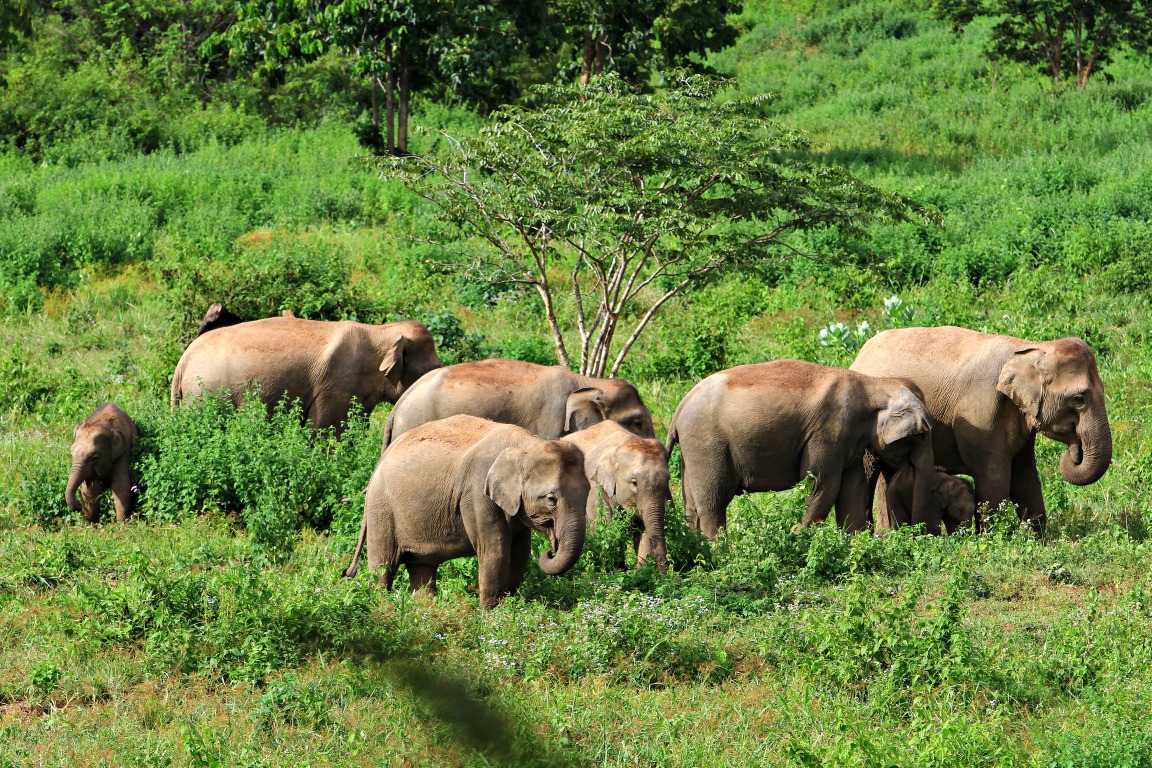
Khao Yai is an essential destination for observing a diverse array of mammals in Thailand. The park is the prime location for spotting wild elephants, and offers fascinating encounters with Northern pig-tailed macaques, barking deer, sambar deer, gibbons, porcupines, wild boar, Eastern giant squirrels and civets. Visitors may also hope to encounter more elusive animals such as Asian black bears, Asiatic black bears, gaurs, otters, dholes and jackals.
It is also a true paradise for bird enthusiasts, with approximately 440 recorded bird species. It is famous for its vast hornbill population, and it is common to see great hornbills and Oriental pied hornbills flying above the visitor center area almost daily. White-rumped shamas, a rare species in Thailand, are found only at Khao Yai. It also serves as a refuge for other rare birds such as brown wood owls, white-browed fantails, Blyth's pipits, great adjutants, Japanese thrushes, coral-billed ground-cuckoos and Eurasian sparrowhawks. Wild jungle fowl, very common in the jungle, are visible almost daily along park roads. One can also observe silver pheasants, scaly-breasted partridges and Siamese fireback pheasants.
More than 85 reptile species have been recorded. The park is particularly known for its three types of pit vipers: Vogel's pit vipers, white-lipped pit vipers and large-eyed pit vipers. Gibson's wolfsnakes, Nganson bronzebacks and Malayan monitors are equally present. Khao Yai is home to all three of Thailand's python species, and Oriental whip snakes distinguish themselves with their colorful forms—white, brown and green—being the most frequently spotted. Chinese water dragons, medium-sized lizards, are often spotted near streams. The park is also home to other lizards such as brown tree dragons, Cardamom dragons, Reeves' butterfly lizards, Cambodian skinks, Yunnan dwarf geckos, barred flying dragons and spotted dragons. Observe Reeves' butterfly lizards basking in grasslands near the visitor center.
Flora
This protected area hosts no fewer than 2,000 plant species. Trees, ferns, flowers, vines, mushrooms. Vegetation varies according to altitude.
Relief and Hydrography
Its highest point, Khao Rom, reaches 1,351 m. The park features numerous waterfalls, with the most popular being Haew Narok and Haew Suwat.
Must-Do Activities
Solo Hiking
This sanctuary overflows with trails ready to reveal their hidden treasures. Along the way, you will explore forests, discover waterfalls and encounter wildlife in the most unexpected places. Before embarking on your adventure, the visitor center offers essential maps and information.
For a gentle and accessible walk, Trail No. 1 awaits you. In less than 30 minutes, you'll reach Kong Kaeo waterfall, ideal for starting your day while observing birds and deer peacefully stationed near the river.
Thrill-seekers will prefer Hike No. 2, which starts at Pha Kluai Mai camping. The trail follows the Lam Takhong River, where you may have the chance to spot crocodiles hidden in the vegetation. You'll likely hear their calls before you see them. During the rainy season, Pha Kluai Mai waterfall and its suspension bridge add a touch of wonder to this one-hour walk, which you can extend with a visit to Haew Suwat waterfall.
Hike No. 4 takes you into a dense and vibrant forest. Colorful bird songs echo above your head, while small wild jungle fowl scratch through dead leaves at your feet. End this adventure by reaching Sai Sorn reservoir, where local wildlife quenches its thirst under the watchful eye of Thai picnickers.
Vehicle Excursion
Khao Yai also invites adventure on its roads! Whether by car, scooter or even bicycle, enjoyment is guaranteed as you traverse these varied landscapes. Around every turn, a new breathtaking view awaits, and who knows, perhaps a monkey or elephant will greet you along the way. Macaques often lie peacefully along the roadside, indifferent to travelers, while elephants remain more elusive.
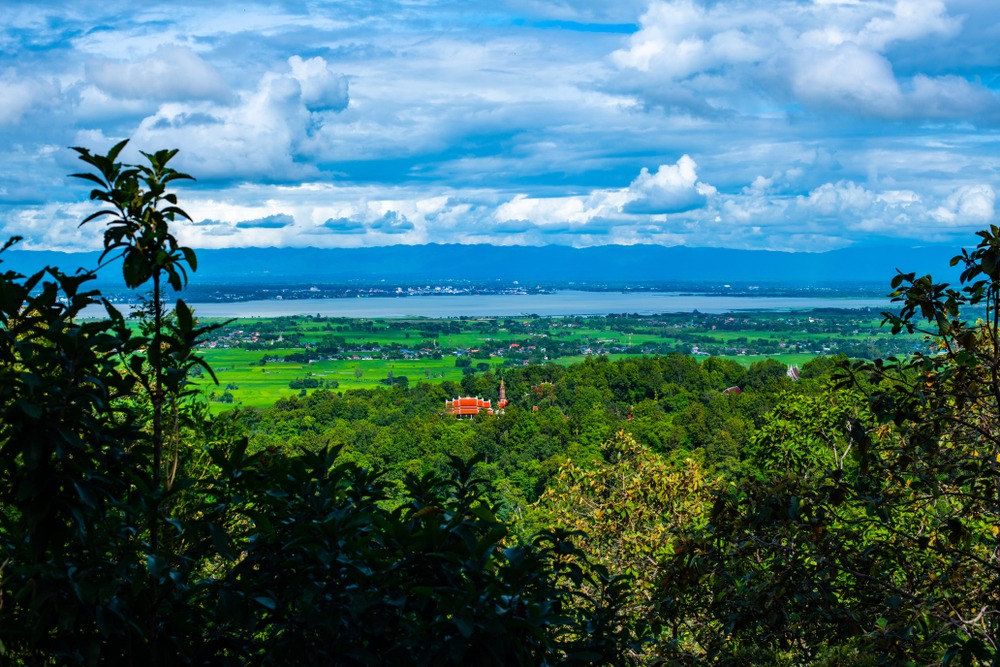
The viewpoint at Khao Khiao Control Center is a must-see. The road leading to it winds through the mountains, reminiscent of winding Alpine roads. At each turn, stunning panoramas unfold before you, and once at the summit, the view is simply magnificent: a sea of forests and hills stretching to the horizon. The center, managed by military personnel, is also a tasty stop, with deliciously grilled chicken skewers. After enjoying the view, venture onto the Pha Diao Dai trail. This wooden pathway, suspended along a cliff face, offers a vertiginous spectacle sure to delight thrill-seekers.
Haew Suwat waterfall is another unmissable location in the park. This waterfall, immortalized in the filming of Danny Boyle's The Beach, can be admired from its top, or, for the more daring, from its base after descending more than 100 steps. Whether you stand above or below, the view is striking and deserves every moment of wonder.
The park also provides cabins and observation towers for curious visitors. Nong Pak Chi tower is easily accessible and leads you in just 20 minutes of walking into the heart of plains and forests. It is the perfect place to observe elephants or other majestic animals.
Best Time to Visit This Park in Thailand
The ideal period to discover Khao Yai extends from autumn through winter, between October and March. During these months, temperatures are pleasantly cool, and the dry climate creates perfect conditions for exploring nature. Fewer leeches and sunny days allow you to fully enjoy hiking and landscapes. However, waterfalls may be somewhat less spectacular due to reduced water flow.
In spring and summer, nature bursts with vitality and color. However, be prepared to face frequent showers and increased leech presence.
How to Get There
Khao Yai National Park is 200 km from Bangkok. By car, the journey takes approximately 3 hours. The park's northern entrance is located in Pak Chong town. Most people take minibuses and buses to get there before heading to Khao Yai. Those traveling by train face 4 to 5 hours of travel.
Hours and Admission
Admission to Khao Yai costs 400 baht for adults. The price is halved for children.
A guided tour of the park averages 500 baht.
Practical Tips
Ensure your skin is not exposed to snakes and leeches. Wear closed-toe shoes and clothing that covers your body well. It would be ideal for your clothes to be water-resistant as well.
Photos
Want to discover this destination?
Our local advisors design your tailor-made trip.