Nakhon Ratchassima
Nakhon Ratchassima
At the threshold of Isan, Nakhon Ratchasima (Korat) blends Khmer ruins, living traditions and preserved nature. The complete guide to planning your stop.
Nestled in the heart of Isan, Nakhon Ratchasima — which Thais simply call Korat — opens the gates to Thailand's northeast. The kingdom's largest province, it marries verdant plateaus, Khmer vestiges and vibrant traditions, far from Bangkok's frenzy. This crossroads city of 2.5 million inhabitants remains overlooked by mainstream tours, making it a precious stop for those seeking authentic Thailand.
At a glance
- Nickname: Korat, the gateway to Isan
- Region: northeast Thailand (Isan)
- Distance from Bangkok: 260 km (3-4 hours by bus, 4 hours by train)
- Must-see: Thao Suranaree statue, Chumpon Gate, Phimai Historical Park, Wat Ban Rai
- Specialties: Pak Thong Chai silk, rice cultivation, Pad Mee Korat
- Best season: November to March (dry and mild season)
- Recommended duration: 2 to 3 days, ideal as gateway to Isan or Khao Yai
Why visit Nakhon Ratchasima?
Korat lacks the postcard beauty of southern islands, and that's precisely its appeal. Here you'll find a Thailand that lives, works and celebrates its heroes without worrying about tourists. The city serves as a natural springboard to three treasures: the Phimai Historical Park with its Khmer ruins, Khao Yai National Park (the country's first national park, UNESCO-listed), and the silk-weaving villages of Pak Thong Chai. For travelers who want to understand Isan before venturing deeper, Nakhon Ratchasima is the ideal base.
History
Initially dominated by Dvaravati culture, Nakhon Ratchasima province came under Khmer cultural influence in the early 14th century. At that time it was called Nokor Reach Seyma or Koreach; today it is known as Khorat.
While Korat is now the industrial and economic center of Isan, it has been a key administrative point of Thai kingdoms since the 16th century. In the 17th century, under the Ayutthaya reign, King Narai chose Nakhon Ratchasima as a defensive bulwark against Laotian invasions.
In the 19th century, the city was seized by Laotian king Anouvong and was liberated by the legendary Thao Suranaree, or Jhun Ying Mo (Lady Mo). According to legend, Lady Mo intoxicated Laotian soldiers before leading a revolt. Since then, her statue stands at the heart of the city and a festival honors her each year in early April.
What to do in Nakhon Ratchasima?
Historic sites and heritage
The Thao Suranaree statue, planted in the city center, is the beating heart of Korat. Locals leave flowers and offerings throughout the day — a good place to observe Thai popular devotion.
Chumpon Gate equally bears witness to Khorat's history. This gate of Khorat is the sole remaining vestige of four gates from the ancient ramparts built to repel Laotian invasions. You can observe the original walls and imagine the fortified city of the 17th century.
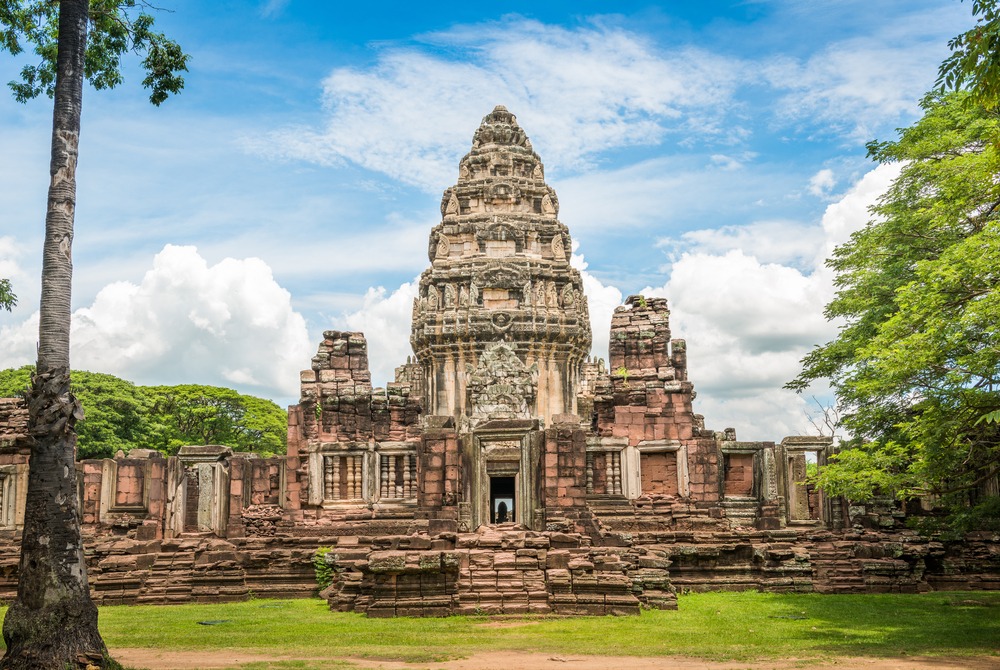
Phimai Historical Park, located a few kilometers from Nakhon Ratchasima, houses ruins of several Khmer temples. Some 60 km northeast of the city, this precursor site to Angkor Wat aligns its pink sandstone prasats in an impeccably maintained park. Budget a half day on site, ideally in the morning to avoid the heat.
Remarkable temples
Korat has several temples worth visiting. Wat Sorapong is the largest in the city. Wat Phra Narai Maharat, the most famous, is built in wood and houses a sandstone representation of the deity Vishnu — rare in Buddhist Thailand. Also worth seeing: Wat Sala Loi shaped like a boat, and Wat Payap.
In the surrounding area, Wat Ban Rai merits a detour: this recent temple nicknamed "the elephant temple" presents spectacular architecture in the shape of a giant elephant covered in mosaics, a work by the revered monk Luang Phor Koon. Further afield, Phanom Rung rivals Phimai for lovers of Khmer ruins.
Crafts and terroir
About 30 km south of Korat, the village of Pak Thong Chai is one of Thailand's largest silk-weaving centers. You can watch artisans at their looms, learn traditional mat-mee patterns and buy directly from producers. Pak Thong Chai silk supplied Jim Thompson's workshops for decades.
Nature at the city's gates
The Khao Yai National Park, 1.5 hours away by road, is the flagship excursion from Korat. The country's first national park, it is home to wild elephants, gibbons, sun bears and over 300 bird species. Several waterfalls, including Haew Narok and Haew Suwat (featured in the film *The Beach*), can be explored on hiking trails.
Where to stay in Nakhon Ratchasima?
Accommodation in Korat is adequate without being exceptional, the city being mainly a stopover.
- Budget (€15-30): family guesthouses and hostels in the city center, around the Night Bazaar. Air-conditioned simple rooms, warm welcome, good base for exploring.
- Mid-range (€60-120): modern boutique hotels like Kantary Hotel or Sima Thani, pool, breakfast included. Comfort for a restful stopover.
- Upscale (€150+): at this level, better to stay near Khao Yai in a nature lodge with mountain views — ideal if combining city and national park.
Our local team selects accommodations based on your itinerary and preferences.
Climate and best season
Tropical savanna climate dominates Nakhon Ratchasima. Year-round, average temperature is 28.2°C and average rainfall is 1,717.9 mm. Three seasons rhythm the province:
- Dry and cool season (November to February): 18-30°C, constant sunshine, this is the ideal period.
- Hot season (March to May): 25-38°C, heavy, plan to escape to Khao Yai.
- Rainy season (June to October): tropical showers in late afternoon, lush landscapes and very light crowds. Temperatures more bearable.
The best season to visit Nakhon Ratchasima runs from November to March. If you're here in early April, don't miss the Thao Suranaree Festival: 10 days of processions, parades and performances honoring the heroine.
How to get to Nakhon Ratchasima?
From Bangkok, several options:
- By plane: flights from Suvarnabhumi and Don Mueang to Korat airport (1 hour flight).
- By train: from Hua Lamphong station, about ten daily departures to Nakhon Ratchasima (4 to 5 hours). Scenic and comfortable in air-conditioned second class.
- By bus: direct buses from Mo Chit terminal (3-4 hours). Most frequent and cheapest option.
- By minivan: 4 hours from Mo Chit. Fast but less comfortable over the distance.
How to get around Nakhon Ratchasima?
The city has two bus stations: the old one serves the province, the new one connects the north and northeast of the country. The historic center is easily walkable — allow 30 minutes from Thao Suranaree statue to Chumpon Gate.
For longer journeys: tuk-tuks and samlors (cycle-rickshaws) for city trips, songthaews (shared pick-ups) to reach outlying neighborhoods, scooter rental (200-300 baht/day) to venture toward Phimai or Pak Thong Chai. For Khao Yai, a private driver or organized tour is better.
Insider tips
- Try Pad Mee Korat: local stir-fried noodles, drier and spicier than classic pad thai. Sample it at the Save One night market.
- Visit Phimai at sunrise: opens at 7:30am, you'll have the site nearly to yourself, and the light on the pink sandstone is superb.
- The Thao Suranaree festival (March 23 - April 3) transforms the city: book your accommodation two months ahead.
- Combine Korat + Khao Yai: 2 days in the city, 2 days in the park, you have the essence of the region.
- Buy silk directly in Pak Thong Chai: prices cut in half compared to Bangkok shops.
For whom?
- Cultural travelers: lovers of Khmer ruins, history and temples off the beaten path.
- Nature adventurers: Khao Yai National Park within reach, wildlife and hiking.
- Immersion travelers: those wanting authentic Isan before venturing to Buri Ram, Ubon Ratchathani or the Mekong.
- Families: safe city, short distances, blend of culture and nature that appeals to all ages.
On the other hand, if you're looking for beaches, nightlife or postcard-perfect Thailand, Korat isn't for you.
FAQ
Frequently asked questions
Two to three days are enough to see the city and make the Phimai excursion. Add 2 extra days if you include Khao Yai National Park.
Phimai is the main Khmer site in the region, 60 km from Korat. You can stay in Korat (more services) and make Phimai a half-day excursion, or stay in Phimai to enjoy the site at sunrise.
English remains limited outside tourist hotels. A few Thai words, a translation app and a smile go a long way. That's part of Isan's charm.
Yes. Showers concentrate in late afternoon, landscapes are lush and crowds very light. Simply pack a raincoat and quick-drying shoes.
No. Korat airport is domestic only. You'll arrive via Bangkok (Suvarnabhumi or Don Mueang) before reaching the city by plane, train or bus.
Also discover
Nakhon Ratchasima fits naturally into a broader Isan circuit. Extend toward other treasures of the northeast, or combine with a return to Bangkok via the Isan region.
For complete immersion, our freedom travel through the heart of Isan (12 days, from €990) crosses royal vestiges, high plateaus and forgotten traditions passing through Korat.
Travel to Nakhon Ratchasima with our local agency
Our local expert from Sawa Discovery helps you integrate Nakhon Ratchasima into your bespoke Thailand journey, in combination with Isan, Khao Yai or a return to Bangkok. Discover the agency.
Photos
Want to discover this destination?
Our local advisors design your tailor-made trip.