Wat Phra That Khao Noi
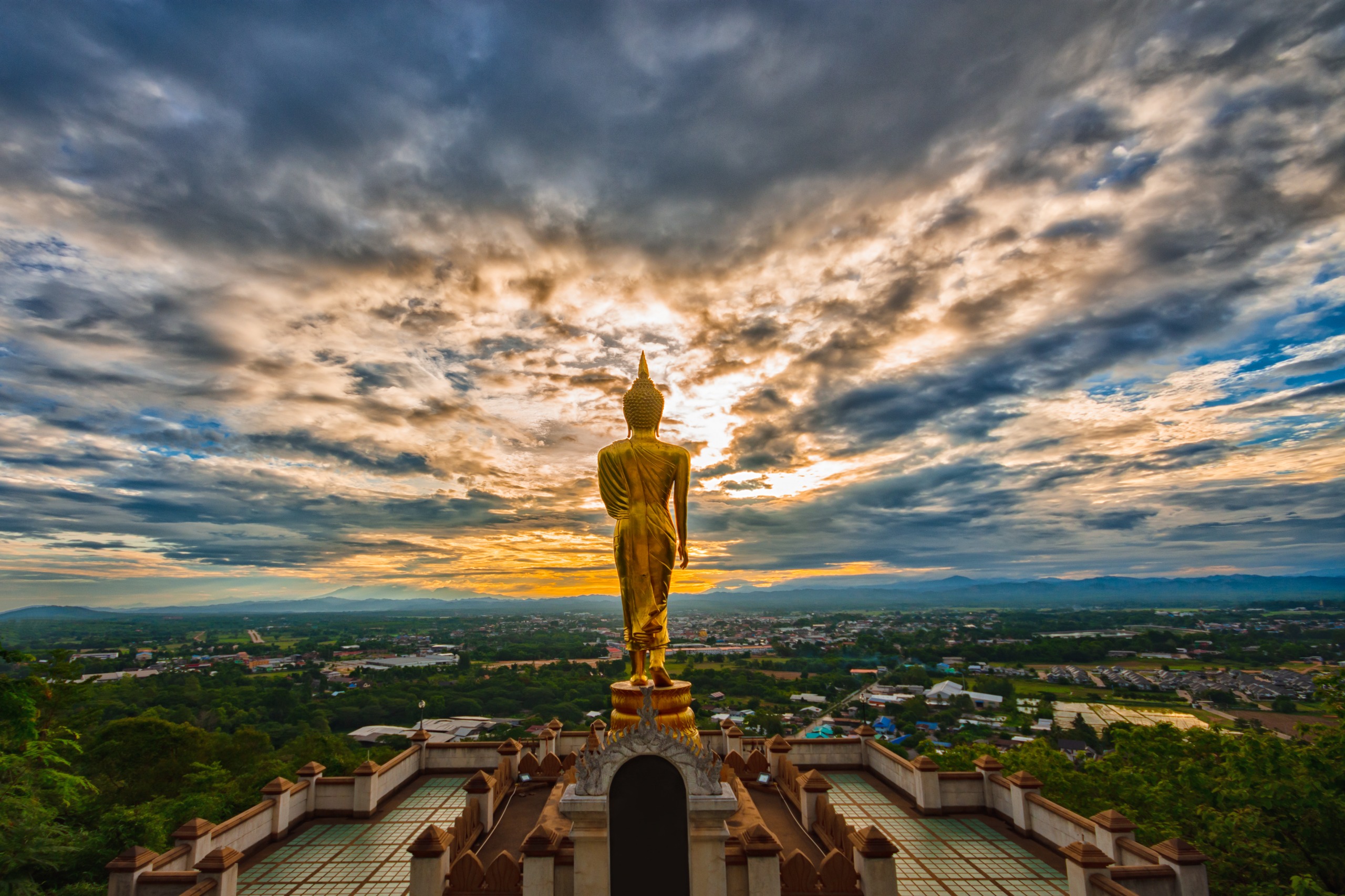
Perched on a hill commanding views of Nan, Wat Phra That Khao Noi combines a white Lanna-style chedi, a striking seated Buddha statue, and one of the finest panoramas across the plains and mountains of northern Thailand.
Perched on a hillside overlooking the town of Nan, in northern Thailand, Wat Phra That Khao Noi is a Buddhist temple whose white chedi stands luminous against the sky. The site commands views across the Nan plains and surrounding mountains. Less frequented than downtown temples, it draws primarily local devotees and visitors seeking tranquility and unobstructed vistas.
Essential Information at a Glance
- Admission: Free
- Dress code: Shoulders and knees must be covered (active place of worship)
- Footwear: Remove shoes before entering sacred buildings
- Recommended duration: 30 to 45 minutes
- Access: By car, motorbike, or tuk-tuk from downtown Nan; paved road to the summit
What to See
The temple is dominated by a striking white chedi in Lanna style, visible from much of the city. A large seated Buddha statue faces the valley below. Secondary structures house Buddha images and fresh offerings. The lush vegetation surrounding the site heightens its serene atmosphere.
History and Context
Nan is a historically isolated province, long influenced by Lanna and Laotian kingdoms. Its temples blend northern Thai styles with Burmese influences. Wat Phra That Khao Noi is one of the province's pilgrimage sites; local residents visit regularly for ceremonies and offerings. The hill itself is considered sacred.
Highlights of Your Visit
The Chedi and Buddha Statue
The elegant white chedi is the temple's focal point. The large seated Buddha facing the plains is an active place of devotion, festooned with flower garlands and incense sticks left by worshippers.
The Panorama of Nan
From the temple esplanade, your gaze sweeps across the roofs of old Nan, the Nan River, and the forested ridges that frame the horizon. This is one of the most accessible and rewarding viewpoints in the region.
Temple Etiquette and Visiting Rules
- Cover shoulders and knees before entering the temple grounds.
- Remove your shoes before entering any enclosed building.
- Speak softly; monks and devotees may be praying on site.
- Do not turn your back to a Buddha image while photographing.
- Ask permission from monks before photographing them.
Photography Tips
Early morning light is ideal: the white chedi gleams brilliantly before valley mist disperses. Late afternoon brings golden light across the Buddha statue and plains. Avoid midday, when contrast is harsh. The panorama frames best from the northwest corner of the esplanade.
Location and Access
The temple sits on a hillside at the immediate periphery of Nan, capital of the province of the same name. The historic city center is just minutes away by vehicle. The access road is paved and suitable for cars or motorbikes. No regular public transport serves the hilltop directly; renting a motorbike or tuk-tuk from downtown Nan is the most common approach.
Nearby Attractions
- Wat Phumin — A 16th-century temple celebrated for its unique Lanna wall murals, located in the heart of old Nan.
- Nan National Museum — Collections of provincial art and history housed in the former residence of Nan's ruling lord.
- Wat Chang Kham Worawihan — A temple sheltering a solid gold Buddha, among the most venerated in the province.
Frequently asked questions
Admission is free for all visitors.
Shoulders and knees must be covered. Bring a light sarong or loose trousers. Shoes are removed before entering buildings.
Rent a motorbike or take a tuk-tuk from the city center. The paved road leads directly to the hilltop.
Yes. Wat Phumin and Wat Chang Kham Worawihan are in the historic center, just minutes away by vehicle. Half a day is sufficient for all three sites.
The dry season, November through February, offers the best conditions: clear skies, pleasant temperatures, and sharp panoramic views from the hilltop.
Photography of the chedi, statue, and panorama is permitted. Ask monks for permission before photographing them, and avoid standing with your back to Buddha images.
Interested in this visit?
We can include it in your personalised itinerary.