Khao Sam Roi Yot National Park
Khao Sam Roi Yot National Park
4XH3+CFX, Khao Daeng, Kui Buri District, Prachuap Khiri Khan, Thaïlande
Limestone peaks, royal Phraya Nakhon cave, mangroves and 355 bird species: complete guide to Khao Sam Roi Yot National Park, 60 km from Hua Hin.
Khao Sam Roi Yot National Park, whose name means "the mountain with three hundred peaks," stretches along the Gulf of Thailand in Prachuap Khiri Khan province. Its limestone pinnacles, mangroves, beaches and royal cave make it one of the most singular natural sites in central Thailand, 60 km south of Hua Hin and 185 km from Bangkok.
Why Visit Khao Sam Roi Yot
The park combines spectacular karst topography, an internationally important wetland zone and dense biodiversity within a compact perimeter. Visitors come for three main reasons:
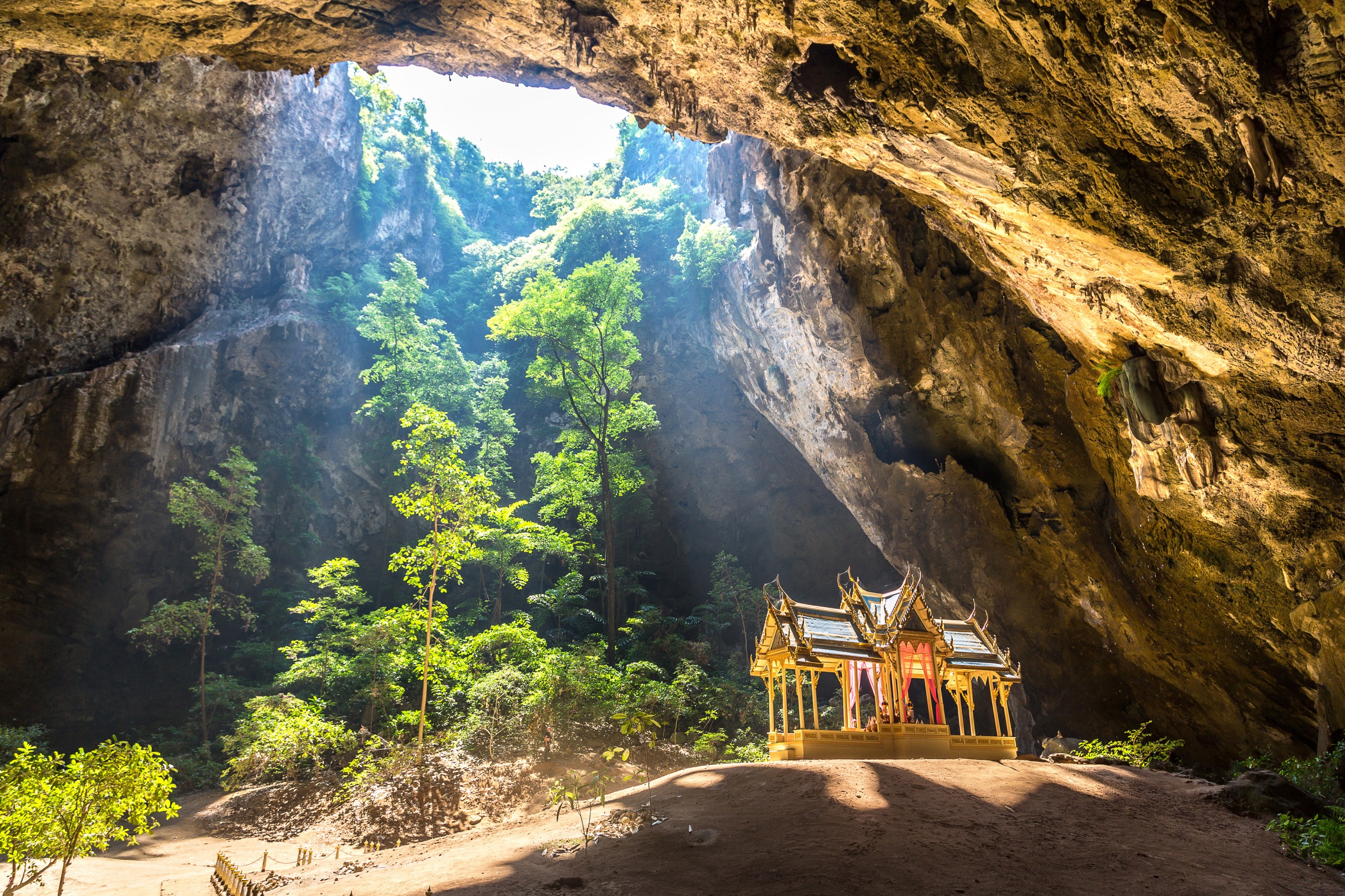
the Phraya Nakhon cave and its royal pavilion illuminated by a natural light shaft;
birdwatching, with approximately 355 species recorded including a substantial proportion of migratory birds;
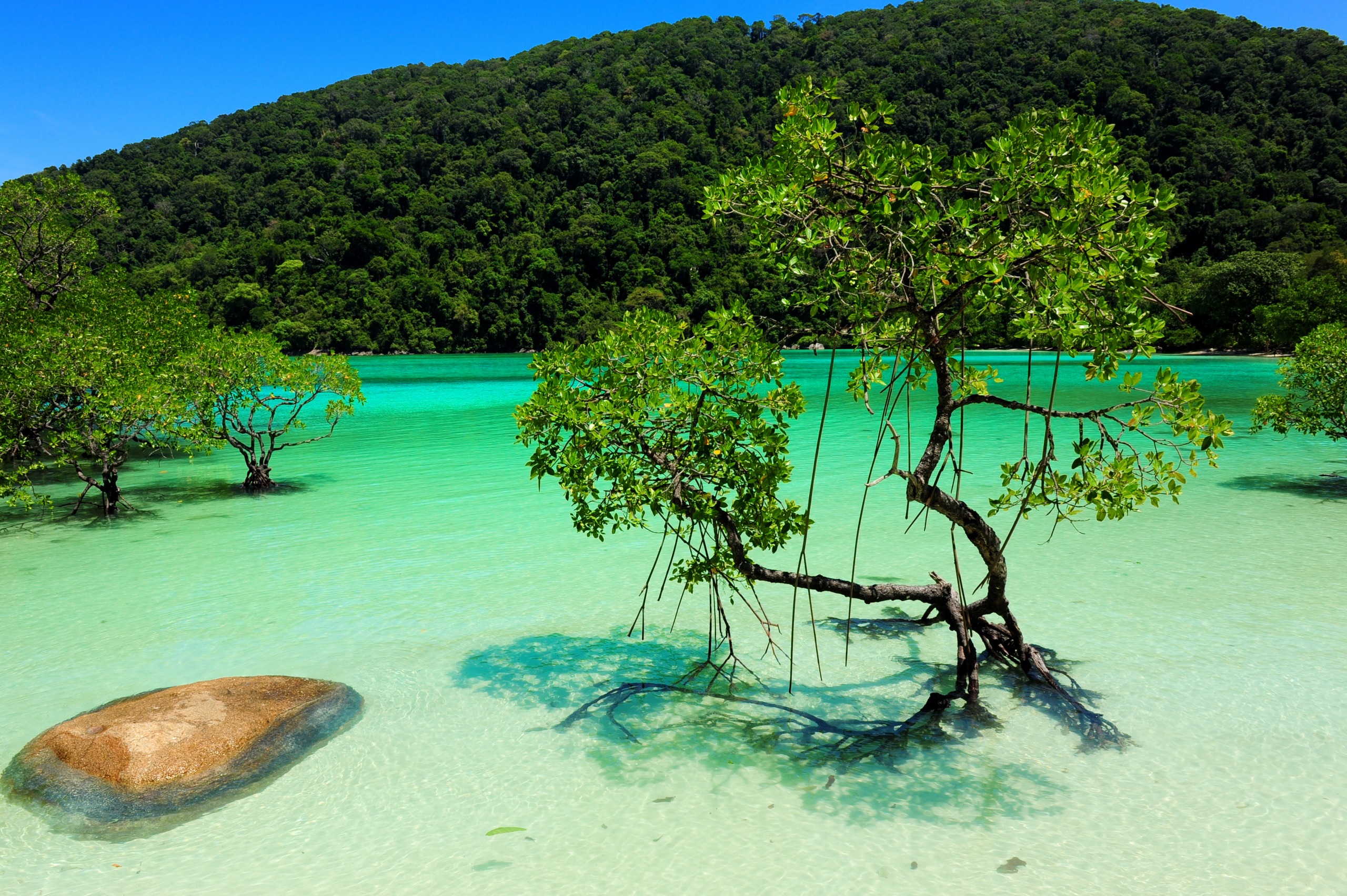
mangrove landscapes, salt marshes and sandy beaches bordered by pine forests.
The site is also accessible in a day trip from Hua Hin, making it a feasible excursion without heavy logistics.
History and Legends
Opened to the public in 1966, Khao Sam Roi Yot is Thailand's first coastal zone to receive protected area status. Its total area reaches 98 km², with four-fifths terrestrial and one-fifth marine. In 2008, the park was designated a Ramsar site under the international wetlands convention.
Two local legends explain the formation of the peaks. The first features Mong Li, a giant and tree deity, who promised his daughter to the Buddhist monk Chao Lai without his wife's consent, though she had already promised the girl to the Emperor of China. When both suitors arrived simultaneously, the child was split in two: one half reportedly became an isolated peak, the other the neighboring mountain range.
A second version recounts a Chinese junk that ran aground on what was then an island. Over centuries, the island fragmented, giving rise to the constellation of limestone islets visible today.
What to See and Do
Phraya Nakhon Cave
This is the park's signature attraction. Perched on a cliff above Laem Sala beach, it can be reached either by boat or via a ridge trail of 430 meters with 130 meters of elevation gain on Ti Tian mountain. Inside stands the Khuha Kharuehat royal pavilion, built in 1890 for the visit of King Rama V. The site was also visited by Rama VI and Rama IX. The ceiling features a large opening that lets sunlight rays through, illuminating the pavilion mid-morning depending on the angle of light.
Laem Sala and Hat Sam Phraya Beaches
Laem Sala beach, located 16 km from the reserve headquarters, sits at the foot of a forested hill. Several seafood restaurants, a camping point and the regular presence of dusky langurs, dark-pelaged primates more discrete than macaques, can be found here. Further northeast, Hat Sam Phraya offers fine sand bordered by pine forests, ideal for a peaceful stop.
Khao Deng Viewpoint
The Khao Deng viewpoint peaks at 157 meters altitude. The climb is short but steep. It overlooks the limestone range and surrounding salt marshes, and serves as the starting point for mangrove trails.
Mangroves and Khao Deng Fishing Village
A boat trip through the mangrove allows observation of mangrove trees, oyster and shrimp farms, and wetland birds. Departures are about 1.5 km from the park office. The Khao Deng fishing village, along the canals, offers visits with residents and local meals.
Wildlife and Birdwatching
The park is part of the Tenasserim Hills mountain belt. Offshore, it's possible to spot Irrawaddy dolphins. In the mangrove forests live the flat-headed cat, the Asian palm civet and the serow. Three gecko species are endemic to the site:
Dixonius kaweesaki, recognizable by its leaf-shaped tail;
Cnemaspis lineogularis, a small lizard with striped throat;
Cyrtodactylus samroiyot, which takes its name from the park.
For birdlife, striped herons, little herons, little egrets, pintail snipes, water rails and several kingfisher species are observed. Nearly half of the species recorded in the park are migratory.
Practical Information
Duration of visit: a full day to combine cave, beach and mangrove; two days to add morning birdwatching.
Entrance fee: standard national park entrance fee for Thai parks, payable at the entrance.
Equipment: closed-toe shoes for the climb to Phraya Nakhon, water, flashlight for the cave, binoculars for birds.
Accommodation: bungalows and camping managed by the park at Laem Sala, more numerous hotels in Pranburi and Hua Hin.
When to Go
The most favorable period runs from December to April: clear skies, more moderate temperatures, ideal conditions for hiking and photography. Bird migration peaks from December to March, a prime window for observation. From May onward, temperatures can exceed 40°C, and the monsoon peaks between September and November, with rainfall that can close certain trails and the cave.
How to Get There
The park is located 60 km south of Hua Hin and 185 km southwest of Bangkok, about three hours by road from the capital. No direct public transport serves the park entrance. Realistic options are:
Taxi or private driver for the day from Hua Hin (the most practical way to visit multiple park sites);
Motorbike rental from Hua Hin or Pranburi for independent travelers;
Train or bus to Pranburi, then local songthaew or taxi to the park entrance.
Once there, a vehicle remains necessary to connect the different access points (Laem Sala to the north, Hat Sam Phraya and Khao Deng further south).
Nearby Attractions
Tham Khao Luang Temple: sacred cave housing statues and Buddhas, in neighboring Phetchaburi province.
Klong Kone Mangrove: another remarkable wetland accessible by boat, further north.
Mae Klong Railway Market: unique railway market on the return route to Bangkok.
Frequently Asked Questions
Frequently asked questions
A full day allows you to combine Phraya Nakhon cave, a beach and a mangrove excursion. To fully enjoy birdwatching, it's better to plan two days with an overnight stay.
Access is via a 430-meter trail with 130 meters of elevation gain, short but steep and rocky. Plan for a good half-hour climbing time. A boat option from Bang Pu beach also exists.
It's possible but lengthy: approximately three hours drive each way. A base in Hua Hin or Pranburi is more comfortable and allows early departure to enjoy morning light on the royal pavilion.
The December to March window corresponds to peak migration. Nearly half of the 355 bird species recorded in the park are migratory, arriving from North Asia and Siberia.
Yes, bungalows managed by the park and camping facilities exist near Laem Sala. Accommodations remain limited, so it's better to book in advance or stay in Pranburi or Hua Hin for more options.
Plan Your Trip
Khao Sam Roi Yot fits naturally into an itinerary combining the Gulf coast and central Thailand. To build a tailor-made trip including the park, Hua Hin and nearby sites, consult our Thailand journeys.
Photos
Also discover
Interested in this visit?
We can include it in your personalised itinerary.