Phatthalung Governor's Residence
Phatthalung Governor's Residence
Two 19th-century wooden palaces in Phatthalung: the Wang Kao and Wang Mai, former homes of the Chantharotchanawong governors, restored and open to visitors.
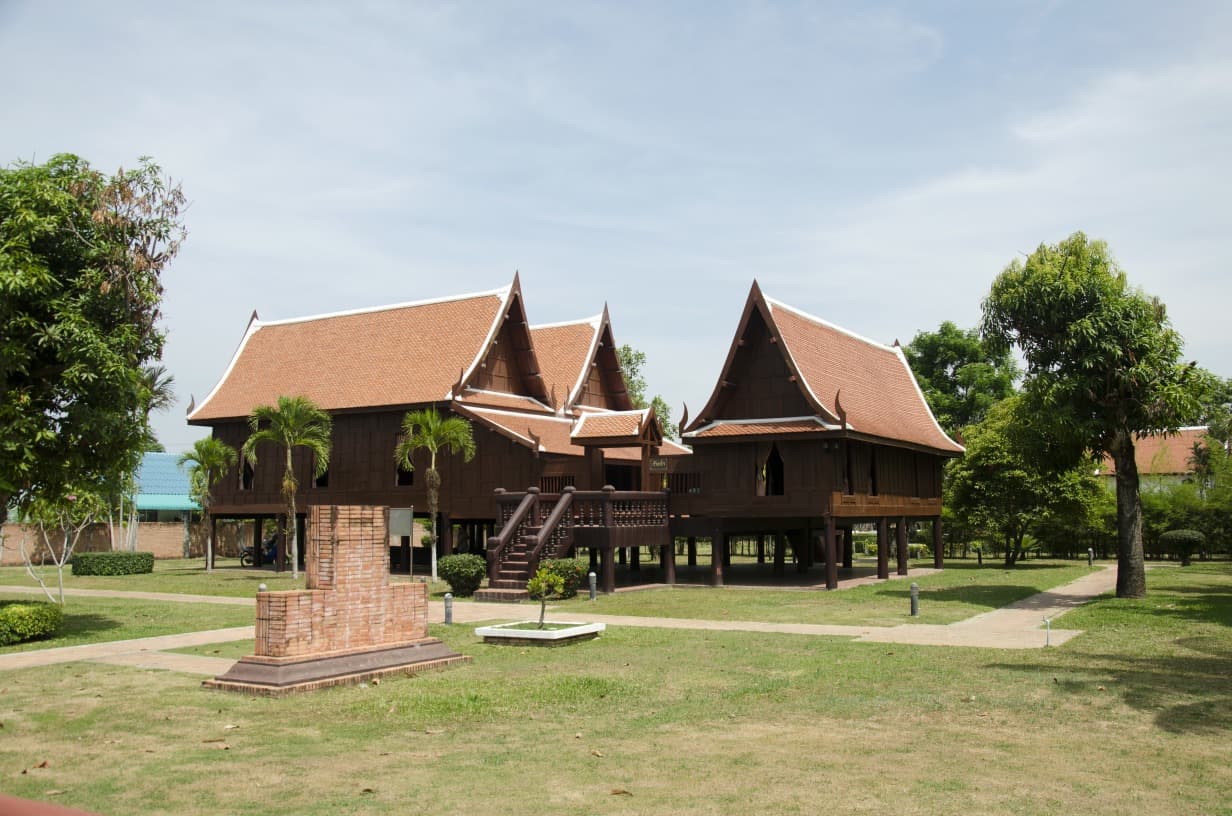
The Phatthalung Governor's Residence comprises two wooden palaces built in the late 19th century on Aphai Borirak Road, in Tambon Lam Pam district, near Wat Wang. The complex, consisting of the Wang Kao (old palace) and Wang Mai (new palace), exemplifies Southern Thai traditional architecture and preserves the legacy of the Chantharotchanawong governors who administered the province.
Why visit the governor's residence
A rare testament to Southern Thai wooden architecture, assembled using wooden wedges rather than nails.
A blend of architectural styles from southern and central Thailand, uncommon in the region.
An authentic historical site, long inhabited by the governor's family, and restored by the Department of Fine Arts.
A short, educational visit, ideal as a complement to a stop at the nearby Wat Wang.
Site history
The old palace, or Wang Kao, was built by governor Phraya Aphai Borirak (Noi Chantharotchanawong), who governed Phatthalung from 1869 to 1888. The exact date of construction of the original building is not documented. The palace served as both a residence and administrative office.
In 1888, Phraya Aphai Borirak (Noi) retired and was appointed royal advisor by King Chulalongkorn (Rama V) under the title Phraya Worawutthi Waiyawat Lungkawisai Issarasak Pithak Ratchakit Naritsorn Ratchapakdee Piriyapahaha. He passed away in 1903. Wang Kao then passed to his son Luang Siworawat (Phin Chantharotchawong), who continued as governor until his death in 1937.
The Wang Mai, or new palace, was erected in 1889 by Phraya Aphai Borirak (Net Chantharotchawong), son of Phraya Phatthalung, just behind Wang Kao. The complex was restored by the Department of Fine Arts and officially opened to the public in 1993.
What to see on-site
Wang Kao (old palace)
Wang Kao consists of three connected traditional Thai houses. The first two contain bedrooms preceded by an entrance hall. The third is a long room called "Mae Than", accessible through a door near the second house's hall—a layout designed for the occupants' security.
The roofs face west and turn their back to the east. The structure rests on traditional craftsmanship: the pieces are assembled using wooden wedges rather than nails, a technique characteristic of ancient Thai craftsmanship.
Wang Mai (new palace)
Wang Mai forms a complex of five traditional Thai stilt houses arranged around a central sand courtyard, whose brick border maintains the sand level above ground. At the courtyard's center, a pink crabapple tree is surrounded by a thick brick circular fence, which can also serve as a bench.
The main dwelling consists of two connected traditional houses with multiple rooms, which housed the governor's family. Beneath the governor's bedroom floor lies a secret tunnel, concealed under a floorboard, designed as an emergency exit leading to the Lampam canal. An entrance hall precedes the bedroom and likely served as an office. The three other houses were occupied by the governor's wife and son.
Other elements to observe
A wooden granary situated facing the main buildings, formerly used as a rice storage.
The round columns supporting the elevated houses, typical of Southern architecture.
The blend of southern and central Thai styles, evident in the volumes and roof designs.
Practical information
Address: Aphai Borirak Road, Moo 4, Tambon Lam Pam, Mueang Phatthalung district.
Visit duration: plan for approximately 1 hour to explore both palaces and the granary.
Admission: moderate entrance fee, managed by the Department of Fine Arts.
Accessibility: the stilt houses involve some wooden steps.
Good to know: appropriate dress is recommended, as at any Thai heritage site.
When to visit
The site is accessible year-round. The dry season, from December to February, remains the most comfortable for exploring the site and its surroundings outdoors. Late morning or mid-afternoon limits exposure to intense midday heat. Avoid periods of heavy rain (October–November), which can make travel more difficult in the Lam Pam district.
Nearby attractions
The governor's residence is part of an interesting heritage and natural complex around Phatthalung:
Wat Wang, a historic neighboring temple linked to the governors' history.
The Thale Noi Waterbird Park, a vast wetland area accessible in less than an hour.
Khao Ok Thalu mountain, the geographical emblem of the province.
The Wat Tham Khuha Sawan, a cave temple within a limestone massif.
How to get there
The site is located approximately 6 kilometers from Phatthalung town hall, toward Lam Pam. From downtown, tuk-tuk remains the simplest option and allows you to observe the town's surroundings along the way. Rental car or scooter also work; Aphai Borirak Road is well marked all the way to Wat Wang, the nearest landmark to the palace.
Frequently asked questions
Frequently asked questions
About an hour is enough to tour Wang Kao, Wang Mai, and the wooden annexes. Plan for more time if you combine it with the nearby Wat Wang.
Yes. The route is short, outdoors, and the wooden architecture and the governor's secret tunnel often interest children.
The structures are assembled using wooden wedges without the use of nails, according to a traditional technique. The site combines elements from southern and central Thailand.
Yes, Wat Wang is just a short walk from the palace. Combining both sites is easily arranged in a half-day visit.
After restoration conducted by the Department of Fine Arts, official opening to the public took place in 1993.
Include this site in your trip
The governor's residence naturally fits into an itinerary in southern Thailand, complementing the karst landscapes and wetlands of the province. To design a custom itinerary including Phatthalung and its surroundings, consult our Thailand travel ideas.
Interested in this visit?
We can include it in your personalised itinerary.