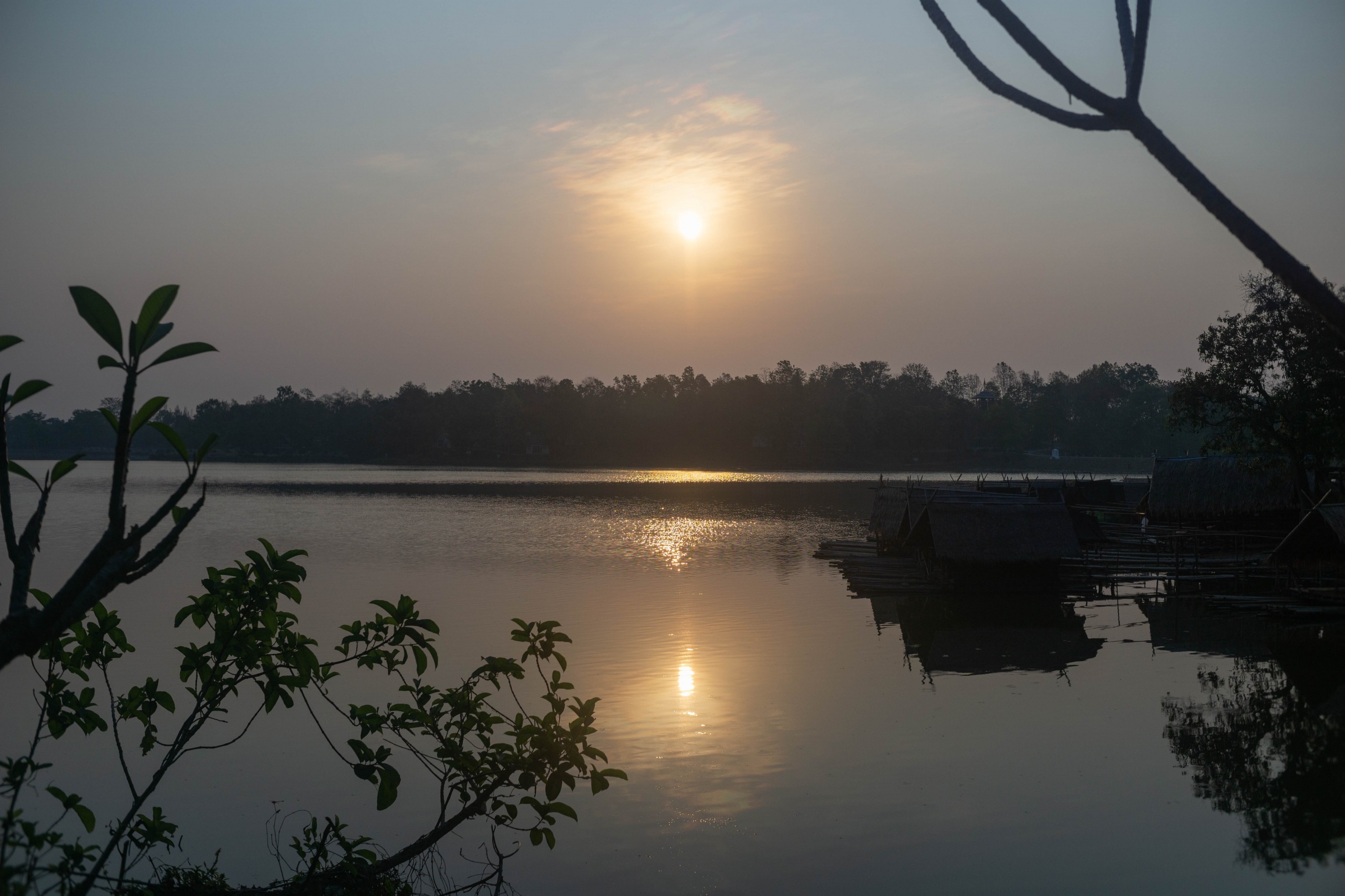
Phayao Lake
Phayao Lake
Phayao Lake, Ban Sang, Mueang Phayao District, Phayao 56000, Thaïlande
Located 9 km from Phayao, Kwan Phayao (19.8 km²) is home to the submerged Wat Ti Lok Aram temple, around fifty fish species and seasonal lotus blooms.
Approximately 9 km from the centre of Phayao, Kwan Phayao stretches across 19.8 km² and stands as northern Thailand's largest freshwater lake, as well as the fourth largest nationally. This vast, shallow body of water, created in 1941, blends fishing heritage, Buddhist legacy and seasonal floral landscapes.
Why visit Phayao Lake
The lake brings together three centres of interest rarely found in one location: submerged heritage featuring Wat Ti Lok Aram temple, remarkable aquatic biodiversity (around fifty freshwater fish species, lotus flowers, water lilies) and an authentic rural setting where approximately 16,500 households still live in direct connection with the water. Far from the saturated tourist circuits of the north, Phayao remains a quiet stopover between Chiang Mai and Chiang Rai, accessible within a few hours' drive.
History: from the Ing River delta to artificial lake
Before 1941, the area was not a lake but an alluvial plain crossed by the Ing River, marked by two distinct water bodies: Kwan Noi and Kwan Luang. Inhabitants alternated rice cultivation in the dry season with fishing during the monsoon, when mountain springs swelled the ponds. From the 1930s onwards, authorities grew concerned about overexploitation of the Ing River and declining fish stocks.
A fish regulation programme was launched in 1939, followed in 1941 by the opening of a flood gate. The waters submerged rice fields, farms, Lanna-style monasteries and an entire village, giving rise to Kwan Phayao fed by 18 tributary streams. The lake has since become an economic pillar for the province and a site of memory: beneath the surface lie remnants, including Wat Ti Lok Aram, a Buddhist temple connected to the reign of King Tilokarat of Lanna (15th century).
What to see and do here
The submerged temple Wat Ti Lok Aram
A boat excursion allows you to reach the platform reconstructed on the ruins of Wat Ti Lok Aram, in the middle of the lake. The temple houses the statue of Luang Pho Sila, discovered in 1983 during underwater surveys. Temporarily transferred to Sri Umong Kham temple, it was returned to its original location in 2007 at the request of locals. The statue is the object of popular veneration, particularly intense during Buddhist festivals.
Aquatic flora and fauna
The lake is colonised by water hyacinth, but moving away from the shores you'll observe blue and white lotus flowers as well as water lilies. The main flowering period occurs between July and August, following the first monsoon rains. In terms of fauna, the waters are home to around fifty species: carp, barbel, Nile tilapia, marsh eels, catfish. The fishing volume is estimated at 159 kg per hectare, and a fishing observation centre installed on the shore documents the sector.
Outdoor activities
Cycling or walking tour around the lake along the promenades near town
Picnicking by the lake, very popular with Thai families at weekends
Introduction to artisanal fishing techniques with local residents
Visit to the disappeared village of Ban Hong Rai and its Buddhist monastery ruins on the shore
When to visit
The average annual temperature is around 24°C, with a moderate range (rarely above 27°C, rarely below 19°C). Annual rainfall reaches approximately 1,064 mm, concentrated between June and October. The most comfortable period to visit extends from October to March: clear skies, cool mornings, lake navigable by boat.
For lotus blooms, target July-August despite the showers. To attend Buddhist ceremonies around Luang Pho Sila, check the 3rd, 6th and 8th lunar months: the faithful leave floral offerings and illuminate the lake with candles at dusk.
Practical information
Access to the shores is free and unrestricted, with no closing times. Boat crossings to the submerged temple are arranged via local boatmen for a modest contribution per person. Allow 1 to 2 hours for a visit with a water excursion, half a day if you combine it with cycling and a meal. Rates for excursions and bus transport evolve: check before departure.
How to get there
The lake is located in Wiang district, Phayao province, 9 km from the town centre. The most common routes:
From Chiang Mai: approximately 102 km, 3 hours' drive. The Greenbus network serves Phayao daily from Arcade terminal.
From Chiang Rai: approximately 2 hours by bus, frequent service.
From Bangkok: approximately 700 km. Night buses from Mochit, or fly to Chiang Rai or Chiang Mai then bus.
Nearby
Phayao makes a convenient stopover to explore northeastern Thailand. Approximately 70 km to the southeast, Chiang Kham allows you to explore Tai Lue minority culture. Further west, Chae Son National Park combines hot springs and waterfalls. Moving north, Chiang Rai's Wat Rong Khun and Boon Rawd Farm complete a multi-day itinerary.
Frequently asked questions
Frequently asked questions
Access to the shores and promenades is free. Only the boat excursion to the submerged Wat Ti Lok Aram temple requires a modest contribution to the boatman.
October to March for dry and cool weather. July-August if you want to see lotus blooms, accepting monsoon showers.
Yes. A platform has been built on the ruins of Wat Ti Lok Aram, accessible by boat from the jetties. It houses the statue of Luang Pho Sila discovered in 1983.
Around fifty freshwater species have been recorded: carp, barbel, tilapia, eels, catfish. The fishing volume reaches approximately 159 kg per hectare.
Greenbus connects the two cities in approximately 3 hours for 102 km. From Phayao town centre, the lake is 9 km away, accessible by songthaew or taxi.
To incorporate Phayao Lake into a wider itinerary, consult our Thailand tours.
Photos
Also discover
Interested in this visit?
We can include it in your personalised itinerary.