Wat Sothon Wararam Worawihan
Wat Sothon Wararam Worawihan
134 Thanon Thep Khunakon, Tambon Na Muang, Amphoe Mueang Chachoengsao, Chang Wat Chachoengsao 24000, Thaïlande
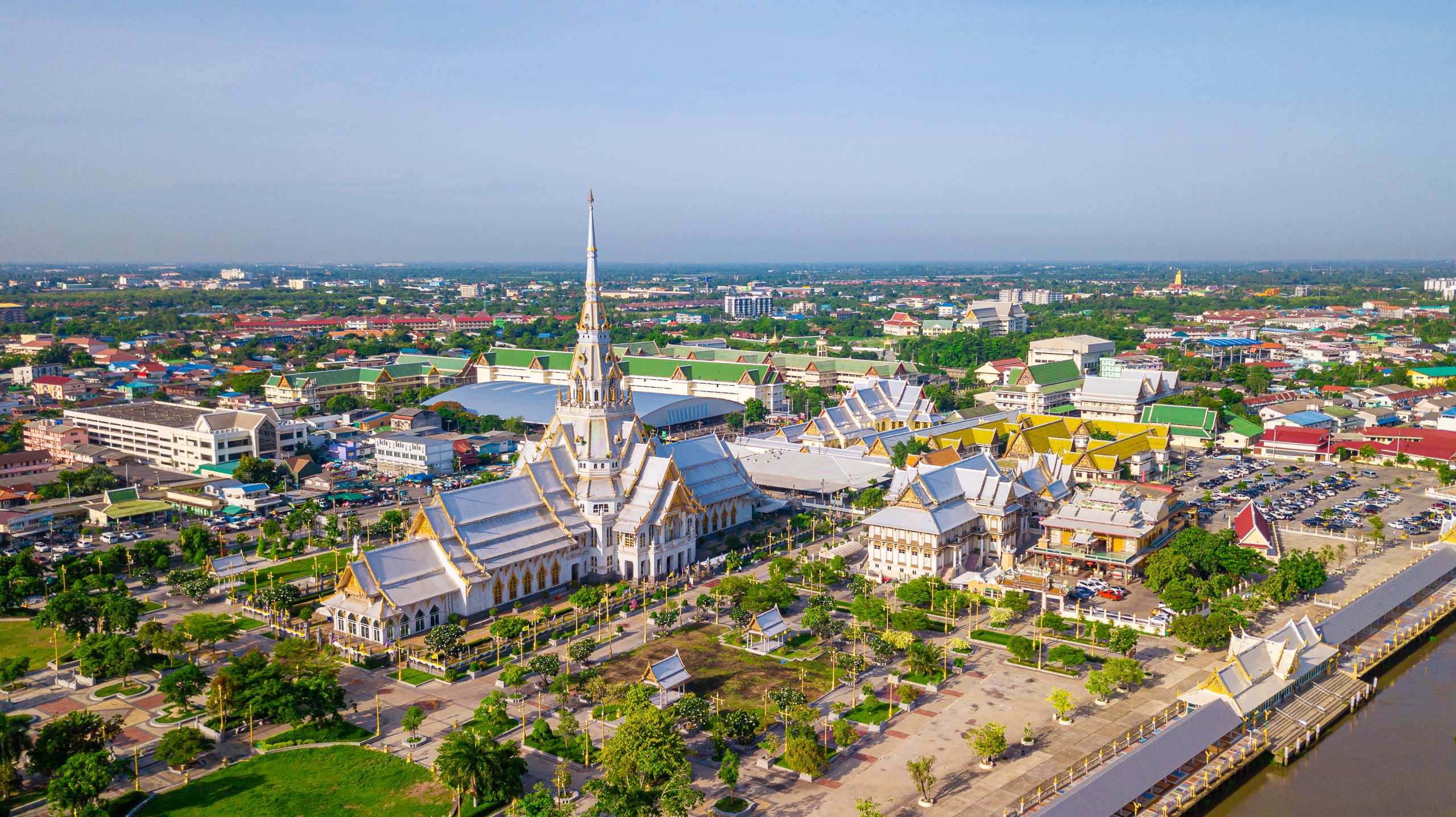
An emblematic temple in Chachoengsao, Wat Sothon Wararam Worawihan houses the venerated statue of Luang Pho Sothon and a striking marble ordination hall.
Wat Sothon Wararam Worawihan is one of the most visited temples in eastern Thailand. Located in Chachoengsao, roughly 80 kilometres east of Bangkok, it enshrines Luang Pho Sothon, a Buddha statue venerated throughout the country for its protective powers. Its pale marble facade and monumental ordination hall make it an instantly recognisable architectural landmark.
Why visit Wat Sothon Wararam Worawihan
The temple combines profound religious significance with remarkable architecture. For Thai devotees, it is above all a pilgrimage destination: the faithful come to make wishes, seek healing, or request protection for their loved ones. For travellers, it offers a chance to witness an active sanctuary far from the well-trodden tourist circuits of Bangkok and Ayutthaya, and to observe Buddhist rituals in their everyday setting.
The complex stands out for its pale grey-white marble facade of Italian origin (sourced during modern renovations) and the unusual proportions of its ordination hall. Plan to spend one to two hours exploring the site, longer if you attend a ceremony.
The temple's history and Luang Pho Sothon
The temple was founded in the late Ayutthaya period, around the 18th century. Local sources link it to the Ayutthaya dynasty, though no precise dating commands consensus. Its origins are inextricably tied to the legend of Luang Pho Sothon, also called Phutthasothon: a meditating Buddha image that monks are said to have recovered from the Bang Pakong river, which flows through the province.
To protect it from theft, the statue was sealed in cement and then covered with gold leaf. It stands 1.48 metres tall and measures 1.65 metres wide. Over the centuries, it gained a reputation for healing powers, protection, and wish-granting that draws pilgrims from across the country today.
What to see
The ordination hall and marble facade
The ordination hall, or ubosot, is the most spectacular element of the complex. Its pale grey-white Italian marble facade, tiered roofs, and gilded ornamentation stand in sharp contrast to the dark wood typical of Thai temples. The structure ranks among the tallest of its kind in the region.
Luang Pho Sothon, in the main hall
The statue sits in the main hall, surrounded by other Buddha images and saffron cloth offered by devotees. Access is free, provided you remove your shoes and observe silence. You'll see visitors placing lotus flowers, lighting incense sticks, and applying delicate gold leaf to the replicas positioned at the entrance.
The chedi and gardens
A chedi (stupa) houses Buddhist artefacts and relics offered by pilgrims. The gardens surrounding the buildings include several secondary pavilions, ponds, and statues. It's a peaceful place to conclude your visit.
Practical information
- Hours: open daily from early morning through late afternoon. Best to arrive early to avoid weekend crowds.
- Admission: free entry; donations welcome to support site maintenance.
- Dress code: shoulders and knees covered. Shoes removed before entering sacred buildings.
- Photography: permitted in the gardens, more discretely indoors, never with your back to the statues.
When to visit
The temple is open year-round. The dry season, from November to February, offers the most pleasant conditions, with more bearable temperatures. The annual pilgrimage of Luang Pho Sothon features a procession that carries the statue out of the temple and around Chachoengsao, accompanied by prayers and chanting. Dates follow the Buddhist lunar calendar: ask locally or check with the provincial tourism office for exact dates during your visit.
Getting there
Chachoengsao is connected to Bangkok by train from Hua Lamphong station (roughly 1.5 to 2 hours) and by bus from the Ekkamai terminal. The temple lies a few kilometres outside the town centre: a tuk-tuk, taxi, or songthaew will get you there in about ten minutes. If driving a rental car, allow roughly 1.5 hours from Bangkok via Highway 314. Parking is available on-site.
Nearby attractions
Chachoengsao merits a full day if you combine multiple sites. Wat Saman Rattanaram, famous for its immense reclining pink Ganesh statue, sits about twenty kilometres away. On your return to the capital, consider a stop at Bang Kachao, Bangkok's green lung, or Chatuchak Market if you're arriving on a weekend.
Frequently asked questions
The temple is situated in Chachoengsao, the capital of the province of the same name, approximately 80 kilometres east of Bangkok.
According to local tradition, the meditating Buddha statue was retrieved from the Bang Pakong river, then sealed in cement and covered with gold leaf to protect it from theft. It stands 1.48 metres tall and 1.65 metres wide.
Entry to the temple is free. A donation is appreciated to help support the site's maintenance and the work of the monastic community.
As in all Thai temples, shoulders and legs must be covered. Shoes are removed before entering sacred halls.
The procession follows the Buddhist lunar calendar and shifts each year. Check with the Chachoengsao tourism office before your visit for exact dates.
Keen to fit this stop into a broader itinerary? Our English-speaking advisors can craft a bespoke Thailand journey combining Bangkok, Chachoengsao province, and the country's major sites.
Photos
Interested in this visit?
We can include it in your personalised itinerary.