Mae Sai
Mae Sai
On the border between Thailand and Myanmar, Mae Sai blends hilltop pagodas, a cosmopolitan market, and a frontier crossing to Tachileik. A complete guide.
On the Golden Triangle route, at the edge of Thailand and Myanmar, the town of Mae Sai is a mandatory stop for its pagodas and open-air bazaar. Here's what you need to know.
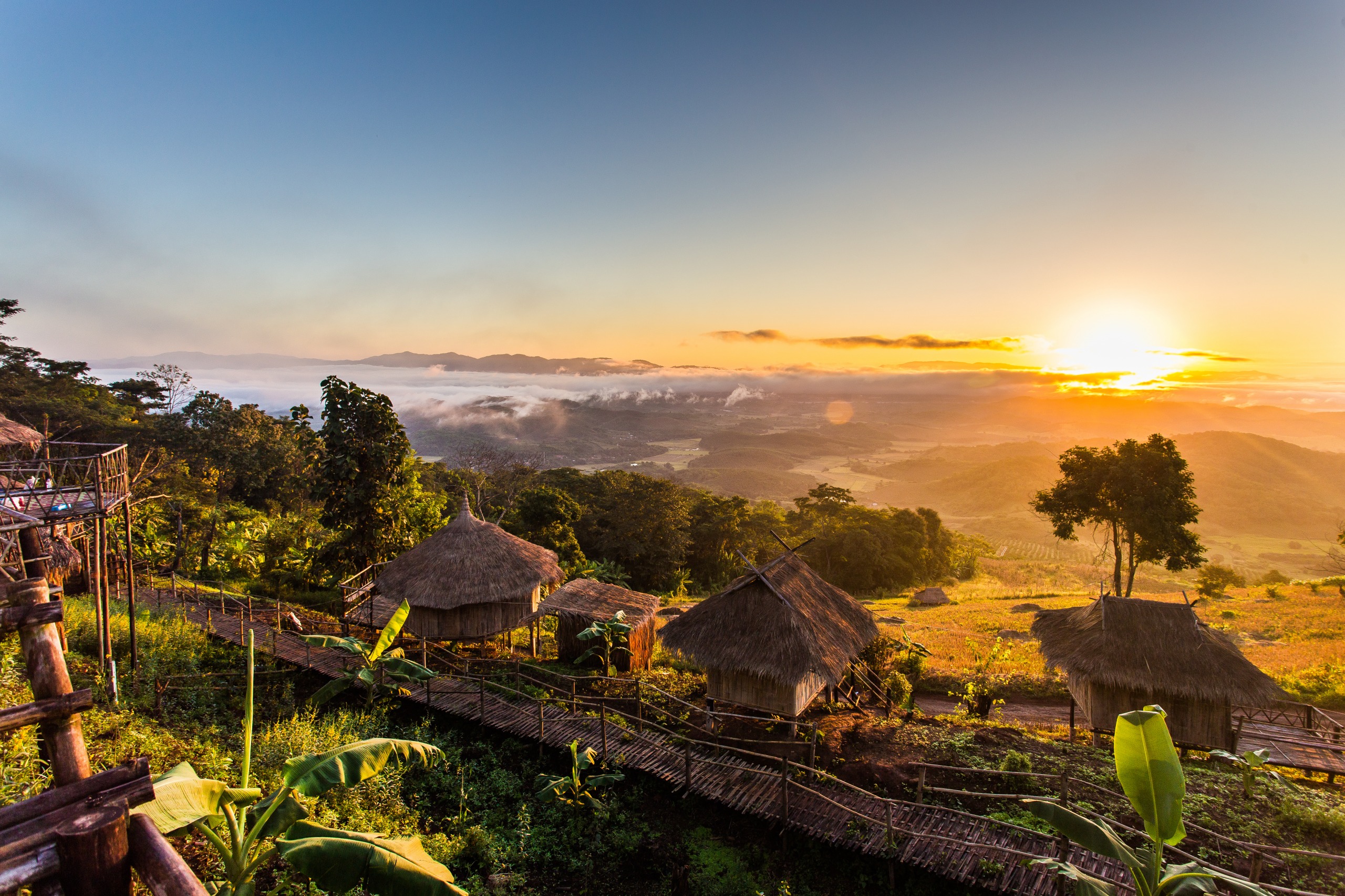
Road-trip enthusiasts will happily wander through the Thai town of Mae Sai, located at the northernmost tip of the country. Starting from Chiang Rai, a 60-kilometre stretch reveals the magic of the mountain world, where rice paddies and tea gardens unfold endlessly. Poor in monuments, Mae Sai is a town often overlooked by the tourism sector. Its distinctive feature lies in its land connection to Myanmar, some would argue. But reducing Mae Sai's appeal to a mere link between Chiang Rai and Tachileik is a hasty judgment. Beyond its hilltop temples, the border market overflows with textiles and handicrafts. Its inhabitants have an open mind and seem to have adopted tranquility as their guiding principle. A must-visit!
History
The amphoe (district) of Mae Sai was officially founded in March 1939, when the tambons of Mae Sai and Phong Pha were freed from the administration of Chiang Saen District to form an independent administrative unit.
Today
Mae Sai is primarily viewed as the gateway to Myanmar. Tourists visit to handle the paperwork necessary for a visa while taking advantage of the attractions the town offers. Shopping enthusiasts will love making a detour to the border market. Walkers will enjoy it too, especially if they haven't yet explored Chiang Mai. As you progress along the main street, you'll reach the gracefully suspended bridge over the Ruak River, which separates Mae Sai from Tachilek, a city under Burmese administration.
The importance of tea plantations and rice fields reveals a strong dependence on rainfall agriculture. The district has one of the lowest incomes in Thailand. By visiting temples and purchasing souvenirs, you support local communities.
Mae Sai and Its Border Market
Lose yourself for a moment in this open-air market where a mixed population gathers: Thais, Burmese, Karens, and tourists from everywhere. Just 60 km from Chiang Rai, this border market symbolizes the cordial relations between Myanmar and the Kingdom of Thailand. This wasn't always the case sixty years ago, particularly during World War II. You can buy and consume virtually anything at every price point: beauty accessories, high-tech gadgets, fruits, vegetables, condiments, beverages, and more. For gifts, choosing between traditional jewelry, shawls, silverware, or luxury crafts is a delightful puzzle that tourists adore. Be careful not to be deceived by vendors peddling supposedly handcrafted items that are actually imported from China or Laos. Even though some articles are of poor quality, the market is worth visiting for its cheerful, colourful, and cosmopolitan atmosphere.
Mae Sai Waterfall
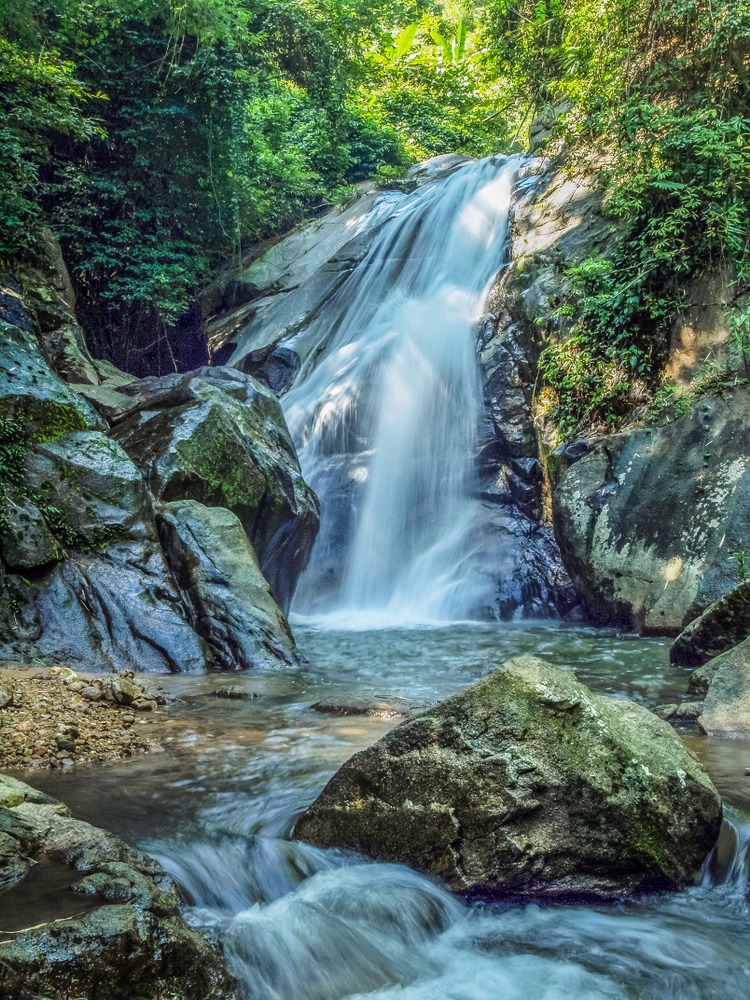
Around Mae Sai, a spectacular waterfall awaits trekking enthusiasts. The trail leading to it is delightfully winding, crossing tea plantations, terraced rice fields, and vertiginous hills. The cascade drops in two stages. After the hike, you can swim, picnic at the base of the falls, or take an adventurous dive upstream. The most practical way to get there is by bicycle (no public transport available).
Wat Phra That Doi Wao or Scorpion Temple
The reason for visiting Wat Phra That Doi Wao is its advantageous location atop a cliff. Visitors will enjoy a stunning view of the city and its farmland landscape. To reach it, you must climb a grand staircase starting from the main street, about 100 metres from the border checkpoint. A tip of the hat to the impressive scorpion statue in a posture of intimidation and defence, which lent its name to the site. The creature's face turns toward nearby Tachileik. Giving the sanctuary all its character, this sculpture is an undeniable symbol of Mae Sai. Inside the sanctuary, admire the artistic features, including a magnificent hexagon-shaped Ganesh with an elephant's head.
Wat Tham Pla
As you head back toward Chiang Rai, don't forget to stop at Wat Tham Pla. It's located 16 km beyond the town centre. The site's name translates to "sanctuary of the fish cave," as a pond populated with fish can be seen on the left side of the ordination hall. However, this contemplative fishery isn't the sanctuary's main attraction. A troop of monkeys frequents the neighbouring mountain and the cave grounds, approaching tourists without hesitation. By tossing them treats, you can hold them in your arms and snap a selfie. The final highlight of this stop is exploring the cave, whose entrance is accessed via a staircase surrounded by serpentine deities (nagas). Bring a torch, as it's pitch black inside the cavern.
Climate
The town of Mae Sai is located in the heart of the Golden Triangle, characterized by a tropical humid climate. During peak summer, scorching temperatures often exceeding 34°C are accompanied by frequent rains. May is the hottest month of the year. The beginning or end of the year is the best time to visit Mae Sai with favourable weather.
How to Get There?
- From Chiang Rai
The most practical way to reach Mae Sai is to rent a motorbike or private car from Chiang Rai. The town is located 60 km away by following Highway 110.
If you opt for public transport, go to the Chiang Rai bus station. The bus will cost you approximately 40 baht or €1.12 for a one-way ticket. Buses depart every half-hour.
- From Chiang Mai
Public buses serve Mae Sai from Chiang Mai at the modest price of 210 baht or €5.88. After 4 hours, you'll reach Mae Sai's bus terminal, located south of the town centre. From the station, board a red songthaew that will take you into town. The ticket price is fixed at 15 baht per person (€0.42).
Also note the tourist minibuses that operate several daily connections between Chiang Mai and Mae Sai. This travel option promises more comfort, but the fare is relatively expensive: 700 baht or €19.60 for a round trip. The downside is that these minibuses make a long stop around noon so passengers can shop. Travellers in a hurry are forewarned!
Getting Around Mae Sai
Moving around Mae Sai couldn't be easier, as the town has only one main avenue. However, backpackers keen on exploring the surroundings should consider renting a scooter. For your information, you are not permitted to enter Myanmar unless you obtain a visa run issued by the immigration services at the border checkpoint.
Photos
Also discover
Want to discover this destination?
Our local advisors design your tailor-made trip.