Bangkok and the Central Plains
The sprawling capital, the Siamese ruins of Ayutthaya on their river island, and the Erawan waterfalls to the west: the historic and fluvial heart of Thailand.
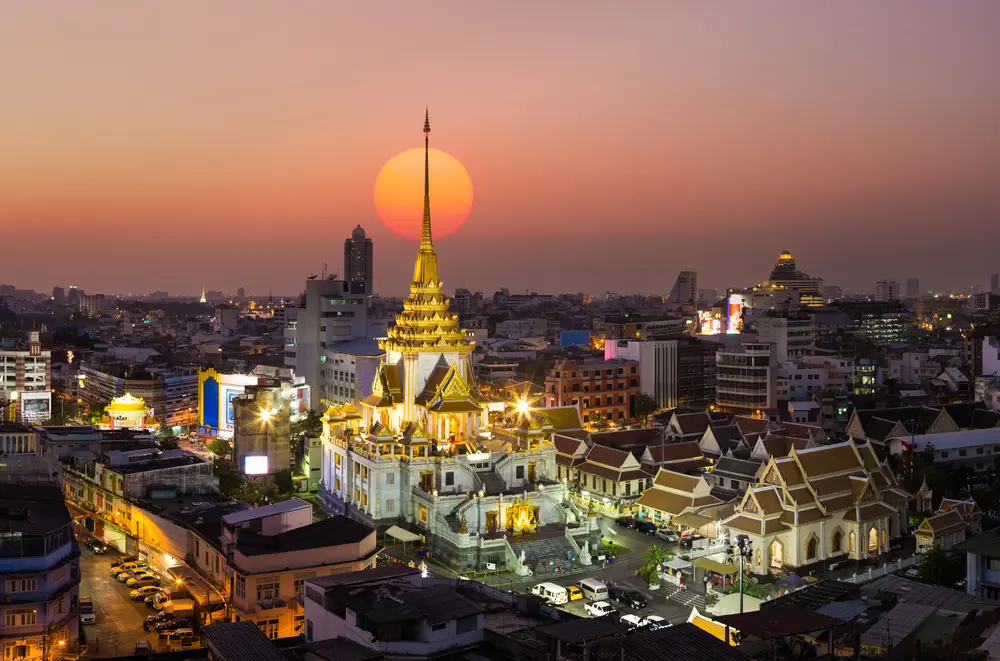
Bangkok and the Central Plains form the beating heart of Thailand. The capital, which Thais call Krung Thep, flourishes along the Chao Phraya, this majestic river that descends from the mountains of the north. Our local team knows well the hesitation that travellers feel: how long should you spend in Bangkok? Our answer is clear: at least three to four nights. The city reveals itself in layers, from the golden temples of the Grand Palace at dawn to rooftop bars in Sukhumvit at dusk, passing through the authentic alleyways of Talat Noi and the flavours of Yaowarat, Thailand's Chinatown.
The Central Plains, the kingdom's true rice bowl, spreads around the Chao Phraya, Pa Sak and Lopburi rivers. This fertile land nourished the successive kingdoms of Sukhothai, Ayutthaya and Bangkok. An hour and a half north of the capital, Ayutthaya sits on an island formed by the confluence of these three rivers. Razed by the Burmese in 1767, it reveals its archaeological treasures today: the brick ruins of Wat Mahathat, the chedis of Wat Phra Si Sanphet and the walls of Wat Chaiwatthanaram, all UNESCO-listed.
To the west, the plains gently rise towards the Burmese border. Kanchanaburi, three hours from Bangkok, tells the poignant story of the Bridge over the River Kwai and the railway line built by Allied prisoners in 1943. Beyond this powerful history, the province unveils its natural wonders: the turquoise cascades of Erawan, the caves of Sai Yok and the forests of the national park where you can sleep on bamboo rafts and bungalows. It's the most accessible green escape from the capital.
What to See and Do
Bangkok's Must-See Attractions
Grand Palace and Wat Pho at Dawn
Arrive at 8:30 a.m. when it opens to avoid crowds. Wat Pho houses the 46-metre Reclining Buddha covered in gold leaf and the country's first school of traditional Thai massage. Allow 2-3 hours for both sites.
Talat Noi Neighbourhood
This Sino-Portuguese quarter on the banks of the Chao Phraya retains its old-world soul: mechanical workshops, century-old Chinese shrines and cafés in former warehouses. A two-hour walk that tells the story of Bangkok before the skyscrapers.
Authentic Markets
Discover the real local markets: Or Tor Kor for its exemplary cleanliness, Klong Toei from 5 a.m. for the wholesale market, Wang Lang on the Thonburi side for its popular atmosphere.
Day Trips from Bangkok
Ayutthaya by Bicycle
The former capital is best explored by bike on the central island. Don't miss Wat Mahathat and its famous Buddha head cradled in a fig tree, as well as the white chedis of Wat Phra Si Sanphet. Plan a full day.
Maeklong Railway Market
A unique spectacle: the market stalls retract eight times a day as the train passes by, grazing the baskets of dried fish. Perfect combined with Amphawa floating market in the late afternoon.
Kanchanaburi and the Erawan Waterfalls
Seven tiers of turquoise water flowing over limestone in the national park, then a memorable train journey across the wooden trestle of Tham Krasae. Minimum two days to fully appreciate it.
Climate and Best Time to Visit
The Central Plains enjoy a tropical monsoon climate, hot year-round. Here's how to choose your best time:
Ideal Season (November to February)
Pleasant daytime temperatures: 28-32°C
Cool nights around 22°C
Low humidity and clear skies
Perfect period for Bangkok, Ayutthaya and Kanchanaburi
Hot Season (March to May)
High temperatures: 36-40°C with strong humidity
Most gruelling period of the year
Songkran mid-April: water festival throughout the city
Avoid if you struggle with heat
Rainy Season (May to October)
Stormy showers in late afternoon
Flooding risks in September-October
Lush vegetation and waterfalls at full flow
Avoid the first half of October
Budget and Costs
Accommodation per Night
Youth hostel: 300-600 baht (8-16€)
3-star hotel: 1,200-2,500 baht (32-65€)
4-5 star hotel: 3,000-8,000 baht (80-210€)
River Kwai lodge: 2,000-4,000 baht (53-105€)
Meals per Day
Street food and markets: 200-400 baht (5-10€)
Local restaurants: 400-800 baht (10-21€)
Tourist restaurants: 800-1,500 baht (21-40€)
Transport and Attractions
Bangkok Metro/BTS: 20-60 baht per trip
Bangkok-Ayutthaya train: 20 baht (3rd class)
Grand Palace entry: 500 baht
Erawan National Park: 300 baht
Practical Advice
Recommended Duration
Plan for 5-6 days minimum to explore the essentials without rushing:
3 nights in Bangkok for temples, neighbourhoods and markets
1 night in Ayutthaya or a lodge on the Chao Phraya
2 nights in Kanchanaburi with a night on a bamboo raft along the river
Transport and Getting Around
Suvarnabhumi Airport is the natural entry point, 30 minutes from the centre by Airport Rail Link. In Bangkok, favour the BTS elevated train and Chao Phraya Express boats to avoid traffic jams.
For day trips: the train remains the most authentic way to reach Ayutthaya from Krung Thep Aphiwat Station. For Kanchanaburi, the road is more convenient with stops at floating markets.
Health and Safety
Drink only bottled water
Watch out for sunburn and dehydration
Significant pollution in Bangkok: mask recommended if sensitive
Be cautious with street food the first few days
Keep your identification papers with you
Possible Combinations
The region combines perfectly with the rest of the country. The classic itinerary: Bangkok and the Central Plains, then Chiang Mai by domestic flight (1h15), before finishing with the beaches of the Gulf or Andaman. For experienced travellers, we recommend combining this with Isan, the authentic and less touristy North-East.
Culture and Gastronomy
The Central Plains shaped Thai cuisine as the world knows it: creamy pad Thai, fragrant tom yam goong, tender massaman beef, crispy green papaya somtam. But it's in the neighbourhood markets that Bangkok reveals its true flavours, far from the sweetened versions made for tourists.
Culturally, the region pulses with festivals. Loy Krathong in November transforms the Chao Phraya into a river of lights, when thousands of small banana-leaf vessels carry the wishes of residents across the water.
The cosmopolitan population of the metropolis (15 million inhabitants) blends Siamese Thais, the Chinese-Thai community of Yaowarat, Môn descendants of Pak Kret, and expatriates who have shaped the neighbourhoods of Phrom Phong, Phahurat and Nana. This diversity is the unique wealth of Bangkok.
Frequently asked questions
We recommend 5 to 6 days minimum: 3 nights in Bangkok to discover temples, neighbourhoods and markets, 1 night in Ayutthaya for historical ruins, and 2 nights in Kanchanaburi with a bamboo raft experience on the River Kwai.
November to February: pleasant temperatures (28-32°C), low humidity and little rain. Avoid March-May (very hot, up to 40°C) and the first half of October (flooding risks).
Train to Ayutthaya from Krung Thep Aphiwat Station (20 baht, 1h30). For Kanchanaburi, buses from the Southern Bus Terminal (120 baht, 3h) or car rental. Between Ayutthaya and Kanchanaburi, you'll need to return through Bangkok or take the direct road (3h).
Yes, the park is open year-round. The waterfalls are more impressive during the rainy season (May-October) but some trails may close temporarily during heavy rain. Entry: 300 baht.
Allow 1,500-2,500€ per person (international flight included) for a comfortable stay in 3-4 star hotels, or 800-1,200€ backpacker-style with hostels and local transport. Local food remains very affordable: 5-15€ per day.
Absolutely! Thais love children. Choose hotels with pools, favour air-conditioned transport (BTS, taxis), visit temples early in the morning, and don't hesitate to take breaks in shopping centres to cool off.