Gulf of Thailand
Three islands with distinct characters, Samui well-equipped, Phangan divided between legendary parties and secluded bays, Koh Tao focused on diving, accessible February to September.
The Gulf of Thailand offers a unique tropical refuge on the country's eastern coast. Facing the South China Sea, this region captivates with its warm and calm waters for much of the year. Three emblematic islands form the Samui archipelago: Koh Samui, Koh Phangan and Koh Tao. Located 700 km south of Bangkok, they constitute the essential beach destination on the eastern flank.
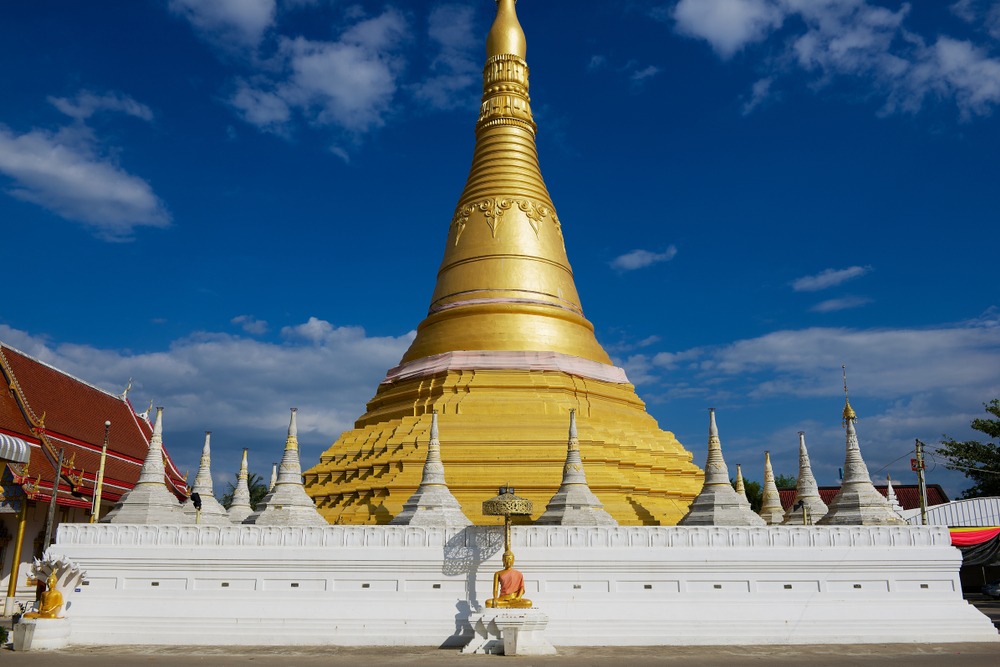
Each island has its own personality: Samui for comfort and accessibility, Phangan for its wild beaches and legendary parties, Koh Tao for underwater diving. The mainland opposite remains authentic, with quiet beaches and centuries-old Buddhist temples like Wat Phra Mahathat in Nakhon Si Thammarat.
The three main islands of the gulf
Koh Samui: comfort and variety
Samui is the largest and best-equipped of the three islands. Its airport connects it directly to Bangkok in one hour of flight, facilitating access since 1980. The island divides into several zones with distinct atmospheres:
- East coast (Chaweng and Lamai): hotels, restaurants and lively nightlife
- North and west (Bophut and Maenam): peaceful atmosphere, Fisherman's Village with Sino-Thai houses
- Mountainous interior: traditional coconut groves and farming villages
Average budget: 1,500-3,000 baht/night for a decent hotel, 200-400 baht/meal at a local restaurant.
Koh Phangan: wild nature and legendary parties
Twenty minutes by ferry north of Samui, Phangan reveals two contrasting faces. The south around Haad Rin hosts the famous Full Moon Parties each full moon. But three-quarters of the island escape this frenzy.
The northern bays like Bottle Beach, Thong Nai Pan Yai and Thong Nai Pan Noi are only reached by water taxi or 4x4. They offer a pristine coastline bordered by jungle. The interior, classified as Than Sadet National Park, harbors historic waterfalls frequented by Kings Rama V and Rama VII in the 19th century.
Average budget: 800-2,000 baht/night depending on access, meals 150-300 baht.
Koh Tao: diving paradise
The smallest island (21 km²) concentrates an exceptional density of dive centers. Its waters harbor decent coral life despite recent bleaching episodes. It's the ideal place to begin:
- PADI Open Water certification: 10,000-12,000 baht (among the lowest rates in the world)
- Training sites: Japanese Gardens, Twins (12 meters depth)
- Marine life: stingrays, schools of barracudas, tropical fish
The nearby islet Koh Nang Yuan, accessible in 15 minutes, offers a viewpoint over three beaches connected by a sandbank.
Climate and best periods
Ideal season: February to September
The gulf operates opposite to the west coast (Phuket, Krabi). When the Andaman undergoes monsoon, the gulf remains accessible. This peculiarity makes it an excellent alternative for European summer trips.
- February-May: calm sea, 28-32°C, water 28-29°C (March-May warmer)
- June-September: sunny with short showers late in the day
- October-November: rainy season (up to 400mm), ferries sometimes suspended
- December-January: transition, cool nights (22-23°C)
What to do and see in the gulf
Must-see beaches and natural sites
Bottle Beach (north of Koh Phangan): wild bay accessible only by water taxi from Chaloklum. White sand, sandy bottom and four small resorts without roads or scooters.
Ang Thong Marine Park: archipelago of 42 limestone islands accessible by excursion from Samui. The interior lagoon of Koh Mae Ko, inspiration for the novel "The Beach", is reached by a steep stairway.
Than Sadet Waterfalls (Koh Phangan): royal site where Rama V engraved his initials between 1888 and 1909. Forest trail of 30 minutes, swimming possible in dry season.
Terrestrial and cultural activities
Fisherman's Village in Bophut: former fishing hamlet with Sino-Thai houses from the early 20th century. Night market on Fridays with southern cuisine and fresh fish.
Hiking: trails through Phangan's jungle, climb to Samui's peak for panoramic views, exploration of traditional coconut villages.
Local gastronomy: cuisine more robust than Bangkok with fresh turmeric and black pepper. Specialties: khao yam (rice salad), gaeng tai pla (spicy curry with fermented fish).
Diving and snorkeling
Koh Tao offers comprehensive training in 3-4 days. Shallow sites suit beginners, while experienced divers explore deeper drop-offs further offshore. Equipment rental: 500-800 baht/day.
Practical tips for organizing your stay
Recommended duration and combinations
We recommend a minimum of 4 to 6 days to enjoy without rushing. Over a week, combining Koh Tao (2 nights diving) then Koh Phangan (3 nights exploring northern bays) works perfectly. Save Samui for your last night before your return flight.
The gulf naturally connects with Bangkok and the central plain (3-4 cultural days beforehand), and possibly Chiang Mai for stays of more than two weeks. Avoid combining with the Andaman coast: the seasons are reversed.
Access and transport
From Bangkok:
- Direct flight: Bangkok Airways, 1h to Samui (3,000-6,000 baht)
- Train + ferry: overnight train to Surat Thani then 4h ferry (800-1,500 baht total)
Between islands: rapid ferries 30min to 1h30 depending on routes (150-400 baht). Reservation recommended in high season.
Local transport: scooter 200-300 baht/day, songthaew (shared taxi) 60-100 baht/trip, private taxi 300-800 baht depending on distance.
Budget and accommodation
Indicative daily budget:
- Backpacker: 1,000-1,500 baht (simple bungalow, street food)
- Comfort: 2,500-4,000 baht (3-4* hotel, restaurants)
- Luxury: 6,000+ baht (upscale resort, spa)
The destination suits families with children in Samui, contemplatives on northern Phangan, and beginner or experienced divers in Koh Tao. Some northern Phangan hotels close for a few weeks in November.
Health and safety
Tap water not drinkable, prefer bottled water. Sun protection essential (SPF 50+ cream, hat). Beware of currents when swimming and respect diving guidelines. Pharmacies available in town centers, main hospital in Samui.
Frequently asked questions
Koh Tao is ideal for learning to dive with rates among the lowest in the world (10,000-12,000 baht for PADI Open Water) and well-established professional organization. Shallow sites like Japanese Gardens are perfectly suited for beginners.
Yes, it's even the ideal period! From February to September, the gulf benefits from dry and sunny weather, unlike the west coast of Thailand which undergoes monsoon then. This seasonal reversal makes it an excellent summer alternative.
We recommend a minimum of 4 to 6 days to enjoy one or two islands without rushing. A week allows you to perfectly combine Koh Tao (2 nights diving) and Koh Phangan (3 nights exploring northern bays), with Samui for your last night.
Two main options: direct flight Bangkok-Samui with Bangkok Airways (1h, 3,000-6,000 baht) for more comfort, or overnight train to Surat Thani then ferry (4h additional, 800-1,500 baht total) for a tight budget.
Allow 1,000-1,500 baht/day in backpacker mode, 2,500-4,000 baht/day for standard comfort, and 6,000+ baht/day for luxury. Prices vary depending on the island chosen and the accessibility of the beaches.
Samui for families and comfort (complete facilities), Phangan for wild nature and secluded beaches in the north, Koh Tao for diving and learning underwater diving. Each island has its unique personality.