Chiang Kham
Chiang Kham
Chiang Kham, Province de Phayao, Thaïlande
Located 50 km north of Phayao, Chiang Kham combines Lanna and Burmese temples, Thai Lu weaving, and access to Phu Sang national park.
Situated roughly 50 km north of Phayao, Chiang Kham is a small town in northern Thailand where several remarkable temples converge, living artisanal heritage thrives, and a cultural legacy shaped by Thai Lu and Shan peoples is palpable. Its relative obscurity on mainstream tourist circuits makes it a rewarding detour for those drawn to Lanna and Burmese religious architecture.
Why visit Chiang Kham
Chiang Kham stands out for the diversity of its architectural influences: the Lanna style of northern Thailand, Shan Burmese architecture, Thai Yai motifs. This layering reflects the region's history as a zone of contact between neighboring kingdoms. The town is home to four particularly noteworthy temples, an active Thai Lu weaving center within a religious complex, and sits immediately adjacent to Phu Sang national park.
For travelers interested in textile craftsmanship, local workshops continue to produce fabrics, bags, and tapestries using techniques handed down by the Thai Lu community. Set aside a full day to explore the town's main sites.
History and settlement
The Thai Lu people migrated to the region in the early nineteenth century, bringing their textile and architectural traditions with them. Over successive centuries, groups from the Burmese Shan State, Laos, and Vietnam settled or passed through the area, leaving a visible imprint on local religious art.
Local tradition ascribes Wat Phra That Sop Waen an age of over seven hundred years, making its pagoda one of the district's oldest religious monuments. According to the 2015 census, the district had roughly 77,200 residents spread across 10 subdistricts and 135 villages—a scale that remains representative today. Chiang Kham borders the districts of Phu Sang, Pong, and Chun.
What to see in Chiang Kham
Wat Nantaram
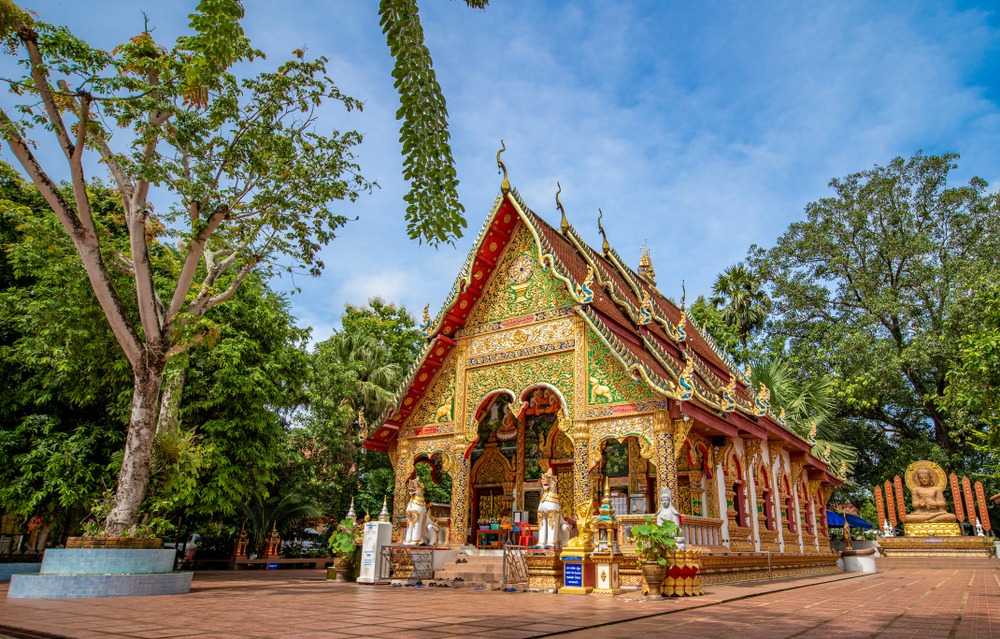
Located near the communal market, Wat Nantaram is the town's principal Buddhist temple. Its solid teak cladding and sculptural motifs adorning the gables, windows, and balconies exemplify Shan Burmese architecture. Inside, murals depict the Story of the Great Birth, a major episode in Buddhist tradition. The compound also houses a Thai Yai-style stupa and a small museum displaying ancient coins.
Wat Phra That Sop Waen
Also known as Pra That Sop Van, this temple's pagoda is said by local tradition to be over seven hundred years old and retains its original Lanna-style structure. Its white stupa with gilded spire is believed by the faithful to contain relics attributed to the Buddha—fragments of his chin and hair. Within the temple grounds stands a Thai Lue weaving center, where you can observe artisans at work and purchase pieces directly from them.
Wat Saeng Mueang Ma
This Burmese temple is said to date to the reign of Rama I, when Nan and Phayao were a single province. Local tradition holds that a governor encouraged villagers to construct a temple of distinction. The site displays carefully executed sculpture and wall paintings.
Wat Phrachao Nang Din
Located several kilometers outside town, this temple is known for a seated Buddha statue positioned on the ground. Local tradition assigns it an age of over 2,000 years, linking it to the earthly life of Gautama Buddha—a devotional narrative rather than a historical dating.
In the immediate vicinity
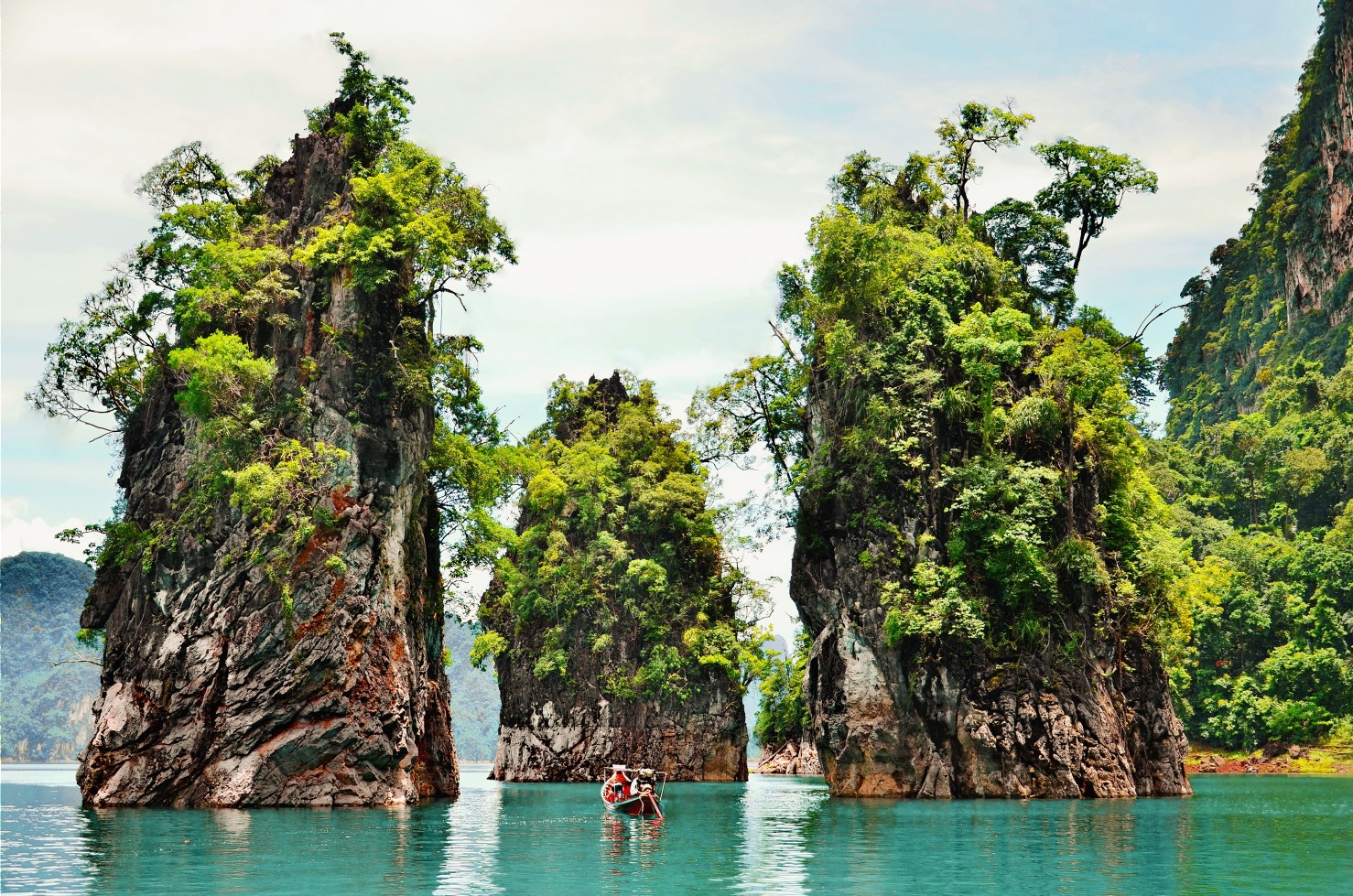
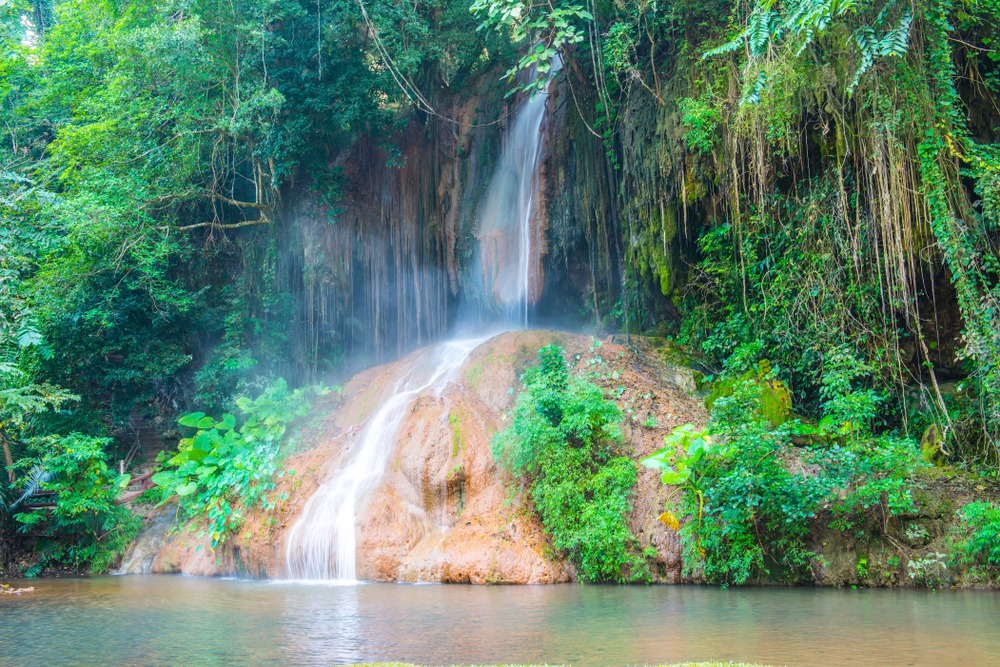
Phu Sang national park, cradled by mountains, offers forest trails, waterfalls, a hot spring, and several caves. The Phu Langka and Pu Chi Fah forest parks, accessible as an extension, round out the area's natural attractions.
Practical information
- Duration: one day for the four main temples; two days if including Phu Sang national park.
- Dress code: shoulders and knees covered in temples; shoes removed before entering prayer halls.
- Crafts: the Thai Lue weaving center at Wat Phra That Sop Waen is the most direct place to purchase locally produced textiles.
- Fees: free entry or donation for temples; modest entrance fee for the national park.
When to go
The dry season, from November to February, remains the most comfortable window: mild temperatures and limited rainfall. The rainy season (June to October) turns the landscape verdant but may complicate outings to Phu Sang park.
How to get there
Chiang Kham lies roughly 50 km north of Phayao. From Chiang Rai, Greenbus coaches reach the town in around 1.5 hours. From Chiang Mai, allow approximately 4 hours. Locally, blue songthaews run from the bus station to various neighborhoods and temples. Renting a scooter or car eases access to Wat Phrachao Nang Din and Phu Sang national park.
Combine with nearby attractions
Chiang Kham pairs well with a loop through northern Thailand. A ninety-minute drive away, Phayao Lake offers a more urban stop. Heading toward Chiang Rai, Wat Rong Khun and the Doi Din Dang pottery studio complement your exploration of regional artisanal and religious heritage.
Frequently asked questions
A full day allows you to see the four main temples and the Thai Lue weaving center. Plan two days if you wish to add Phu Sang national park.
November to February, during the dry season: mild temperatures and limited rainfall make conditions favorable for temple visits and hiking in Phu Sang park.
Allow around 4 hours by direct bus from Chiang Mai. Another option is to go via Chiang Rai (roughly 1.5 hours from Chiang Kham on Greenbus), which lets you break up the journey.
Thai Lu craftsmanship is the signature production: hand-woven fabrics, bags, and tapestries. The weaving center located within Wat Phra That Sop Waen allows you to purchase directly from the artisans.
To work Chiang Kham into a broader itinerary across the north, explore our Thailand journeys.
Photos
Interested in this visit?
We can include it in your personalised itinerary.