Wat Phuket
Wat Phuket
5W8M+4MR, Wora Nakhon, Pua, Province de Nan 55120, Thaïlande
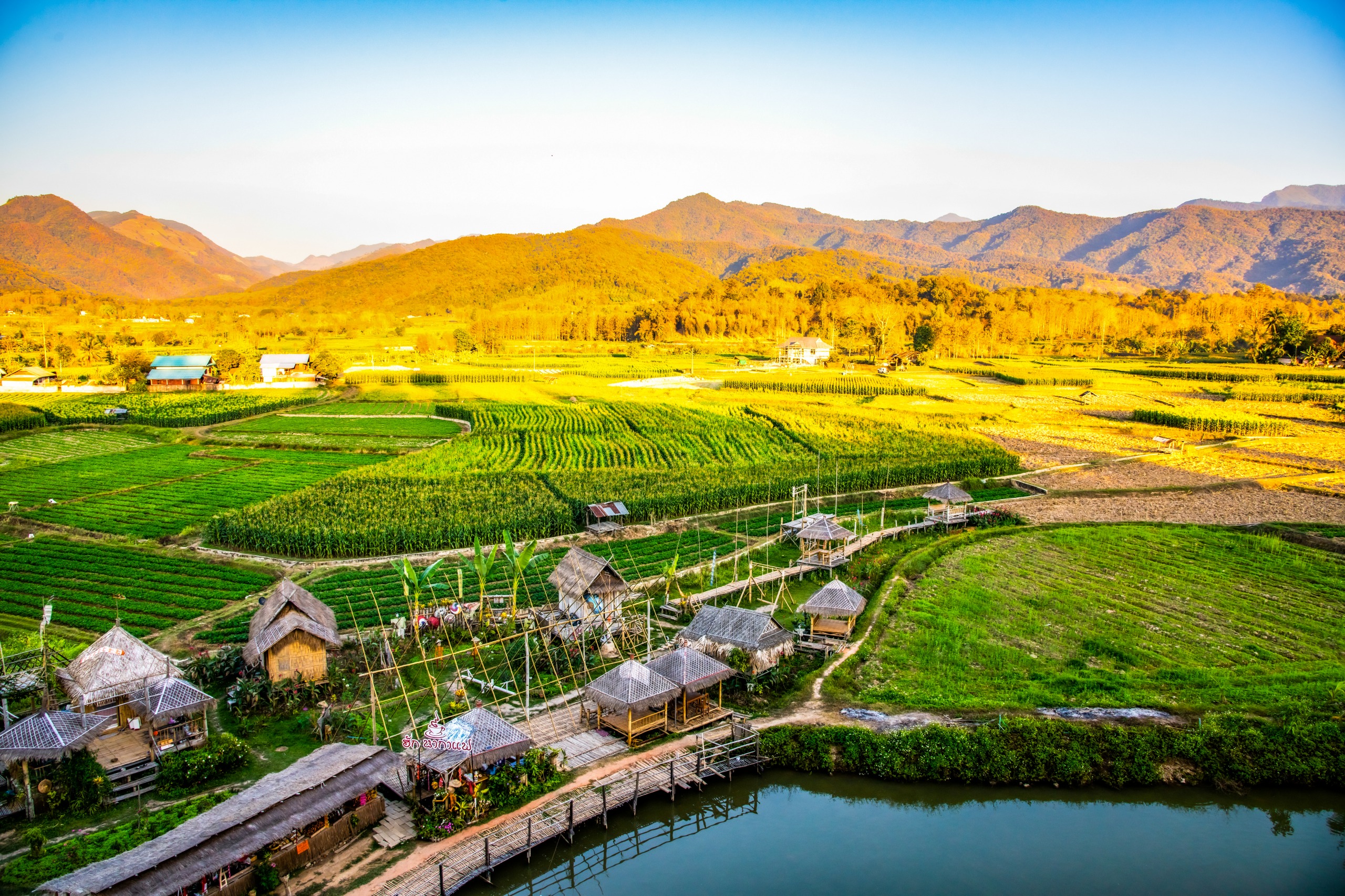
Perched on a hill in Pua district near Nan, Wat Phuket offers remarkable panoramic views over rice fields and Doi Phu Ka national park.
Wat Phuket, officially Wat Phuket Songthaya, sits atop a rocky outcrop in Pua district, approximately 60 km from the town of Nan, in northern Thailand. Rather than for its modest architecture, the site draws visitors for its vantage point overlooking the checkerboard rice fields and mountains of Doi Phu Ka national park.
Why visit Wat Phuket
The temple lacks the ornamental richness of Thailand's grand northern sanctuaries, yet it offers three complementary assets:
- sweeping views across Pua's rice valley and the Doi Phu Ka mountain range;
- proximity to a weaving workshop run by the Thai-Lu community, nestled below the hillside;
- an authentic stop far removed from the classic tourism circuits of Chiang Mai or Chiang Rai.
The entire site can be explored in 1 to 2 hours and easily combines with other locations in the district.
Etymology and context
The temple's name stems from the fusion of two words: Phu (hill) and Ket, a contraction of Ban Ket, the neighboring village. Wat Phuket thus means "the temple on the hill of Ban Ket." It bears no connection, despite common confusion, to the island of Phuket located in the country's south.
Ban Ket belongs to the rural Pua district in Nan province, in Northern Thailand. Agriculture, particularly rice farming, remains the primary economic activity. Weaving and basketry supplement incomes for many households, especially within the Thai-Lu community settled at the foot of the hill.
What to see on site
The panorama over rice fields
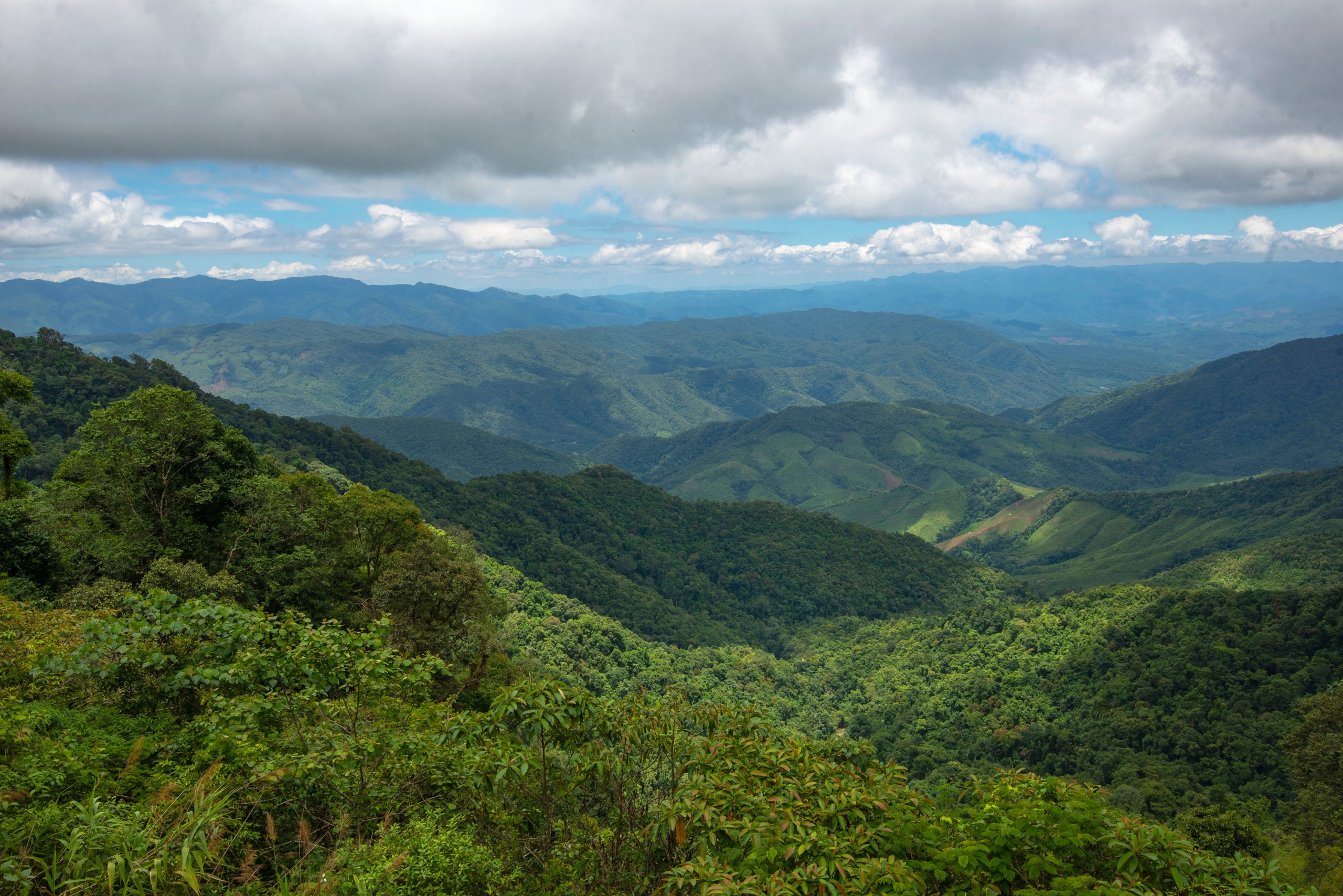
From the temple terrace, the view encompasses the mosaic of Pua district's rice paddies, dotted with wooden farmhouses, and opens onto the slopes of Doi Phu Ka national park in the distance. The color of the fields shifts dramatically with the season: shimmering water in July, deep green from August through October, golden ochre before the December harvest.
The temple itself
The main building features simple construction typical of northern rural temples. Expect a few minutes to walk around. Voluntary donations are welcome and help maintain the sanctuary.
The Thai-Lu weaving workshop
Coming down the hill, you can stop by the local weaving workshop. The Thai-Lu, originally from Sipsong Panna (Yunnan), have preserved weaving techniques featuring understated geometric patterns. Purchasing items directly on site supports the village economy.
Practical information
- Address: Ban Ket, Pua district, Nan province
- Distance: 1.2 km from Pua town center, approximately 60 km from Nan
- Hours: open during daylight, typically morning through late afternoon
- Admission: free entry, donations accepted
- Dress code: shoulders and knees covered, shoes removed before entering the sanctuary
When to visit
The rice-farming calendar strongly influences the site's visual appeal:
- July: planting season, flooded paddies with silvery reflections;
- August to October: deep green rice fields, ideal for photography;
- November-December: harvest time, golden hues;
- January to May: dry fields, less photogenic landscape but more stable skies.
The rainy season offers the most spectacular rice fields, provided you're prepared for occasional showers.
How to get there
No direct buses serve Ban Ket from Nan. The journey involves two stages:
- From Bo Kho So bus station, south of Nan, board a bus heading toward Thung Chang and ask to be dropped at Pua, at the intersection marked by the 7-Eleven.
- From Pua, cover the remaining 1.2 km by motorcycle taxi, tuk-tuk, or rented bicycle.
With a rental car, allow approximately 1 hour 15 minutes from Nan via Route 1080.
In the surrounding area
Pua district and Nan province offer several natural extensions to your visit:
- Doi Phu Ka national park, for hiking trails and waterfalls;
- the town of Pua, a useful base for exploring the valley;
- Wat Phumin, a masterpiece of Lanna mural frescos in Nan;
- Wat Phra That Cho Hae, a major sanctuary in Phrae province;
- neighboring temples Wat Ban Ton Laeng, Wat Rong Ngae, and Wat Phra That Bueng Sakat, all accessible within a single day.
Frequently asked questions
Frequently asked questions
Prepare your journey
Wat Phuket fits naturally into an itinerary across northern Thailand, between Nan, Phrae, and the Laotian border. To build a complete circuit, explore our Thailand travel suggestions.
Photos
Interested in this visit?
We can include it in your personalised itinerary.