Wat Phra That Cho Hae
Wat Phra That Cho Hae
1 หมู่ 11 Tambon Cho Hae, Amphoe Mueang Phrae, Chang Wat Phrae 54000, Thaïlande
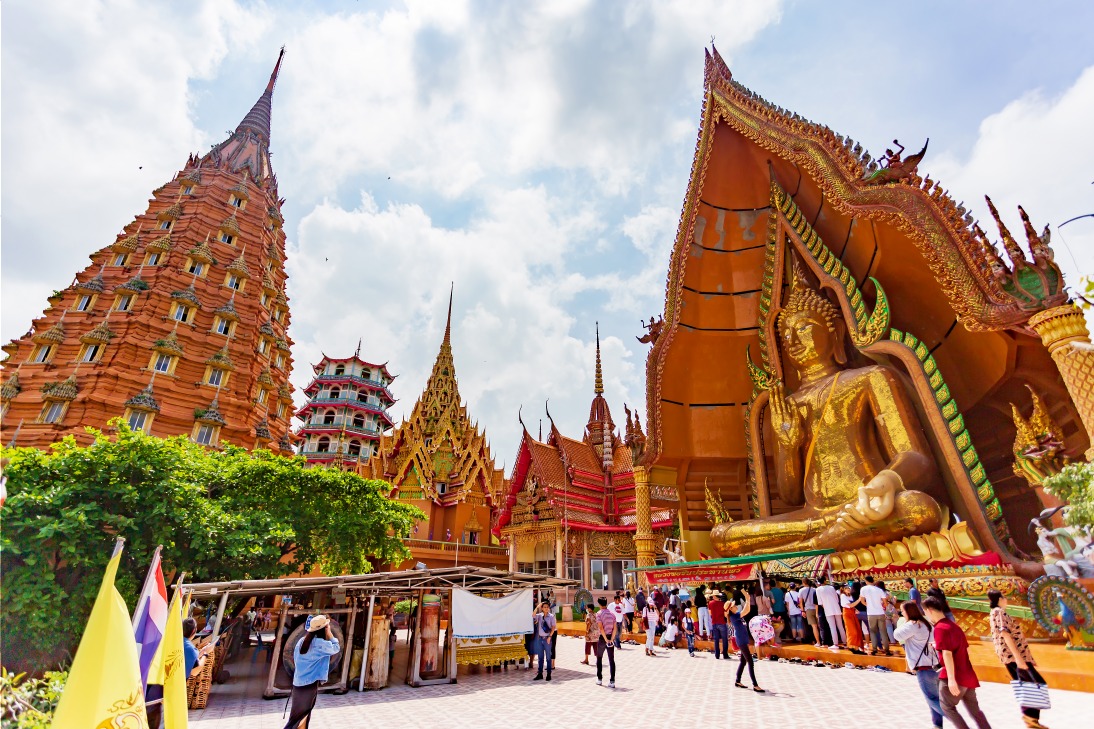
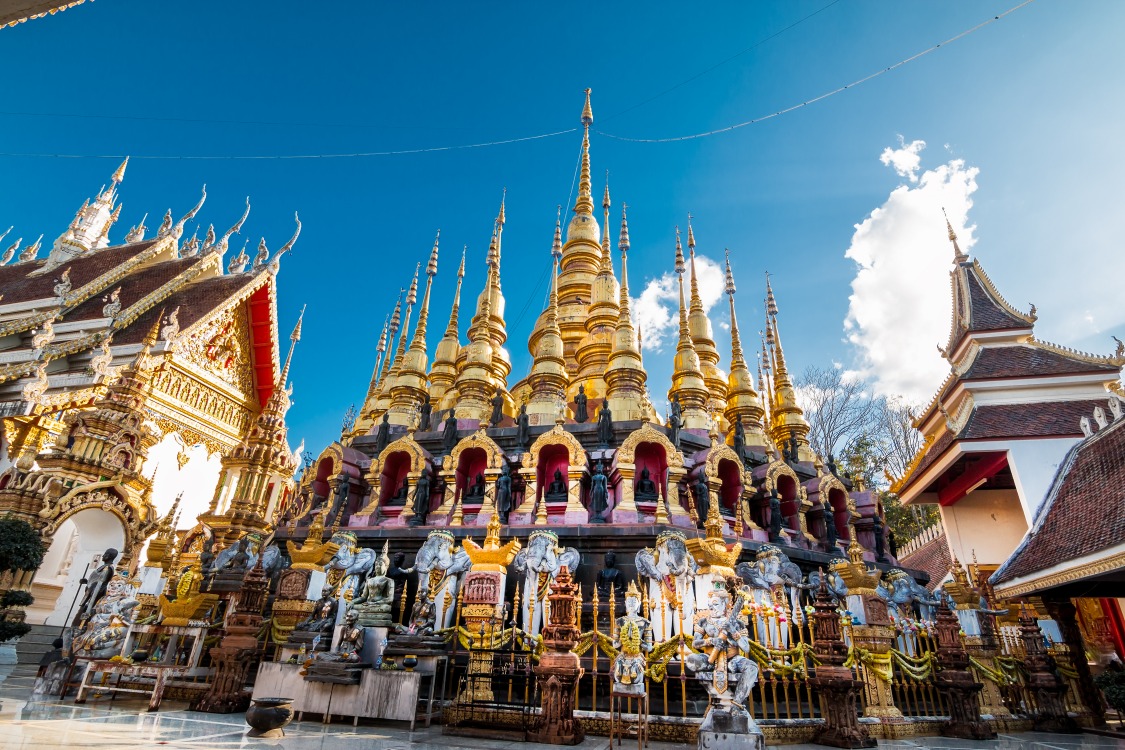
Perched on a forested hill southeast of Phrae, Wat Phra That Cho Hae houses a golden chedi standing 33 meters tall and shelters one of Northern Thailand's most revered Buddhist relics.
Wat Phra That Cho Hae stands on a forested hillside southeast of Phrae, in northern Thailand. Its golden chedi, measuring 33 meters tall, houses what tradition holds to be a relic of the Buddha's hair wrapped in silk cloth—hence its name, meaning "Temple of the Relic Wrapped in Silk." It ranks among the most venerated sanctuaries in the Lanna region and remains an active pilgrimage site for Thai Buddhist devotees.
Why Visit Wat Phra That Cho Hae
The temple is one of twelve revered stupas in Northern Thailand, each linked to an astrological sign. Here, the Tiger symbolizes Phrae's zodiac sign, and believers born under this sign come to pray with particular devotion. Beyond its religious function, the site commands sweeping views across the surrounding countryside and allows visitors to experience well-preserved Lanna architecture, far from the crowded circuits of Chiang Mai or Chiang Rai.
Local belief also attributes to the relics a power that favors fertility, explaining the steady flow of Thai couples and families who visit regularly.
Temple History
Wat Phra That Cho Hae was founded during the era of the Sukhothai kingdom. The central chedi is said to have been commissioned by King Phaya Lithai in the 14th century to safeguard sacred relics: the Buddha's hair and, according to tradition, a portion of his elbow. These relics are attributed to the Indian king Ashoka, who is said to have sent them to Southeast Asia in the 3rd century BC—a claim that owes more to foundational legend than to documented history.
Over the centuries, successive Sukhothai rulers contributed to the embellishment of the complex. In the 1920s, the venerated monk Khruba Siwichai, a major figure in Northern Thai Buddhism, led an extensive restoration campaign that established the sanctuary's present-day appearance.
What to See on Site
The Golden 33-Meter Chedi
The centerpiece of the complex, this chedi covered in gilded copper dominates the entire ensemble. Pilgrims circumambulate around it in ritual procession, carrying lit candles and lotus flowers in hand.
The Main Viharn
Adjacent to the chedi, this expansive building features a tiered roof and houses a gilded Buddha statue in the Bhumisparsha mudra—the posture known as "Calling the Earth to Witness." The interior walls are adorned with traditional Lanna paintings and motifs.
The Secondary Viharn and Phra Chao Than Chai Image
Beside it, a second viharn shelters a statue of the Buddha meditating atop a Naga, the mythological protective serpent. Further along, the Phra Chao Than Chai shrine preserves a sacred image particularly venerated by local worshippers.
The Guanyin Section
Part of the temple is dedicated to Guanyin, the Chinese goddess of mercy, testament to Sino-Thai cultural influence on Northern Buddhism.
The March Festival
Each year in March, the temple becomes the focal point of a week-long celebration. A procession winds through Phrae with devotees in traditional Lanna costumes and ornately decorated elephants. Evenings at the temple blend prayer, sermons, dance, and a drum-beating competition that draws communities from neighboring villages. It stands as one of Northern Thailand's most significant Buddhist gatherings.
When to Visit
The dry season, from November to February, offers the most comfortable conditions: moderate temperatures, low humidity, clear skies. March coincides with the festival but also marks the onset of the hot season and sometimes seasonal haze in the north. The monsoon (June to October) renders the vegetation lush, though the access stairs may become slippery.
For a regular visit, early morning or late afternoon offers the best balance between light and comfortable temperatures.
Practical Information
- Entrance: Free; donations toward site maintenance are appreciated.
- Visit Duration: Allow 1.5 to 2 hours to explore the entire complex.
- Dress Code: Shoulders and knees must be covered; shoes must be removed before entering sacred buildings.
- Accessibility: Approximately 120 steps from the parking area; not well-suited for visitors with mobility challenges.
- On Site: Food and souvenir kiosks at the base of the stairway.
How to Get There
The temple lies roughly 9 kilometers southeast of Phrae's city center. From Talat Preeda market, Songthaews (shared pick-ups) provide regular service at modest rates. Private taxi remains a straightforward option if traveling as a group or with luggage.
From the parking area, access to the temple is via a staircase of approximately 120 steps, flanked by naga statues that undulate along the railing.
Nearby Attractions
Phrae province and neighboring regions host several major Lanna sites:
- The historic center of Phrae, with teak houses and peaceful alleyways.
- Wat Chom Sawan, a remarkable Burmese temple in the heart of the city.
- Baan Sao Nak House, a traditional stilt-raised dwelling in Lampang.
- Wat Phra That Lampang Luang, among Thailand's finest Lanna temples.
- The ruins of Si Satchanalai, a sister city to ancient Sukhothai.
Frequently asked questions
Plan for 1.5 to 2 hours for a comprehensive visit, including the climb and exploration of the various buildings in the complex.
Early morning or late afternoon: the light is softer, the heat less intense, and crowds lighter than at midday.
As with all Thai temples, shoulders and knees must be covered. Shoes are removed before entering sacred buildings.
Access remains challenging due to the 120 steps from the parking area. The site is not wheelchair-accessible.
The festival runs for a week in March, featuring a procession through Phrae, traditional Lanna costumes, decorated elephants, and a drum-beating competition at the temple.
To incorporate Wat Phra That Cho Hae into a broader itinerary across Northern Thailand, explore our curated Thailand travel experiences.
Photos
Also discover
Interested in this visit?
We can include it in your personalised itinerary.