Erawan National Park
Erawan National Park
94GV+5HW, Tha Kradan, Si Sawat District, Kanchanaburi 71250, Thaïlande
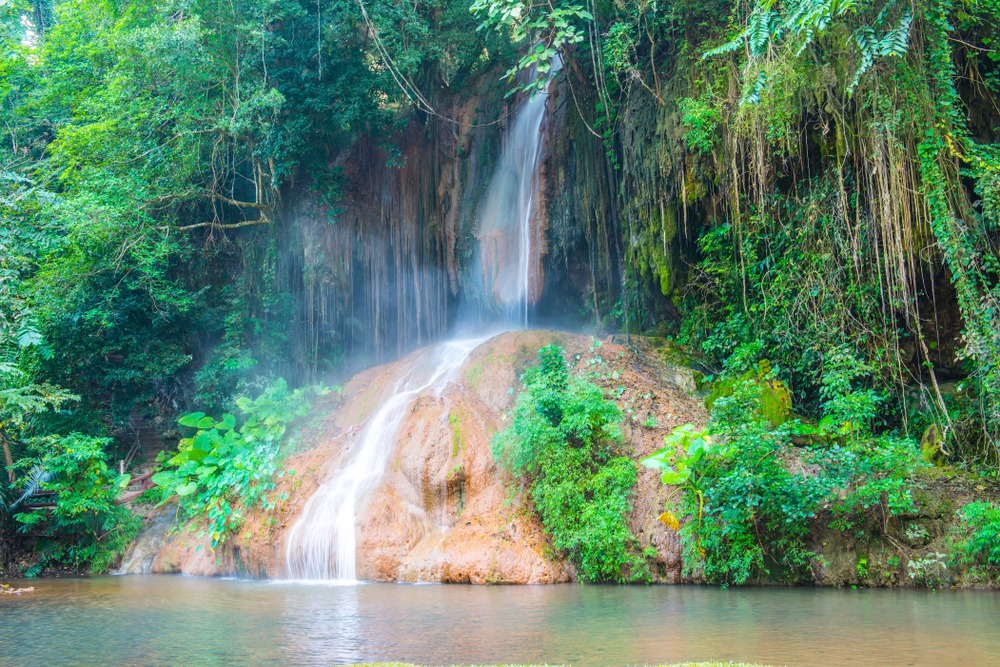
Erawan National Park, near Kanchanaburi, is home to a seven-tiered waterfall, emerald pools, and rich wildlife across 550 km².
Erawan National Park protects 550 km² of tropical forest in Kanchanaburi province, approximately 200 km northwest of Bangkok. It owes its fame to a seven-tiered waterfall punctuated by emerald-green pools where swimming is permitted, and to abundant wildlife that makes it one of Thailand's most visited protected areas.
Why visit Erawan National Park
A seven-tiered waterfall whose lower pools are accessible at all walking levels.
Exceptional biodiversity: nearly 120 bird species recorded, as well as elephants, gibbons, tapirs, and reptiles.
A network of limestone caves (Phra That, Wang Badan, Mi, Ta Duang) accessible by trail.
Convenient location from Kanchanaburi, allowing for a day trip or overnight stay.
History and meaning of the name
Established in 1975, the park takes its name from the three-headed elephant of Hindu mythology, Airavata, mount of the god Indra. The resemblance between the upper tier of the waterfall, called Khao Phang, and this mythical animal inspired the naming. Airavata appears on Siam's coat of arms from 1939 as well as on flags of that era, anchoring Erawan in Thai national imagination.
What to see and do
The seven-tiered waterfall
Ascending the waterfall structures the visit. Tiers 1 to 3 are connected by a well-maintained path, accessible without particular difficulty, and concentrate the majority of swimmers. From tier 4 onward, the scenery becomes more spectacular: suspended pools, water curtains, limestone formations carved by nature. The complete route to tier 7 (Khao Phang) covers approximately 2 km on uneven terrain requiring reasonable fitness and sturdy footwear.
Swimming is possible in the emerald pools at the base of the falls. To preserve the site, food is prohibited from the second tier onward. Park monkeys are known for rifling through unattended bags and stealing visitors' belongings: secure your items before entering the water.
Park wildlife
Erawan is home to wild elephants, tapirs, Siamese hares, wild boar, gibbons, and more discreetly, tigers and clouded leopards. Among reptiles, you'll find banded kraits, Asian pythons, Indochinese spitting cobras, and Malayan monitors that can reach 1.5 m and weigh 60 kg. Nearly 120 bird species have been recorded, including the Indian peafowl, the secretary bird, the Chinese spur-fowl, the kalij pheasant, the helmeted hornbill, and the white-rumped shama. Around the waterfalls, you'll primarily encounter gibbons and wild boar.
Caves along the Mong Lai trail
A marked trail runs alongside the Mong Lai River and provides access to several limestone caves:
Phra That: at the foot of a hill, accessible by a short path from the parking area.
Wang Badan: narrow opening, interior richly decorated with limestone formations.
Mi (Bear Cave): five interconnecting chambers, former refuge of wild bears.
Ta Duang: walls covered with prehistoric rock carvings.
Practical information
Attire: closed hiking shoes, swimming suit for bathing, light clothing and mosquito repellent.
Safety: do not feed monkeys, keep distance from monitors and other wildlife.
Crowds: the park is very busy on weekends. Prefer weekdays and early morning to enjoy the pools.
Accommodation: bungalows managed by the park allow overnight stays; reservation recommended during peak season.
Rates and hours: paid entry (differentiated rates for adults/children), daytime access only. Check current conditions with the Department of National Parks before your visit.
When to go
The best period runs from January to February: pleasant temperatures, clear skies, waterfalls still flowing strongly. The rainy season extends from May to October, with moderate rainfall as the area is partially protected by surrounding topography; pools gain in color but some upper tiers may close during heavy rain. March and April are hot and flow decreases late in the dry season.
How to get there
The park is located approximately 65 km northwest of Kanchanaburi, about 2 hours by road. From Bangkok (≈200 km), the journey is done in two stages: reach Kanchanaburi by bus from Sai Tai Mai bus terminal or train from Thonburi station, then take a local bus to the park entrance. Private taxi or organized transfer from Bangkok is more comfortable but significantly more expensive. Plan a full day for a round trip from Kanchanaburi, minimum two days from Bangkok.
See in the surrounding area
The Death Railway: historic railway line built during World War II.
Wat Ban Tham: troglodyte temple carved into a limestone cliff, near Kanchanaburi.
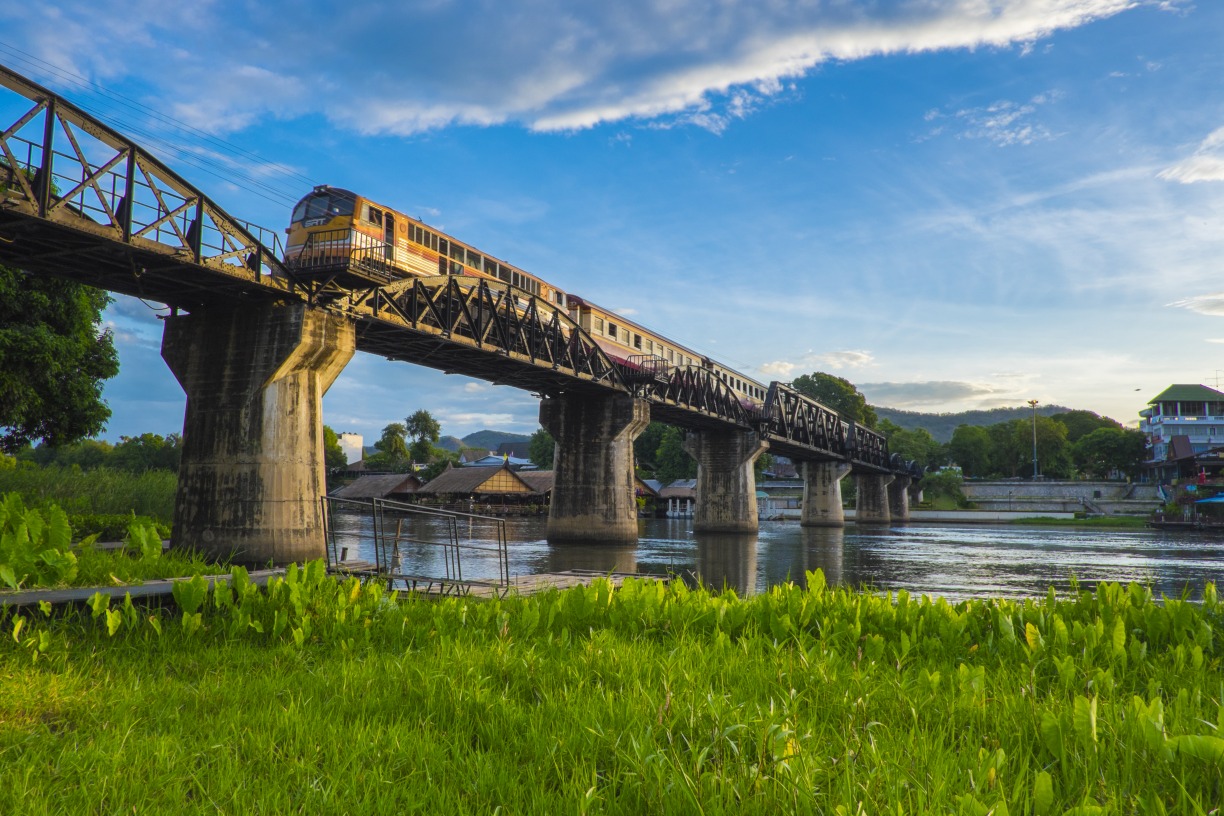
Kanchanaburi: gateway town to explore the region, with its bridge over the Kwaï River and war museums.
Frequently asked questions
Frequently asked questions
Not for the first three tiers of the waterfall, accessible by a well-maintained path. From tier 4 onward, the trail becomes more uneven and the complete ascent to tier 7 requires good fitness over 2 km.
Yes, swimming is permitted in most pools. Bring a swimsuit and keep an eye on your belongings: monkeys readily steal items left unattended on the banks.
Allow half a day to visit the lower tiers and swim, a full day to reach tier 7 and explore a cave. An overnight stay in a bungalow lets you enjoy the park before the excursion crowds arrive.
January and February offer the best balance between dry climate and waterfall flow. The rainy season (May to October) remains feasible but some trails may be slippery or closed.
Yes, the lower tiers suit families. Shallow pools allow supervised swimming. Beyond tier 4, terrain becomes less suitable for young children.
Include Erawan in your trip
Erawan Park fits naturally into an itinerary including Kanchanaburi and western Thailand, complementing historical sites along the Kwaï River. To build a bespoke itinerary suited to your pace and the season, consult our Thailand tours.
Photos
Interested in this visit?
We can include it in your personalised itinerary.