Wat Ban Tham
Wat Ban Tham
ต.เขาน้อย อ.ท่าม่วง จ.กาญจนบุรี 711110 Tambon Khao Noi, Amphoe Tha Muang, Chang Wat Kanchanaburi 71110, Thaïlande
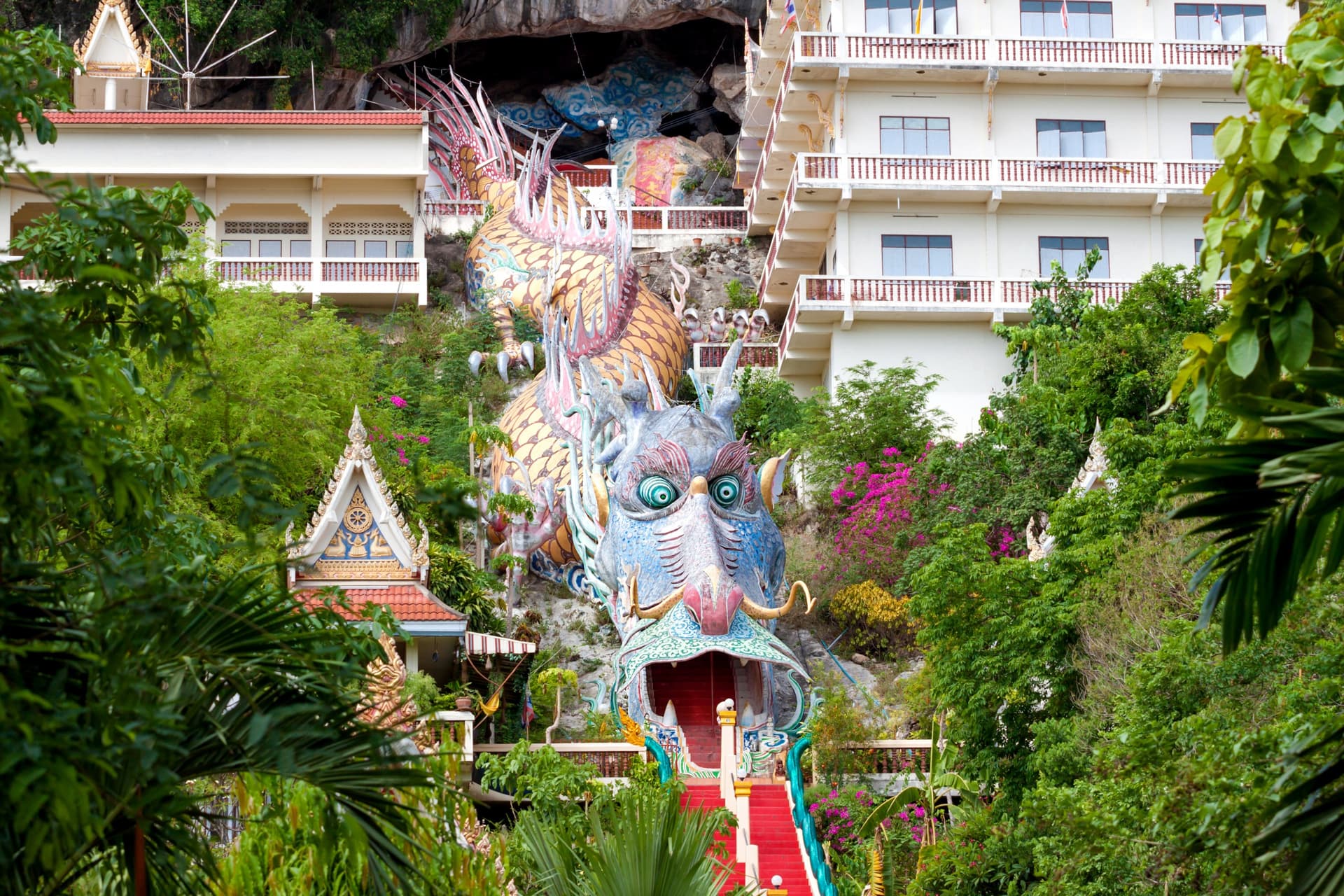
Wat Ban Tham, or Dragon Temple, near Kanchanaburi: a naga-shaped staircase, fertility sanctuary cave and golden stupa at the summit of 700 steps.
Wat Ban Tham, also known as the Dragon Temple, sits on the east bank of the Mae Klong River, approximately 9 km south of Kanchanaburi. The site combines a naga-shaped staircase, a tunnel adorned with mythological paintings and a sanctuary cave dedicated to fertility. A singular visit in western Thailand.
Why visit Wat Ban Tham
Three elements distinguish this temple from other Buddhist sites in the province. First, its spectacular entrance: a metal staircase with blue eyes and red eyebrows shaped like a dragon, its mouth serving as the gateway to the tunnel. Next, the main cave Tham Khuha Mangkon Sawan, known as the "fertility sanctuary," which houses an active local ritual. Finally, the climb of 700 steps to the golden stupa, offering panoramic views over the river, rice fields and surrounding vegetation.
History and legends
The cave temple already existed during the Sukhothai Kingdom era (13th-15th centuries). Its foundation is poorly documented and rests on oral tradition. According to local legend, a wealthy merchant discovered the cavity and invited the renowned monk Luang Po Thong to retire there for meditation, away from the world. The monk accepted and settled in the cave.
Another legend tells that Luang Po Thong once met a magpie and taught it human language. Since then, it is said, magpies roam permanently around the sanctuary.
Today, a modern monastery stands near the historic cave. About twenty monks reside there, while the original cavity remains used for prayer and meditation.
What to see
The dragon staircase
Built in 1995, the metal staircase leads to the dragon's mouth, marking the entrance to the tunnel. Inside, the steps spiral upward through the naga's body, its walls covered with murals illustrating the Jataka legend, which recounts the Buddha's previous lives. Nagas, serpentine deities with dragon heads, are venerated in Buddhism: they accompanied the Buddha during his meditation and watched over passages between the human world and the divine realm.
The Tham Khuha Mangkon Sawan cave
At the tunnel's exit opens the main cave, a vast hall of stalactites and stalagmites. It houses the Luang Po Yai Chinnarat statue, cast in the 14th century during the Ayutthaya period. This is a copy of the famous Phra Phuttha Chinnarat of Phitsanulok. The Buddha is represented in lotus position, left hand resting on the knee and right hand touching the ground to invoke the Earth Goddess against Mara's army. At times when sunlight penetrates the cavity, the statue is bathed in natural light. Several small buddhas with feminine appearance are scattered throughout the hall, a rare feature in local iconography.
The Bua Kli sanctuary
In a corner of the cave, a stalactite is dedicated to Bua Kli, one of the wives of the legendary governor Khun Paen, a popular hero of Kanchanaburi. Tradition holds that Bua Kli died in childbirth and her spirit still haunts the place. Couples seeking to conceive or facing fertility issues come here to pray and leave offerings of toys, baby clothes and rompers in hopes of receiving her blessing.
The summit and stupa
The spiral staircase continues its ascent through a medium-sized cave, several Buddha images and smaller cavities arranged as meditation rooms. After 700 steps total, you reach the summit, where a golden stupa stands. At its base, two Buddhas in lotus position are protected by the seven hoods of Mucalinda, king of the nagas. From the platform, views extend over the Mae Klong River and cultivated plains.
Practical information
- Access: free, no entrance fee.
- Hours: open during the day, generally 8am to 5pm (confirm on site).
- Dress code: shoulders and legs must be covered to enter the cave and prayer rooms.
- Visit duration: allow 1.5 to 2.5 hours depending on whether you climb to the stupa.
When to visit
The dry season (November to February) remains the most comfortable period: the heat is less oppressive for climbing 700 steps and the light enhances the Luang Po Yai Chinnarat statue inside the cave. Late morning and early afternoon are the best times to benefit from natural light in the main cavity. Avoid monsoon rains (June to October), which make the metal steps slippery.
How to get there
No direct service runs to the temple from central Kanchanaburi. From the bus station, take a bus to Tha Muang, then hire private transport (taxi, motorcycle taxi or vehicle through your accommodation) to reach the site. Most Kanchanaburi hotels offer car, motorcycle or bicycle rentals, a convenient option for combining several sites in a day.
A combined excursion with Wat Tham Suea and Wat Tham Khao Noi, perched on the same hill just a few kilometers away, can be arranged by private tuk-tuk or songthaew. Budget approximately 600 to 800 baht for half-day transportation.
Nearby attractions
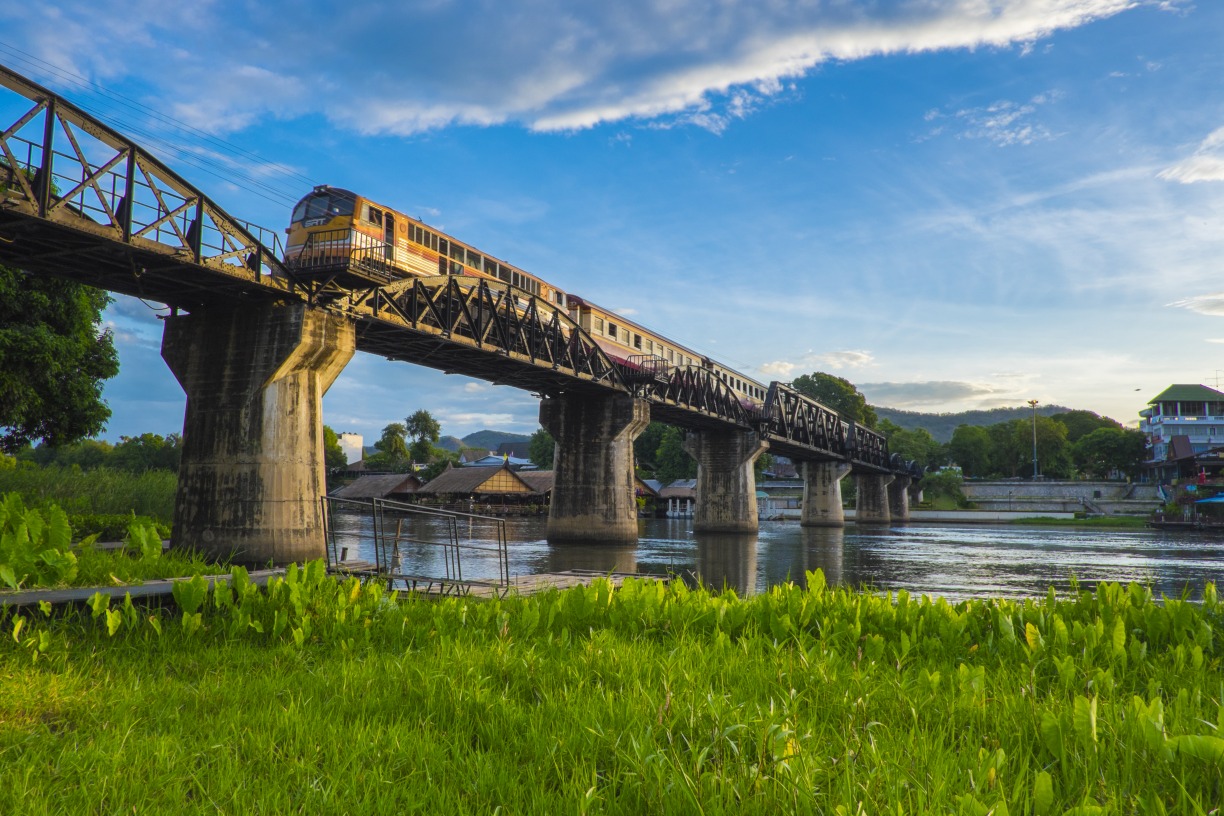
The Kanchanaburi region has several complementary sites. Beyond the two neighboring cave temples, you can extend your visit with the Bridge over the River Kwai, linked to the construction of the Death Railway by Japanese forces during World War II (1942-1943). Further into the province, the Dawna Range offers mountainous landscapes to explore on foot.
Frequently asked questions
Frequently asked questions
As in all Thai Buddhist temples, shoulders and legs must be covered. A sarong or lightweight scarf is sufficient to adapt before entering the caves and prayer rooms.
Allow approximately 1.5 hours if you limit yourself to the main cave and dragon tunnel, and up to 2.5 hours if you climb the 700 steps to the stupa.
Yes, Wat Tham Suea and Wat Tham Khao Noi are located nearby, on the same hill. A half-day by private tuk-tuk or songthaew allows you to visit all three sites.
Access to the main sanctuary involves climbing a spiral metal staircase. The visit is therefore not suitable for people with difficulty walking or climbing steps.
No, access is free. A donation to the temple is appreciated and supports the upkeep of the sanctuary and neighboring monastery.
Plan your trip
Wat Ban Tham fits naturally into an itinerary centered on Kanchanaburi and western Thailand. To build a tailor-made journey including cave temples, historical sites and nature, explore our Thailand tours.
Photos
Nearby

Also discover
Interested in this visit?
We can include it in your personalised itinerary.