Wat Na Phra Men
Wat Na Phra Men
76 Tambon Lum Phli, Amphoe Phra Nakhon Si Ayutthaya, Chang Wat Phra Nakhon Si Ayutthaya 13000, Thaïlande
The sole Ayutthaya temple to escape the 1767 destruction, Wat Na Phra Men preserves its original architecture and several ancient Buddhas.
Wat Na Phra Men is the only temple in Ayutthaya to have survived intact the Burmese sacking of 1767. Facing the former royal palace across the Lopburi River, it houses a series of ancient Buddhas including the celebrated Phra Phuttha Nimit, a bronze statue covered in gold leaf and adorned with royal regalia.
Why visit Wat Na Phra Men
Most temples in Ayutthaya stand as laterite and red-brick ruins. Wat Na Phra Men is an exception: its original buildings remain standing, its ubosot retains its carved pediment, and it houses several remarkable Buddhas spanning five centuries of Thai and Khmer sculpture. It is one of the few places in the city where you can still see the sacred architecture of Ayutthaya as it stood before the fall of the Siamese kingdom.
The complex comprises an ubosot (ordination hall), three stupas, and several viharas. The visit is compact yet dense: allow roughly one hour to tour the buildings and observe the statues.
History of the temple
The temple was constructed during the reign of Ramathibodi II (1491-1529). Its name means "monastery facing the crematorium": it overlooks the site, across the Lopburi River, where cremation rituals were performed near the ancient royal palace. Sources differ on the exact nature of these ceremonies—royal funerals or executions of the condemned—but the ritual use of the place is well attested.
Two episodes from the Royal Chronicles of Ayutthaya link the sanctuary to conflicts between Siam and Burma.
In the 16th century, the Burmese sovereign Bayinnaung demanded that the Siamese king Chakkrapphat surrender two white elephants, symbols of sovereignty. When the king refused, Bayinnaung launched an attack on Ayutthaya. Cornered, the Siamese king negotiated a peace treaty: a dual-throned palace was erected near Wat Na Phra Men to formalize the agreement between the two sovereigns.
In 1760, during another Burmese raid, the invaders positioned their cannons on the Lopburi riverbank to bombard the temple and the Grand Palace. The Burmese king Alaungphraya was wounded when one of his own cannons exploded as he gave the order to fire. His troops interpreted the incident as a dire omen, broke camp, and abandoned plans to set the sanctuary ablaze.
Seven years later, during the sacking of Ayutthaya in 1767 that reduced the capital to ashes, Wat Na Phra Men was spared once more. Abandoned in 1760 and then restored approximately 75 years later in its original form, it was inscribed in 1935 on Thailand's national monuments list by the Department of Fine Arts.
What to see here
The ubosot pediment
Above the main door of the ordination hall, the triangular pediment depicts Vishnu mounted on Garuda vanquishing the naga, flanked on either side by apsaras (celestial musicians). This Hindu iconography, common in Khmer art inherited by Siam, frames the entrance to the complex's most sacred space.
Phra Phuttha Nimit
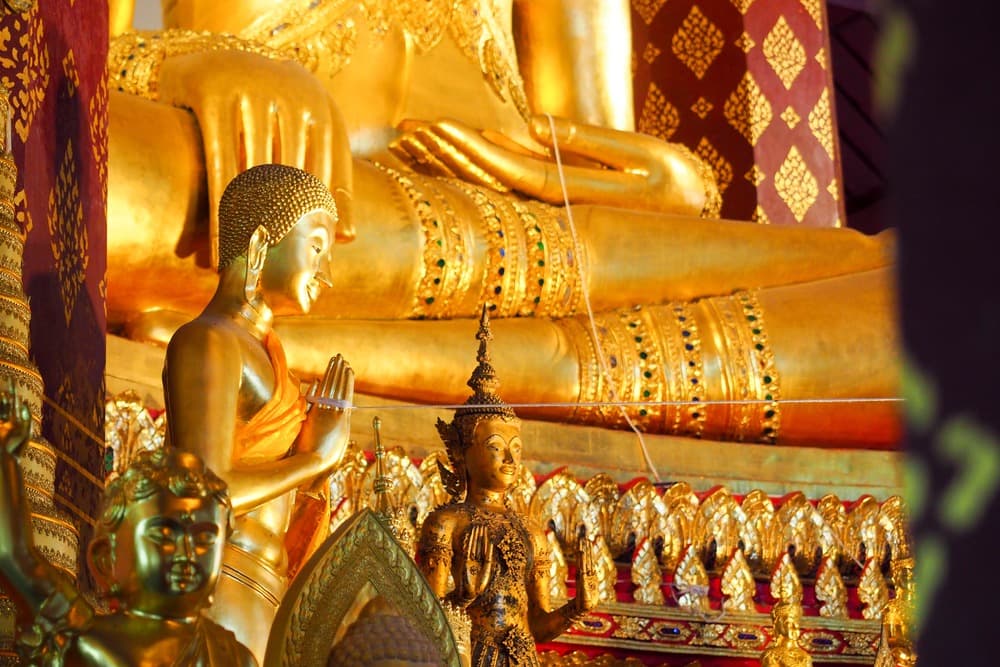
Inside the ubosot stands the temple's principal statue: a 6-meter-tall bronze Buddha, 4.5 meters wide at the knees, covered in gold leaf and adorned with royal regalia—crown, jewelry around the neck, arms, and chest. This representation of the Buddha in royal attire is a stylistic signature of the late Ayutthaya period, marking a departure from the more austere Buddhas of earlier eras.
Luang Po Khao
In a pavilion near the stupas stands a Buddha silvered from head to foot, carved approximately 500 years ago according to the date inscribed on the plaque. The same chapel houses several other Buddhist images, including the Phra Phuttha Lila, a Buddha from the Lopburi period (pre-Ayutthaya Khmer style).
Phra Khan Thanrath
In a small teak vihara is preserved a Buddha in quartzite—a greenish stone—from the Dvaravati period (6th–12th century), when this Mon culture flourished across present-day Thailand and continental Southeast Asia. The posture is unusual: while most Buddhas in the temple sit in lotus position with hands joined or calling the earth to witness, this one sits in Western fashion with legs dangling. It is one of the rare representations of this type still visible in Thailand.
Practical information
Wat Na Phra Men is an active temple, open to visitors throughout the day. Admission is charged but remains modest (a few dozen baht). Allow 45 minutes to 1 hour for a complete visit.
Attire covering shoulders and knees is required, as in all Thai Buddhist temples. Shoes are removed at the entrance to buildings.
When to visit
The best time to visit Ayutthaya runs from November to February: temperatures are more bearable (25-30°C) and rain is rare. From March to May, the heat becomes oppressive and light harsh; from June to October, the rainy season can cause flooding in the historic park, with some areas temporarily inaccessible. For temple visits, choose early morning or late afternoon: the light is softer and day-tour groups from Bangkok have not yet arrived.
How to get there
The temple is located just north of Ayutthaya's historic park, separated from the former royal palace by the Lopburi River. From the park's center, head north, cross the bridge on Naresuan Road: the temple appears on the left shortly after. On foot from Wat Phra Si Sanphet, allow 15 to 20 minutes; by tuk-tuk or bicycle, just minutes.
Nearby attractions
- Wat Phra Sri Sanphet, the former royal temple of Ayutthaya palace
- Wat Mahathat and its famous Buddha head ensnared in fig tree roots
- Wat Ratchaburana, whose crypt preserves rare frescoes
- Wat Chai Watthanaram, a Khmer-style complex on the riverbank
- Chao Sam Phraya National Museum, which houses the most precious pieces recovered from the park's temples
Frequently asked questions
During the Burmese raid of 1760, King Alaungphraya was wounded by the explosion of one of his own cannons aimed at the temple; his troops saw this as a bad omen and refrained from destroying it. Seven years later, during the 1767 sacking that reduced Ayutthaya to ashes, it was spared once again, becoming the only temple in the city preserved in its original structure.
Allow 45 minutes to 1 hour to tour the ubosot, ancillary pavilions, and observe the main statues. The visit can easily flow into a tour of Ayutthaya's historic park just across the Lopburi River.
It is a representation of the Buddha adorned as a sovereign—crown, jewelry, regalia—that developed during the late Ayutthaya period. The Phra Phuttha Nimit is the finest example within the temple. This iconography symbolizes the royal and cosmic dimension of the Awakened One.
Shoulders and knees covered for both men and women. Shoes are removed at the entrance to buildings housing the statues. Overly light clothing is considered disrespectful to monks and worshippers.
Plan your trip
Wat Na Phra Men naturally fits into a day or two devoted to Ayutthaya, a major stop on any cultural itinerary in Thailand. To build a journey combining the ancient capital, Bangkok, and the north of the country, consult our Thailand trips.
Photos
Nearby
Also discover
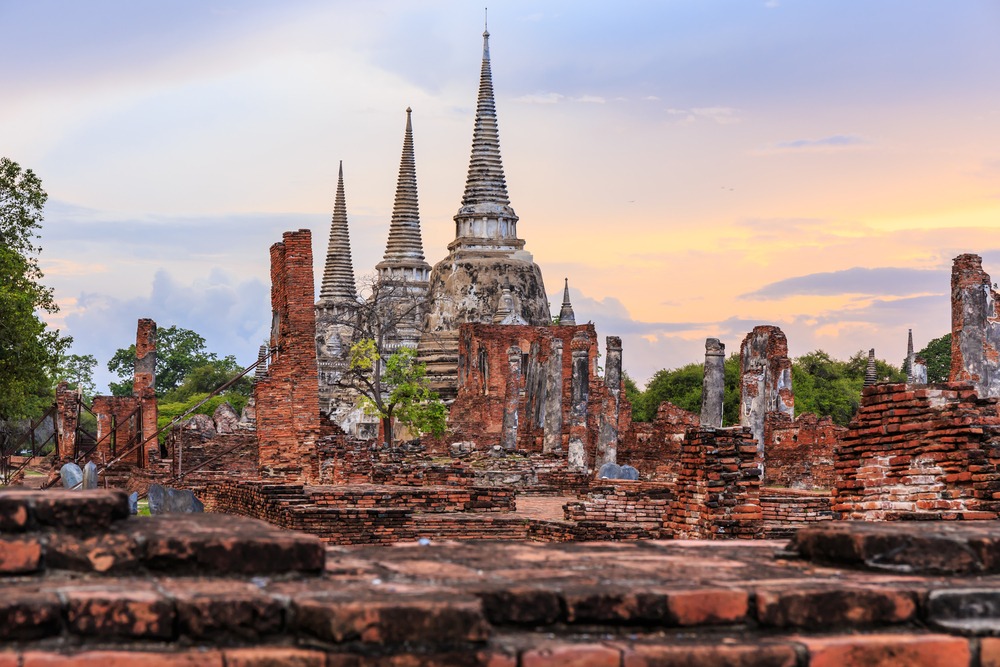
Wat Phra Sri Sanphet
A former royal temple in Ayutthaya, Wat Phra Sri Sanphet displays three iconic chedis, the sole structures spared by the Burmese sacking of 1767.
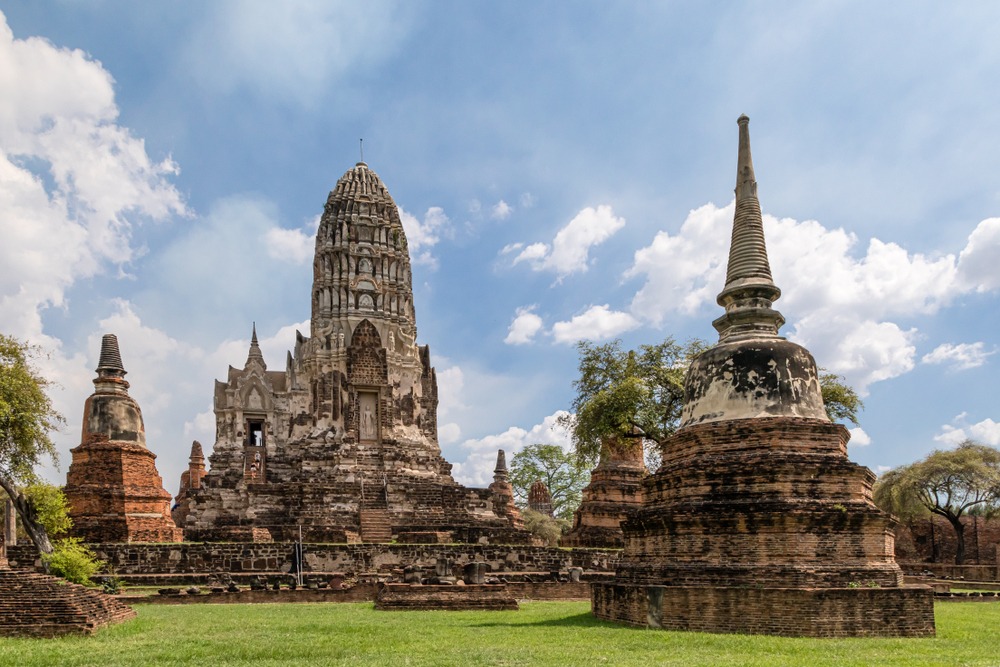
Wat Ratchaburana
Founded in 1424 in Ayutthaya, Wat Ratchaburana houses a restored prang, rare funerary frescoes and the legacy of a golden royal treasure.
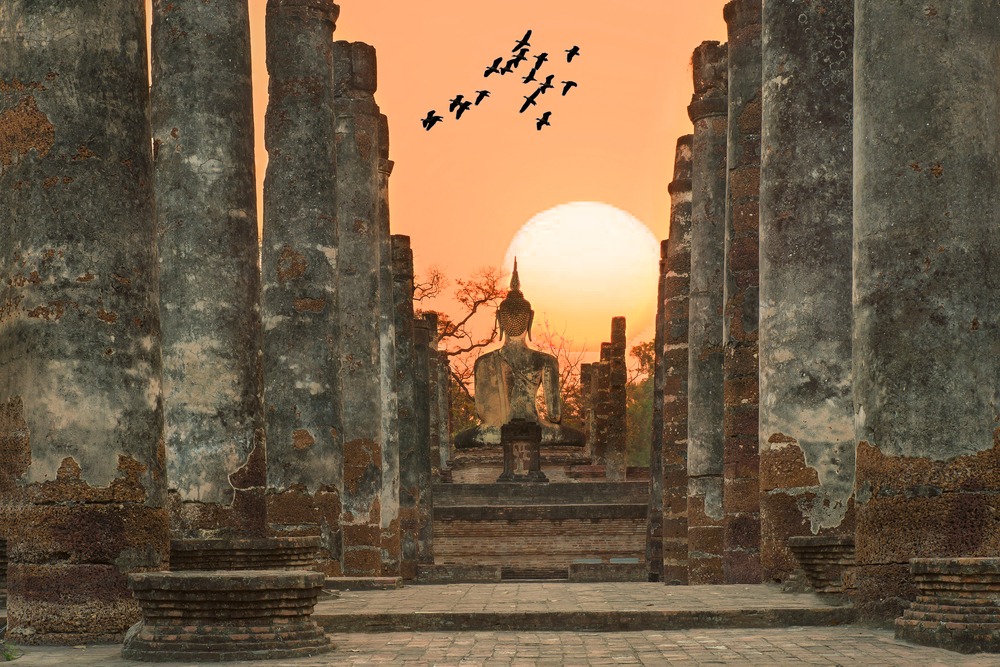
Wat Mahathat
Royal sanctuary of Ayutthaya founded in 1374, Wat Mahathat preserves its collapsed central prang, decapitated Buddhas and the famous head enveloped in a banyan tree.
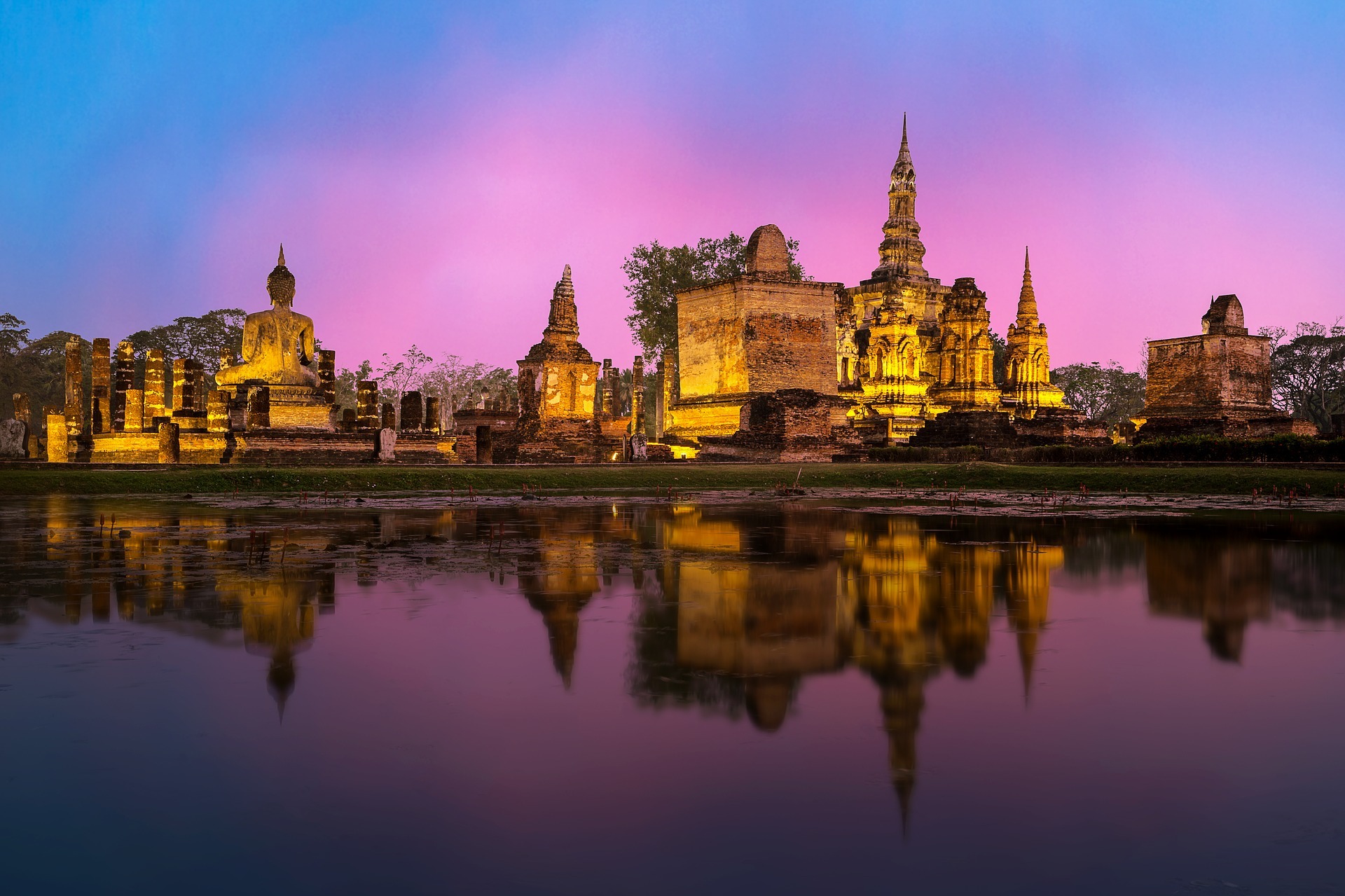
Ayutthaya
A UNESCO-listed former capital of the Siamese kingdom, Ayutthaya can be discovered in a day from Bangkok or savored over two days, among towering chedis, giant Buddhas and Khmer ruins.
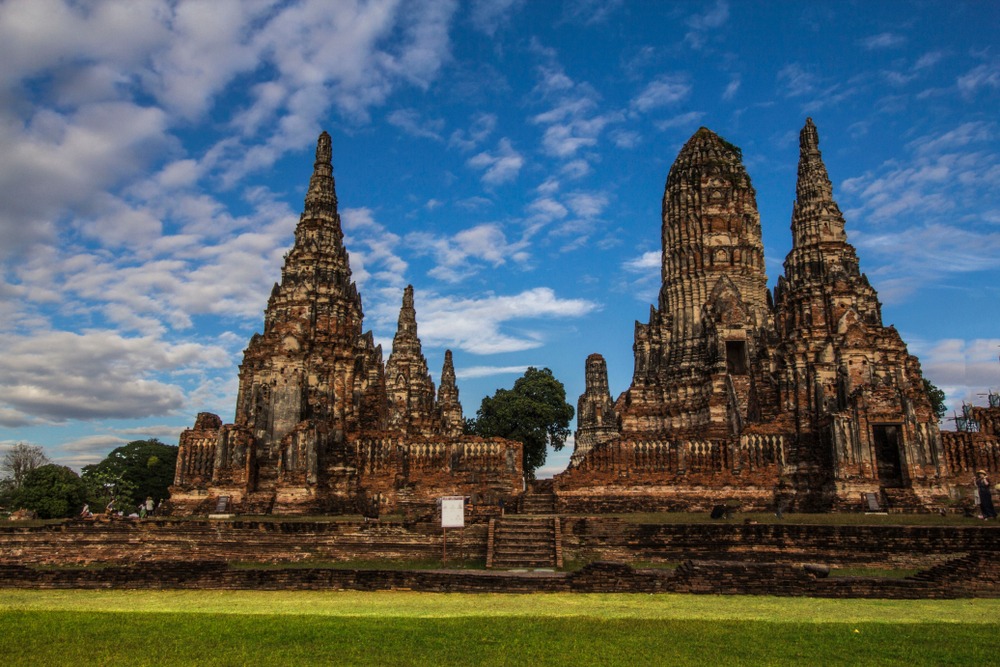
Wat Chai Watthanaram
A 17th-century Buddhist temple of Khmer style on the west bank of the Chao Phraya, Wat Chai Watthanaram stands as one of the major sites within Ayutthaya's historical park.
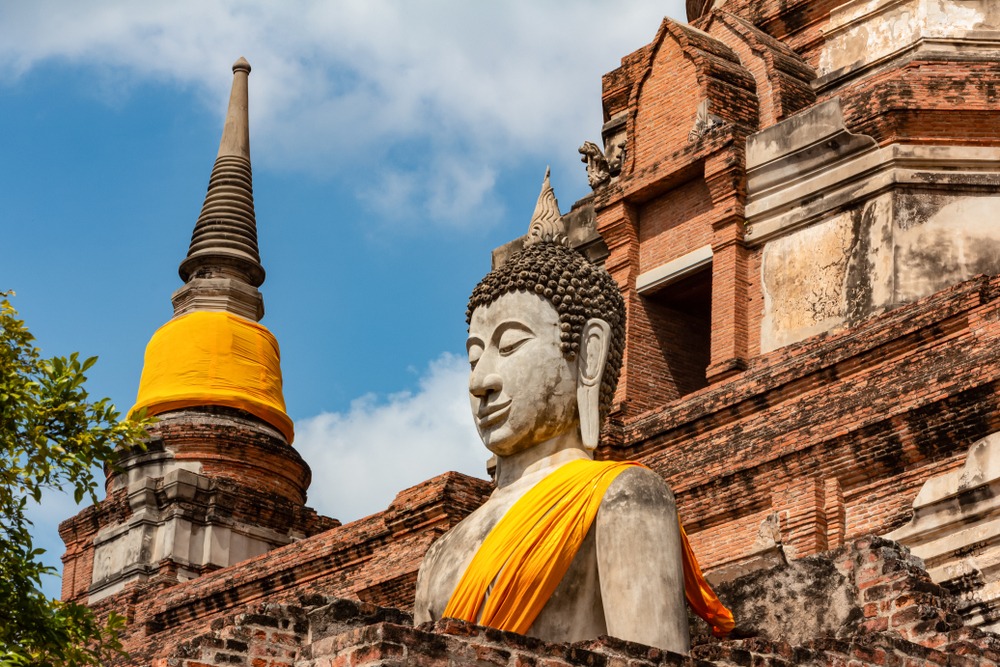
Wat Yai Chai Mongkhon
Located 3 km from Ayutthaya, Wat Yai Chai Mongkhon houses a monumental chedi commemorating King Naresuan's victory in 1592 and a 15-meter reclining Buddha.
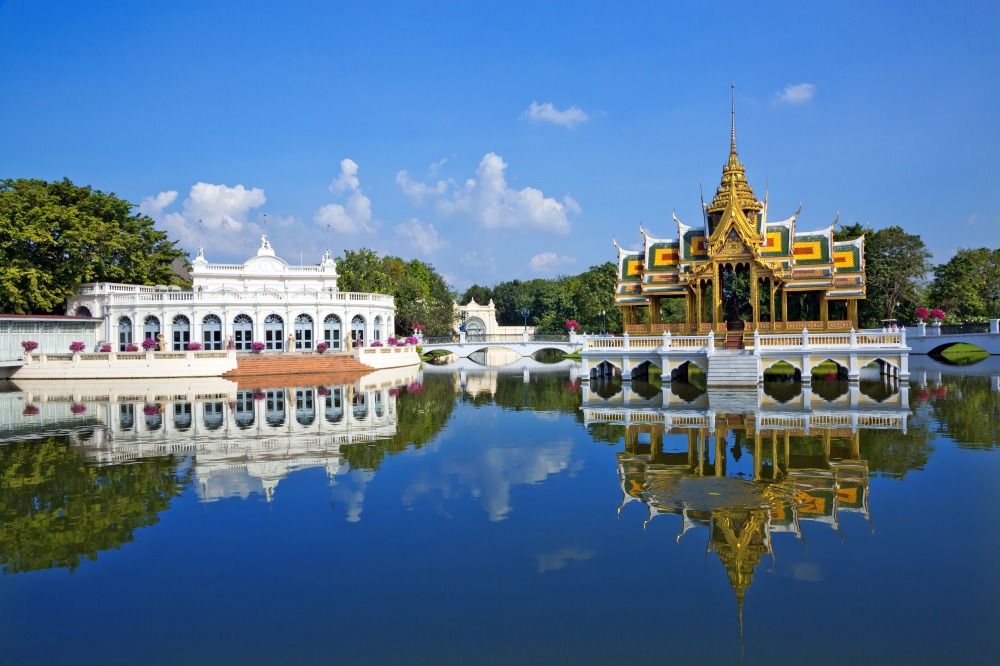
Bang Pa In
Twenty kilometers from Ayutthaya, Bang Pa In brings together a restored royal summer palace from the Rama IV era and a Buddhist temple in neo-gothic style designed by Joachim Grassi.
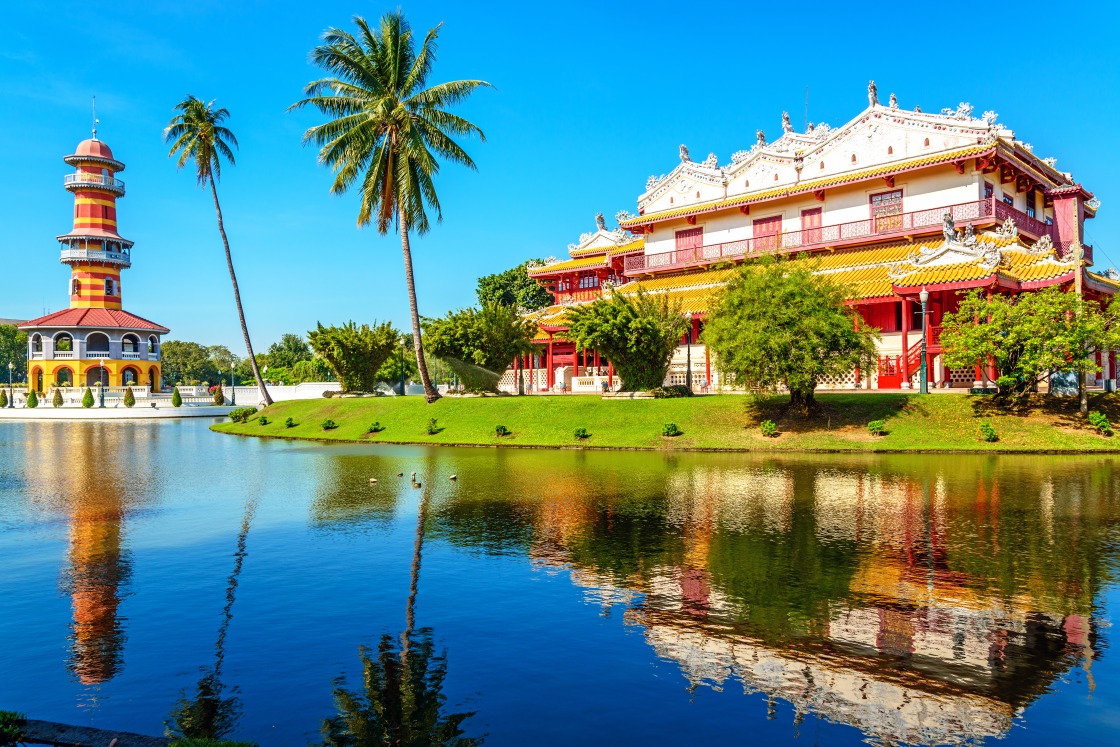
Bang Pa In Royal Palace
Former summer residence of the Kings of Siam south of Ayutthaya, Bang Pa In brings together pavilions in Thai, European, Chinese and Gothic styles within a riverside park.
Interested in this visit?
We can include it in your personalised itinerary.