Wat Chai Watthanaram
Wat Chai Watthanaram
31 8GVR+8PW 1 ตำบล บ้านป้อม Tambon Ban Pom, Amphoe Phra Nakhon Si Ayutthaya, Chang Wat Phra Nakhon Si Ayutthaya 13000, Thailand
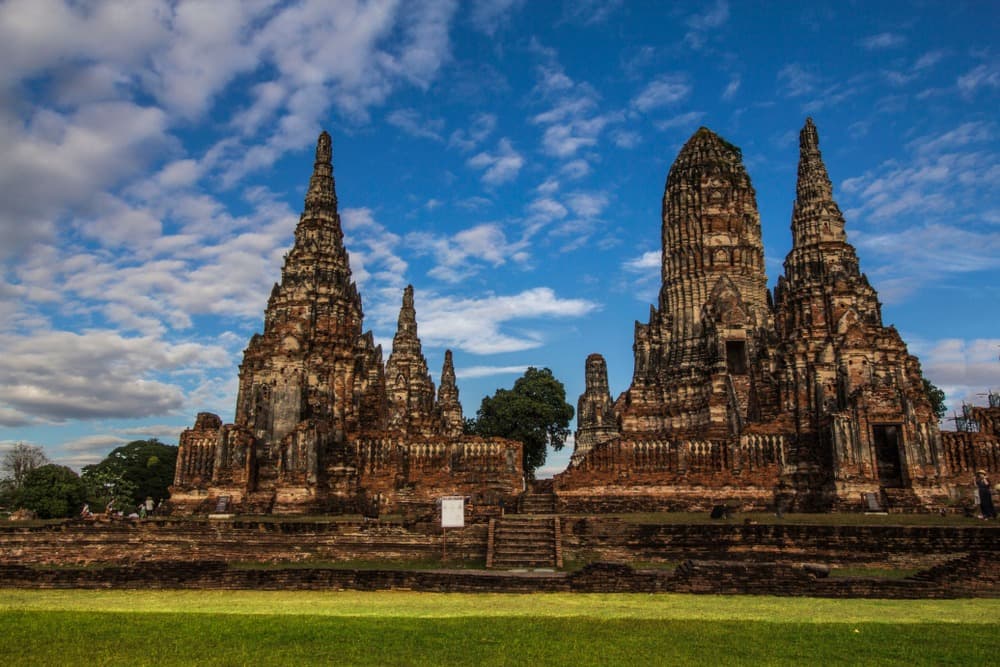
A 17th-century Buddhist temple of Khmer style on the west bank of the Chao Phraya, Wat Chai Watthanaram stands as one of the major sites within Ayutthaya's historical park.
With its 35-meter central prang surrounded by four satellite towers, Wat Chai Watthanaram ranks among the most evocative ruins in the Ayutthaya historical park. Built in the 17th century on the west bank of the Chao Phraya, this Buddhist temple of Khmer style bears witness to the height of the Siamese kingdom and Angkor's influence on Thai religious architecture.
Why visit Wat Chai Watthanaram
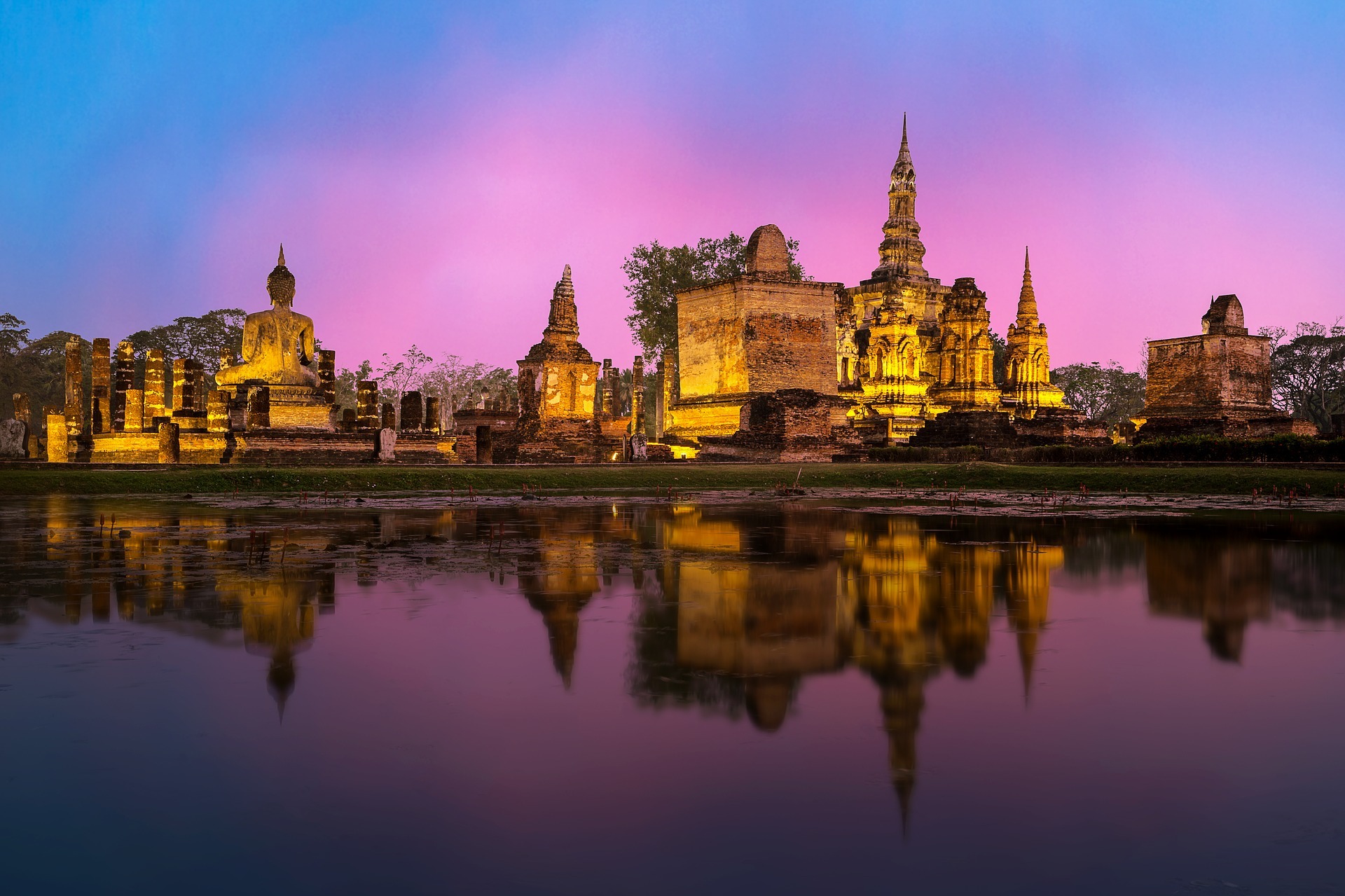
The site stands apart from other Ayutthaya temples through its quincunx layout of Khmer inspiration, its photogenic silhouette along the riverbank, and its history tied to a defining reign. Unlike the central Ayutthaya ruins, it rises set apart on the opposite bank from the historic heart, making it a destination in its own right. The late afternoon light on red brick and the reflection of the prangs on the Chao Phraya make it one of the region's most sought-after photography spots.
Temple history
The temple's inauguration dates back to 1630 under the reign of Prasat Thong. The sovereign had it built in honor of his late foster mother, on the very site of her former residence. The edifice received the name Wat Chai Watthanaram, meaning "Monastery of the Prosperous and Victorious Temple." Its construction on such a personal location blended Buddhist piety, filial homage, and the king's political affirmation before his subjects.
In the 17th century, Dutch merchant Van Vliet, on a mission to Siam, describes the complex under the name "great Abbentak" in his memoirs:
"We beheld some of the most elegant sanctuary towers of Siam, in particular the great and the small Abbentak, gleaming with gold and precious stones like a golden mountain. [...] There was once a gate that was opened only to sovereigns, to the exclusion of all other persons. The interior contained many images carved in solid gold."
Around 1767, the Burmese invasion brought this splendor to an end. The temple was looted, statues decapitated, gold stripped away. The site remained abandoned for 220 years. It took until 1987 for Thailand's Department of Fine Arts to undertake its restoration. The monument reopened to the public in 1992 under historic monument status. The Ayutthaya historical park, encompassing all ruins of the former capital, has been inscribed on the UNESCO World Heritage List since 1991.
What to see on site
The main prang and four satellite prangs
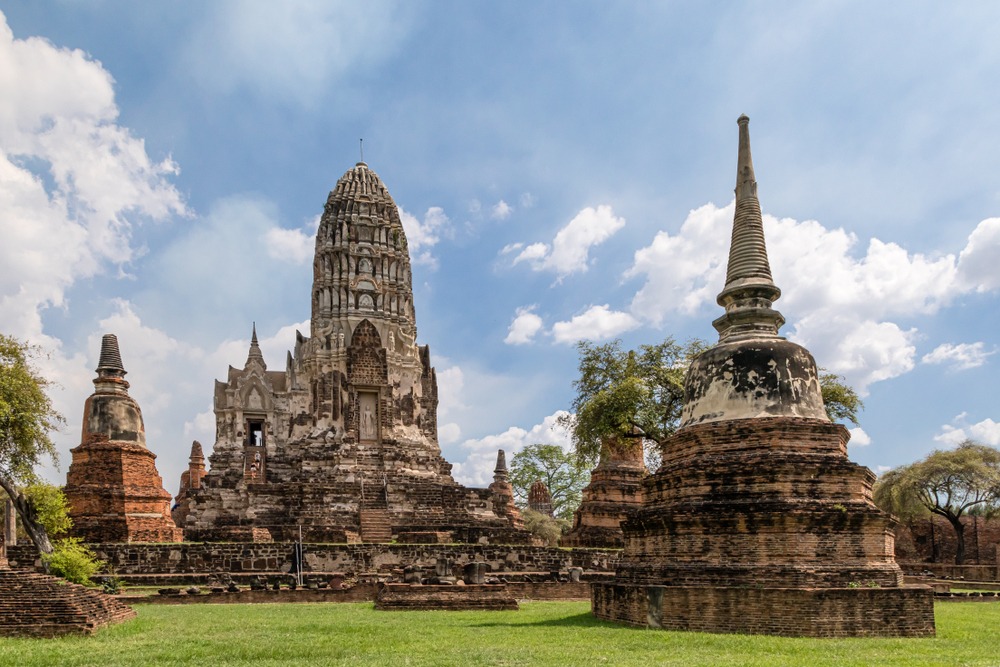
At the center of the site stands the main prang, a 35-meter-high sanctuary tower resting on a square platform. Its apex takes the shape of a lotus bud. It symbolizes Mount Meru, the cosmic axis of Buddhist thought. Four smaller prangs surround it, oriented toward the cardinal points and representing the four continents of traditional cosmography. This quincunx arrangement is characteristic of Khmer art and recalls, on a smaller scale, the Angkor Wat complex.
The enclosure and its eight gates
The original wall measured 194 meters long by 117 meters wide, about 2 meters high. It had eight gates: two to the north, two to the south, one to the west, and three opening onto the river. The central gate, on the riverside, opened only for the passage of the royal barge. The walls were once coated with white plaster; the covering has disappeared over the centuries, now revealing the red bricks that give the site its character.
The frescoes of the northeast gallery
In the gallery located northeast of the platform, fresco fragments illustrate the legend of the Vessantara Jataka, one of the Buddha's previous lives. Within, one can discern the Buddha in lotus position, rows of angels in an offering posture, and a palace surrounded by vegetation.
The decapitated Buddha statues
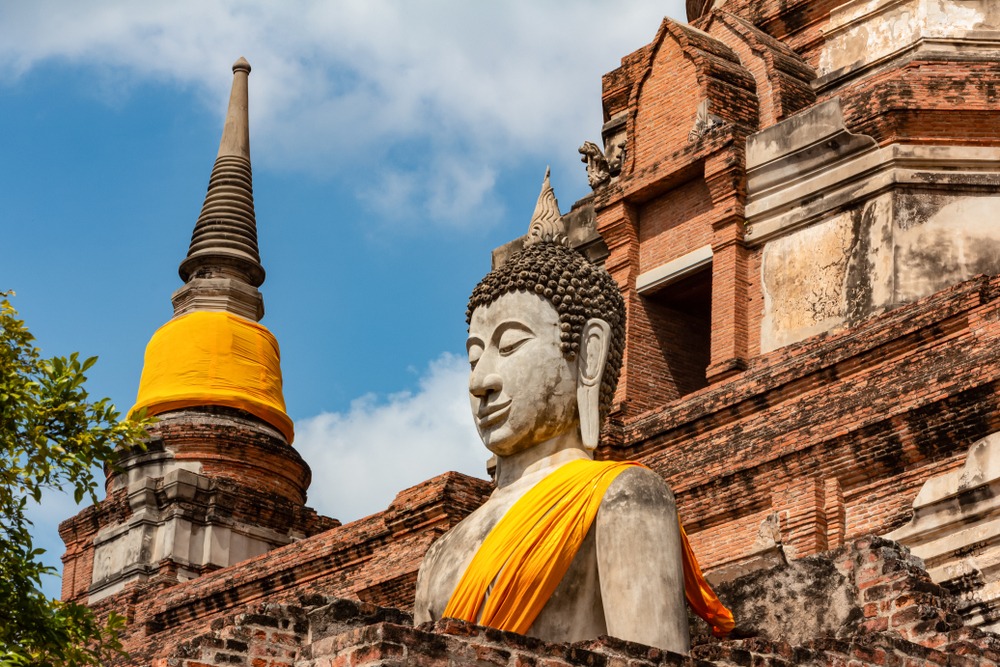
Along the walls, several seated Buddha statues have retained their silhouettes but lost their heads. These decapitations date back to the Burmese plunder of 1767, when sculpted heads were carried off as spoils.
The campanile-shaped chedi
North of the main prang, a small 18th-century chedi with campanile-like proportions holds the ashes of Prince Thamatthibet, eldest son of King Borommakot (1733–1758). Heir presumptive to the throne, the prince was condemned for adultery with four royal concubines and executed by 120 lashes. His father had this chedi built for his cremation, in accordance with court funeral customs.
Practical information
The site is open daily. Admission is charged for foreign visitors at a modest rate (in baht). Thai nationals enter free. Allow 1 to 1.5 hours on-site to tour the complex and take in the details. Bring a hat and water: the site offers little shade. Attire should cover shoulders and extend below the knees, as in any active Buddhist temple.
When to visit
The dry season, from November to February, remains the most comfortable period to visit Ayutthaya: manageable temperatures and low rainfall likelihood. March and April are the hottest months, sometimes scorching. The rainy season (June to October) can complicate walking between ruins. Late afternoon, about an hour before sunset, is the moment favored by photographers: golden light strikes the prangs and the Chao Phraya reflects the temple's silhouette.
How to get there
Wat Chai Watthanaram is located in the Ban Pom neighborhood of Phra Nakhon Si Ayutthaya, approximately 70 km north of Bangkok. The temple sits on the west bank of the Chao Phraya, set apart from Ayutthaya's historic heart, which occupies the central island.
From Bangkok, the train departing from Hua Lamphong Station (or Krung Thep Aphiwat) remains the simplest option, with a journey of approximately 1.5 to 2.5 hours depending on the service. Buses depart from Mochit bus station. Once in Ayutthaya, the temple is reached by taxi, tuk-tuk, or bicycle from the center, crossing the river by bridge or ferry. Several river cruises from Bangkok also include a stop at the site.
Nearby attractions
The Ayutthaya historical park groups around fifteen still-visible temples, from the some 1,500 that once graced the capital at its height, nicknamed the "Venice of the East" in its day. Several sites can be visited in a single day:
- The Wat Phra Sri Sanphet, former royal temple at the heart of the historical park.
- The Wat Mahathat, renowned for its Buddha head ensnared within the roots of a fig tree.
- The Wat Ratchaburana, whose central prang is among the best-preserved on the site.
- The Wat Na Phra Men, one of the rare temples to escape Burmese destruction.
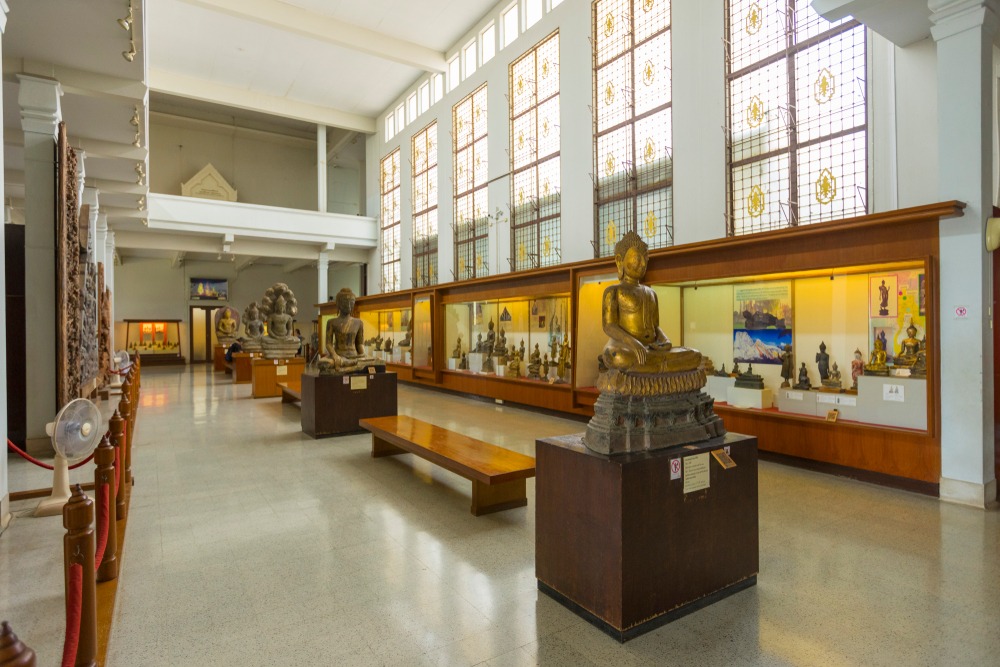
- The Chao Sam Phraya National Museum, which houses artifacts from the park's excavations.
Frequently asked questions
Frequently asked questions
Allow 1 to 1.5 hours to tour the complex, observe the northeast gallery's frescoes, and take photographs from the banks of the Chao Phraya.
Late afternoon, about an hour before sunset, highlights the brick color and allows you to capture the reflection of the main prang on the river.
Admission is paid separately on-site. A combined ticket exists for several historical park sites: inquire upon arrival to learn about current options.
Yes, the temple is accessible by bicycle from the center in about twenty minutes. You must cross the Chao Phraya by bridge or by ferry that accepts bicycles.
The temple is part of the Ayutthaya historical park, inscribed on the UNESCO World Heritage List in 1991. The designation concerns the entire park, of which Wat Chai Watthanaram is one of the major monuments.
To incorporate Ayutthaya and its Khmer temples into a complete itinerary, explore our tailor-made Thailand journeys.
Photos
Nearby
Also discover
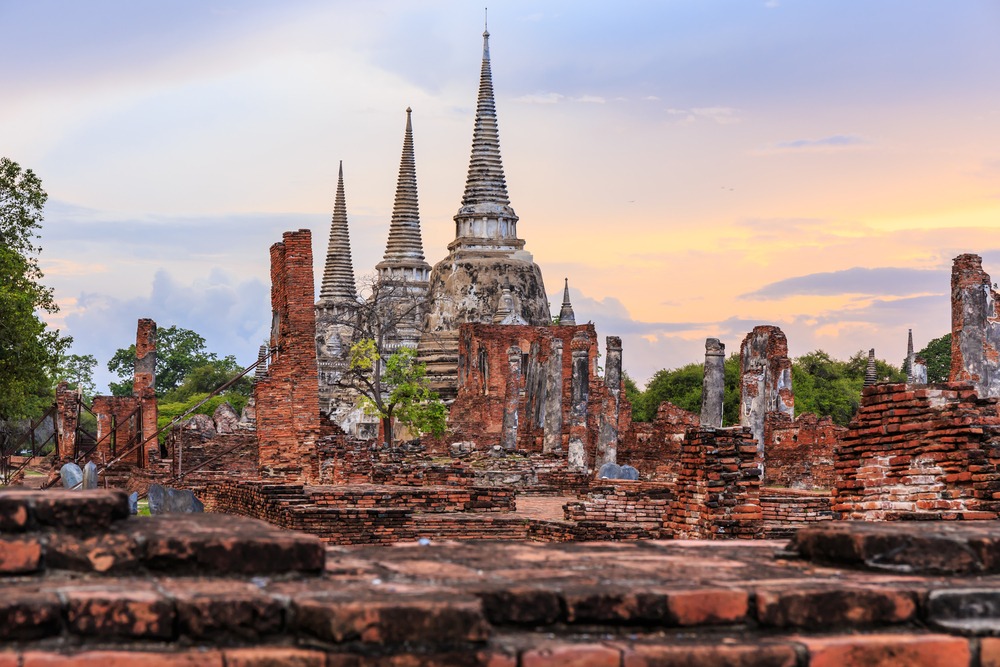
Wat Phra Sri Sanphet
A former royal temple in Ayutthaya, Wat Phra Sri Sanphet displays three iconic chedis, the sole structures spared by the Burmese sacking of 1767.
Ayutthaya
A UNESCO-listed former capital of the Siamese kingdom, Ayutthaya can be discovered in a day from Bangkok or savored over two days, among towering chedis, giant Buddhas and Khmer ruins.
Wat Yai Chai Mongkhon
Located 3 km from Ayutthaya, Wat Yai Chai Mongkhon houses a monumental chedi commemorating King Naresuan's victory in 1592 and a 15-meter reclining Buddha.
Interested in this visit?
We can include it in your personalised itinerary.