Chao Sam Phraya National Museum
Chao Sam Phraya National Museum
108 Thanon Rochana, Tambon Pratuchai, Amphoe Phra Nakhon Si Ayutthaya, Chang Wat Phra Nakhon Si Ayutthaya 13000, Thaïlande
The Chao Sam Phraya National Museum in Ayutthaya houses the treasures unearthed from Wat Ratchaburana: royal gold, ancient Buddhas, and manuscripts on palm leaves.
The Chao Sam Phraya National Museum holds the most significant collection of objects from the ancient capital of Siam. Buddha statues, royal goldwork, manuscripts, and ceremonial weapons trace nearly four centuries of Siamese history, from the fourteenth to eighteenth centuries.
Why visit the Chao Sam Phraya Museum
In Ayutthaya, red-brick ruins hint at former grandeur, but they reveal nothing of the objects that once filled temples and palaces. This is precisely what this museum shows: the surviving pieces from the 1767 sacking, unearthed in the last century from the crypts of sanctuaries.
The visit complements exploration of the historical park by providing the material context missing on site: Buddhist iconography, goldsmithing techniques, insignia of royal power. History and religious art enthusiasts will find unique pieces here, some visible nowhere else in Thailand.
Museum history and collections
The museum opened in 1961 to house treasures discovered a few years earlier. Ayutthaya, founded around the mid-fourteenth century, was for more than four hundred years the seat of a commercial empire that radiated across Southeast Asia. In 1767, Burmese armies took the city, plundered and burned it, ending the kingdom.
A portion of precious objects had nonetheless been hidden in temple crypts. In the 1950s, the restoration program of the ancient city allowed archaeologists to unearth these pieces, particularly from Wat Ratchaburana, a sanctuary founded in the fifteenth century. Most of the collection comes from this temple. The museum bears the name of the sovereign Chao Sam Phraya, patron of Wat Ratchaburana.
What to see in the museum
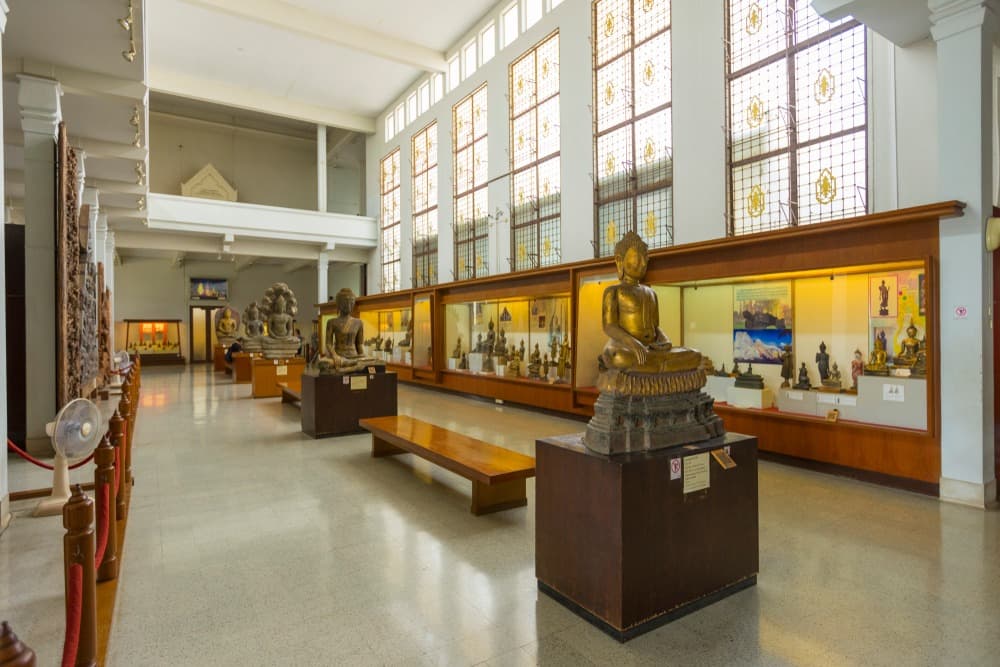
The exhibition is spread across three buildings. The main building houses the oldest pieces, organized by artistic school.
Buddhas by artistic tradition
The Buddhist iconography gallery allows you to compare several sculptural traditions side by side:
- a white stone Buddha in Dvaravati style (seventh to eleventh century), witness to the first wave of Buddhist art in Thailand;
- a Khmer-style Buddha seated in meditation, protected by a naga, a serpent with seven or eight heads forming a canopy;
- a Sukhothai-style Buddha, recognizable by its fluid lines and elongated face.
This confrontation of styles makes the museum a true condensed history course in Buddhist art.
The treasures of Wat Ratchaburana
A room is dedicated to precious objects unearthed from the Wat Ratchaburana crypt. Masterpiece: a golden royal elephant statue created in 1424, along with bracelets, necklaces, rings, and headdresses belonging to the royal family, often inlaid with fine stones.
Also on display: the sword of victory, attributed to an Ayutthaya sovereign, as well as votive tablets in metal and terra cotta.
Manuscripts, carved wood, and liturgical objects
Buddhist manuscripts on palm leaves, preserved in black and gold lacquered cabinets, illustrate the written transmission of sacred texts. The museum also presents carved teak doors, ornamental lintels, and architectural elements from vanished temples.
Practical information
The museum is open weekdays and weekends during daytime hours. Admission is charged, with reduced rates for Thai residents and full price for foreign visitors (modest amount). Plan 1.5 to 2 hours to tour the three buildings without rushing.
At the entrance, ask for the information brochure: it locates the masterpieces and provides historical context. A shop offers books on Ayutthaya's history and architecture. Parking and a small beverage stand are nearby.
Photography is forbidden in the three exhibition rooms. Cameras and video recording equipment are not allowed. Photography remains authorized elsewhere on the grounds, without flash.
To avoid crowds, visit on a weekday rather than weekends.
How to get there
The museum is located on Rochana Road, in the Pratoo Chai district, across from Phranakhon Si Ayutthaya Rajabhat University. From the center of the historic island, cross the Somdet Phra Naresuan Bridge, then continue straight on Rochana past two traffic lights: the museum is on the right, just next to the university.
The site is accessible on foot from the main temples in the historical park, by tuk-tuk, songthaew, or bicycle—a very common mode of transport in Ayutthaya.
Nearby attractions
The museum fits naturally into a day exploring Ayutthaya's historical park, inscribed on the UNESCO World Heritage list. In the immediate vicinity:
- Wat Ratchaburana, the source of the museum's main pieces;
- Wat Mahathat and its famous Buddha head ensnared in a fig tree's roots;
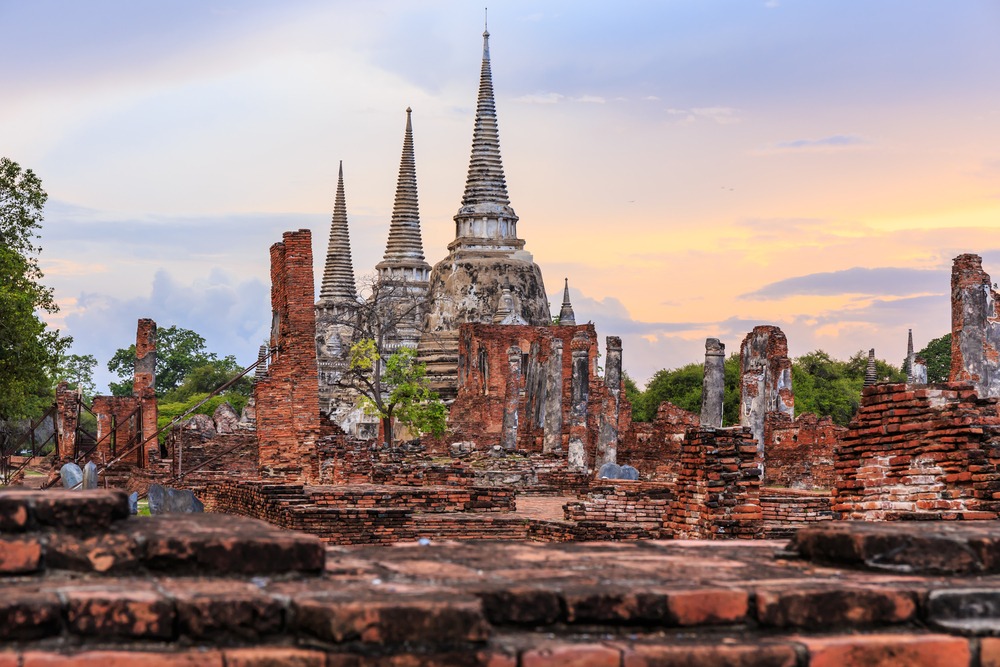
- Wat Phra Sri Sanphet, a former royal temple with three iconic chedis;
- Wat Chai Watthanaram, on the west bank of the river, particularly photogenic in the late afternoon.
Chandra Kasem Museum, Ayutthaya's second museum, usefully complements the visit for those wishing to deepen their understanding of the city's urban history.
Frequently asked questions
The museum is open weekdays and weekends during daytime hours. Admission is charged at a modest rate, higher for foreign visitors than for Thai residents. Exact hours and prices may change: verify before your visit.
No, photography is forbidden in the three exhibition rooms. It is permitted elsewhere on the grounds, provided flash is disabled.
Allow approximately 1.5 to 2 hours to explore the three buildings and main collections without rushing.
It is situated on Rochana Road, in the Pratoo Chai district of Ayutthaya, across from Phranakhon Si Ayutthaya Rajabhat University. Access it by crossing the Somdet Phra Naresuan Bridge and continuing past two traffic lights.
Most of the collection comes from excavations conducted in the 1950s at Wat Ratchaburana as part of Ayutthaya's restoration program. The museum bears the name of the sovereign Chao Sam Phraya, patron of this temple.
Eager to explore Ayutthaya and the ancient Siamese kingdom? Discover our tailor-made itineraries in travel to Thailand.
Photos
Nearby
Also discover
Wat Phra Sri Sanphet
A former royal temple in Ayutthaya, Wat Phra Sri Sanphet displays three iconic chedis, the sole structures spared by the Burmese sacking of 1767.
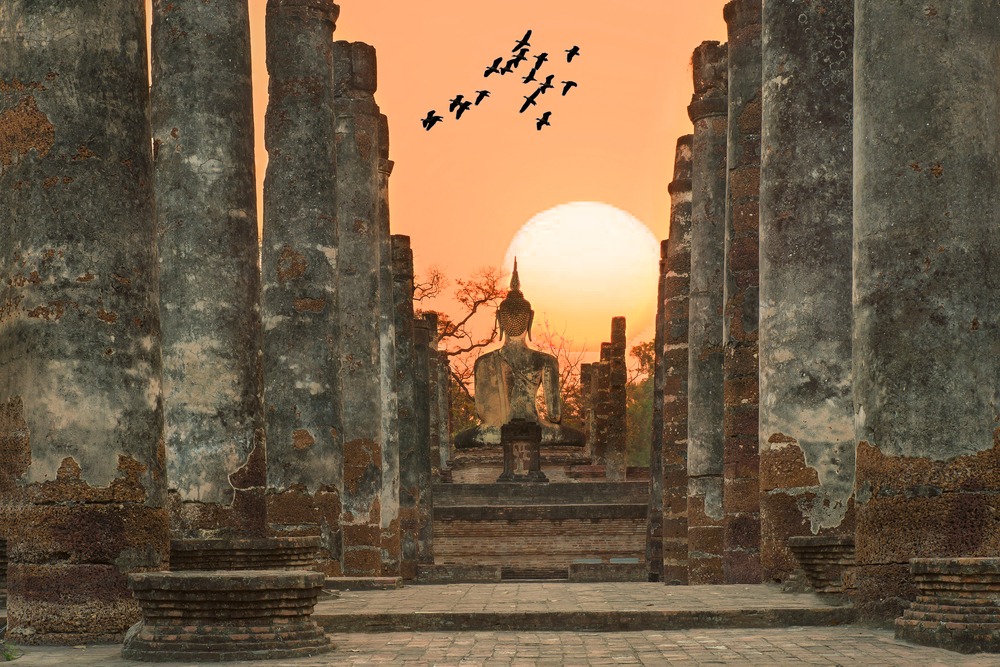
Wat Mahathat
Royal sanctuary of Ayutthaya founded in 1374, Wat Mahathat preserves its collapsed central prang, decapitated Buddhas and the famous head enveloped in a banyan tree.
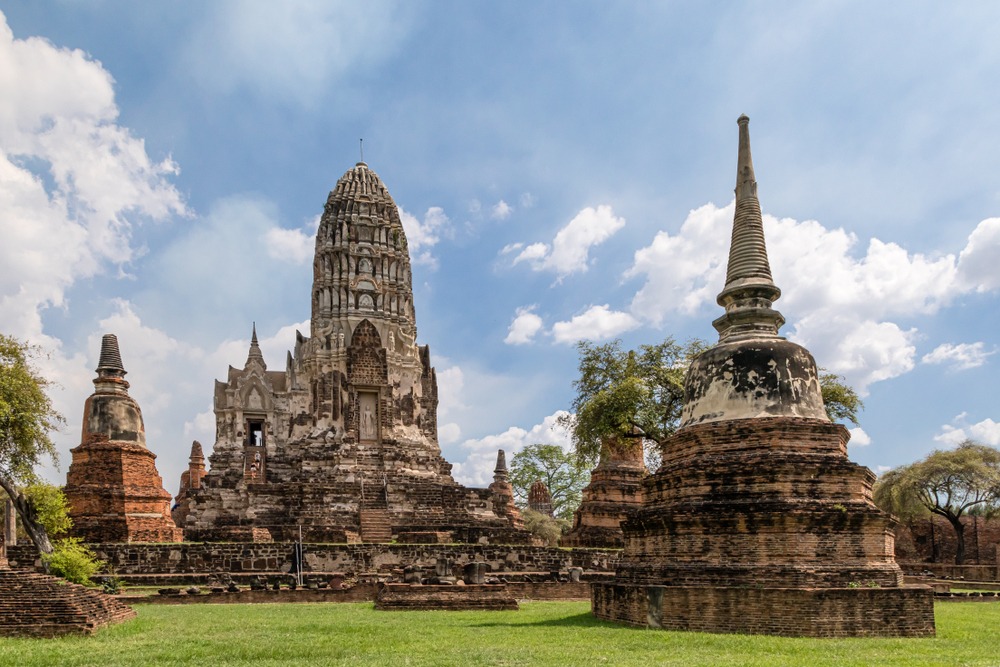
Wat Ratchaburana
Founded in 1424 in Ayutthaya, Wat Ratchaburana houses a restored prang, rare funerary frescoes and the legacy of a golden royal treasure.
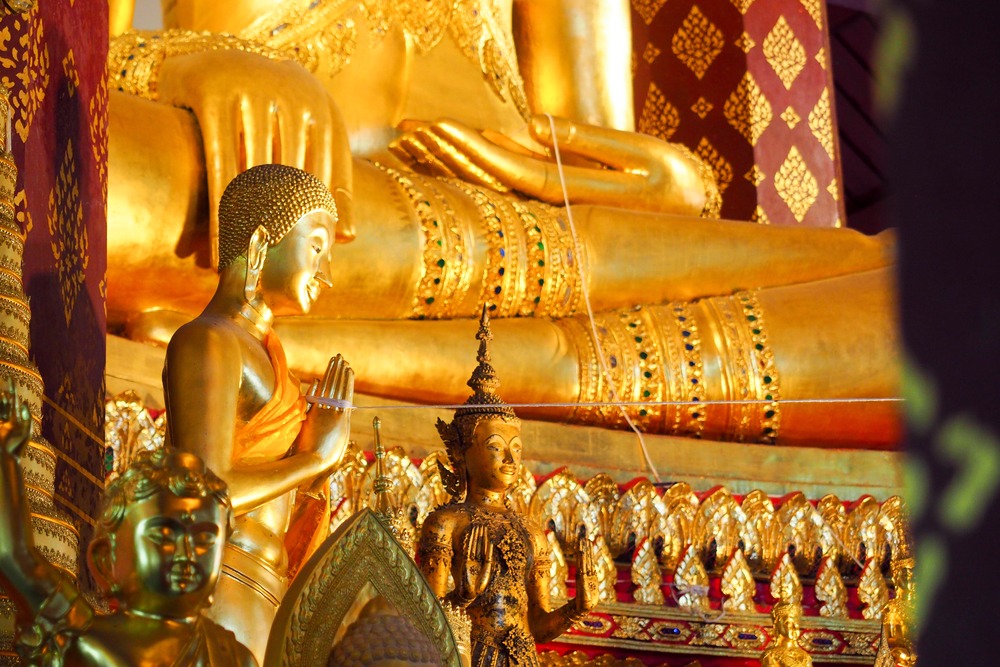
Wat Na Phra Men
The sole Ayutthaya temple to escape the 1767 destruction, Wat Na Phra Men preserves its original architecture and several ancient Buddhas.
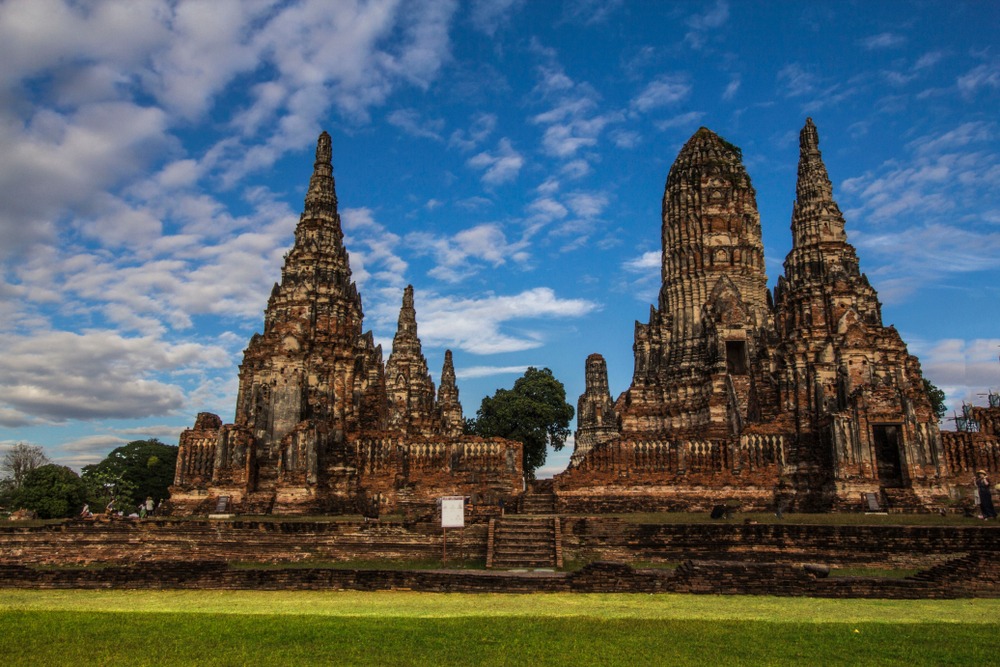
Wat Chai Watthanaram
A 17th-century Buddhist temple of Khmer style on the west bank of the Chao Phraya, Wat Chai Watthanaram stands as one of the major sites within Ayutthaya's historical park.
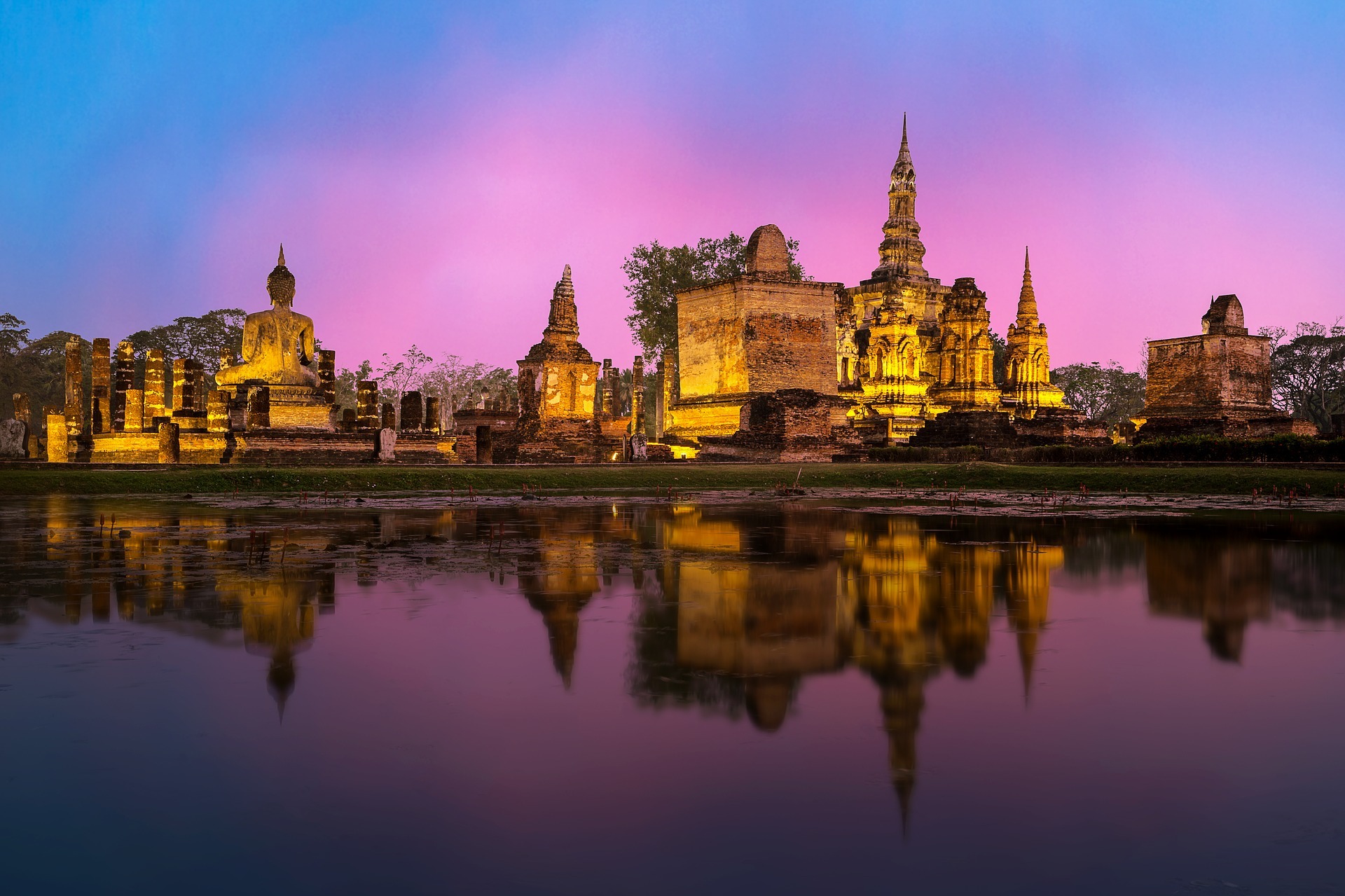
Ayutthaya
A UNESCO-listed former capital of the Siamese kingdom, Ayutthaya can be discovered in a day from Bangkok or savored over two days, among towering chedis, giant Buddhas and Khmer ruins.
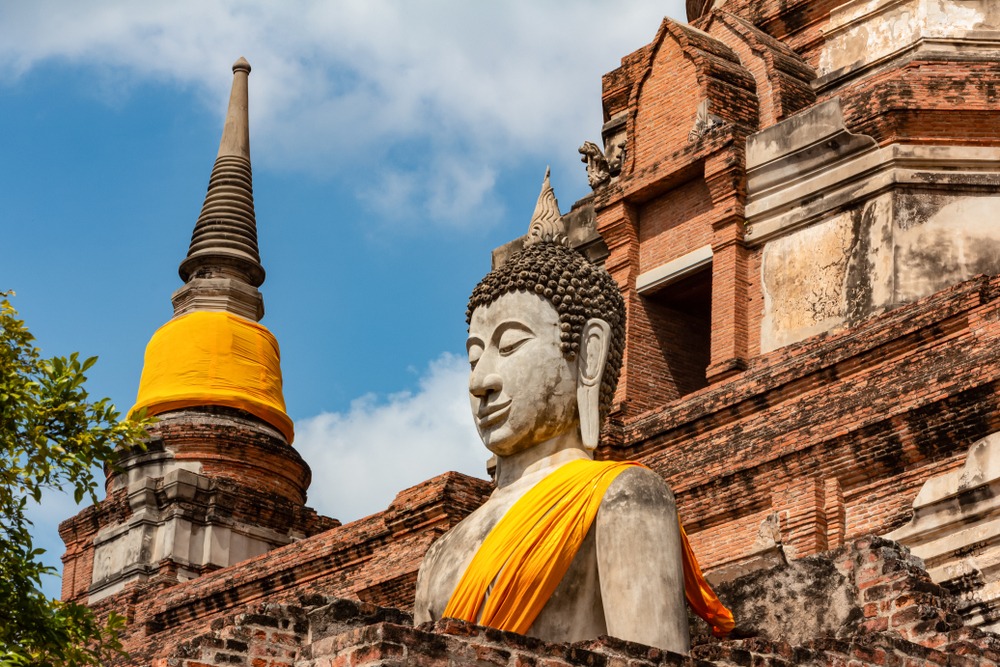
Wat Yai Chai Mongkhon
Located 3 km from Ayutthaya, Wat Yai Chai Mongkhon houses a monumental chedi commemorating King Naresuan's victory in 1592 and a 15-meter reclining Buddha.
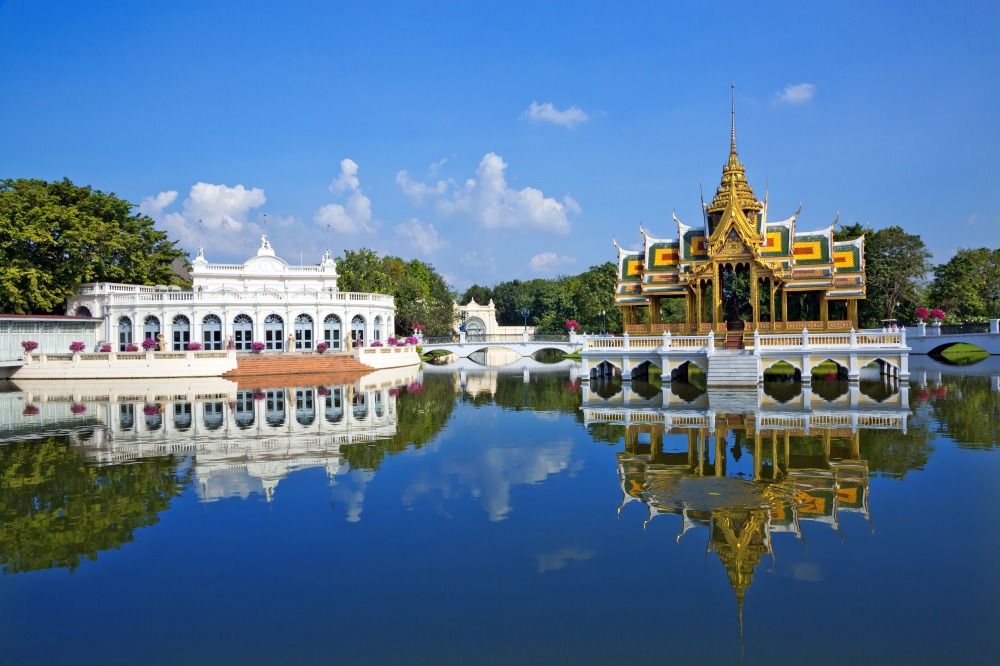
Bang Pa In
Twenty kilometers from Ayutthaya, Bang Pa In brings together a restored royal summer palace from the Rama IV era and a Buddhist temple in neo-gothic style designed by Joachim Grassi.
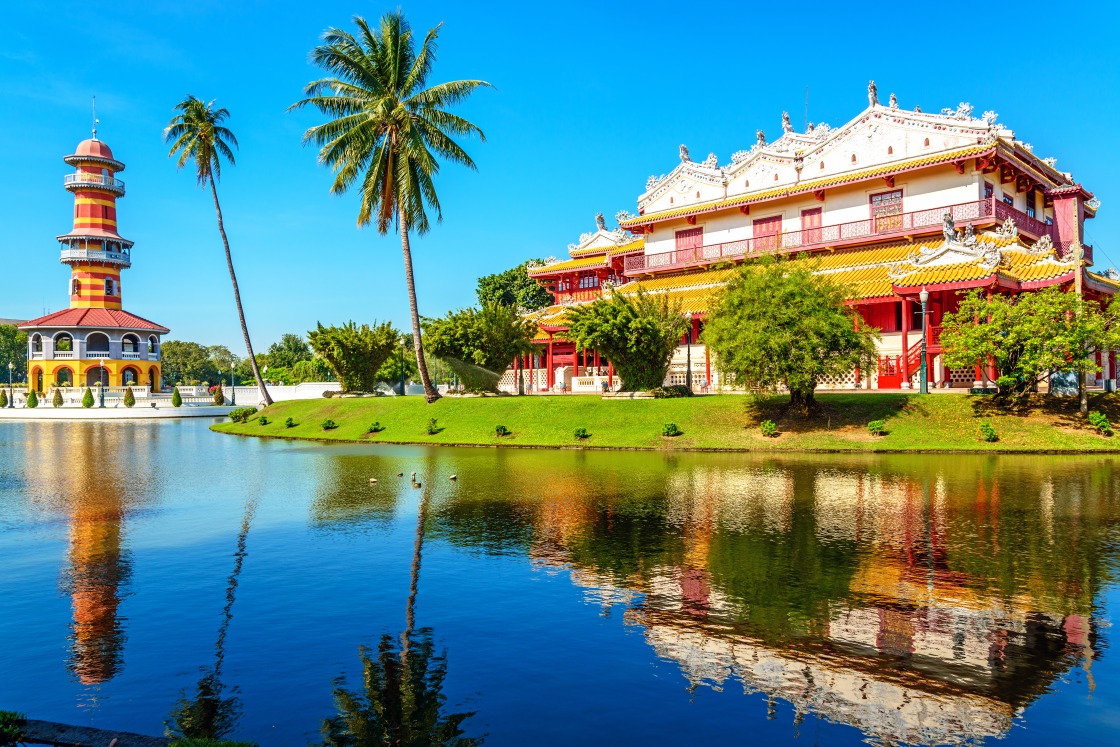
Bang Pa In Royal Palace
Former summer residence of the Kings of Siam south of Ayutthaya, Bang Pa In brings together pavilions in Thai, European, Chinese and Gothic styles within a riverside park.
Interested in this visit?
We can include it in your personalised itinerary.