Wat Phra Kaeo
Wat Phra Kaeo
Na Phra Lan Rd, Khwaeng Phra Borom Maha Ratchawang, Khet Phra Nakhon, Krung Thep Maha Nakhon 10200, Thaïlande
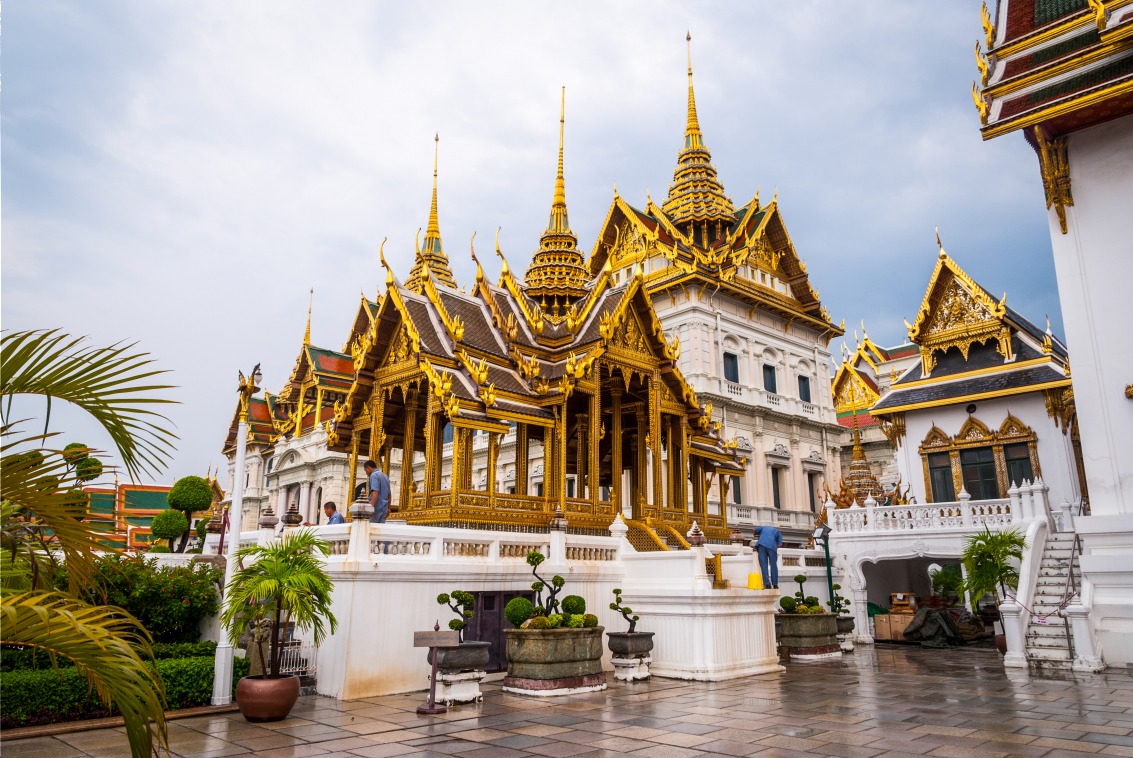
Royal temple of the Emerald Buddha, at the heart of Bangkok's Grand Palace, founded in 1783 by Rama I on the island of Rattanakosin.
Wat Phra Kaeo, officially Wat Phra Si Rattana Satsadaram, occupies the northeast corner of the Grand Palace in Bangkok. This royal temple houses the Emerald Buddha, a jade statue revered as Thailand's palladium. Built from 1783 onwards, it forms together with the palace the ceremonial centre of Rattanakosin island, on the eastern bank of the Chao Phraya.
Why visit Wat Phra Kaeo
Wat Phra Kaeo brings together in one location the most venerated statue in the country, Rattanakosin architecture at its finest, and the setting for major royal ceremonies. Unlike other Buddhist temples in the capital, it has never housed a monastic community: it belonged to the king's private domain, and only monks summoned on special occasions performed rituals there.
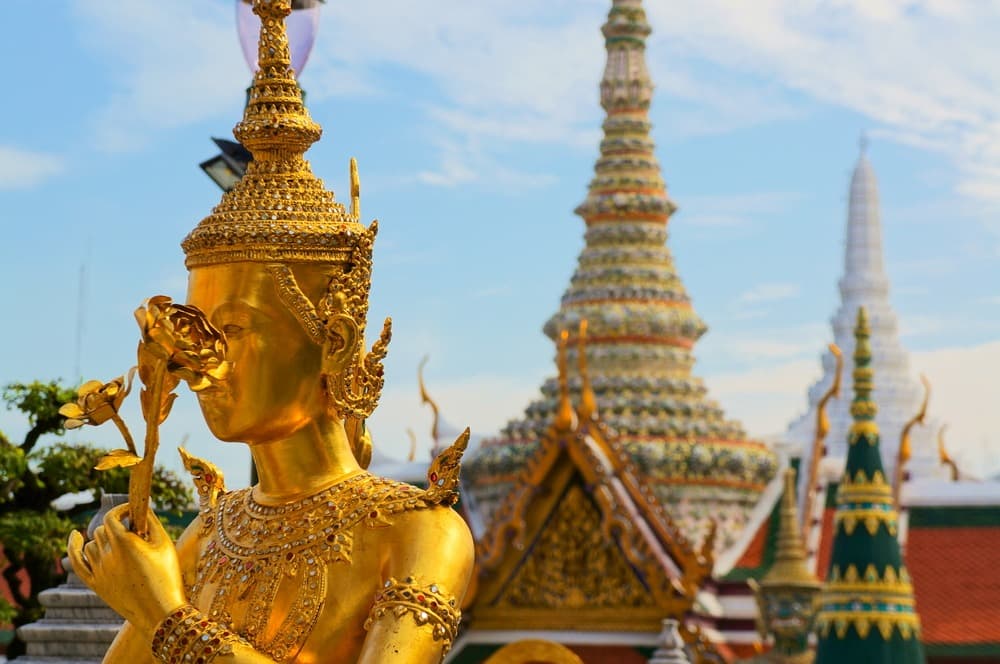
The complex comprises around a dozen pavilions, painted galleries, gilded chedis, a library of sacred texts, and long friezes depicting the Ramakien. For many travellers, it is the first stop on a broader visit that includes the Grand Palace and the surrounding historic quarter.
History of the temple
When Rama I proclaims himself king in 1782 and establishes the Chakri dynasty, he decides to move the capital from Thonburi to Bangkok, on the opposite bank of the Chao Phraya. The new city, protected by walls that form what is now known as Rattanakosin island, must receive a palace and temple befitting the emerging dynasty.
Construction of Wat Phra Kaeo begins in 1783. The ordination hall, the complex's first building, is completed within two years, while the royal residence is still wooden. Successive sovereigns later expand the sanctuary, each adding pavilions, statues, or decorations.
The Emerald Buddha itself travelled far before arriving here. Kept at Wat Chedi Luang in Chiang Mai, it leaves the city after the earthquake that strikes the great stupa in 1545, reaches a Laotian temple in 1551, then Wat Arun, then the royal temple of Thonburi. Its transfer to Wat Phra Kaeo takes place on 22 March 1784, an event that mobilises the entire capital.
What to see on site
The Emerald Buddha
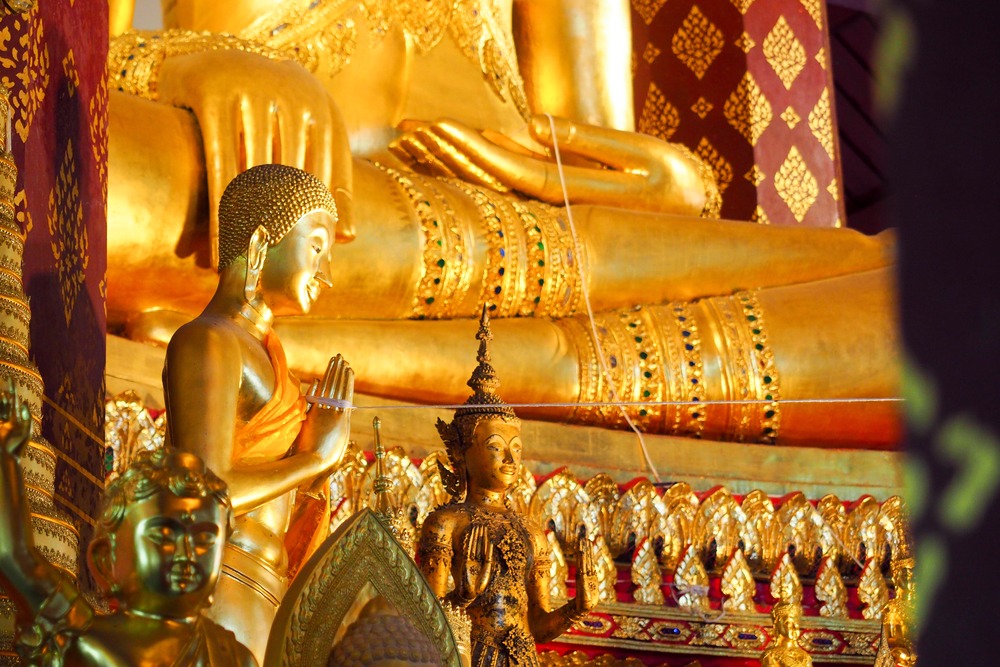
The statue stands at the far end of the ordination hall, elevated by a flight of steps. Despite its name, it is carved from jade rather than emerald. Standing 66 cm tall, the Buddha is depicted in the lotus position, draped in a gold robe. Three different robes are alternated throughout the year during a ceremony presided over by the king, marking the hot, rainy, and cool seasons.
On either side of the base stand two standing statues with palms facing forward in the gesture of calming the waters: Phra Phuttha Yotfa Chulalok on the right and Phra Phuttha Loetla Naphalai on the left. Their donation was made public through a proclamation by Rama III. At the foot of the base are also two marble vases and a preaching pulpit, presented to the temple in 1908 by a European sovereign.
The galleries and golden stupa
East of the ordination hall, the galleries display forty-two small copper Buddhas, commissioned by Rama III and gilded under Rama IV. Further on, a golden stupa contains a relic of Buddha. The interior walls of the galleries encircling the complex are covered with a continuous fresco illustrating the Ramakien, the Thai version of the Ramayana.
The Angkor scale model
North of the library stands a reduced-scale reproduction of the Angkor site. Rama IV had initially wished to have certain Khmer monuments transported to Bangkok; faced with the impossibility of the project, he had this scale model built, which remains one of the complex's most viewed curiosities.
When to visit
The dry season, from November to February, offers the most comfortable conditions for a visit: clear skies, bearable heat, and open skies that show off the gilded roofs to best advantage. March and April are already very hot, and the monsoon from June to October brings showers that are often brief but intense.
Three moments punctuate the temple's ceremonial calendar: the king's birthday, Thai New Year (Songkran, mid-April), and the two other dates for renewing the Buddha's gold robe. The complex may then be partially closed to the public or particularly busy.
Practical information
The temple is open daily in the morning and early afternoon, with last entry around mid-afternoon. It remains accessible on public holidays, except during royal ceremonies that may require exceptional closure. Allow 2 to 3 hours for a thorough visit to Wat Phra Kaeo and the Grand Palace.
The ticket, sold at a single rate for foreign visitors, also gives access to Queen Sirikit's Textile Museum, located within the grounds. Dress covering shoulders and knees is mandatory; clothing can be borrowed free of charge at the entrance for a deposit. Arriving at opening time helps you avoid the longest queues.
How to get there
The temple is located within the Grand Palace grounds, in Phra Nakhon district. The simplest option from tourist quarters along the river is to take a Chao Phraya shuttle boat to Tha Chang pier, a few minutes' walk from the entrance. Taxis and tuk-tuks also serve the area, but traffic is heavy during the day.
Nearby
Wat Phra Kaeo is part of a very dense heritage cluster:
- Grand Palace: the complex of which the temple is part, former throne halls and royal residences.
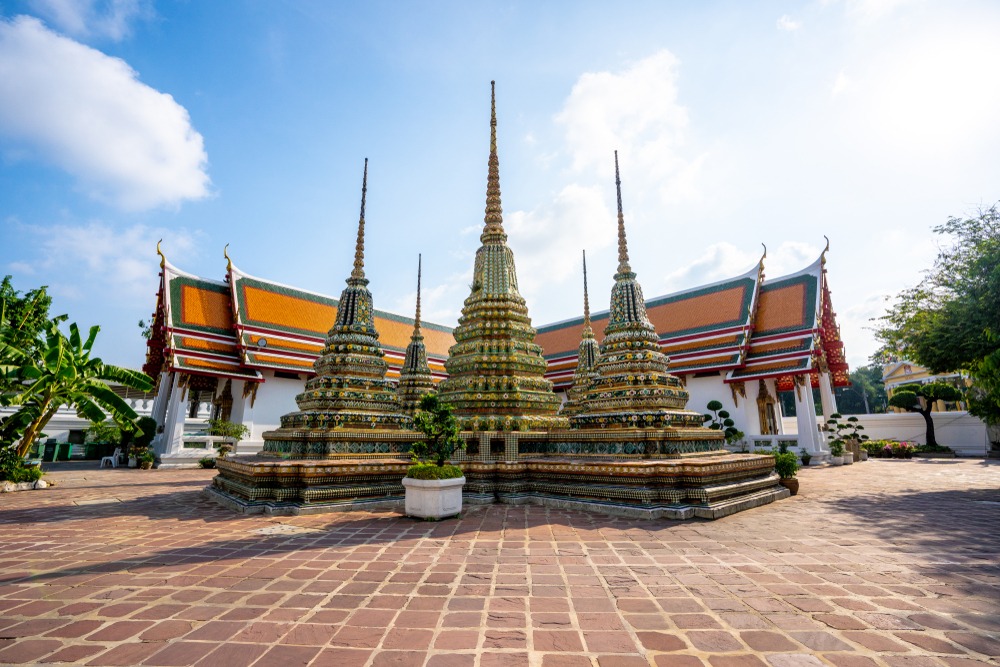
- Wat Pho: a ten-minute walk south, home to the Reclining Buddha and a traditional Thai massage centre.
- Wat Arun: on the opposite bank of the Chao Phraya, accessible by shuttle boat from Tha Tien pier.
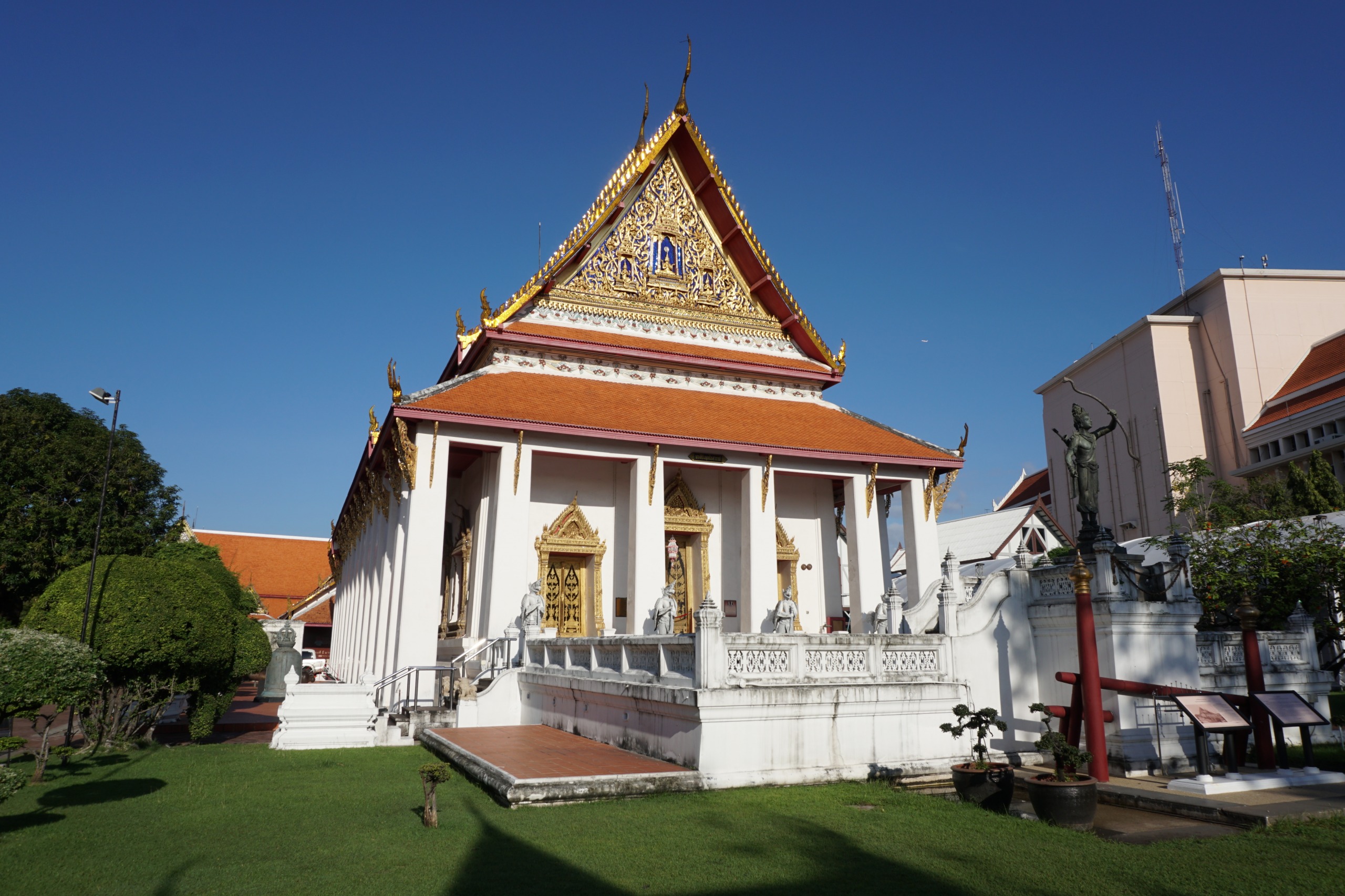
- National Museum: a short distance to the north, to place the Chakri dynasty in Siamese history.
Frequently asked questions
No. Despite its name, the 66 cm statue is carved from jade. The term "emerald" refers to the stone's deep green hue.
The statue has three gold robes corresponding to the hot, rainy, and cool seasons. Their change, presided over by the king, is one of the major ceremonies in the royal calendar.
Shoulders, knees, and décolletage must be covered. Long trousers or long skirts, long sleeves. Clothing is available at the entrance if needed.
Allow 2 to 3 hours to explore Wat Phra Kaeo and the Grand Palace at a leisurely pace, longer if you include the Textile Museum.
It remains open on ordinary public holidays. Only certain royal ceremonies may result in partial or total closure, announced in advance.
To include Wat Phra Kaeo in a complete itinerary combining Bangkok, the north, and the southern islands, consult our Thailand travel suggestions.
Photos
Nearby
Also discover
Grand Palace of Bangkok
Royal complex founded in 1782 by Rama I, the Grand Palace of Bangkok houses Wat Phra Kaeo and the Emerald Buddha. Practical guide to prepare your visit.
Wat Pho
South of Bangkok's Grand Palace, Wat Pho houses a 46-meter Reclining Buddha, 400 statues, and a UNESCO-recognized Thai massage school.
Phra Nakhon District
Phra Nakhon concentrates Bangkok's founding heritage: Grand Palace, Wat Phra Kaeo, Wat Pho, National Museum and the Indian quarter of Phahurat.
Bangkok
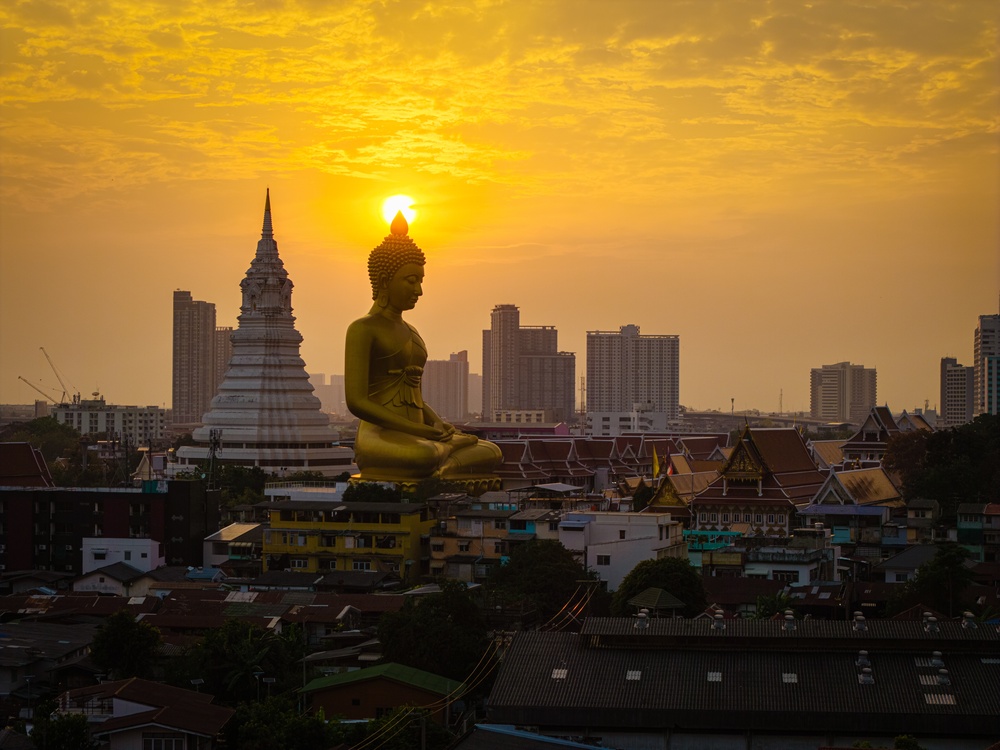
Bangkok, Thailand's vibrant capital, sometimes described as chaotic, is often overlooked by travelers who prefer the northern treks or southern beaches. Yet bypassing Bangkok during your Thailand trip means missing out on incredible Thai cultural diversity.
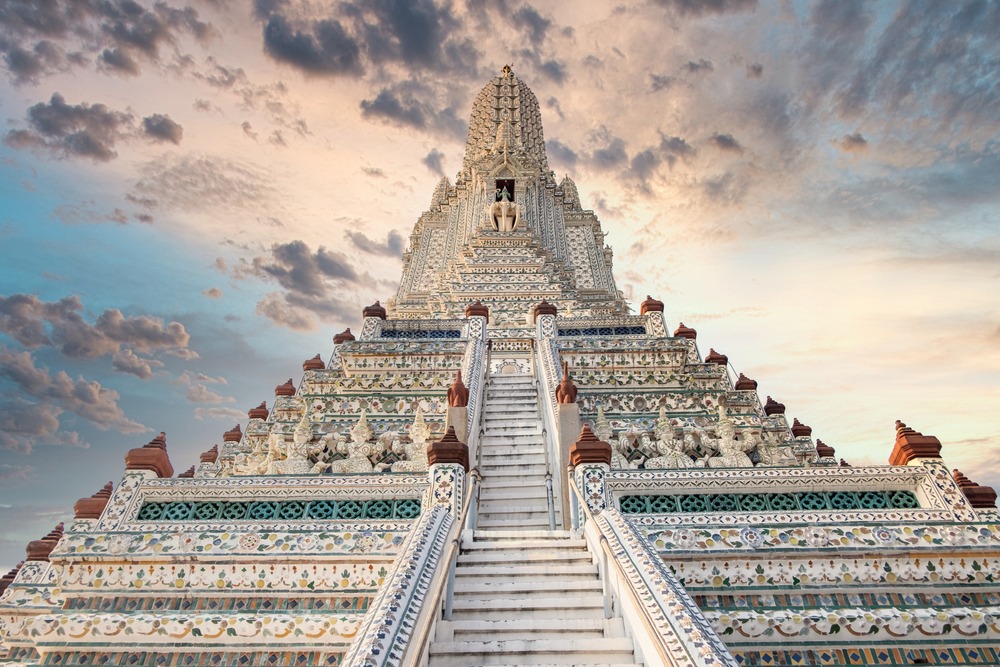
Wat Arun
Wat Arun, or the Temple of Dawn, dominates the western bank of the Chao Phraya in Bangkok with its 70-meter prang covered in porcelain mosaics.
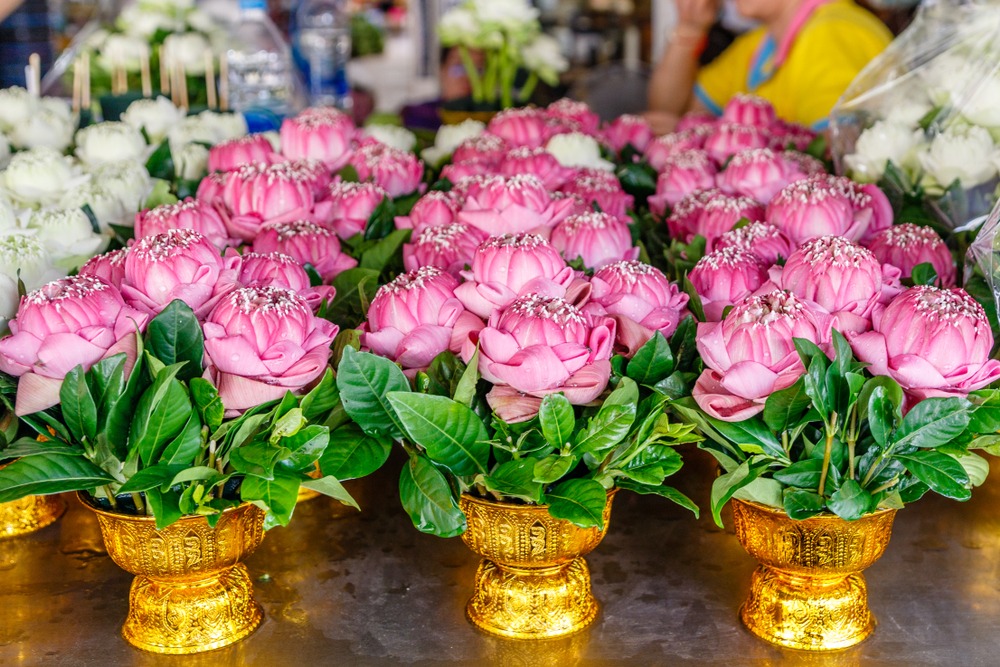
Pak Khlong Talat
Historic flower market in Bangkok, open around the clock near the Chao Phraya, supplying hotels, restaurants and temples in the capital with fresh blooms.
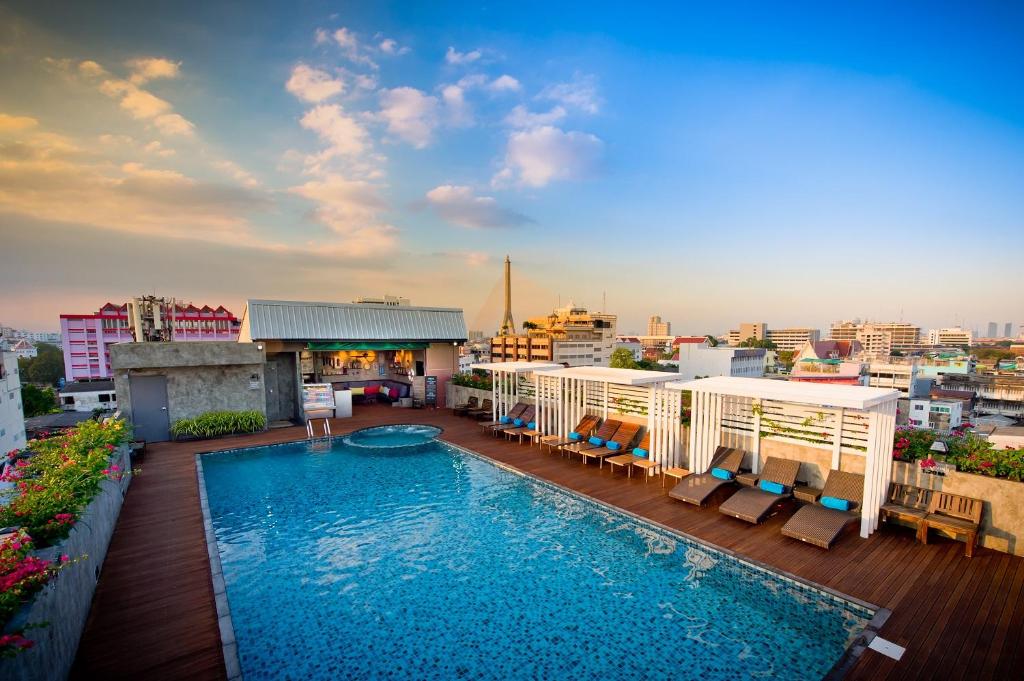
Nouvo City Hotel
Urban comfort hotel in Banglamphu's historic district, Bangkok: rooms of 32 to 38 m², spa, two pools and recognized halal dining.
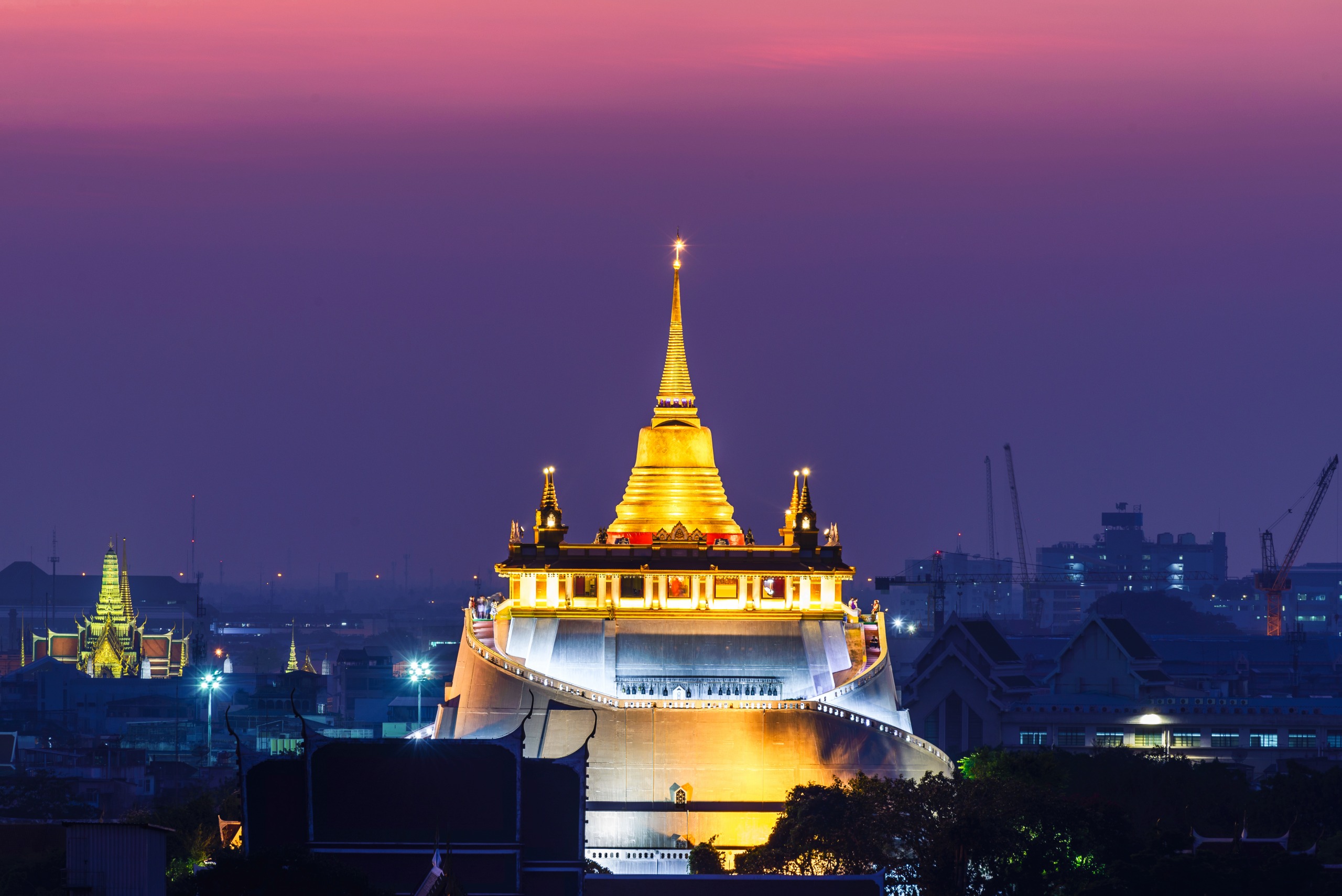
Wat Saket
Wat Saket, or the Golden Mount Temple, dominates Bangkok from its artificial hilltop. History, ascent of the golden chedi and visiting tips.
Chao Praya
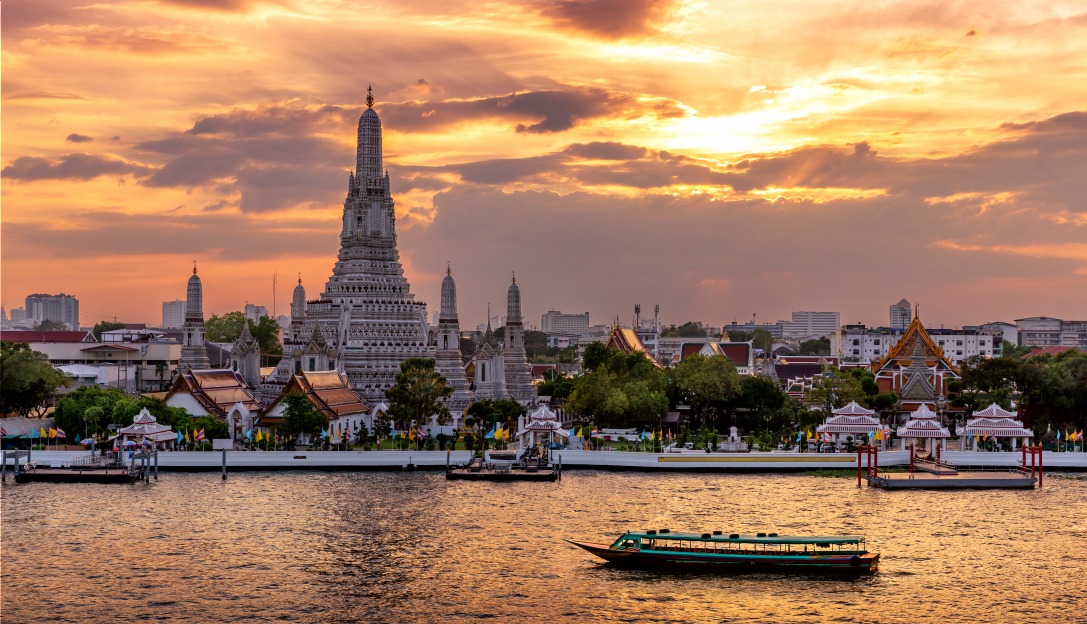
Spanning 372 km, the Chao Phraya has shaped Bangkok since 1782. Temples, markets, boats: your guide to understanding and exploring the river.
Wat Suwannaram
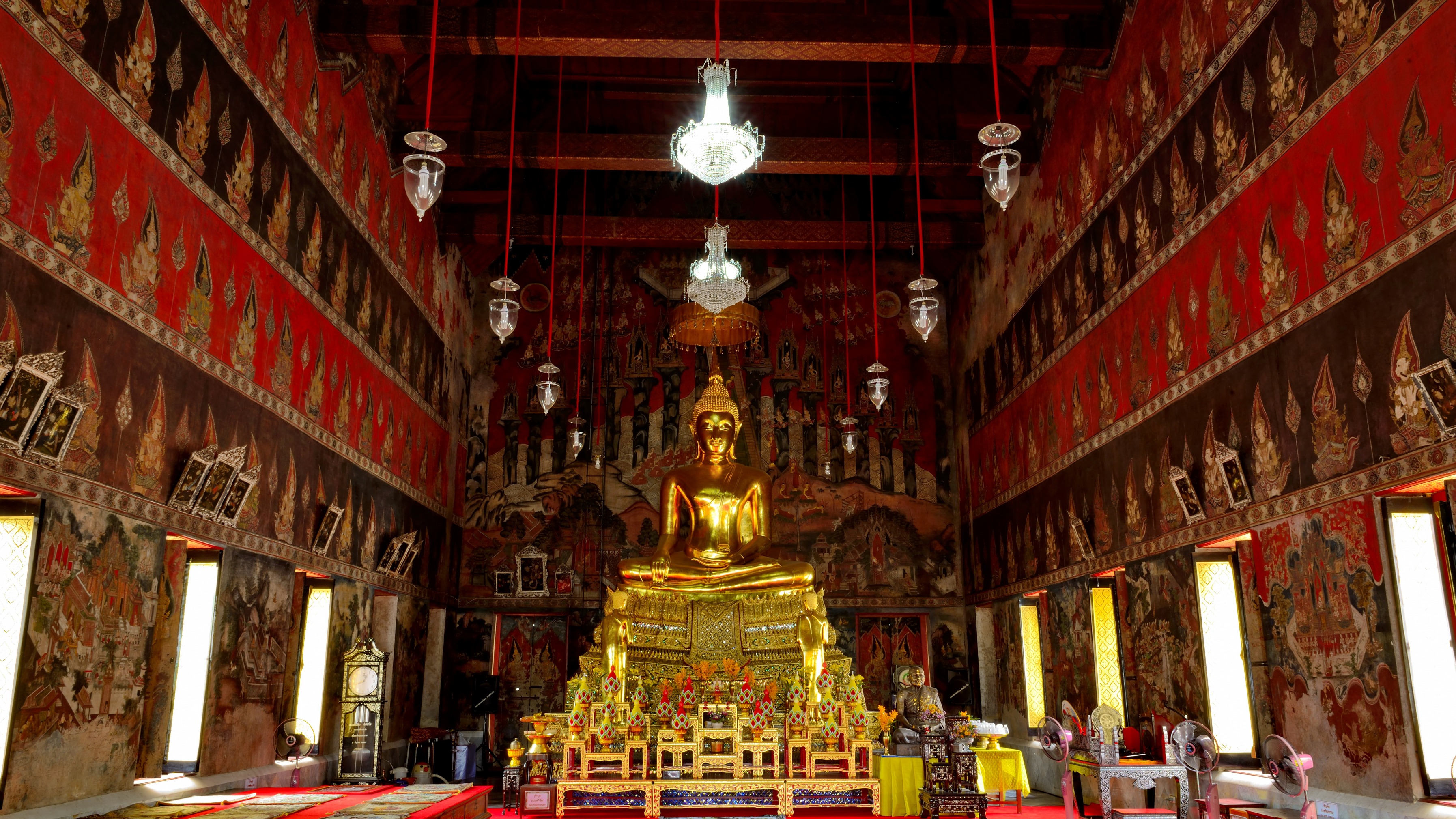
On the western bank of the Bangkok Noi canal, Wat Suwannaram combines Ayutthaya architecture, Jataka frescoes and the royal history of Siam.
Interested in this visit?
We can include it in your personalised itinerary.