Phra Nakhon District
Phra Nakhon District
Phra Nakhon, Bangkok 10200, Thaïlande
Phra Nakhon concentrates Bangkok's founding heritage: Grand Palace, Wat Phra Kaeo, Wat Pho, National Museum and the Indian quarter of Phahurat.
Phra Nakhon forms the historic heart of Bangkok, on the east bank of the Chao Phraya. This district brings together the founding sites of Thailand's capital: the Grand Palace, Wat Phra Kaeo, Wat Pho, the National Museum, the Monument of Democracy and the Indian quarter of Phahurat. It is here that the history of the Chakri dynasty was written and continues to unfold in stone, golden stupas and royal avenues.
Why visit Phra Nakhon
The district brings together, within a few square kilometres, the essence of Bangkok's royal and religious heritage. The density of temples (wats), museums and monuments is unique in Thailand. It is also a living neighbourhood, crossed by markets, street food stalls, Buddhist schools and ancient communities like Little India in Phahurat. You come for the heritage, but you stay for the atmosphere.
Allow at least two full days to explore the main sites without rushing. Three to four days allows you to add museums, forts and river cruises.
History of the district
The history of Phra Nakhon begins in the late 18th century, when King Rama I moved the Siamese capital to the left bank of the Chao Phraya and founded Bangkok. The sector quickly took on the role of administrative, religious and royal centre of the new kingdom.
Originally, the area was known as Chana Songkhram. On 15 October 1915, an administrative reorganisation created 25 new districts in central Bangkok. On 12 March 1928, six of them — Phahurat, Samran Rat, Phra Ratchawang, Chana Songkhram, Sam Yot and Bang Khun Phrom — merged to form the unified Phra Nakhon district. In 1972, it gained the status of Khet Phra Nakhon, which it retains today.
What to see in Phra Nakhon
The Grand Palace and Wat Phra Kaeo
Former official residence of the kings of Siam, the Grand Palace houses royal pavilions, ceremonial halls and the Wat Phra Kaeo, which enshrines the Emerald Buddha, the most venerated statue in the country. Strict dress code: shoulders and knees must be covered.
Wat Pho
Immediately adjacent to the palace, Wat Pho is known for its massive reclining Buddha statue, 46 metres long and covered in gold leaf. It is also the historic birthplace of the teaching of traditional Thai massage.
The National Museum
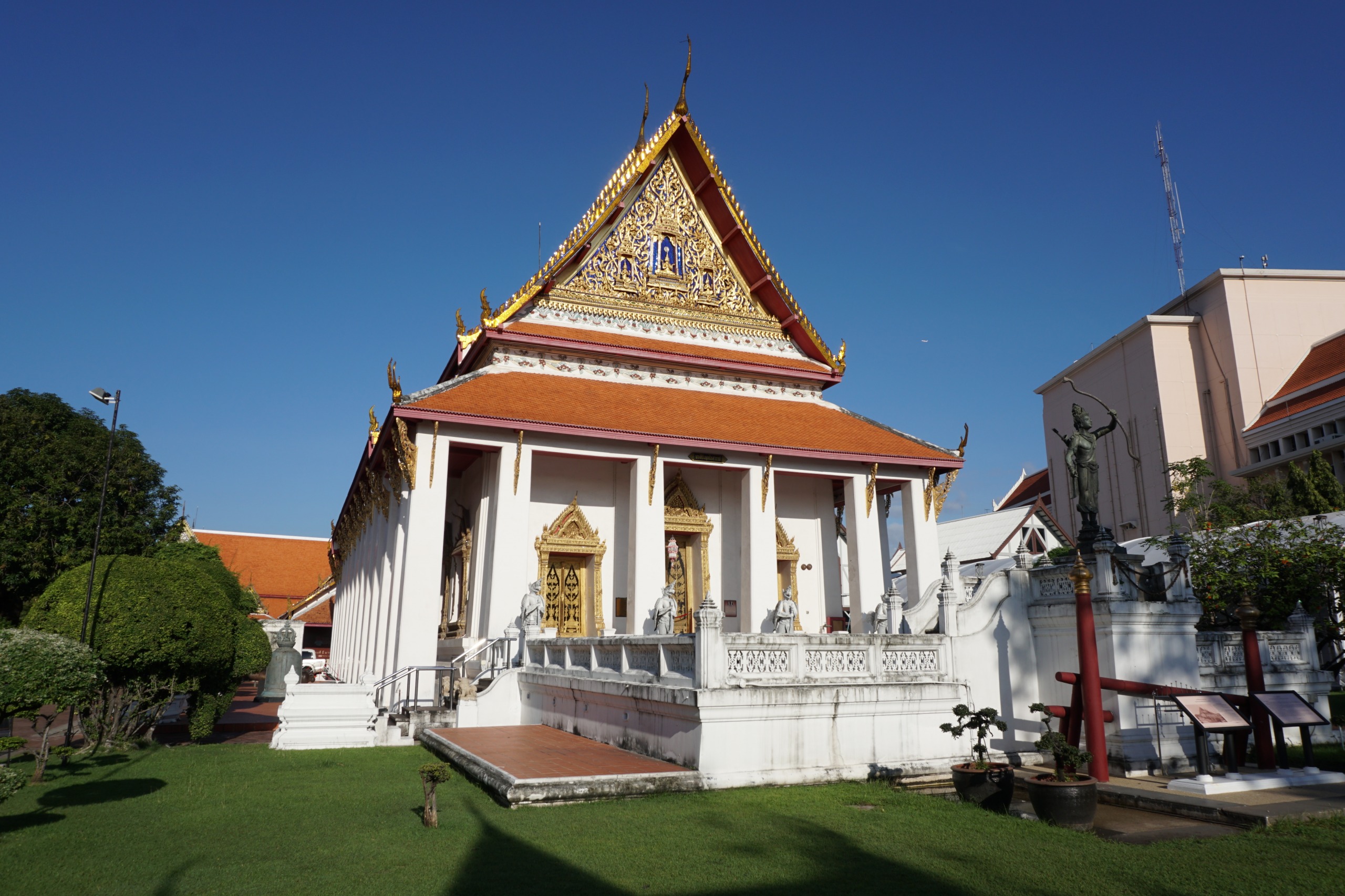
The National Museum of Bangkok houses the country's most extensive collection of Thai art and artefacts, from prehistory through to the Rattanakosin period. A worthwhile stop to contextualise what you see later in the temples.
Wat Bowonniwet Vihara
This royal temple houses an ancient Buddha statue (attributed to the Sukhothai period) and a golden stupa containing relics of members of the royal family. Several Thai kings have been ordained as monks here.
The Giant Swing (Sao Ching Cha)
In front of Wat Suthat stands the Sao Ching Cha, a 27-metre-high teak structure. It was the centre of Brahmanical ceremonies for nearly two centuries before the rite was abandoned. The swing is no longer in use today: it is an architectural and symbolic landmark, not an interactive attraction.
The Monument of Democracy
On Ratchadamnern Klang Road, this monument commemorates the establishment of constitutional monarchy in 1932. Its four curved wings punctuate one of the capital's great royal perspectives.
Charoen Krung Road
Bangkok's first paved road (opened in 1861), Charoen Krung connects the district's southern area to Chinatown and Bang Rak. It is home to the historic Sala Chalermkrung theatre, which still hosts traditional Thai dance and theatre performances.
Phahurat (Little India)
Phahurat Road is home to Bangkok's largest Indian community. Textiles, spices, jewellery, North Indian cuisine: a marked contrast with the Buddhist world of the rest of the district.
Phra Sumen and Mahakan Forts
Remnants of the city's former fortifications, these two white forts are now integrated into pleasant green spaces, notably the Santi Chaiprakan park along the river.
Practical information
- Proper dress required in all temples and at the Grand Palace: shoulders and knees must be covered.
- Temple visits more pleasant early morning (near opening time) to avoid crowds and heat.
- Plan for cash and cards: Phahurat remains an area where cash is predominant.
- Khaosan Road, on the northern edge of the district, concentrates backpacker accommodation and nightlife.
When to go
The dry season, from November to February, offers the most comfortable conditions for exploring the neighbourhood, with temperatures ranging from 22 to 32°C. March to May marks the hottest period, sometimes stifling in midday. The rainy season, from June to October, alternates bright sunshine and short but sustained showers: site attendance drops, and storm skies provide interesting light on the golden stupas.
How to get there and get around
Phra Nakhon is not directly served by the BTS Skytrain or the main MRT line, which explains the heavy use of boats and taxis to access it.
- Chao Phraya Express river bus: the most convenient option. Several piers serve the district, notably Tha Chang (Grand Palace) and Tha Tien (Wat Pho).
- Metered taxi: comfortable and economical outside rush hours. Insist on meter use (« meter »).
- Tuk-tuk: suitable for short trips within the neighbourhood; always negotiate the fare before getting in.
- MRT: Sanam Chai station on the Blue Line directly serves the Wat Pho and Grand Palace area.
- On foot: most of the major sites can be visited by walking between them, provided you accept the heat.
Nearby attractions
Phra Nakhon serves as a natural base for exploring other major Bangkok sites:
- Wat Saket and its Golden Mount, immediately east of the district.
- Chinatown (Yaowarat), just to the south, accessible on foot via Charoen Krung.
- Thonburi and Wat Arun, on the opposite bank of the Chao Phraya, just a few minutes by boat.
Frequently asked questions
Allow two to three days for the main sites (Grand Palace, Wat Pho, National Museum, Monument of Democracy). A week allows you to add secondary temples, Phahurat and the forts.
The Chao Phraya Express river bus serves several piers in the area. Sanam Chai MRT station on the Blue Line is the closest rail option to the Grand Palace and Wat Pho.
Early morning, at site opening, or late afternoon. The rainy season (June to October) attracts fewer visitors, at the cost of short showers.
No booking required. Arrive at opening to minimise waiting time and respect the dress code: shoulders and knees must be covered.
To incorporate Phra Nakhon into a complete Thailand itinerary, see our Thailand travel suggestions.
Photos
Nearby
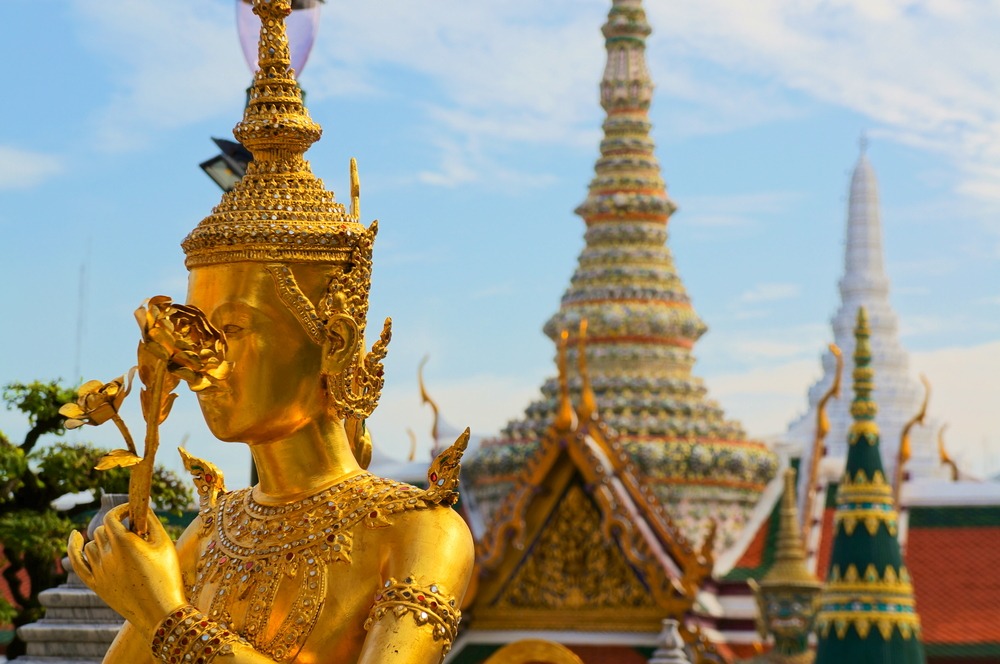
Also discover
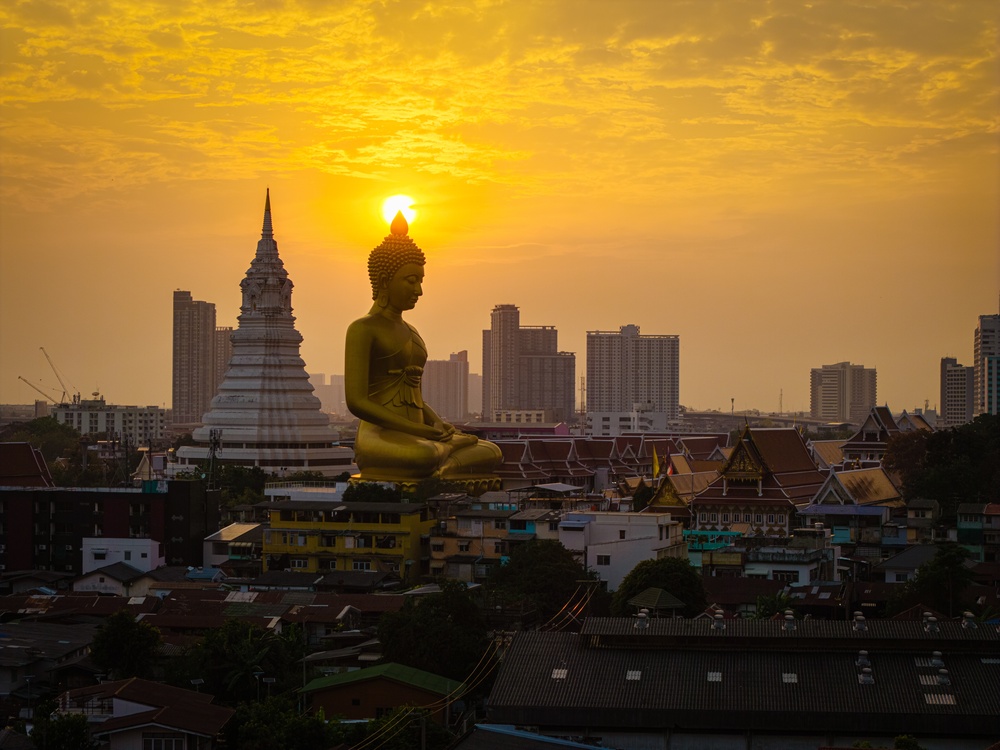
Bangkok
Bangkok, Thailand's vibrant capital, sometimes described as chaotic, is often overlooked by travelers who prefer the northern treks or southern beaches. Yet bypassing Bangkok during your Thailand trip means missing out on incredible Thai cultural diversity.
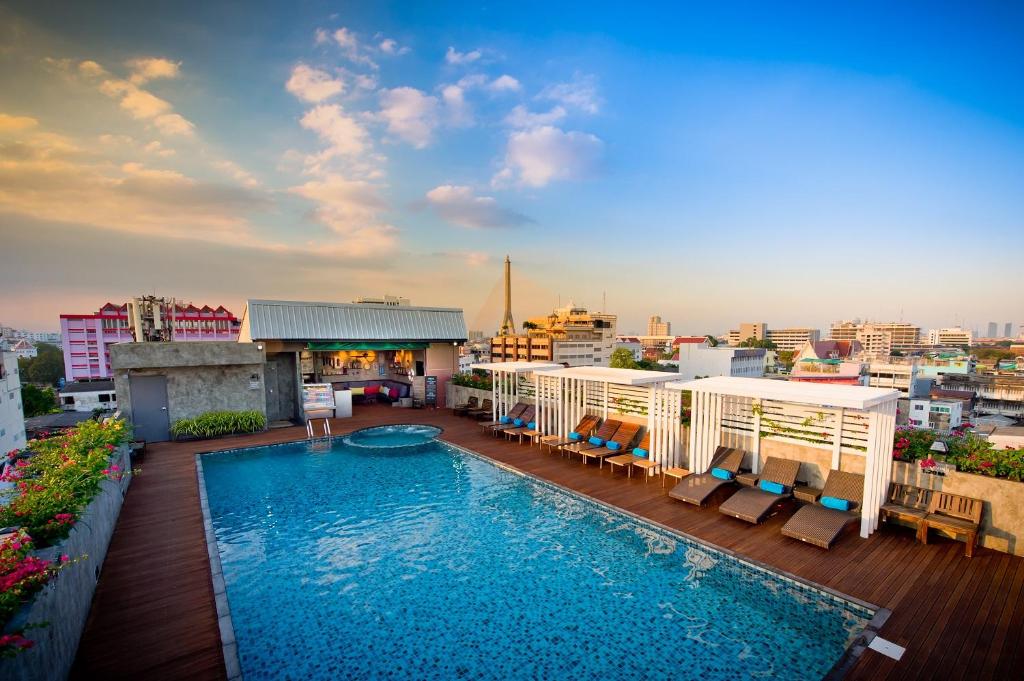
Nouvo City Hotel
Urban comfort hotel in Banglamphu's historic district, Bangkok: rooms of 32 to 38 m², spa, two pools and recognized halal dining.
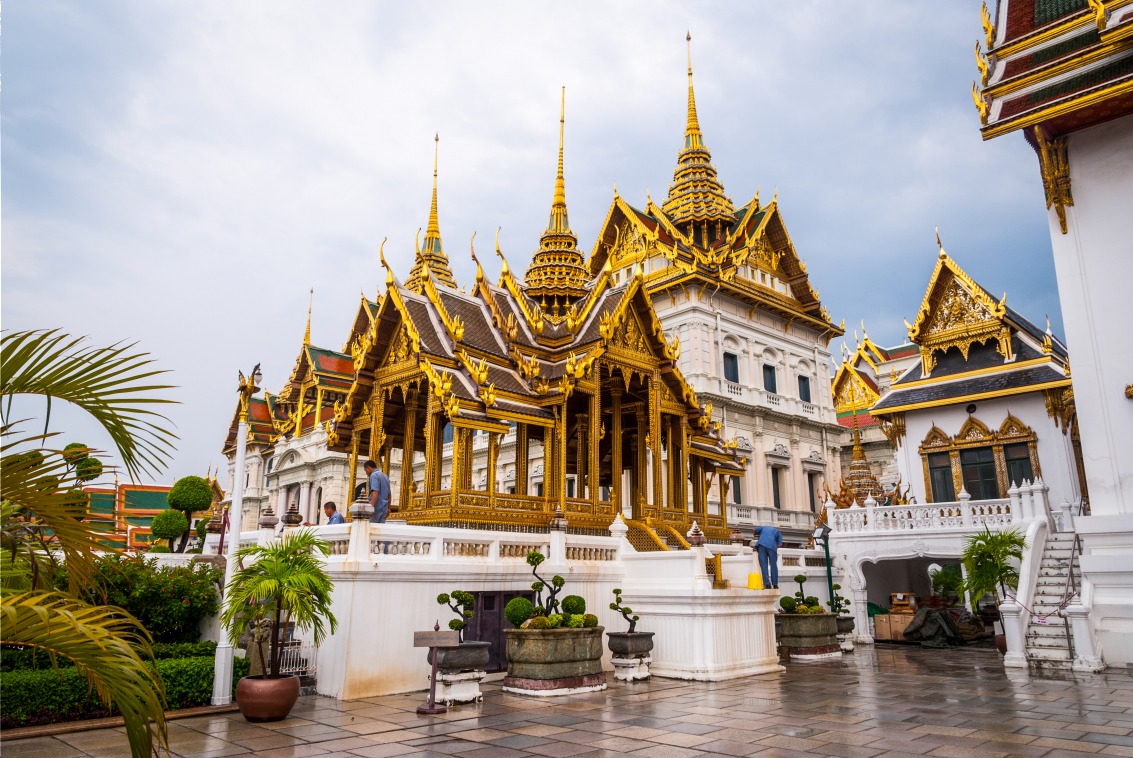
Grand Palace of Bangkok
Royal complex founded in 1782 by Rama I, the Grand Palace of Bangkok houses Wat Phra Kaeo and the Emerald Buddha. Practical guide to prepare your visit.
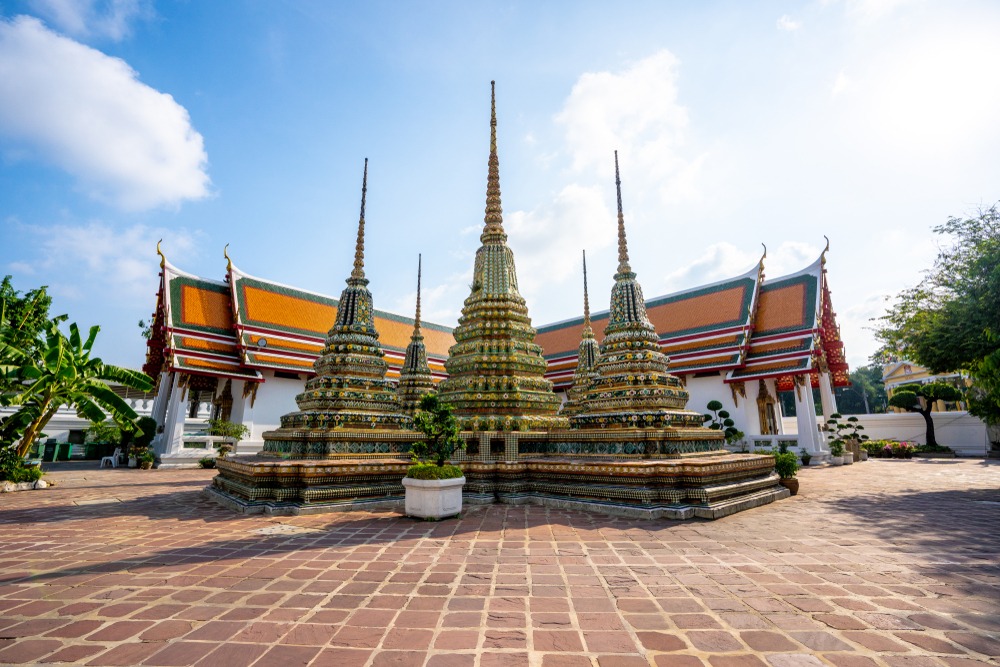
Wat Pho
South of Bangkok's Grand Palace, Wat Pho houses a 46-meter Reclining Buddha, 400 statues, and a UNESCO-recognized Thai massage school.
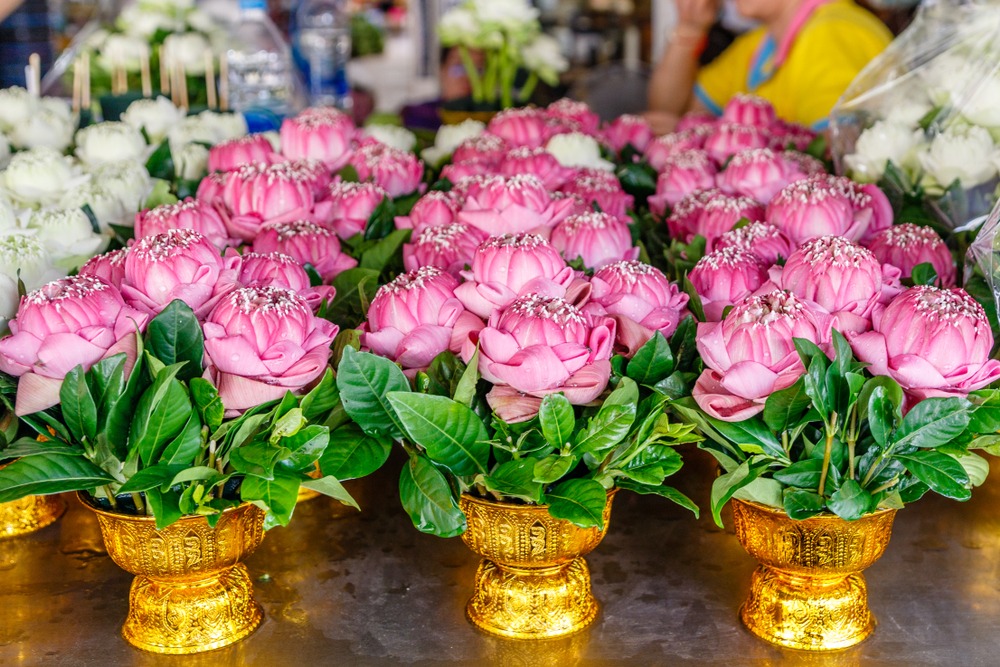
Pak Khlong Talat
Historic flower market in Bangkok, open around the clock near the Chao Phraya, supplying hotels, restaurants and temples in the capital with fresh blooms.
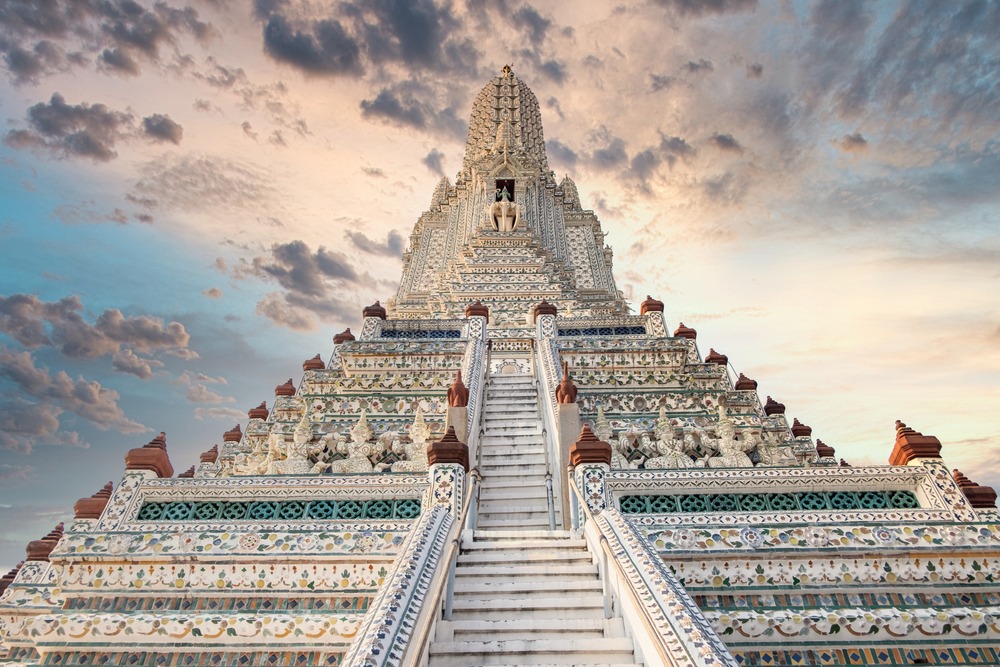
Wat Arun
Wat Arun, or the Temple of Dawn, dominates the western bank of the Chao Phraya in Bangkok with its 70-meter prang covered in porcelain mosaics.
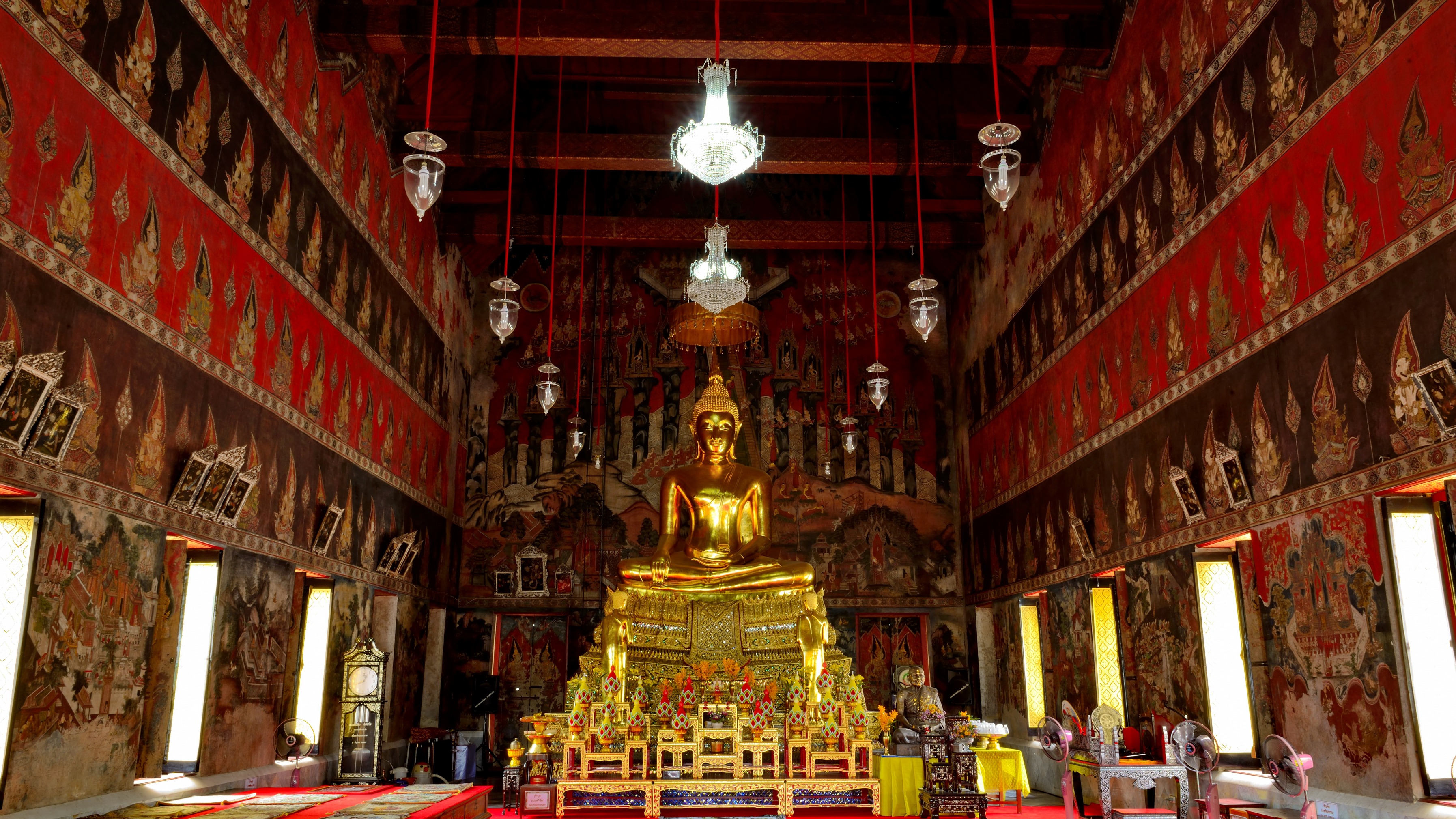
Wat Suwannaram
On the western bank of the Bangkok Noi canal, Wat Suwannaram combines Ayutthaya architecture, Jataka frescoes and the royal history of Siam.
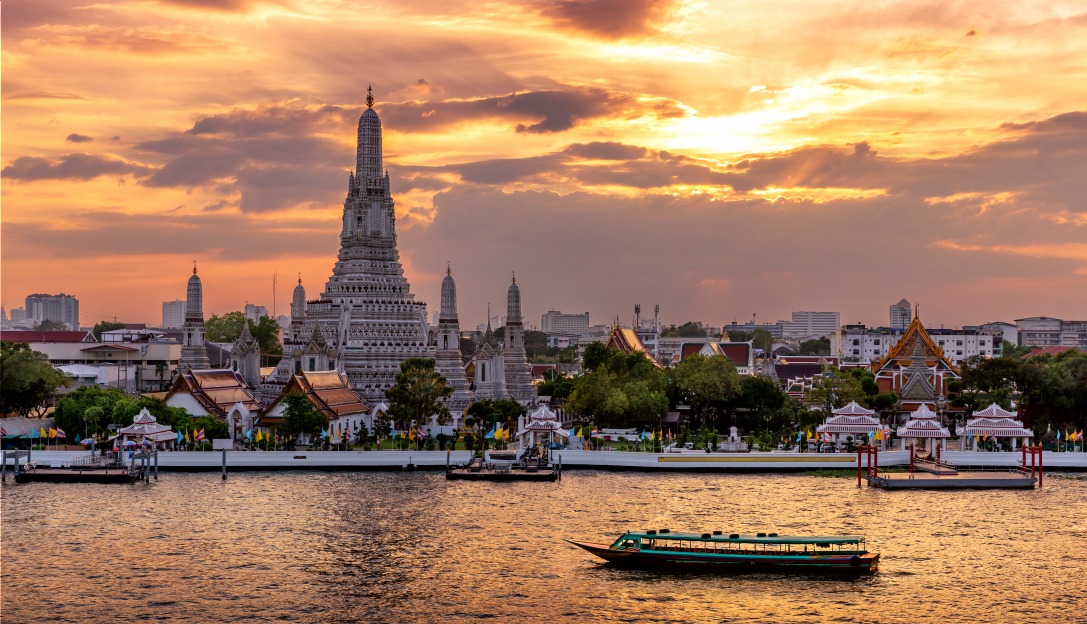
Chao Praya
Spanning 372 km, the Chao Phraya has shaped Bangkok since 1782. Temples, markets, boats: your guide to understanding and exploring the river.
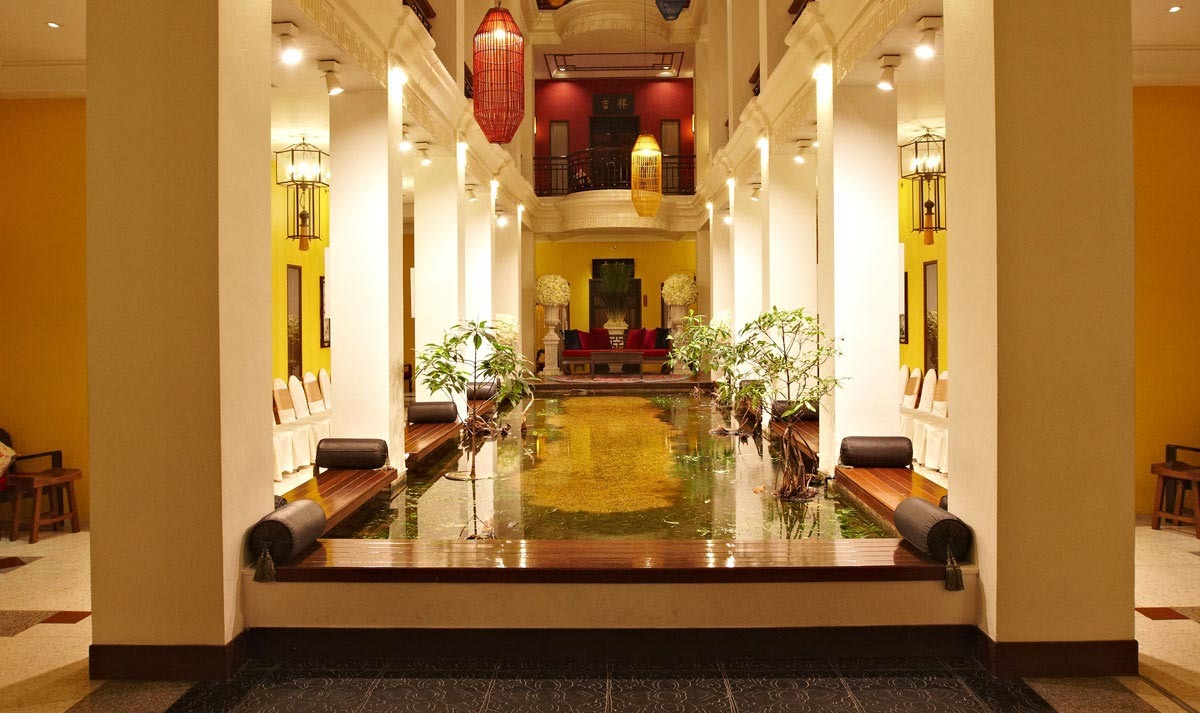
Shanghai Mansion
4-star hotel with vintage Shanghai inspiration on Yaowarat Road, in the heart of Bangkok's Chinatown. 67 rooms, Sino-Thai restaurant and jazz concert bar.
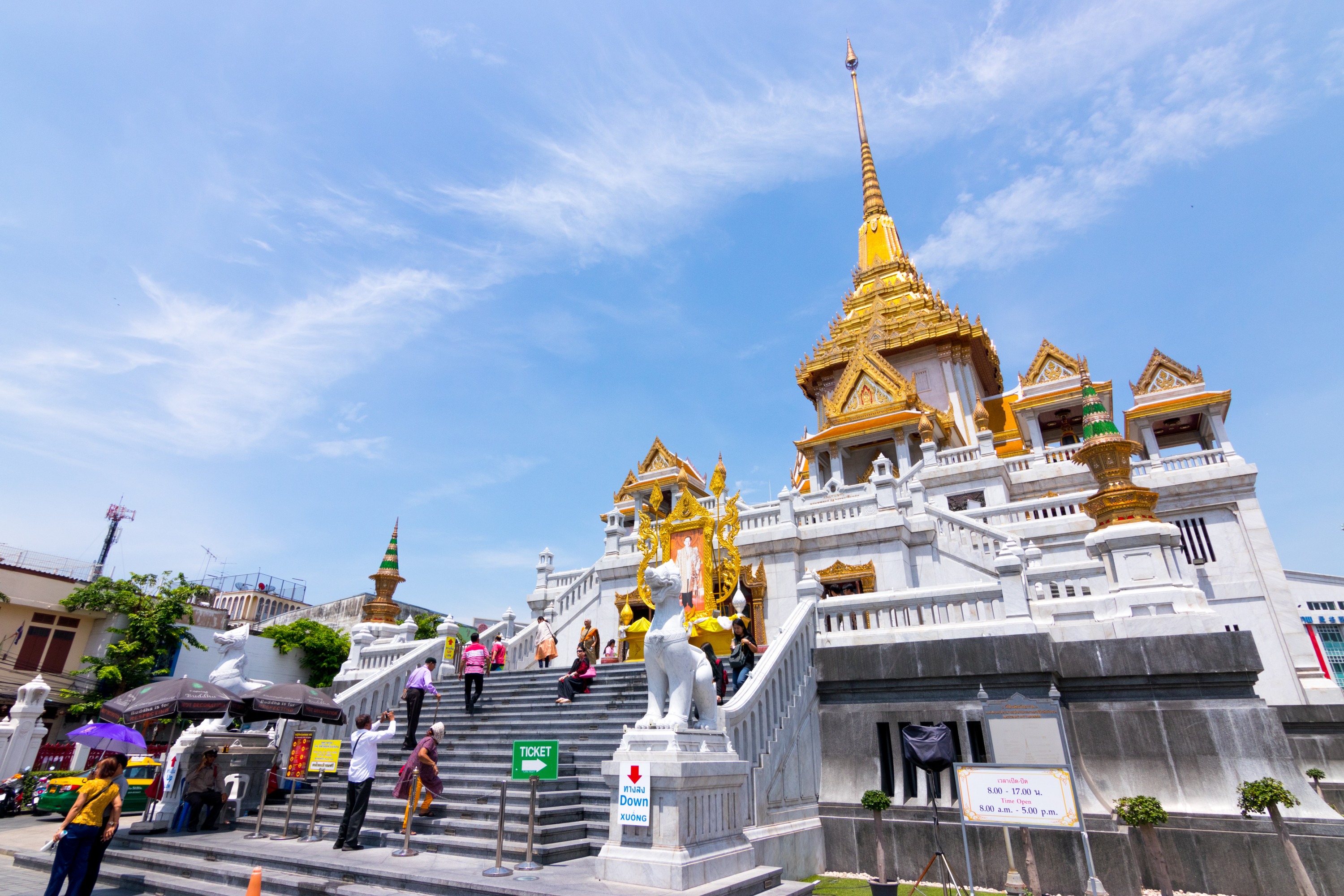
Wat Traimit, the Temple of the Golden Buddha
In Bangkok, Wat Traimit shelters a solid gold Buddha measuring 3 meters and weighing 5.5 tonnes, whose golden identity was only revealed in 1955.
Interested in this visit?
We can include it in your personalised itinerary.