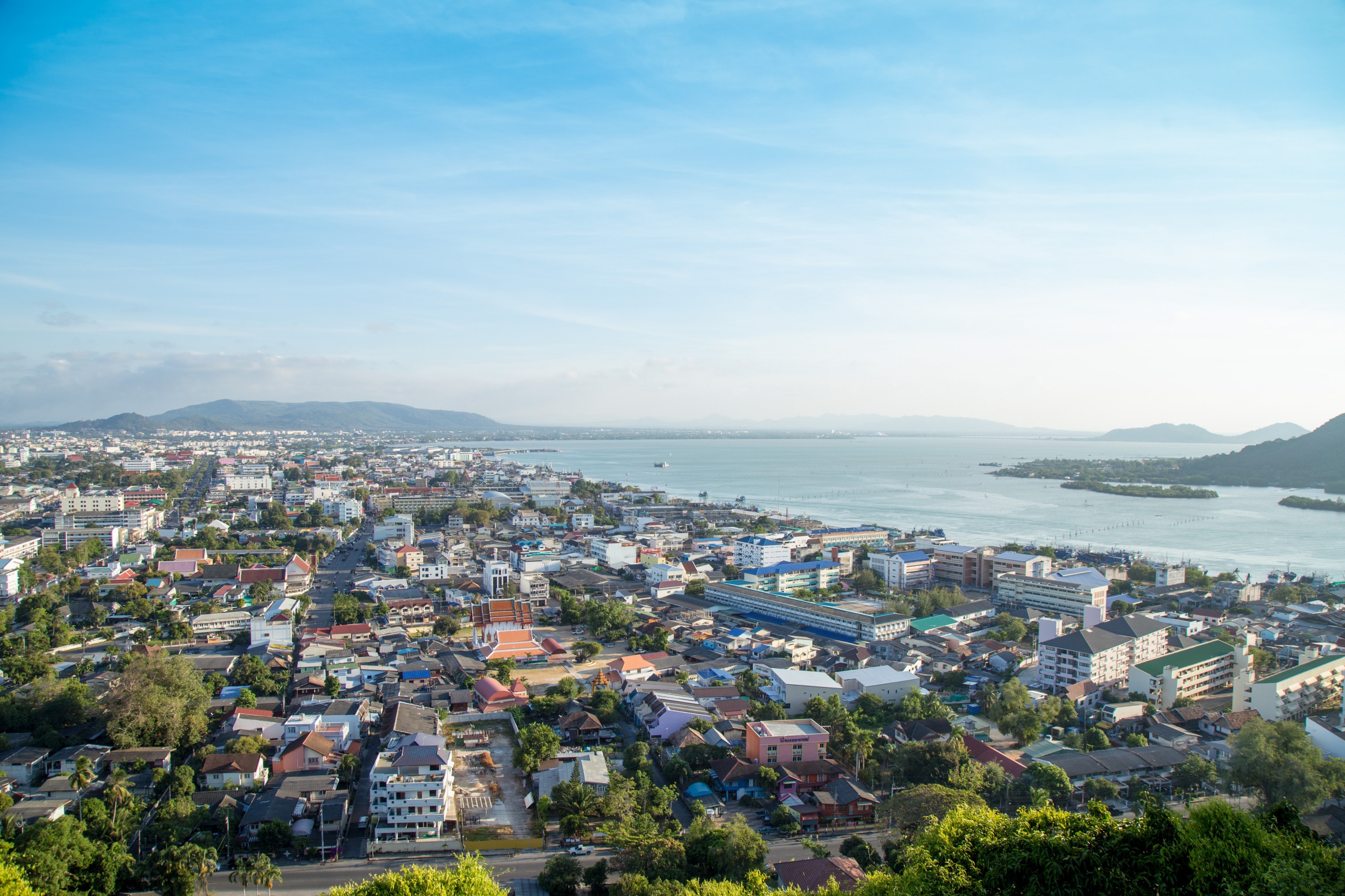
Wat Phra Kaew (Temple of the Emerald Buddha)
At the heart of Bangkok's Grand Palace, Wat Phra Kaew enshrines the Emerald Buddha, Thailand's most sacred statue. Gilded roofs, epic frescoes, and 18th-century royal architecture.
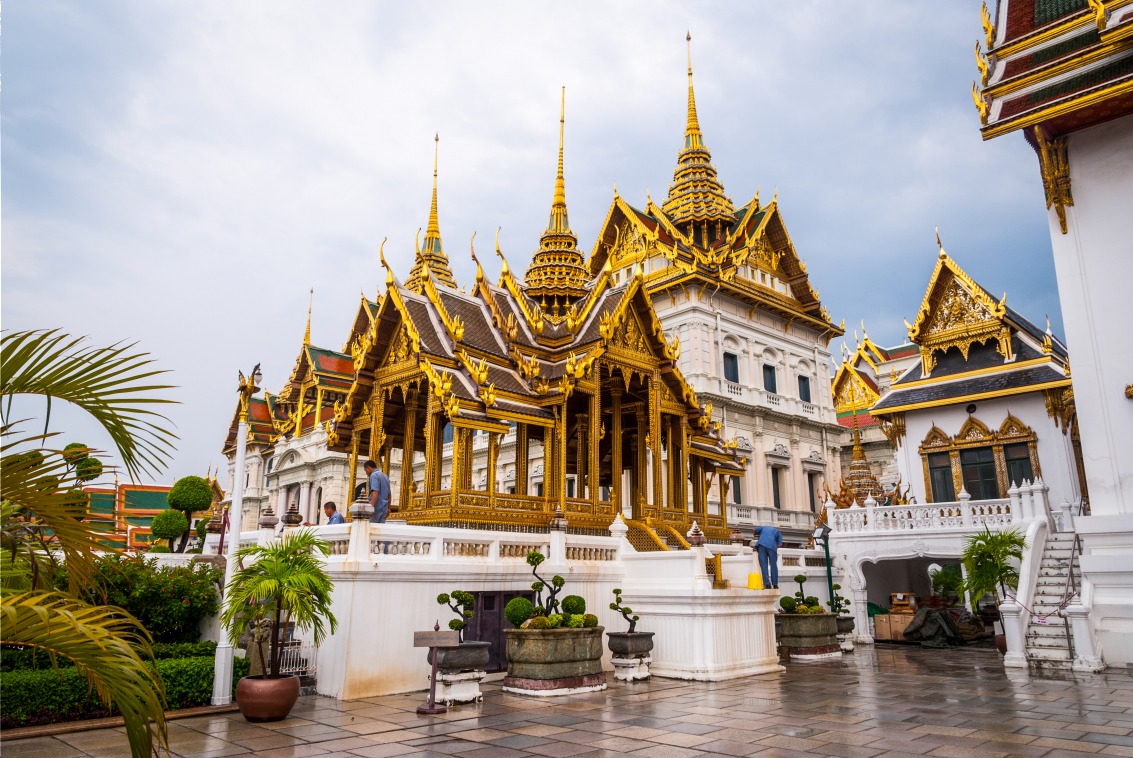
At the heart of Bangkok's Grand Palace, Wat Phra Kaew houses Thailand's most sacred statue: the Emerald Buddha, carved from green jade. This royal temple, founded in 1782 under Rama I's reign, is no ordinary monastery—no monks reside here. It is a sanctuary of state, a venue for royal ceremonies, whose gilded roofs and colorful glass mosaics dominate the landscape of Rattanakosin Island.
Practical information at a glance
- Admission: paid (combined ticket with the Grand Palace)
- Dress code: shoulders and knees covered—sarongs are provided at the entrance
- Shoes: must be removed before entering the main building (ubosot)
- Recommended duration: 1.5 to 2 hours for the temple and Grand Palace
- Access: Chao Phraya express boat, Tha Chang stop (N9); tuk-tuk or taxi from downtown
- Accessibility: partial access—some areas have steps
What you'll see
The complex contains several royal buildings with distinct functions. The ubosot (ordination hall) houses the Emerald Buddha on its raised golden throne. Around the inner courtyard, the Phra Mondop preserves the sacred texts of the Tripitaka. The Prasat Phra Thep Bidon, a royal pantheon, and a gilded replica of Angkor Vat complete the ensemble. The outer galleries are entirely covered with frescoes depicting the Ramakien, Thailand's epic inspired by the Indian Ramayana.
History and context
Rama I founded Bangkok in 1782 and commissioned the construction of the Grand Palace and Wat Phra Kaew to enshrine the Emerald Buddha statue, transferred from Vientiane. The statue, whose exact origins remain debated, is thought to date to the 14th century. It is regarded as the kingdom's palladium: its possession symbolizes the sovereign's legitimacy. Rama III and Rama IX oversaw major restorations of the Ramakien frescoes.
Highlights of your visit
The Emerald Buddha
Standing approximately 66 cm tall, the Buddha sits at an imposing height. Three costumes in gold and precious stones are changed by the king himself with each seasonal shift (hot season, rainy season, cool season). Photography of the statue is forbidden inside the ubosot.
The Ramakien frescoes
One hundred seventy-eight painted panels stretch across more than 500 meters of covered galleries. They narrate the adventures of Prince Rama against the demon Tosakan. Successive restorations have preserved details of remarkable precision.
The yaksha and kinnaree
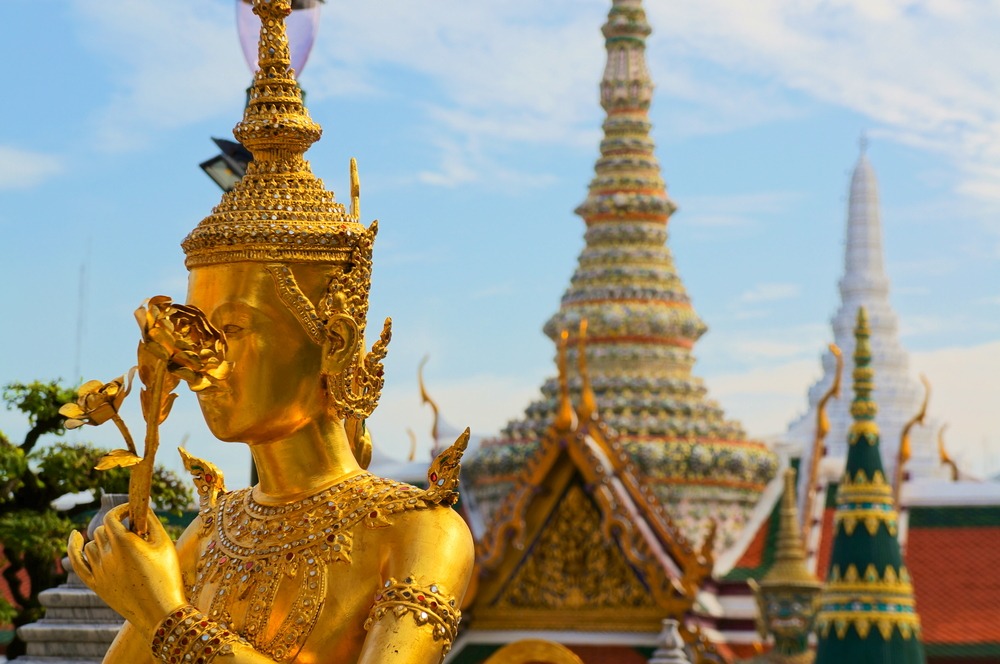
Brightly colored guardian giants (yaksha) flank the doors of the enclosures. Creatures half-woman, half-bird (kinnaree) adorn the roofs. These Buddhist and Brahmanical mythological figures coexist throughout the temple's iconography.
The Angkor Vat replica
Rama IV commissioned a scale model of the Cambodian temple, which was then under Siamese sovereignty. It offers an unexpected architectural comparison point within the Thai complex.
Etiquette and visiting rules
- Shoulders and knees covered is mandatory—shorts, sleeveless shirts, and sleeveless dresses are not permitted.
- Sarongs and covering garments are available free of charge at the entrance (deposit required).
- Shoes must be removed before entering the ubosot.
- Photography is forbidden inside the ubosot (Emerald Buddha).
- Silence and respectful behavior are required in all worship areas.
- Do not turn your back to the main statue for selfies.
Photography tips
Morning light at opening is softest on the gilded roofs. The ubosot and Phra Mondop facades face east—ideal in early morning. Glass mosaics on the prangs (towers) shimmer particularly well in bright sunlight. Avoid peak hours (10 am–2 pm) for shots with fewer crowds. The Ramakien frescoes, in covered galleries, photograph well without flash.
Location and access
Wat Phra Kaew is located in the historic Rattanakosin quarter, on the artificial island bounded by the Chao Phraya River and Khlong Lot canal. The most pleasant access is via the Chao Phraya express boat, Tha Chang stop (N9), a short walk from the main entrance. From downtown Bangkok (Siam, Silom), expect 20 to 40 minutes depending on traffic by taxi or tuk-tuk. The BTS Skytrain does not directly serve this area; the boat remains the most reliable option during rush hours.
Nearby attractions
- Grand Palace — adjacent royal complex, included in the same admission ticket.
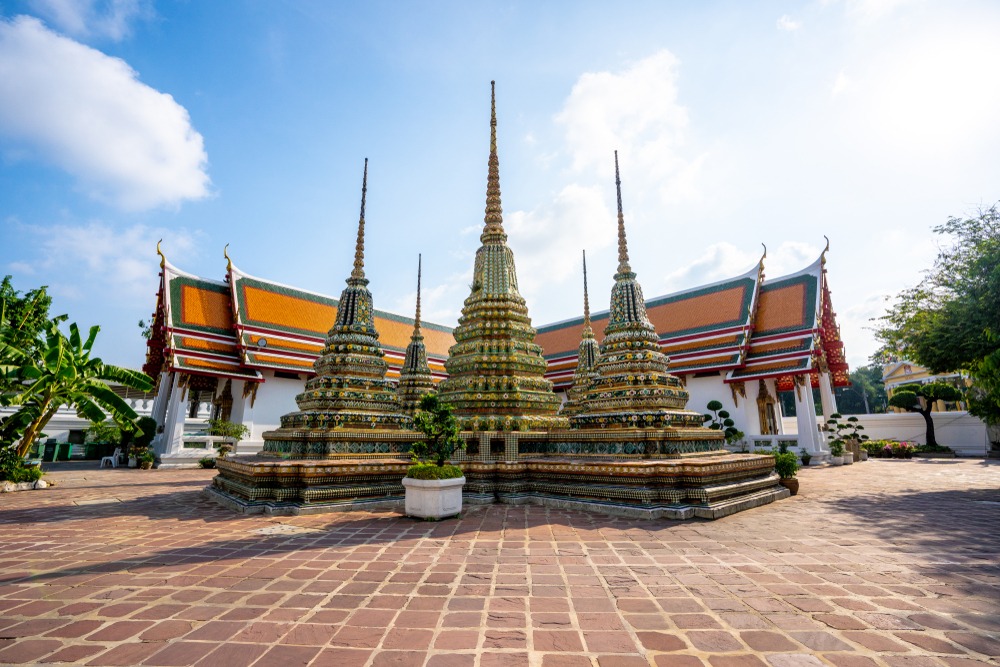
- Wat Pho — temple of the Reclining Buddha, a 10-minute walk south; one of Bangkok's oldest temples.
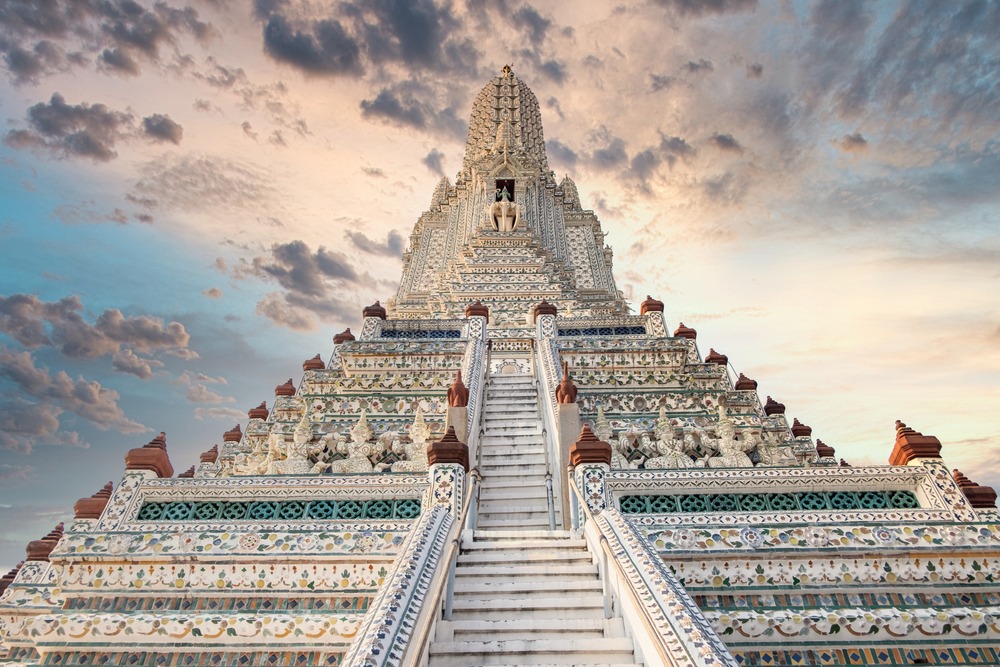
- Wat Arun — Temple of Dawn on the opposite bank of the Chao Phraya, accessible by ferry.
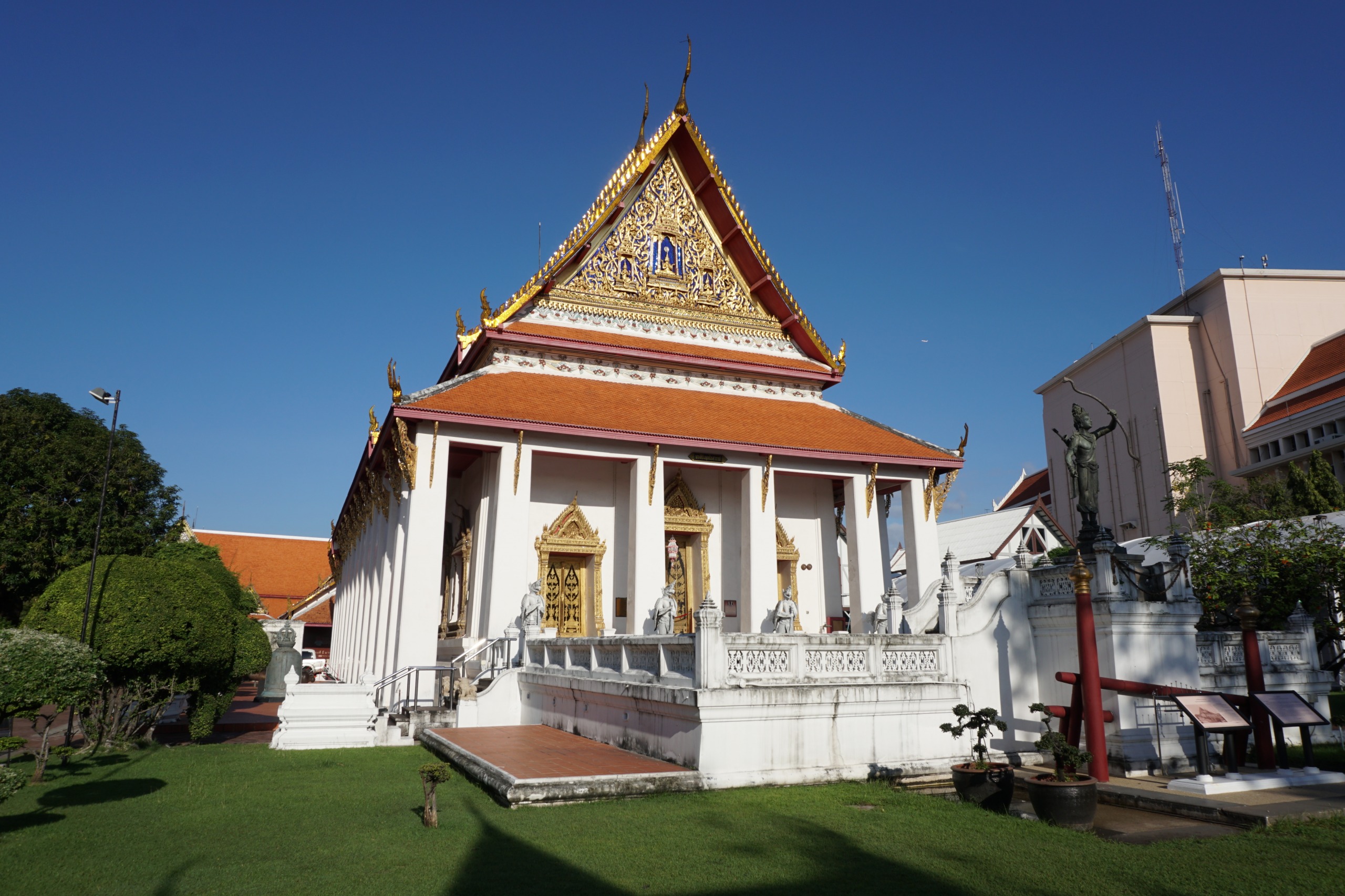
- Bangkok National Museum — Thai and Southeast Asian art collections, a 5-minute walk north.
- Sanam Luang — royal esplanade facing the Grand Palace, venue for state ceremonies.
Frequently asked questions
Shoulders and knees must be covered. If you arrive in shorts or a sleeveless shirt, sarongs and covering garments are provided free of charge at the entrance, with a deposit required.
No. Photography is strictly prohibited inside the ubosot where the statue is enshrined. Outside the temple, photography is permitted.
The cool season (November to February) offers the most pleasant temperatures. Arriving at opening time helps you avoid crowds and enjoy softer light on the gilded roofs.
Yes. Wat Pho is a 10-minute walk to the south. Allow half a day for both sites. Wat Arun, accessible by ferry from Wat Pho, can complete your day.
The Chao Phraya express boat (Tha Chang stop, N9) is the fastest and most pleasant option. Taxi and tuk-tuk are also available, but traffic can lengthen the journey during rush hours.
Allow 1.5 to 2 hours for Wat Phra Kaew and the Grand Palace combined. If you wish to study the Ramakien frescoes in detail, plan for more time.
Nearby
Interested in this visit?
We can include it in your personalised itinerary.