Wat Phra Phutthabat
Wat Phra Phutthabat
In Saraburi, Wat Phra Phutthabat shelters one of Thailand's most revered Buddha footprints. A 17th-century royal temple, it draws pilgrims and travelers year-round.
Wat Phra Phutthabat stands on the slopes of a hill in Saraburi, approximately 200 kilometers north of Bangkok. This royal temple houses a Buddha footprint, discovered in the 17th century and venerated since as one of Thailand's most sacred pilgrimage sites. Each year, tens of thousands of devotees visit, especially during major Buddhist festivals.
Practical Information at a Glance
- Entrance: Free for Thai visitors; nominal fee for foreign visitors
- Dress code: Shoulders and knees must be covered; sarongs are available at the entrance
- Footwear: Must be removed before entering the mondop (pavilion) housing the footprint
- Recommended duration: 1 to 2 hours
- Access: By car or minibus from Bangkok (Highway 1) or from Saraburi
What to See
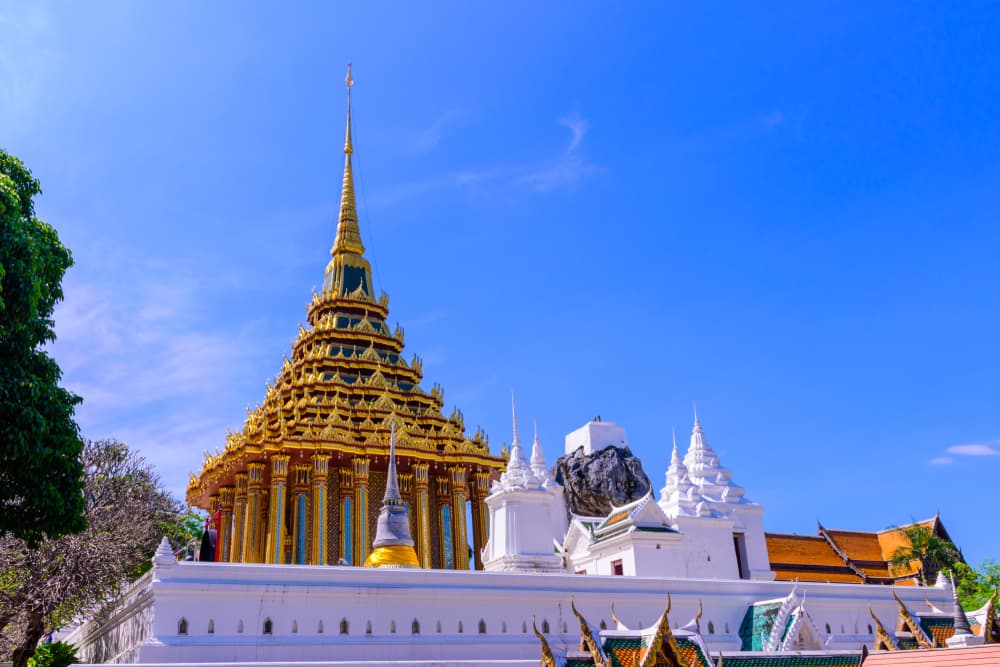
The heart of the site is the royal mondop, a tiered-roof pavilion covered with glass and mother-of-pearl mosaics. Inside, the sacred footprint rests in a natural hollow in the stone, surrounded by floral offerings and gold leaf deposited by pilgrims. The complex includes several golden chedis, prayer halls, and terraced gardens that climb toward the hilltop.
History and Context
The footprint was discovered in the early 17th century, during the reign of King Songtham. A hunter allegedly followed a wounded deer to a depression in the rock filled with water, later recognized as the Buddha's footprint. The king had a first pavilion erected on the site. Successive sovereigns, particularly those of the Chakri dynasty, expanded and embellished the complex, granting it the status of a first-class royal temple.
Highlights of Your Visit
The Mondop and Sacred Footprint
The footprint measures approximately 1.50 meters long. Devotees place gold leaf and lotus flowers here. The atmosphere, heavy with incense and whispered prayers, contrasts with the bustle of the outer markets.
The Chedis and Terraces
As you climb toward the summit, several white and golden chedis punctuate the path. Views of the Saraburi plain gradually unfold. The terraces are shaded by ancient trees, making the climb pleasant even in hot season.
Pilgrimage Festivals
Makha Bucha and Visakha Bucha festivals draw considerable crowds. Temporary markets set up around the temple, offering donations, amulets, and local specialties. Visiting outside these periods ensures a quieter experience.
Etiquette and Visiting Rules
- Cover shoulders and knees; sarongs are loaned or sold at the entrance.
- Remove shoes before entering the mondop.
- Speak in hushed tones inside the sacred pavilion.
- Do not point your feet toward the footprint or Buddha statues.
- Women must not touch monks.
Photography Tips
Morning light is ideal for photographing the mondop, whose glass mosaics glisten against the rising sun. The chedis stand out beautifully against a blue sky mid-morning. Photography is permitted in outdoor spaces; inside the mondop, check local signs before using your camera.
Location and Access
The temple is located in Phra Phutthabat District, Saraburi Province, approximately 200 kilometers north of Bangkok via Highway 1 (Phahonyothin). Minibuses regularly depart from Bangkok's Northeastern Terminal (Mo Chit). From Saraburi, songthaews (shared taxis) serve the site. Parking is spacious for private vehicles. Access to the terraces involves stairs; accessibility for people with reduced mobility is limited.
Nearby
- Khao Yai National Park — UNESCO-listed tropical forest, approximately one hour northeast of Saraburi.
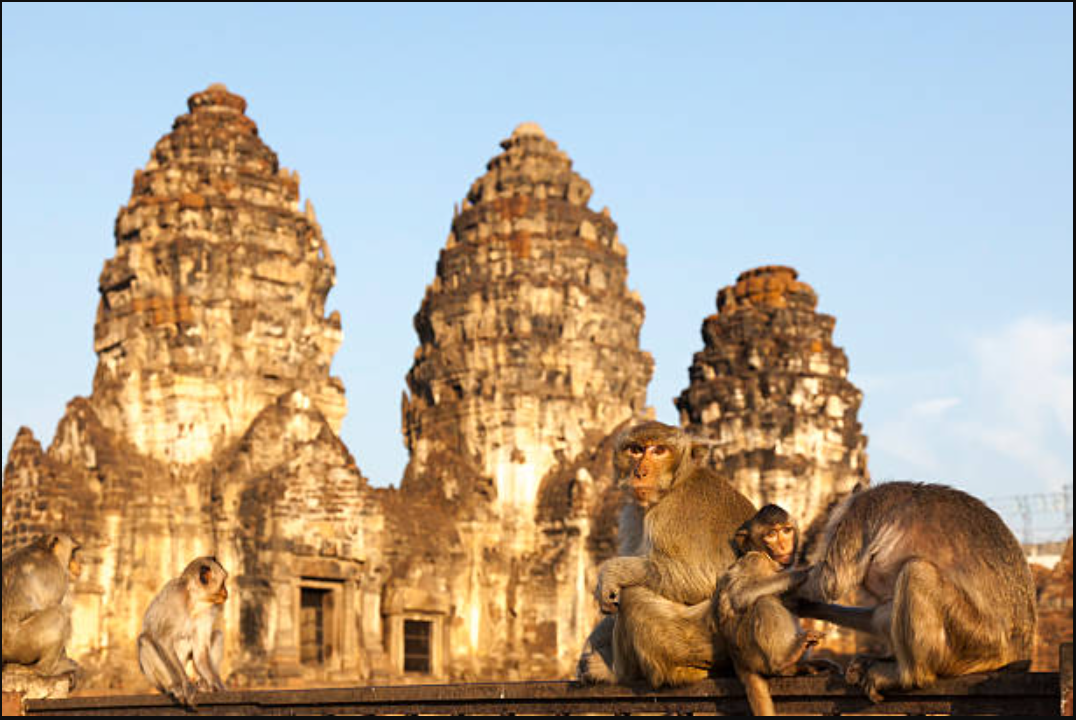
- Historic centre of Lopburi — Khmer ruins and ancient temples, approximately 60 kilometers to the north.
- Ayutthaya — Former royal capital and its ruined temples, accessible in less than an hour to the south.
Frequently asked questions
The dry season (November to February) offers pleasant temperatures. Avoid Buddhist festival days if you prefer tranquility; visit during them instead if you wish to observe the pilgrimage in full intensity.
Yes. Shoulders and knees must be covered. Sarongs are available at the entrance if you are not dressed appropriately. Shoes are removed before entering the mondop.
Yes, both sites are accessible by car or public transport from Saraburi. One day suffices to combine Wat Phra Phutthabat with Lopburi; Ayutthaya is best visited as an additional half-day.
Photography is generally tolerated in outdoor spaces. Inside the pavilion housing the footprint, respect any posted signs and the sensitivity of pilgrims at prayer.
Allow between one and two hours to explore the mondop, chedis, and terraces at your own pace. Add extra time if you wish to explore the offering markets around the temple.
Interested in this visit?
We can include it in your personalised itinerary.