Wat Kalayanamitr Woramahawihan
Wat Kalayanamitr Woramahawihan
On the west bank of the Chao Phraya in Thonburi, Wat Kalayanamitr houses a colossal seated Buddha and a monumental bronze bell set within a 19th-century Sino-Thai sanctuary, away from the crowds of Rattanakosin.
On the west bank of the Chao Phraya, in the historic quarter of Thonburi, Wat Kalayanamitr shelters one of Bangkok's largest indoor seated Buddha statues. Founded in the 19th century by a Sino-Thai nobleman, this temple blends Chinese influences with classical Thai religious architecture. Its giant bell and gilded Buddha make it a distinctive stop, far from the bustle of Rattanakosin.
Quick Practical Information
- Admission: Paid (modest fee)
- Access: Water taxi on the Chao Phraya, Wat Kalayanamitr pier; or tuk-tuk from Pak Klong Talat market
- Dress code: Shoulders and knees must be covered; sarongs available at the entrance
- Recommended duration: 45 minutes to 1 hour
- Accessibility: Limited, uneven paved surfaces
What to See
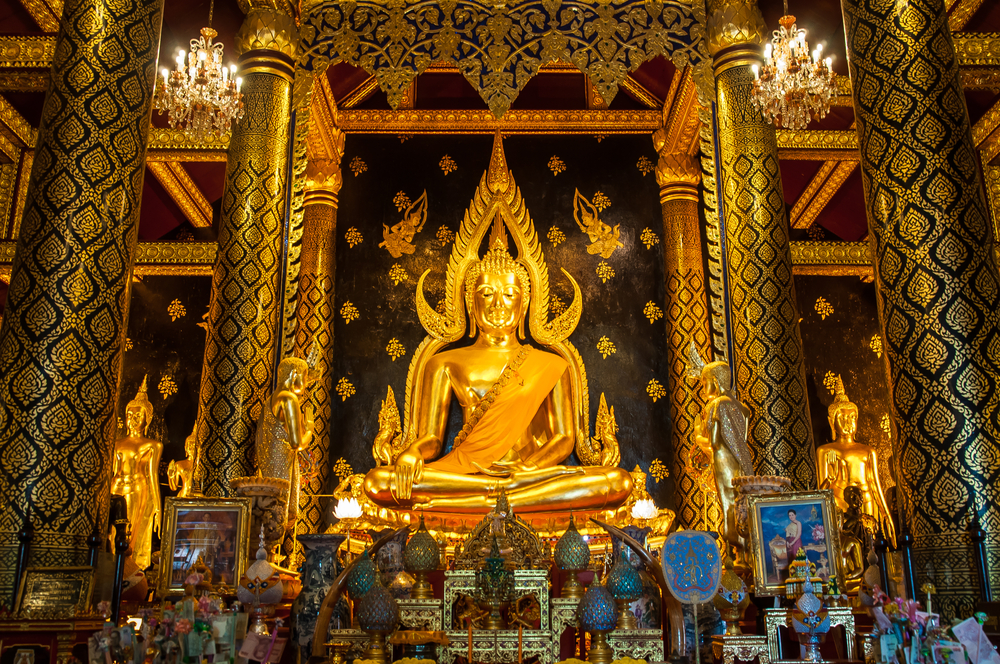
The main building (wihan) houses the Phra Buddha Triratananayok, a gilded seated Buddha standing nearly 15 meters high. The hall is adorned with 19th-century murals depicting episodes from the Buddha's life. In the courtyard, a monumental bronze bell — among Thailand's largest — attracts the faithful who ring it for good fortune. Secondary structures house Chinese statues and votive altars.
History and Context
The temple was founded around 1825 during the reign of Rama III, financed by Chao Sua Phraya Niyom, a wealthy merchant of Chinese descent. Its name roughly translates to "temple of the virtuous friend." The patron's influence is evident in the decoration: Chinese ceramics inlaid on the roofs, guardian statues with Sino-Thai iconography. The temple remains active, serving a local Buddhist community.
Highlights of Your Visit
The Colossal Phra Buddha Triratananayok
Seated in meditation pose, it dominates the main hall with its imposing height. Light filtered through tall windows creates a solemn atmosphere. Take time to observe the details of the murals running along the lateral walls.
The Bronze Bell
Suspended in an open pavilion, this massive bell is struck by the faithful using a wooden mallet. The sound resonates long across the courtyard. It is a moment of authentic religious life, little staged for tourists.
The Courtyard and Chinese Statues
Stone figures in Chinese style — warriors, mythical beasts — punctuate the pathways. They bear witness to the central role the Sino-Thai community played in the temple's founding.
Etiquette and Visiting Rules
- Cover shoulders and knees before entering the wihan.
- Remove your shoes before stepping into the main hall.
- Speak in a low voice; ceremonies may be underway.
- Do not point your feet toward Buddha statues.
- Ask permission before photographing monks.
Photography Tips
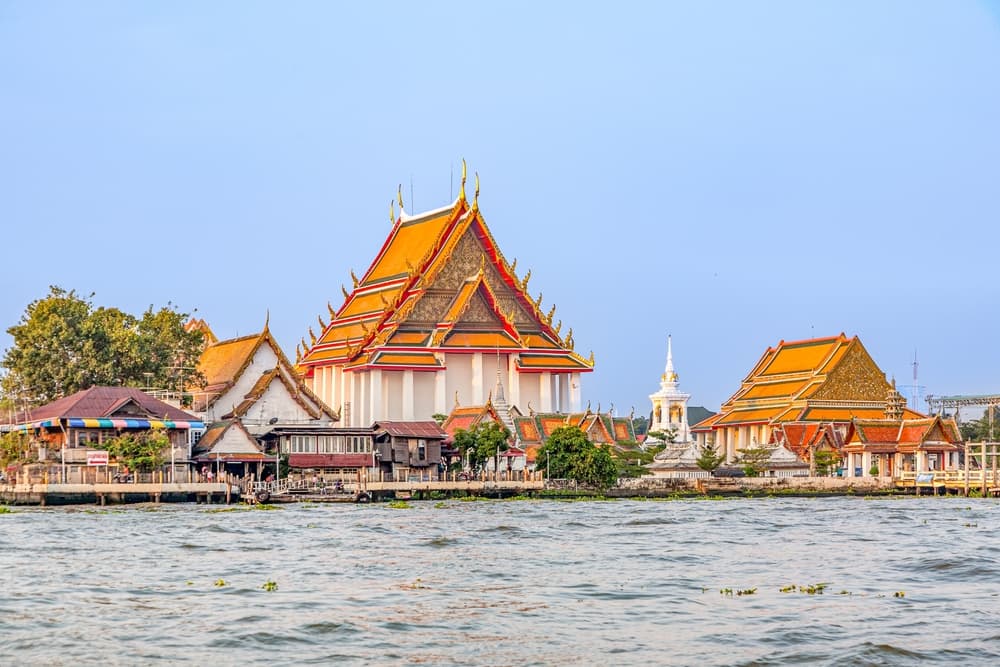
Morning light is most gentle inside the wihan: it enters through the lateral windows and illuminates the Buddha without harsh backlight. For the bell, a slightly low angle emphasizes its scale. Reflections on the Chao Phraya from the pier offer framing with the temple roof in the background.
Location and Access
Wat Kalayanamitr is located in Thonburi, on the west bank of the Chao Phraya, in Bangkok Yai district. The most convenient access is by express water taxi (main Chao Phraya line) to the dedicated pier. From Wat Pho or Wat Arun, a private boat or ferry crosses the river in minutes. The area is also walkable from the flower market at Pak Klong Talat.
Nearby Attractions
- Wat Arun — The Temple of Dawn, recognizable by its central tower inlaid with ceramics, lies a short boat ride away.
- Pak Klong Talat — Bangkok's grand flower market, bustling at dawn, a few minutes' walk on the east bank.
- Wat Pho — Temple of the Reclining Buddha and center of traditional Thai massage, accessible by boat from the neighboring pier.
- Royal Barge Museum — The gilded royal barges are housed in a riverside hangar in Thonburi, nearby.
Interested in this visit?
We can include it in your personalised itinerary.