Wat Phra Si Rattana Mahathat
Wat Phra Si Rattana Mahathat
Wat Phra Si Rattana Mahathat (Wat Yai) houses the Phra Phuttha Chinnarat, a gilded Buddha statue among Thailand's most venerated, in the heart of Phitsanulok on the Nan River.
Wat Phra Si Rattana Mahathat, known locally as Wat Yai, is the most revered temple in Phitsanulok, in central-northern Thailand. It houses the Phra Phuttha Chinnarat, one of the country's most sacred Buddha statues, attracting pilgrims and visitors from across Southeast Asia. The site stands on the western bank of the Nan River, in the heart of the city.
Quick practical information
- Admission : free for the main temple; museum on-site requires a fee
- Dress code : shoulders and knees must be covered; sarongs available at the entrance
- Shoes : must be removed before entering the main viharn
- Recommended duration : 1 to 2 hours for the temple and museum
- Access : by tuk-tuk, songthaew, or on foot from Phitsanulok city center
What to see
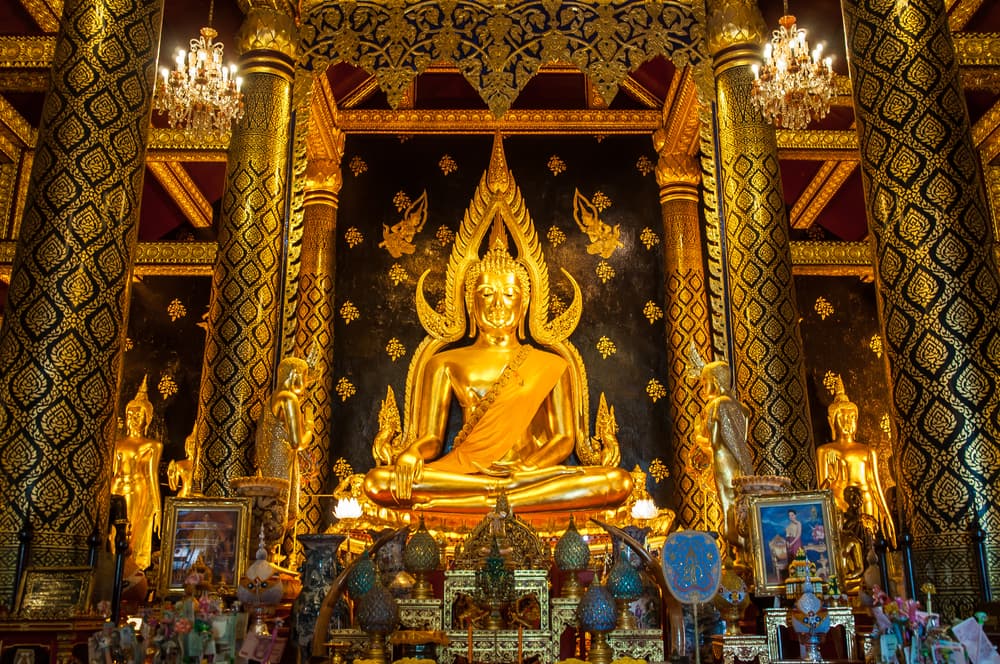
The heart of the site is the main viharn, a building with tiered gilt and black roofing, which houses the Phra Phuttha Chinnarat. This seated golden Buddha statue is renowned for its decorative nāga-shaped flames framing the figure. The entire ensemble radiates an intense spiritual atmosphere, enhanced by lotus flower offerings and wisps of incense.
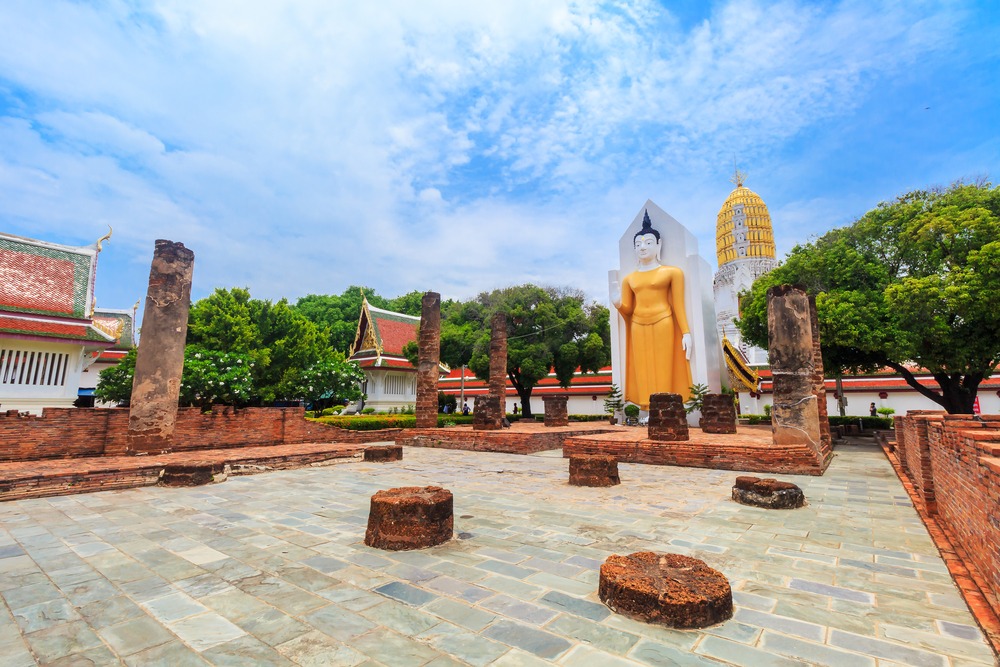
The complex also includes a white chedi in Sukhothaian style, several secondary buildings, and a museum displaying religious objects, statues, and elements of local history.
History and context
The temple was founded in the 14th century, during the reign of King Mahathammaracha I, in the era of the Sukhothaian kingdom. The Phra Phuttha Chinnarat was cast in bronze around 1357. Its reputation as a miraculous statue spread rapidly: King Naresuan, then King Rama V, commissioned copies for Bangkok and other cities. Phitsanulok was then a royal capital rivaling Sukhothai, which explains the care devoted to this sanctuary.
Highlights of your visit
The Phra Phuttha Chinnarat
The statue sits in the gilded gloom of the viharn, surrounded by hundreds of candles and offerings. The sculpted flames framing it are unique in Thai Buddhist art. Take time to observe the details of the face and posture—the serenity it radiates is striking.
The viharn and its mother-of-pearl doors
The wooden doors inlaid with mother-of-pearl of the main viharn are a masterpiece of craftsmanship, commissioned by King Boromakot in the 18th century. Their floral and mythological motifs deserve close attention before you enter.
The Sergeant-Major Thawee Museum
Just beside the temple, this ethnographic museum houses traditional tools, amulets, and everyday objects from the region. It offers a useful cultural counterpoint to the spiritual experience of the temple.
Etiquette and visiting rules
- Cover your shoulders and knees; sarongs are provided at the entrance if needed.
- Remove your shoes before entering the main viharn.
- Speak in a low voice inside; pilgrims are praying at all times.
- Do not turn your back to the main statue when taking photos.
- Women must not touch the monks.
Photography tips
Morning light, between 7 and 9 a.m., is gentlest on the gilded facade of the viharn. In late afternoon, the setting sun illuminates the white chedi. Inside, photography is generally permitted without flash; check the signs at the entrance. Frame the mother-of-pearl doors from below to capture their height.
Location and access
The temple is located in central Phitsanulok, on the western bank of the Nan River, a few minutes' walk from the railway station. Tuk-tuks and songthaews serve the site from the station and central market. Phitsanulok is accessible by train from Bangkok (northern line) and from Chiang Mai.
Nearby attractions include the Sergeant-Major Thawee Museum and night floating markets on the Nan River.
Nearby attractions
- Sukhothaian Historical Park — former kingdom capital, about 55 km to the west, inscribed as a UNESCO World Heritage Site.
- Si Satchanalai Historical Park — less-crowded Sukhothaian archaeological site, about 80 km to the northwest.
- Thung Salaeng Luang National Park — savannas and forests east of Phitsanulok, a starting point for observing wildlife.
Interested in this visit?
We can include it in your personalised itinerary.