Phra Prang Sam Yod
Phra Prang Sam Yod
RJ37+5JF, Tha Hin, Mueang Lop Buri District, Lopburi 15000, Thaïlande
A 12th-13th century Khmer sanctuary in Lopburi, Phra Prang Sam Yod features three laterite prangs in Bayon style, frequented by the country's most famous crab-eating macaques.
In Lopburi, Phra Prang Sam Yod stands with three laterite towers just steps from the railway line. This 12th-13th century Khmer sanctuary showcases the Angkorian heritage in central Thailand while being home to the country's most well-known community of crab-eating macaques.
Why visit Phra Prang Sam Yod
The site combines three distinctive interests rarely found together on a single monument. From an architectural standpoint, it offers one of the finest preserved examples of Bayon style outside Cambodia, a direct testament to the reach of the Angkorian Empire across Siamese territory. Historically, it has passed through centuries of religious reinterpretation, from Khmer Mahayana Buddhism to the Theravada Buddhism of Ayutthaya. Symbolically, its image appears on Thai baht banknotes as well as on the seal and flag of Lopburi Province: the complex has become the defining icon of the city. Add to this the daily presence of crab-eating macaques, and you have a visit that is simultaneously architectural, historical, and zoological.
History of the sanctuary
Phra Prang Sam Yod was built in the late 12th or early 13th century under King Jayavarman VII, when Lopburi was under the influence of the Angkorian Khmer Empire. The monarch, a devoted patron of Mahayana Buddhism, commissioned several sanctuaries of this type throughout territories under Khmer control.
Over the centuries, the structure served multiple religious functions, oscillating between Buddhist and Hindu traditions, as was customary in Khmer practice merging these two worlds. In the 17th century, King Narai of Ayutthaya, who made Lopburi his second capital, definitively converted the temple into a Buddhist monument. This dual identity—Khmer then Siamese—remains legible in the stonework.
What to see
The three prangs
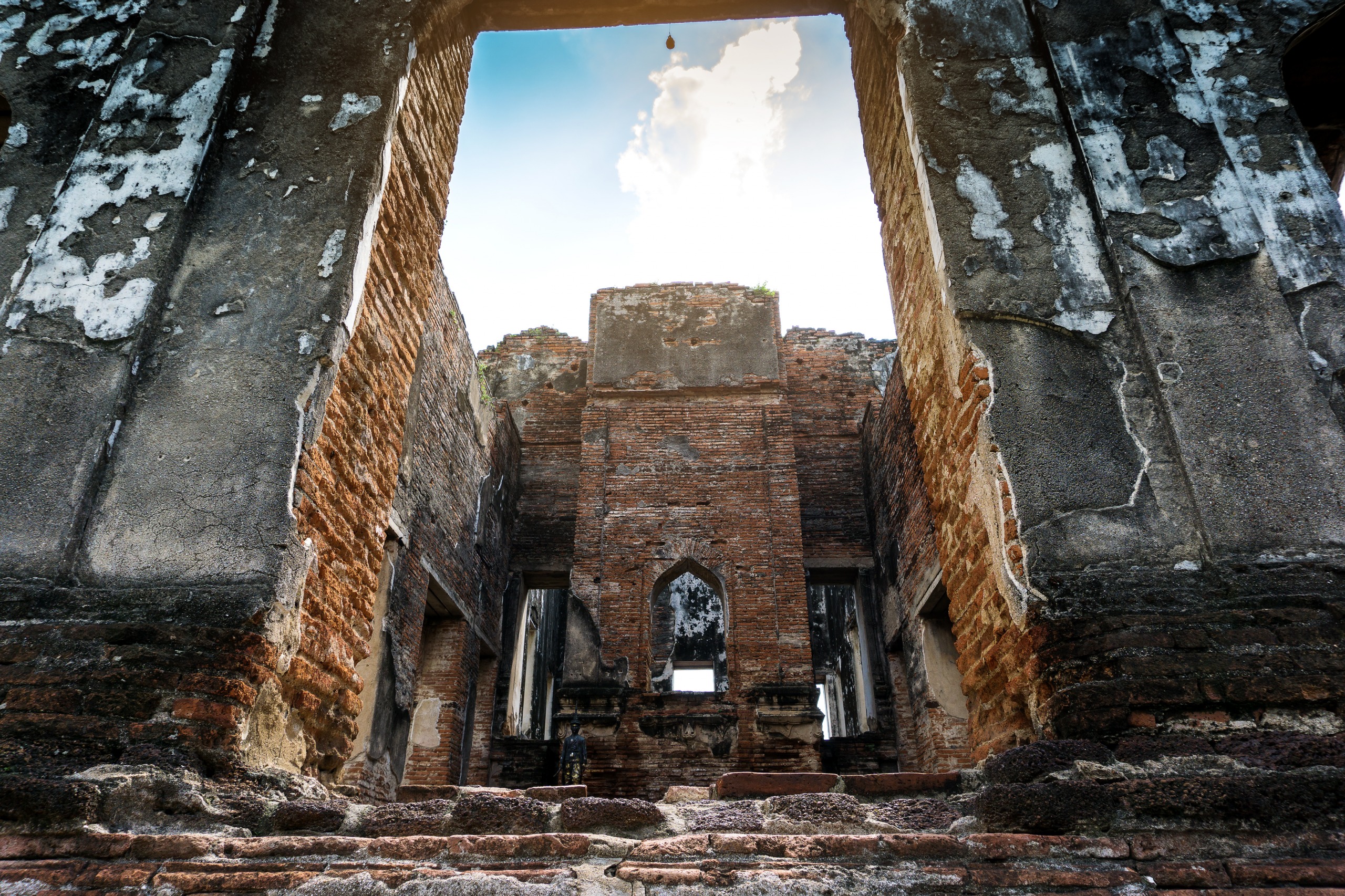
The complex comprises three prangs (tower-sanctuaries) linked by a corridor and aligned along a north-south axis. Built entirely of laterite, the ensemble exemplifies Bayon architecture characteristic of Jayavarman VII's reign. Each tower was dedicated to a deity of Mahayana Buddhism:
the northern tower, to Prajnaparamita, embodiment of perfect wisdom;
the central tower, to the Buddha;
the southern tower, to Avalokiteśvara, the bodhisattva of compassion.
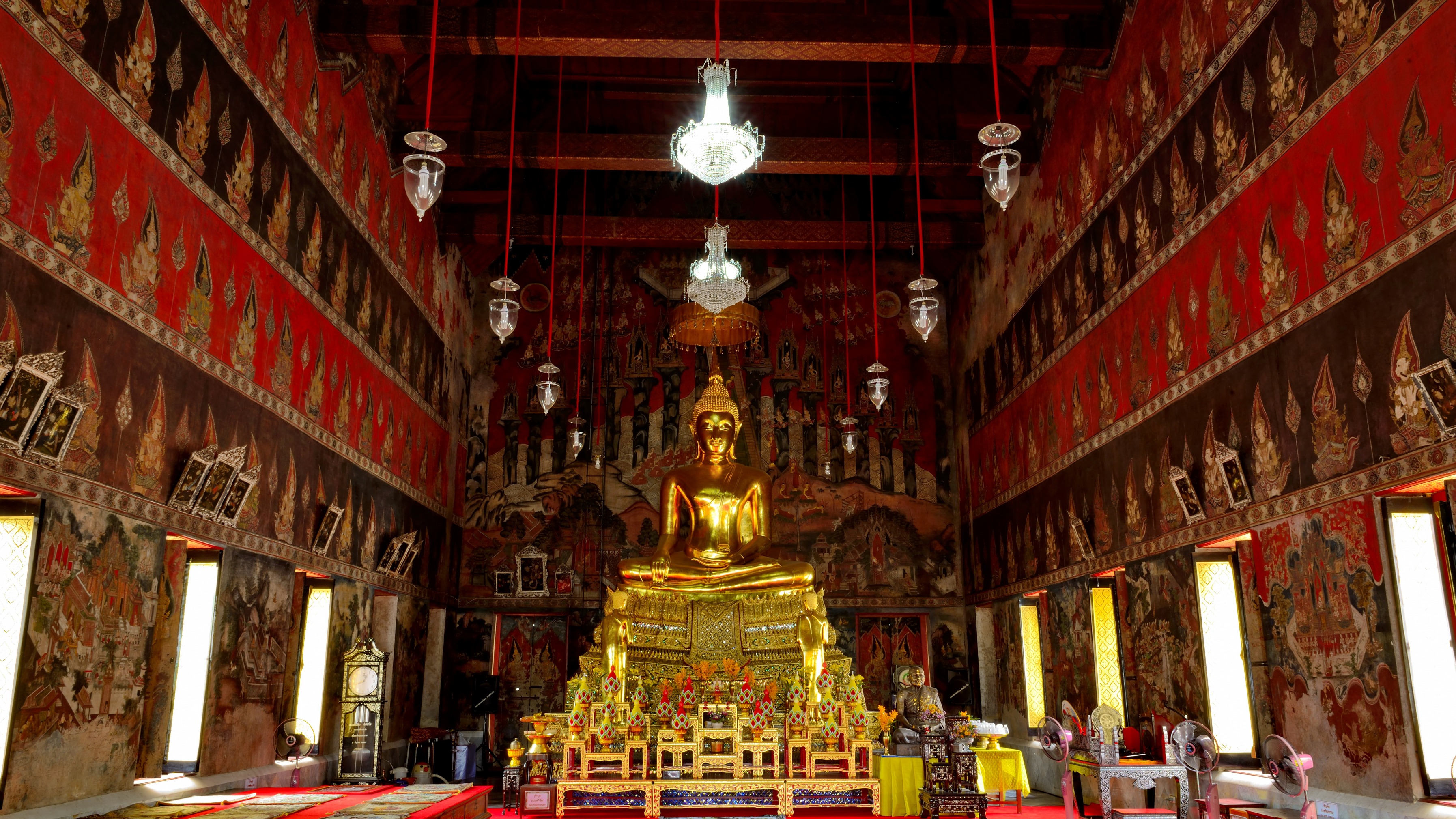
At the entrance to the central prang, a platform originally sheltered a Buddha statue protected by a naga. The ceiling, subtle at first glance, is adorned with red stars that have retained some of their pigmentation.
The viharn and reliefs
On the eastern side stands a viharn (prayer hall) added later, which houses a meditating Buddha statue in Ayutthaya style. The exterior facades merit close examination: five-headed nagas, kalas (protective demonic figures), elephants, and a frieze of hamsa birds (sacred geese) punctuate the wall surfaces. The small columns feature rishis (ascetics) in seated position, sheltered beneath an awning typical of Bayon design. This ornamental vocabulary is directly imported from Angkor.
The crab-eating macaques
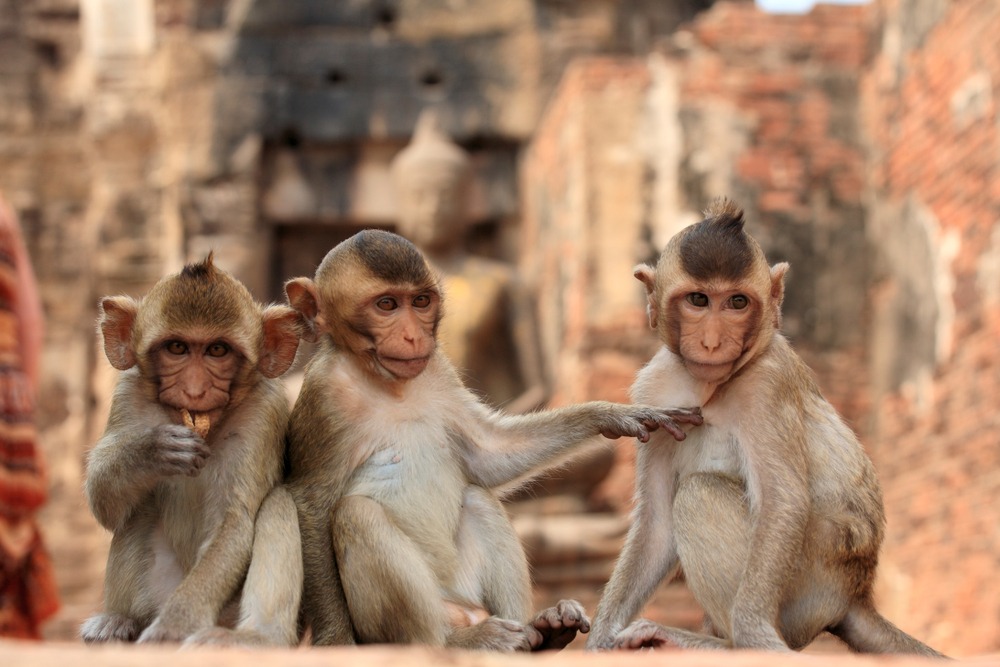
The site is inseparable from its population of crab-eating macaques (Macaca fascicularis), whose numbers have grown since the Monkey Buffet Festival began in 1989. Local tradition regards them as disciples of Jao Paw Phra Kan, the protective spirit of the city whose sanctuary stands nearby. These monkeys are free and accustomed to human presence. A few precautions apply: keep bags closed, secure eyeglasses, avoid visible food, and refrain from direct contact.
Practical information
The site is open daily during daylight hours. Allow 45 minutes to 1.5 hours for your visit depending on your interest in sculptural details and macaque observation. Entry fees are modest and paid on-site in cash. A few recommendations:
dress covering shoulders and knees, in accordance with custom at Buddhist sites;
closed-toe shoes, as the ground can be slippery or soiled by monkeys;
visit early morning to avoid heat and benefit from softer light on the laterite.
When to visit
The cool, dry season from November to February remains the most comfortable window: mild temperatures, rare rainfall, clear skies for photography. The hot season (March-May) calls for early morning visits. The rainy season (June-October) doesn't prevent a visit, as showers are usually brief, though lighting conditions tend to be more dramatic.
How to get there
The sanctuary sits on a rise east of the railway line, near the San Phra Kan sanctuary, approximately 200 metres from Lopburi railway station. Three main options from Bangkok:
By train from Hua Lamphong Station (or Krung Thep Aphiwat): 2 to 3 hours depending on train type, multiple daily departures, economical fares. This is the simplest option: Lopburi station is a 5-minute walk from the temple.
By bus from Mo Chit terminal: 2 to 3 hours depending on traffic, regular departures throughout the day.
By minivan from Victory Monument: around 2 hours, frequent departures during the day.
Nearby attractions
Lopburi is easily explored on foot around Phra Prang Sam Yod and the old town. To extend your exploration of the region and its Khmer or Siamese sites, consult the full guide to Lopburi. The Chao Sam Phraya National Museum in Ayutthaya provides a useful complement, presenting works from the same period. For another cultural and natural dimension of the country, Doi Phu Kha National Park and Doi Mae Salong mountain in the north offer quite different landscapes.
Frequently asked questions
Frequently asked questions
Plan for 45 minutes to 1.5 hours depending on your interest in the architecture and macaque observation. The site is compact and visited in a loop.
They are not aggressive by nature but opportunistic. Avoid wearing visible food, keep bags and eyeglasses close by, and don't extend your hand. Bites are rare but warrant medical attention as a rabies precaution.
Yes. The San Phra Kan sanctuary is just next door, and Phra Narai Ratchaniwet (King Narai's Palace) and Wat Phra Si Rattana Mahathat are within easy walking distance.
Yes, if you depart early on the morning train and return in the late afternoon. Lopburi can also be combined with Ayutthaya over two days for a coherent historical circuit.
Plan your trip
Phra Prang Sam Yod fits naturally into a cultural itinerary connecting Bangkok, Ayutthaya, and Lopburi. To build a bespoke circuit incorporating this site and the rest of the country, explore our suggestions for travel in Thailand.
Photos
Also discover
Interested in this visit?
We can include it in your personalised itinerary.