Khao Luang National Park
Khao Luang National Park
West of Nakhon Si Thammarat, Khao Luang National Park protects 570 km² of jungle, tiered waterfalls, and rare orchids—an off-the-beaten-path trekking destination.
Khao Luang National Park is celebrated for its rivers, forested mountains, and spectacular waterfalls, making it a popular trekking destination in southern Thailand.
A Verdant Mountain Paradise Near Nakhon Si Thammarat
Southern Thailand's natural landscape is renowned for its beauty and ecological richness. Khao Luang National Park, nestled within the Tenasserim Hills mountain range west of Nakhon Si Thammarat, perfectly embodies this splendor. A trek through the park offers a dual purpose: the joy of hiking, exploring cascading waterfalls, traversing bamboo forests, and summiting Khao Luang mountain for breathtaking views. Beyond adventure, the park offers exceptional ecotourism opportunities, particularly for orchid and bird enthusiasts. As an introduction to the botanical wonders, some 300 varieties of wild orchids flourish within this protected area. Venturing to Khao Luang National Park is an immersion into the authentic experience of a Thai tropical jungle.
A Glimpse of History
Mount Khao Luang, from which the park derives its name, stands as a beloved trekking destination. Rising to 1,835 meters above sea level, it is the highest peak in southern Thailand. Yet the park's true highlight lies elsewhere.
Established on December 18, 1974, Khao Luang National Park was Thailand's ninth national park. The government swiftly designated it a "protected site" due to its dense evergreen forests and broadleaf woodlands, making it a biodiversity hotspot. Moreover, the park provides invaluable hydrological services through its waterfalls. The irrigation of surrounding agricultural villages depends on the Krung Chin River, the Klai River, the Tapee River, and the Pakpoon River, all of which originate within the reserve.
The park encompasses a total area of 570 km². Intensive hunting in the 1970s had pushed numerous animal species to the brink of extinction. Protecting the site became essential in combating deforestation. Thailand's environmental legislation transformed Khao Luang into an immense green paradise, where limestone cliffs, granite pinnacles, rushing rivers, and tumultuous waterfalls lend grandeur to the tropical forest ecosystem.
Flora and Fauna of Khao Luang National Park
The site serves as a natural habitat for countless species, sheltering them from industrialization and the loss of pristine forests sacrificed for livestock and agriculture. The park is home to approximately 22 amphibian species, 354 bird species, 28 mammal species, and 34 snake species.
While you won't encounter lions, tigers, leopards, and clouded leopards inhabit the park, though sightings are rare. The most representative mammals include cervids, suids, and viverrids. The deciduous forests are occupied by sambar deer and wild boars, while alpine forests are the domain of barking deer, often spotted alongside Sumatran serows. During your trek, you may encounter rare and endangered primates such as the dusky leaf monkey, an arboreal species with a white face and a tail reaching 83 cm in length, the spectacled langur with its dark coat, and the pig-tailed macaque, equally at home in the canopy or on the ground. Porcupines and small rodents also inhabit these forests. Most animal species frequenting Khao Luang National Park are endemic to the Malay Peninsula.
The park is particularly renowned as a haven for birdwatchers. Some dazzle with their plumage, such as the red-headed barbet or green broadbill, whose coloring blends seamlessly with foliage. Others, like the wreathed hornbill, white-rumped hornbill, and Malaysian white-crested hornbill, stand out with their outsized beaks. At the mountain's summit, the powerful flight of eagles and hawks creates a spectacular display. Other documented bird families include columbids, cuckoos, and woodpeckers.
What to See and Do at Khao Luang National Park
The park's natural wonders are dispersed across its vast expanse. To explore them all, you'll need private transportation. In fact, little of interest lies near the park headquarters. The closest attraction, Karom Falls, sits 7 km from the entrance. Meanwhile, the spectacular Krung Ching waterfall, travelers' favorite, lies over 100 km away. Unless you have your own motorcycle or car, be prepared to hitchhike or wait half an hour for the first songthaew that passes.
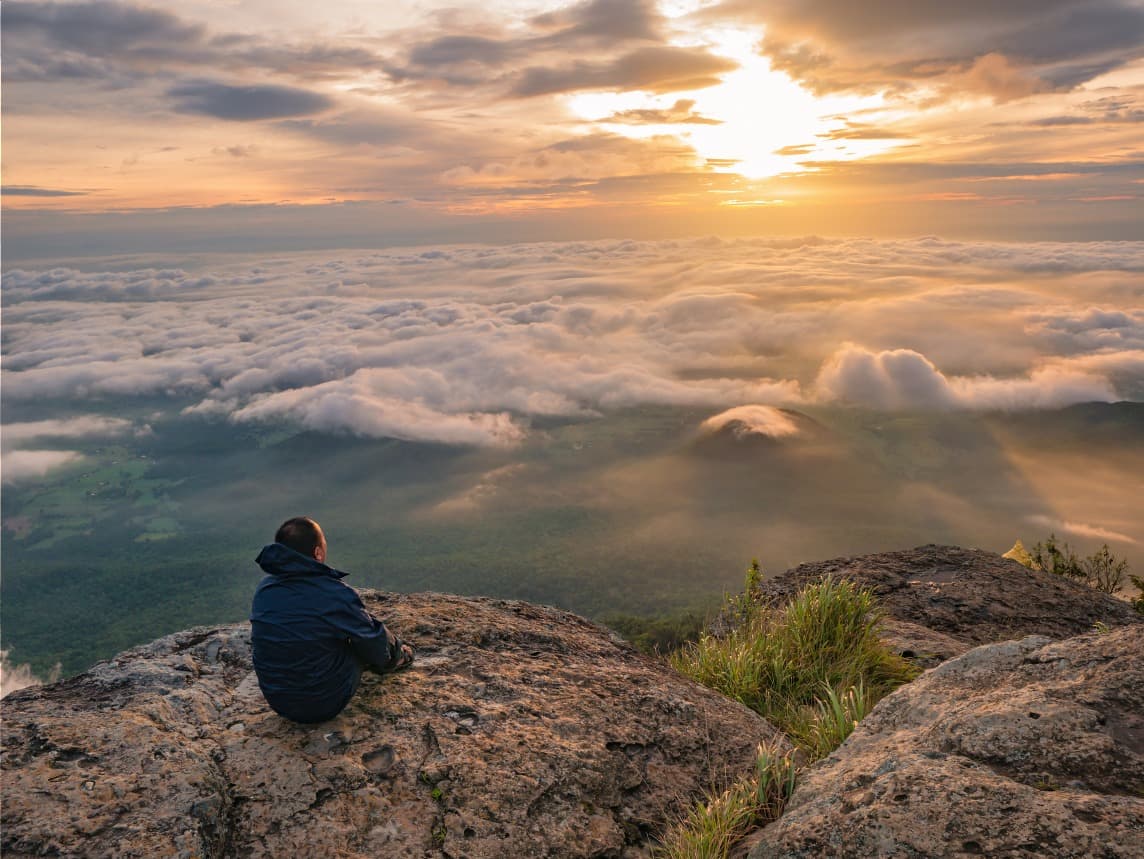
Ascending Mount Luang is reserved for seasoned hikers. Climbers must be accompanied by forest rangers. Typically, reaching 1,835 meters requires three days of trekking with two nights of camping. If this adventure is too demanding, more accessible activities are available.
Beyond this summit challenge, four essentials await at Khao Luang National Park:
- Orchid study and observation: These parasitic plants captivate with their magnificent colored blooms. The park is home to hundreds of different species, some found nowhere else on Earth;
- Birdwatching: Avifauna will accompany you throughout your hike, near waterfalls and through forests. Don't miss the hornbills with their characteristic curved beaks or the black eagle;
- Photographing mammals: While elephants are frequently visible near water sources, spotting big cats requires patience and luck. Consider yourself fortunate if you photograph a leopard in action. Otherwise, console yourself capturing spectacled langurs perched on branches or dusky leaf monkeys foraging, cracking seeds, or playing. Patience is essential;
- Swimming at waterfall pools: For trekkers, the first stop is Karom Falls, located 7 km south of the reserve. It descends in 19 levels, with the first seven accessible via hiking trails. The crystal-clear pool at the seventh level is absolutely unmissable. Progressing eastward into Phrom Khiri District, Phrom Lok and Ai Khiao Falls await within dense verdant jungle, separated by 4 km. Phrom Lok cascades in fifty levels, while Ai Khiao drops 100 levels. Most impressive is undoubtedly the Krung Ching waterfall, located approximately 100 km from the park's official headquarters. A 4-kilometer trek leads to it. From afar, it resembles a silvery milk torrent plunging 100 meters down a rocky cliff face. The whisper of the breeze, the hum of birds and butterflies amid the foliage, and the stillness of towering trees form a striking contrast with the force of the waterfalls.
Practical Information
Admission Fees
For foreign tourists, entrance fees are set at 200 baht, approximately 5.6 euros. Children's admission is half price. Residents enter free.
When to Visit?
February through May offers ideal conditions for visiting Khao Luang National Park. The heat is pleasant, and rainfall is minimal. October through December should be avoided as the park receives peak precipitation during this period. Additionally, waterfalls are inaccessible during the monsoon season.
Where to Stay?
Accommodation options within the park are limited. Two simple yet welcoming and well-maintained bungalows stand near Krung Ching waterfall. One sleeps two people (600 THB or 16.8 euros per night), while the other accommodates a group of twenty (2,000 THB or 56 euros). Camping enthusiasts will find standard-quality tents near the park entrance or at Krung Ching waterfall. For luxury camping, nearby beach resorts offer reservations. Alternatively, family homestays cater to those seeking tradition or authentic travel experiences.
How to Get There?
Given the park's immense size, private transportation is most convenient. Local hotels offer transport services within Khao Luang National Park.
Around Khao Luang
Looking to continue exploring? Venture to Kaeo Surakan Cave, just 3 km from the park, or enjoy a cultural escape to Ban Khiri Wong village.
Photos
Attractions in Khao Luang National Park
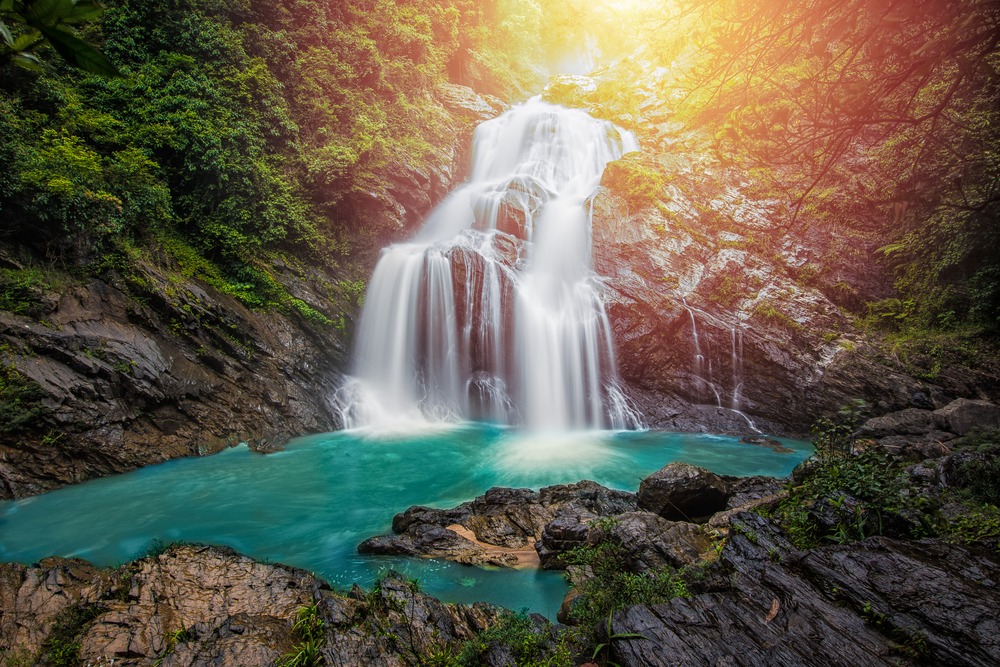
Cascade de Krung Ching
Sept paliers, 3,7 km de sentier en forêt tropicale et un saut iconique imprimé au dos du billet de 1 000 bahts, dans le parc national de Khao Luang.
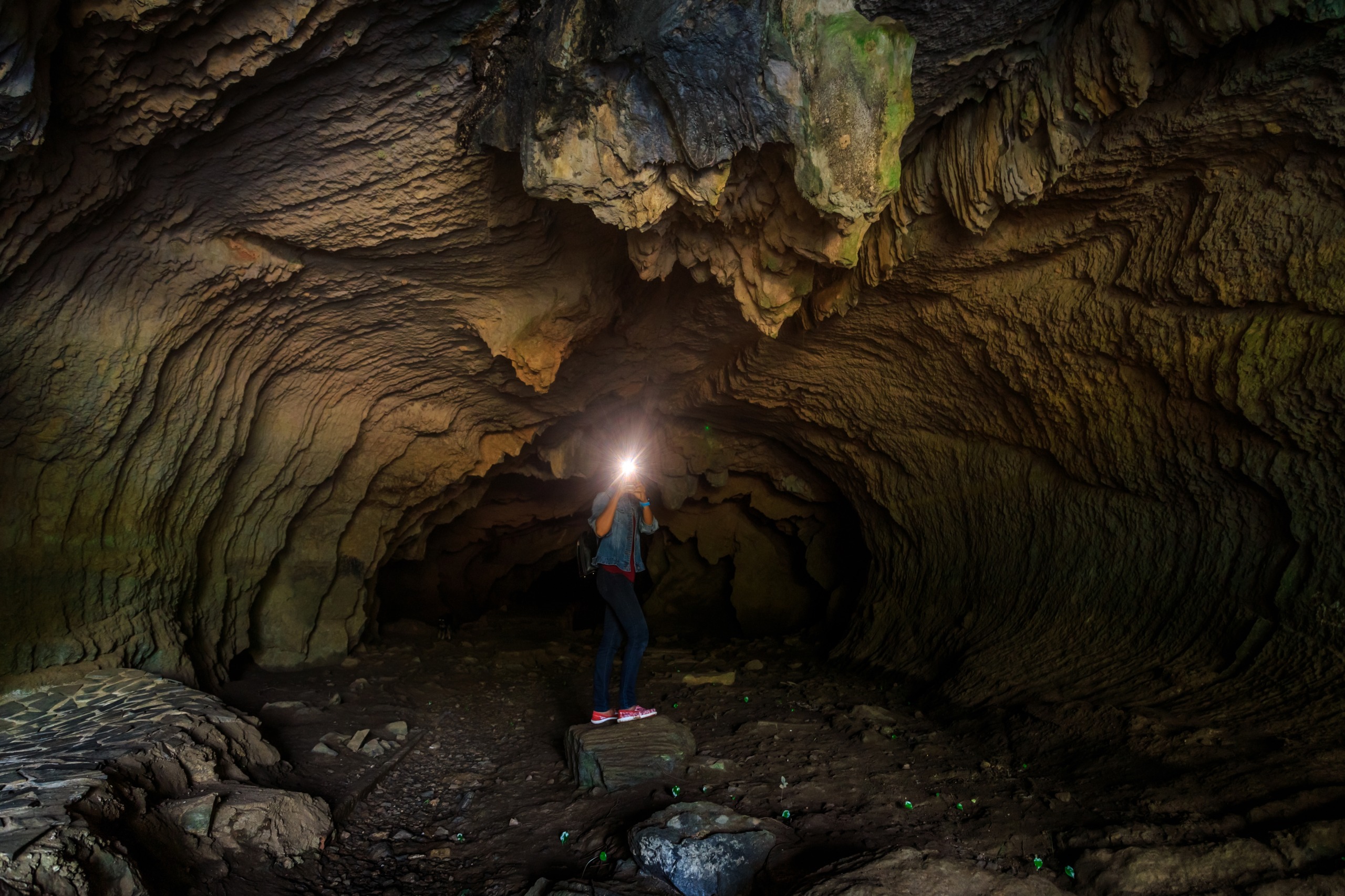
Kaeo Surakan Cave
Grotte calcaire et lieu de méditation bouddhiste dans le district de Lan Saka, près du Parc national Khao Luang, en province de Nakhon Si Thammarat.
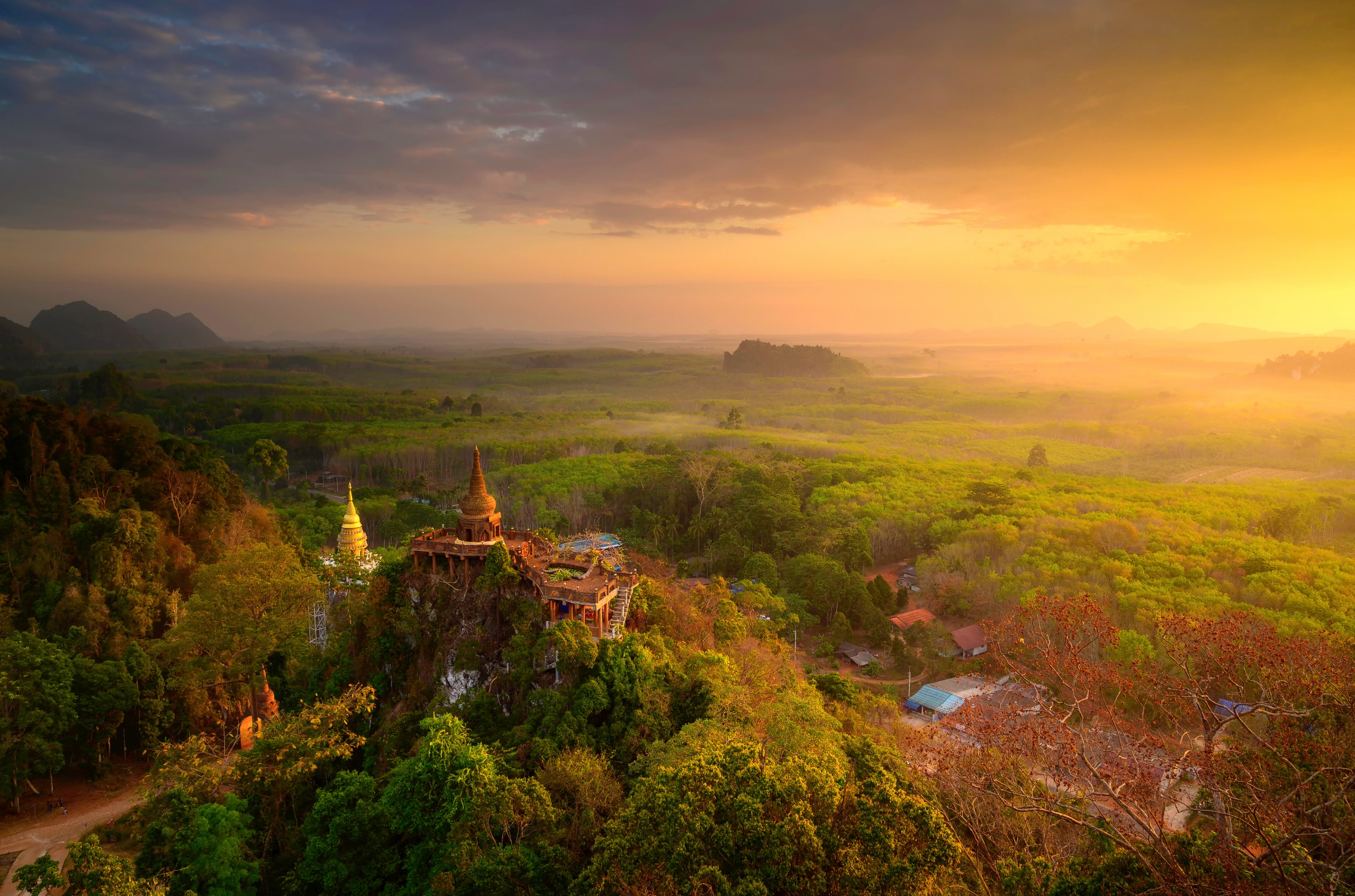
Khao Luang Mountain
À 1 835 m d'altitude, le mont Khao Luang domine le sud de la Thaïlande. Trek exigeant de 3 jours en jungle, faune dense et forêt primaire au programme.
Want to discover this destination?
Our local advisors design your tailor-made trip.