Chin Phrathanporn
Chin Phrathanporn
XJ34+H36, Muang Chum, Tha Muang District, Kanchanaburi 71110, Thaïlande
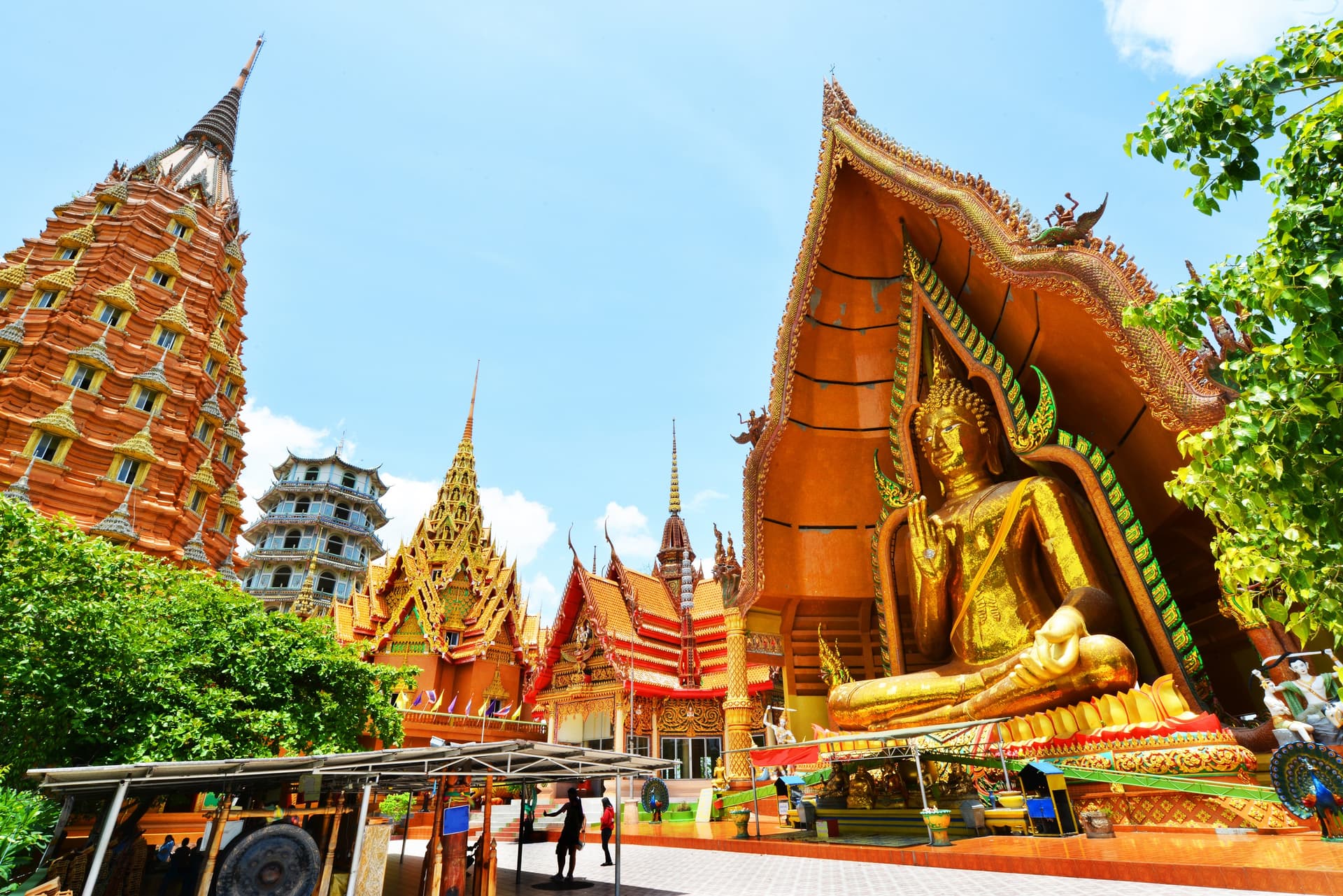
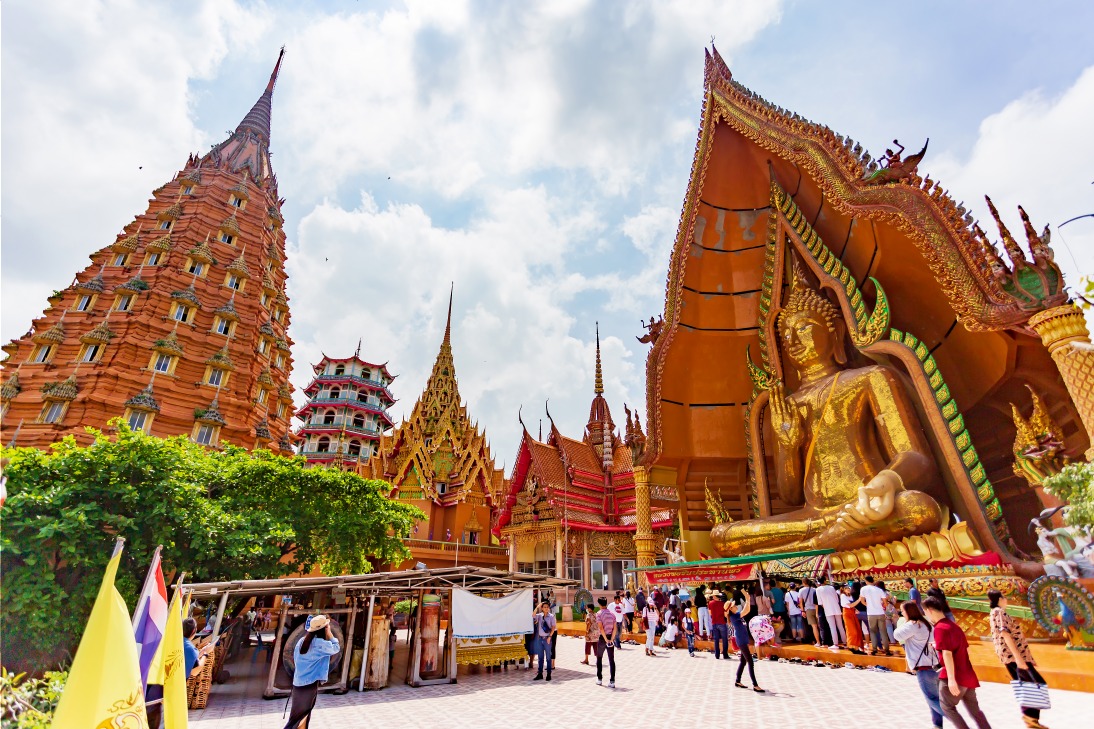
A gilded 18-meter Buddha statue overlooking Wat Tham Sua near Kanchanaburi, Chin Phrathanporn blends Buddhist pilgrimage with sweeping valley views.
Standing 18 meters tall, Chin Phrathanporn crowns the summit of Wat Tham Sua, east of Kanchanaburi. Its name means "the one who grants blessing," and the effigy draws devotees from across Thailand to make wishes or seek protection.
Why visit Chin Phrathanporn
The site's appeal lies as much in the statue itself as in its setting. Perched atop a hillside, the golden meditating Buddha dominates the plain of the Khwae Yai River. The sanctuary combines contemporary religious architecture, a ritual ascent via 157 steps, and sweeping views across rice paddies and the province's forested peaks. It's an accessible spiritual destination, far less touristy than Bangkok's temples, and integrates seamlessly into a Kanchanaburi stay.
History and significance
Wat Tham Sua and its principal statue were built in 1971. The location was no accident: the hillside once harbored a tiger's den ("tham sua" means "tiger cave") and served as a retreat for solitary monks seeking meditation. The temple's construction transformed this remote sanctuary into a pilgrimage center while preserving its contemplative purpose.
Phrathanporn holds a special place in Thai Buddhism: the statue is dedicated to spiritual recollection and the passage of souls. Pilgrims come to leave offerings—lotus flowers, incense sticks, gold leaf affixed to the base—before voicing a personal request.
What to see on site
The main statue
Chin Phrathanporn measures 18 meters high by 10 meters wide. The Buddha is depicted in meditation: legs folded inward, back straight, right arm reaching skyward, and left arm resting on the knee. The statue is entirely gilded, and its base is adorned with finely wrought floral illustrations.
The Chedi that shelters it
The effigy is protected by an open-faced Chedi measuring 69 x 29 meters, its design evoking a stylized seashell. This unusual form in Thai Buddhist architecture makes it one of the site's most recognizable features.
The ascent via 157 steps
The walking path winds along the hillside. Along the way, Naga effigies (protective serpents from Buddhist mythology) line the staircase. The gradient is steady but demands effort; allow 15 to 20 minutes for the climb. From the summit, the view sweeps across mountains, river meanders, and surrounding rice fields.
The funicular
For visitors preferring not to climb, a small funicular serves the summit for a nominal fee (a few baht). It's a practical option for families, elderly visitors, or during peak heat.
Practical information
- Admission: free entry to the site; only the funicular is charged.
- Hours: open from early morning to late afternoon, with extended hours on weekends.
- Duration: plan 1 to 1.5 hours on-site, not including travel time.
- Dress code: shoulders and legs must be covered, as in all Buddhist temples.
- Photography: permitted outdoors and in prayer halls, provided you don't disturb meditating devotees.
When to visit
November through February offers the most favorable conditions: pleasant temperatures, low humidity, and clear skies to enjoy the panorama. From May to October, the monsoon season makes the climb slippery and visibility uncertain; some afternoons bring brief but intense showers. To avoid midday heat, favor the morning.
How to get there
Wat Tham Sua sits roughly 30 kilometers southeast of central Kanchanaburi, reachable by taxi, scooter, or organized excursion from town.
From Bangkok, several options reach Kanchanaburi:
- By bus or minivan: departures from Sai Tai Mai and Mo Chit terminals, roughly 2.5 to 3 hours of travel.
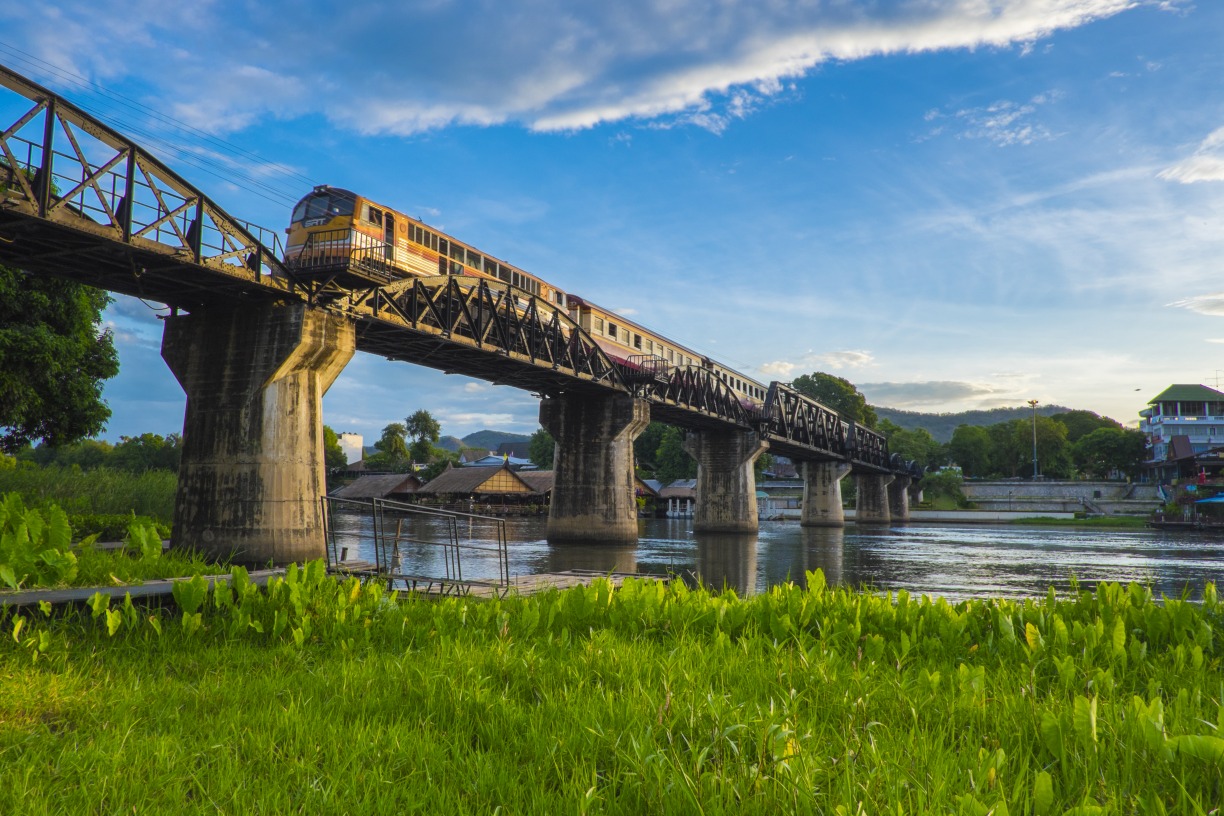
- By train: historic line departing Thonburi Station, slower but more scenic, tracing part of the route of the famous Bridge over the River Kwai.
Nearby attractions
Kanchanaburi and its region host several complementary sites:
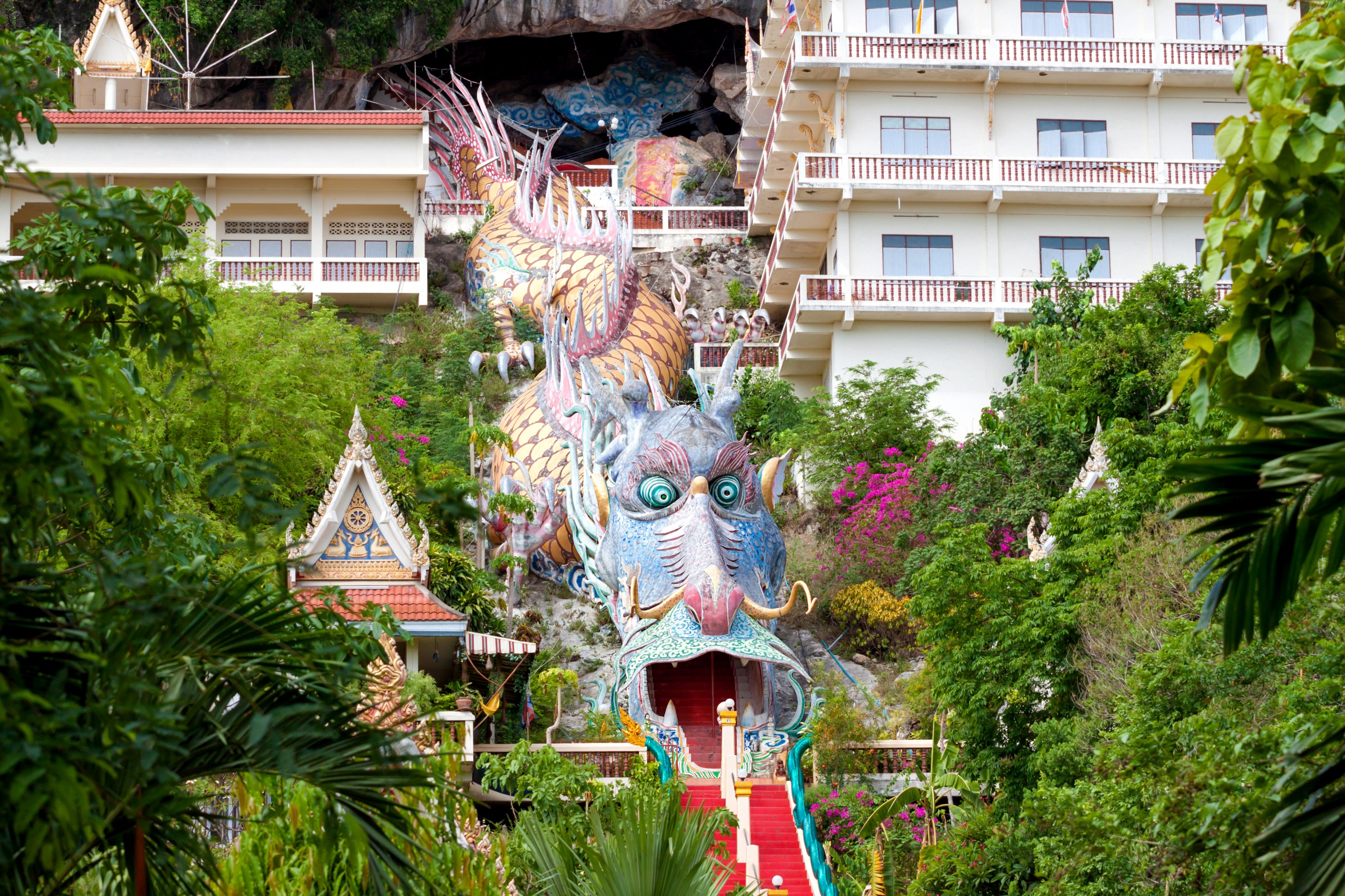
- Wat Ban Tham, a cave temple celebrated for its dragon-mouth grotto.
- Damnoen Saduak Floating Market, en route between Bangkok and Kanchanaburi.
- Sanam Chan Palace in Nakhon Pathom, a cultural stop in the same direction.
Frequently asked questions
Access to the site and temple is free. Only funicular use carries a nominal charge of a few baht.
Plan 1 to 1.5 hours on-site, including the climb and time at the statue. Combined with travel from central Kanchanaburi, a half-day is a solid baseline.
First reach Kanchanaburi by bus from Sai Tai Mai or Mo Chit terminals, or by train from Thonburi Station. Then take a taxi or scooter for the final stretch to Wat Tham Sua.
November through February, for mild temperatures and clear skies that showcase the panorama from the summit.
As in all Thai Buddhist temples, shoulders and legs must be covered. Bring a sarong or lightweight shirt if wearing shorts or a tank top.
Want to include Chin Phrathanporn and the Kanchanaburi region in a complete itinerary? Check out our Thailand journeys to build a bespoke trip.
Photos
Nearby

Interested in this visit?
We can include it in your personalised itinerary.