Bua Tong Waterfalls
Bua Tong Waterfalls
339H+3V, Mae Ho Phra, Amphoe Mae Taeng, Province de Chiang Mai 50150, Thaïlande
Located 60 km north of Chiang Mai, Bua Tong Waterfalls offer a rare experience: ascend the cascade using the natural grip of their limestone walls.
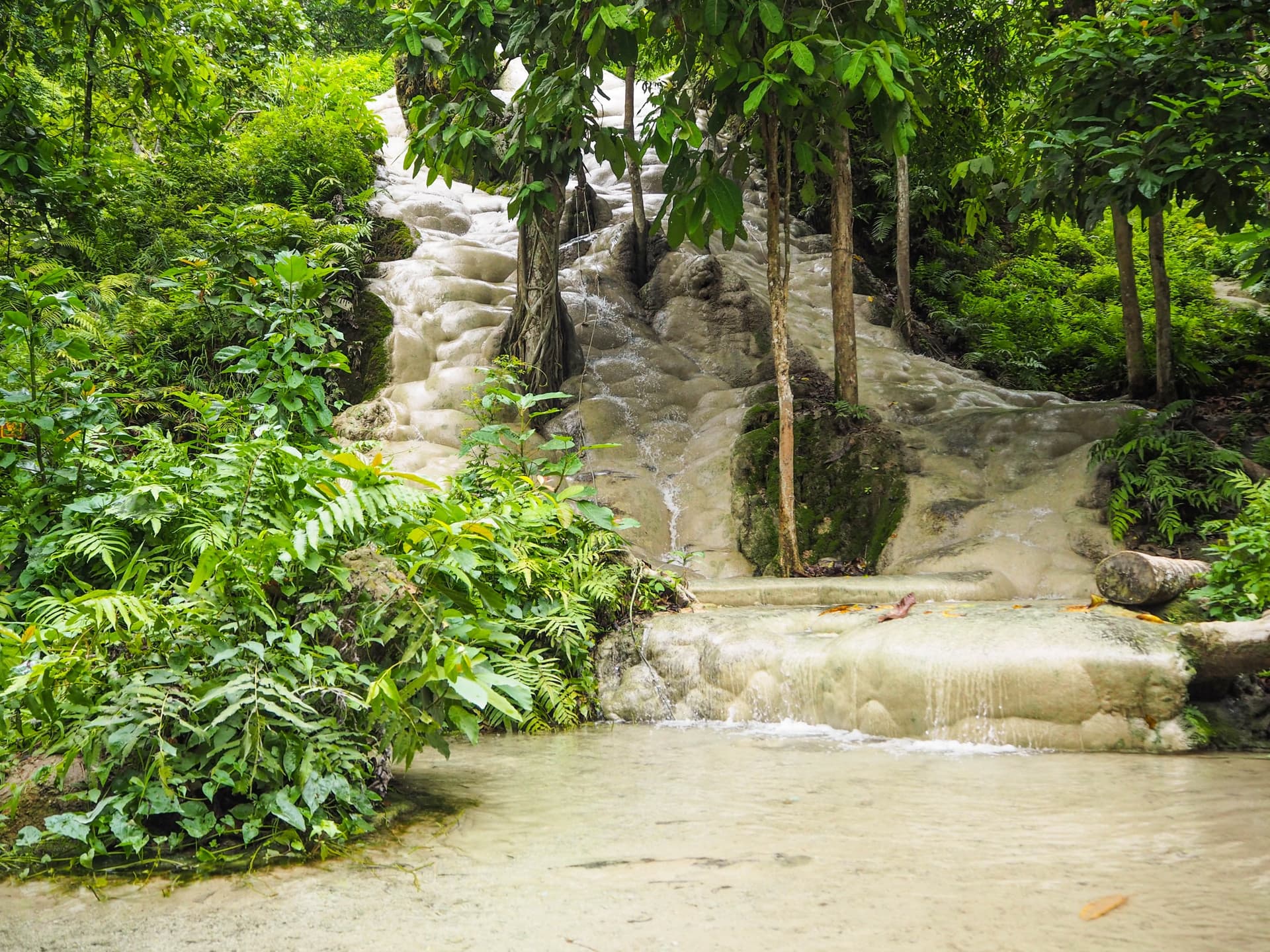
Bua Tong Waterfalls, nicknamed Sticky Waterfalls, display a rare geological feature: their limestone walls provide sufficient grip to climb barefoot along the flowing water. Situated around sixty kilometres north of Chiang Mai, within Sri Lanna National Park, they make for a popular half-day excursion prized for their uniqueness.
Why visit Bua Tong Waterfalls
The site's appeal lies in a mineral phenomenon: deposits of calcium carbonate left by water on the rocky bed form a rough and porous surface, comparable to solidified sponge. This texture allows visitors to climb back up the cascade using their hands, despite the constant water flow. The site thus sets itself apart from typical waterfalls in the region: visitors come as much to climb as to observe.
The setting unfolds within the dense forest of Sri Lanna National Park, away from the busier circuits of northern Thailand. The cascade develops across three successive levels, separated by shallow pools, wooden stairs, and shaded pathways.
What to see and do on site
Ascend the three levels
Climbing constitutes the main experience. Each tier offers a different configuration: gently sloped rocks on the lower level, more vertical and narrow sections higher up. Fixed ropes are installed on the most exposed passages. The effort remains physical despite the limestone's grip; reserve energy for the descent.
Swim in the natural pools
The basins formed at the foot of each level allow for a refreshing dip. These are not specially developed natural pools, but rather shallow crevasses. A swimsuit is useful, as is a towel.
Enjoy the facilities
At the base of the site, picnic tables in the shade, a few stalls offering drinks and snacks, and basic sanitary facilities are available. The national park also maintains short hiking trails in the surrounding area, accessible from the parking area.
Practical information
- Location: Sri Lanna National Park, Mae Taeng District, approximately 60 km north of Chiang Mai, on Route 1001.
- Entrance fee: national park entrance is paid; budget a moderate rate for foreign adults and a reduced rate for children (around 100 and 20 baht as a guide, subject to change).
- Duration of visit: 2 to 3 hours on site are sufficient to explore the three levels and swim.
- Equipment: quick-drying shoes or closed sandals, swimsuit, towel, water. Climbing is often done barefoot, which adheres particularly well to limestone.
- Precaution: despite the grip, some areas are slippery (green moss, patches without white deposits). Exercise caution with young children on higher sections.
When to visit
The dry season, from November to February, offers the most favourable conditions: comfortable temperatures, moderate water flow, accessible rocks. This is the recommended period to combine Bua Tong with a stay in Chiang Mai.
From March to May, the heat can be challenging and the season coincides with agricultural burning in the north, with degraded air quality and risks of forest fires. The rainy season, from June to October, increases water flow and makes climbing trickier, even dangerous on the upper levels.
To limit crowds, aim for a morning arrival and avoid weekends.
How to get there
From Chiang Mai by private vehicle
The journey takes around 1 hour 30 minutes via Route 107 then 1001. Renting a car or scooter works if you're comfortable on Thai roads. The simplest option remains booking a private driver for the day, which allows you to combine Bua Tong with other northern sites.
By songthaew
Songthaews (shared red taxis) can be negotiated in central Chiang Mai for the day. The fare is negotiated before departure and typically includes waiting time on site.
By public transport
From Tha Phae Gate, reach Chang Phueak bus station near Pratu Chang Phueak (north gate), about 600 metres along Changhuak Road. Local buses serve Mae Taeng, but the last kilometre to the waterfalls requires additional transport (taxi or hitchhike).
What to combine in the surrounding area
Bua Tong integrates well into a loop north of Chiang Mai. You can extend the excursion via Mae Rim and its themed farms, or head to Huay Tung Tao Lake for lunch with your feet in the water on the return. Botany enthusiasts will appreciate a detour to Queen Sirikit Botanical Garden, located on the same route.
Frequently asked questions
Calcium carbonate deposits accumulated on the rock walls create a rough and porous surface. This texture provides unusual grip, sufficient to ascend the waterfall barefoot across most sections.
The dry season, from November to February, is most suitable. Avoid March to May (heat, burning, fire risks) and June to October, when the rainy season makes climbing slippery and riskier.
Allow 2 to 3 hours on site to explore the three levels, swim, and rest. With the journey from Chiang Mai (around 1 hour 30 minutes each way), plan for a half-day to a full day.
The lower level is accessible for families. The higher sections remain physically demanding and expose you to falls: careful supervision is necessary and certain passages won't suit young children.
A swimsuit, towel, and water suffice. Quick-drying shoes or closed sandals help on the trails; on the waterfall itself, barefoot climbing is often most effective.
Preparing your Thailand trip
Bua Tong Waterfalls naturally fit into a circuit around Chiang Mai and northern Thailand. To build a complete itinerary, consult our bespoke Thailand trips.

Photos
Also discover
Interested in this visit?
We can include it in your personalised itinerary.