Phu Ruea National Park (Mount Phu Ruea)
An altitude plateau at 1,365 m in Loei Province, Mount Phu Ruea is renowned for its winter fog seas and among Thailand's coolest temperatures.
Mount Phu Ruea peaks at approximately 1,365 meters in Loei Province, northeastern Thailand. This forested plateau, incorporated within the national park of the same name, is celebrated for its cool winter temperatures—among the coolest in the country—and its ethereal morning mist landscapes. It draws hikers, nature enthusiasts, and Thai families seeking respite from the heat of the plains.
Practical information at a glance
- Entry fee: National park entrance fee applies (foreign rates differ from Thai rates, per national park policy).
- Best time to visit: November to February for cool weather and mists; avoid the rainy season (June–October) for trail conditions.
- What to wear: Warm clothing is essential in winter — nights can approach 0 °C.
- Suggested duration: A full day, or better yet, an overnight stay to catch the sunrise.
- Accommodation: National park bungalows bookable through Thailand's official parks system.
What you'll see
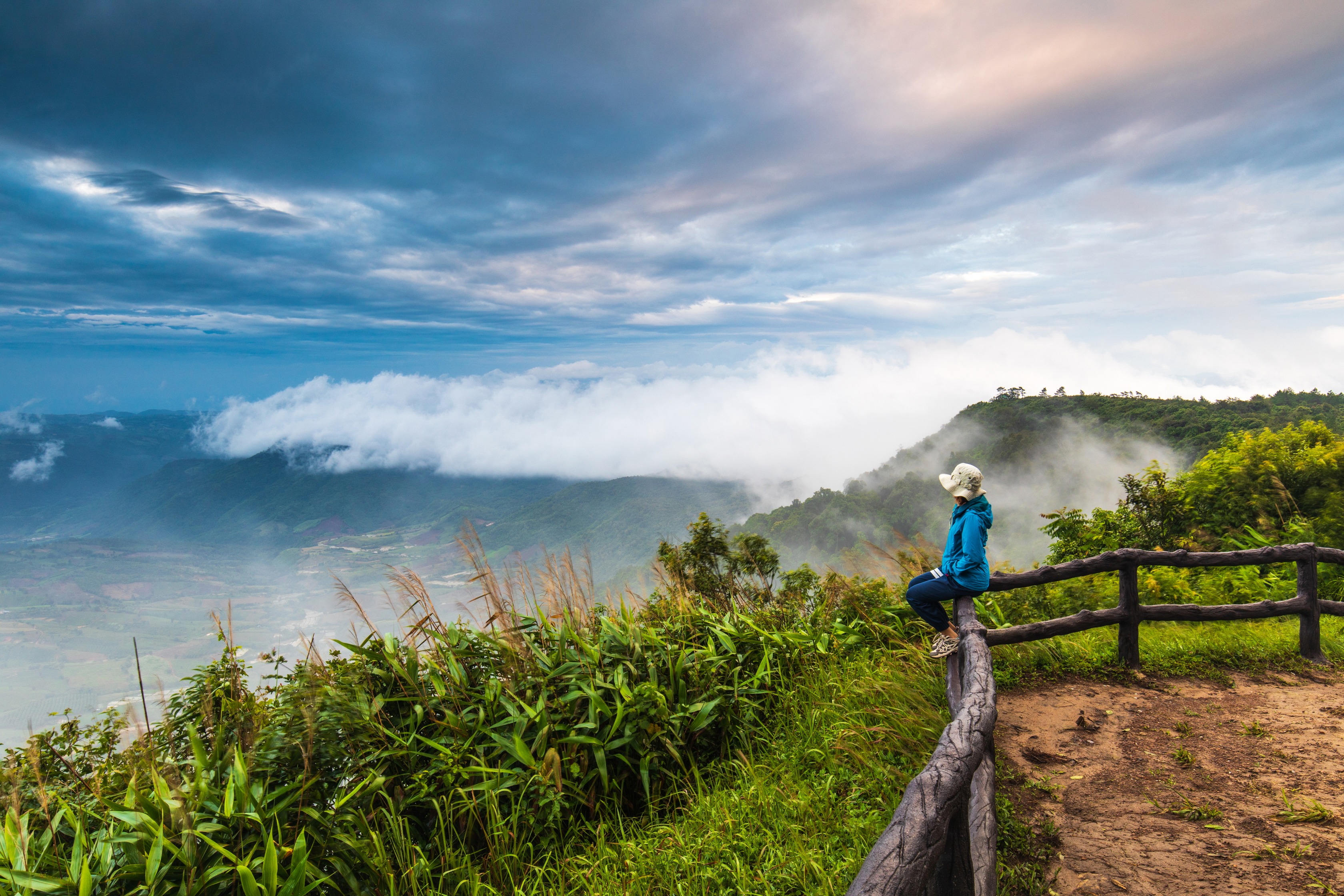
The summit commands clear views across Loei's hills and, on clear days, into Laos. Vegetation ranges from pine forest and altitude grassland to rocky outcrops. In winter, a sea of mist envelops the valleys at sunrise—a spectacle that justifies the journey alone. Wild flowers color the highland meadows from November through January.
History and context
Phu Ruea was designated a national park in 1979. Its name roughly translates to "mountain shaped like a boat," a reference to the plateau's profile as seen from the plains below. Loei Province, nestled between mountains and the Laotian border, is historically one of the least populated and most pristine regions of northeastern Thailand.
Highlights of your visit
Sunrise from the summit
Arriving before dawn at the main viewpoint is the central experience at Phu Ruea. Mist rises from the valleys as low-angle light bathes the ridges in orange. Bring a headlamp for the pre-dawn walk.
The hiking trails
Several marked trails crisscross the plateau and pine forest. Routes are accessible to moderate-level hikers. Park staff can advise on open trails according to the season.
The winter sea of mist
From November to February, the cloud-sea phenomenon occurs nearly every morning. This is the primary reason Thai visitors make the journey from Bangkok or Khon Kaen on weekends.
Photography tips
Light is optimal in the hour following sunrise. Position yourself at the main summit viewpoint facing east. A tripod is useful in the pre-dawn dimness. Partially misty days offer interesting layers of depth; fully clear days reveal the most distant views.
Location and access
The park lies roughly fifty kilometers west of Loei town. Personal vehicle or shared songthaew access from Loei is the most common approach — direct public transport to the summit is limited. The access road to the plateau is paved. Wheelchair accessibility at the summit is restricted due to terrain.
In the surrounding area
- Phu Kradueng National Park — another signature altitude plateau in Loei, more heavily visited, with a mandatory steep approach on foot.
- Loei town — the provincial capital with local markets and logistical hub for the region.
- Chiang Khan — a colonial riverside town on the Mekong with a well-preserved atmosphere, about two hours' drive away.
Frequently asked questions
November to February brings ideal conditions: cool temperatures, morning mists, and wildflowers. This is also high season — weekends can be busy.
Yes. At the height of winter (December–January), night temperatures can approach freezing. Even by day, it is noticeably cooler than the plains. Pack a warm jacket, even if you're traveling from Bangkok during summer months.
The national park offers bungalows and camping. Advance booking is strongly recommended in high season through Thailand's official national parks portal.
Phu Ruea and Phu Kradueng form a natural circuit over three to four days. Chiang Khan, on the Mekong's banks, rounds out a stay nicely with a very different atmosphere.
No particular photography restrictions apply in this nature reserve. Drones are subject to Thailand's national regulations on protected areas — check with the park office at the entrance.
Interested in this visit?
We can include it in your personalised itinerary.