Si Satchanalai
Si Satchanalai
Si Satchanalai, Si Satchanalai District, Sukhothai, Thaïlande
Inscribed on the UNESCO World Heritage List in 1991, the Si Satchanalai Historical Park preserves 215 ruins from the former cultural capital of the Sukhothai kingdom.
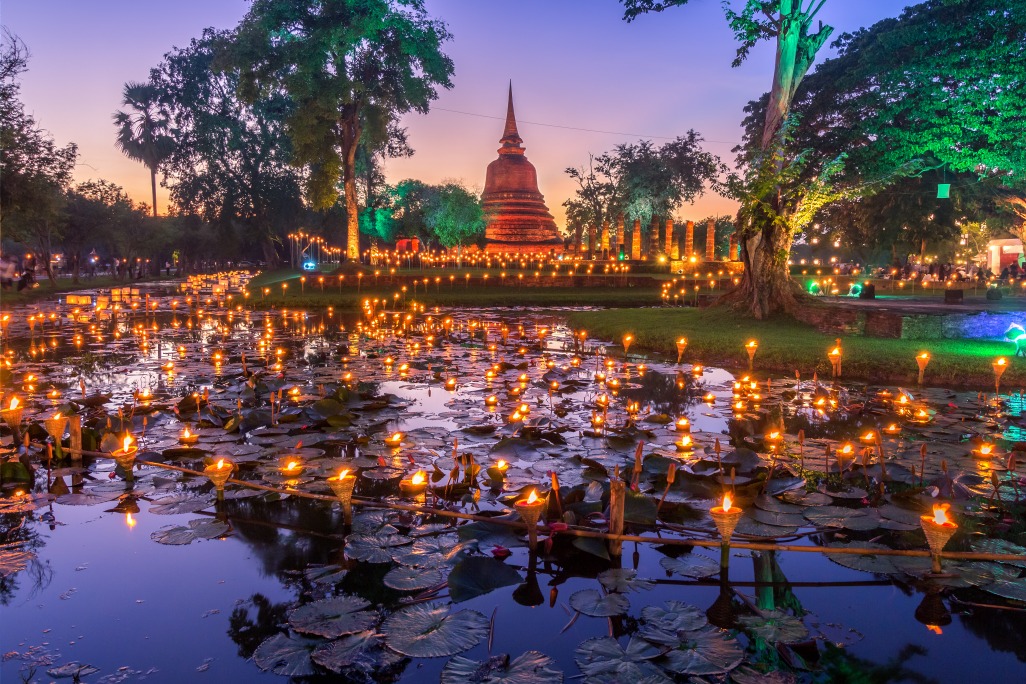
Inscribed on the UNESCO World Heritage List in 1991 alongside Sukhothai and Kamphaeng Phet, the Si Satchanalai Historical Park contains 215 ruins scattered throughout a verdant setting, 450 km north of Bangkok, in Sukhothai province. Once the cultural and religious capital of the Sukhothai kingdom, this ancient city spanned seven centuries of history before being abandoned in the 18th century. Khmer laterite towers, Sri Lankan-style stupas, stone elephant statues, and Buddha images form an architectural ensemble where Khmer, Mon, Lanna, and Siamese influences converge.
Why visit Si Satchanalai
A UNESCO site far less crowded than Sukhothai, its political neighbor.
215 monuments within a single perimeter, including temples from the 13th century.
A vivid record of Siamese architectural evolution, from Khmer art to the earliest Thai developments.
A pristine natural setting, ideal for exploration by bicycle between the Yom River and forested hills.
History
The city was originally called Chaliang, meaning "city of water," and long remained under the dominion of the Angkor Empire. In 1250, King Sri Indraditya, founder of the Phra Ruang dynasty—considered Thailand's first historical dynasty—liberated Chaliang from Khmer rule with the aid of Pha Mueang. He renamed the city Si Satchanalai, meaning "city of good people," and installed his son Ban Mueang as its ruler.
Built in the eastern part of Chaliang, Si Satchanalai held strategic importance due to its border position with Lanna and Burma. While Sukhothai remained the seat of royal power, Si Satchanalai emerged as the cultural and religious capital of the kingdom.
Following Sukhothai's collapse, the city was governed by Lanna princes from 1451 to 1454 before becoming a vassal of Ayutthaya. Renamed Sawankhalok, it developed into a major center of ceramic production, with exports reaching the Philippines, Indonesia, and Japan. The current rectangular plan, with five-meter-high walls, dates to the 16th century. By the 18th century, amid conflicts between Burma and Ayutthaya, the city was abandoned, and its inhabitants relocated to the modern Sawankhalok neighborhood.
What to see in the historical park
The park contains 215 documented ruins accompanied by bilingual Thai-English signage. Here are the key complexes not to miss.
Wat Phra Sri Rattana Mahattat
Si Satchanalai's oldest temple. Construction began in the 13th century under King Jayavarman VII, and the shikhara roof, shaped like a mountain tower, exemplifies characteristic Khmer influence. Before the prang's entrance stands a four-faced Brahma and finely carved Apsara bas-reliefs. Around the main sanctuary spread the Mon-inspired Phra That Mutao pagoda, Sri Lankan-tradition stupas, and the Phra Song Phi Nong vihara housing two Buddha images. Access to the temple crosses a wooden bridge suspended over the Yom River.
Wat Nang Phaya
Built in the 15th century after Ayutthaya's conquest of the city. According to tradition recorded by Rama VI, the temple was allegedly commissioned by a Chinese princess named Pasuja Devi, though this attribution remains legendary. The vihara is renowned for its stucco motifs adorning the façade, reflecting a fusion of Lanna and Sukhothai styles.
Wat Chang Lom
A stupa with a square base and two levels, erected in 1286 by order of King Ram Khamhaeng. The second level contains 20 niches that once held 140-cm stone Buddha images. On the first story, 39 elephant statues surround the structure: four large ones at the corners, nine smaller ones on each side—one statue is now missing.
Wat Chedi Chet Thaeo
South of Wat Chang Lom, this 14th-century temple attributed to a Sukhothai princess displays 32 stupas arranged in seven rows. The main stupa retains its lotus-bud finial.
Wat Chom Chuen
Along the route between Wat Phra Sri Rattana Mahattat and the park's core, this site combines a spherical stupa, a vihara, and a mandapa in excellent condition.
Practical information
The site is open daily during daylight hours. Foreign visitors pay a modest entry fee, with an additional charge to access Wat Phra Sri Rattana Mahattat, located outside the main enclosure. Budget half a day to a full day to explore the park properly, ideally by bicycle. A small shop about 3 km from the entrance rents bicycles for a few baht.
When to visit
Like northern Thailand generally, Si Satchanalai enjoys a cooler, more humid climate than the southern region. The most comfortable period runs from November to February, with pleasant temperatures and minimal rainfall. The monsoon season, from June to October, may render some park trails less passable.
How to get there
From central Sukhothai, public buses serve Si Satchanalai with four morning departures at around 7am, 9am, 10:30am, and 11:30am. The journey takes approximately 1.5 hours. Since schedules may change, it's best to arrive early at the terminal and confirm with the ticket window. A more flexible option is to arrange private transport. Once there, ask your driver to point out the stop near Wat Phra Sri Rattana Mahattat.
Nearby
The region concentrates three UNESCO-inscribed historical parks. Alongside Si Satchanalai, the Sukhothai Historical Park and the Wat Si Chum with its monumental seated Buddha merit a full day. Further west, the Wat Phra That Lampang Luang showcases Lanna art in the Lampang region.
Frequently asked questions
Frequently asked questions
Yes. The two sites complement each other: Sukhothai presents the official architecture of the political capital, while Si Satchanalai preserves a more diverse ensemble blending Khmer, Mon, Sri Lankan, and Lanna influences, in a considerably less crowded setting.
Half a day covers the major temples (Wat Phra Sri Rattana Mahattat, Wat Chang Lom, Wat Chedi Chet Thaeo, Wat Nang Phaya). A full day by bicycle allows broader exploration of all 215 monuments.
Yes, explanatory panels in Thai and English accompany the principal monuments. A guide remains valuable for understanding iconographic details and the historical context of the Sukhothai kingdom.
No. Located outside the main enclosure, this temple requires a separate, modest entry fee payable on-site.
By bicycle. The park is expansive and flat, and rental is readily available near the entrance. Walking remains possible but limits distances covered.
Plan your itinerary
Si Satchanalai fits naturally into a circuit exploring Siam's ancient capitals, linking Sukhothai, Kamphaeng Phet, and northern Lanna. To build a custom journey including these UNESCO sites, explore our selection of Thailand tours.
Photos
Interested in this visit?
We can include it in your personalised itinerary.