Wat Phra That Lampang Luang
Wat Phra That Lampang Luang
271 Tambon Lampang Luang, Amphoe Ko Kha, Chang Wat Lampang 52130, Thaïlande
Fortified sanctuary from the 17th century, 18 km from Lampang: a midnight-blue 45-meter chedi, never-restored frescoes and a camera obscura phenomenon.
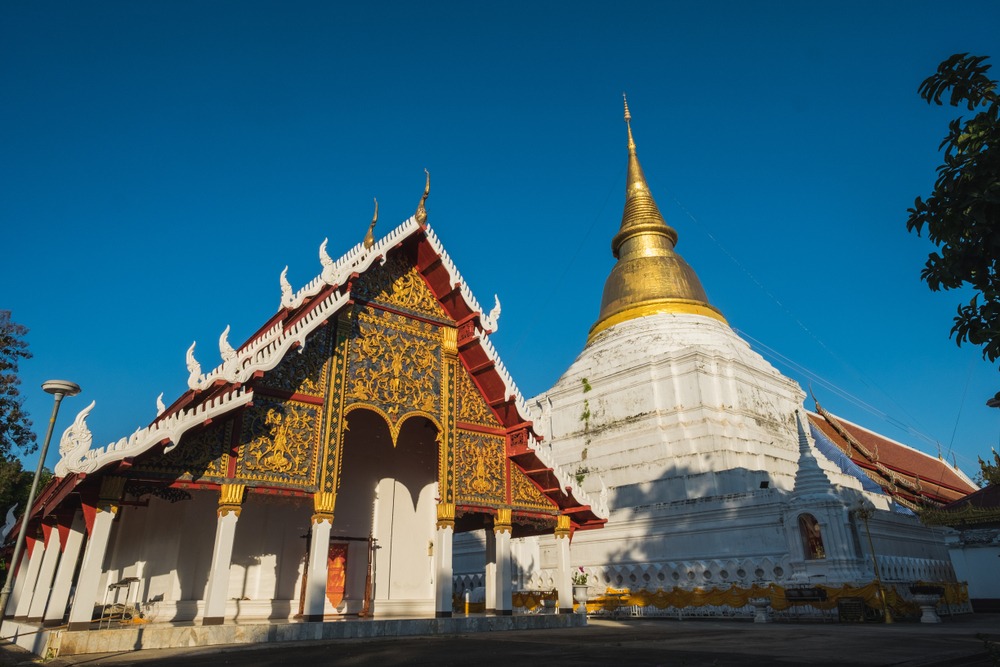
Wat Phra That Lampang Luang rises on a fortified promontory at Ko Kha, 18 km southwest of Lampang. This sanctuary ranks among the best-preserved monastic complexes in northern Thailand, featuring a 17th-century fortified wall, a 45-meter chedi and several teak wooden viharns whose frescoes number among Siam's oldest.
Why visit Wat Phra That Lampang Luang
The temple brings together in a single fortified site architectural and pictorial elements representative of Lanna art spanning nearly five centuries. Its appeal lies in several rare features: an open viharn exposed to the winds (without partitions), a midnight-blue chedi enhanced with yellow-gold geometric motifs, never-restored frescoes, and a camera obscura phenomenon that projects the inverted image of the chedi onto the interior wall of a chapel.
The sanctuary's name means "sanctuary with the sacred relics of the Buddha of Lampang." According to tradition, the main stupa houses a hair of the Buddha. Thai pilgrims born under the sign of the ram in the local zodiac come here to pray as a priority, the animal being associated with this place in popular belief.
History of the sanctuary
Legend traces the founding of this place to the supposed visit of the Buddha himself, who left here a lock of his hair. Bone fragments were subsequently deposited here, justifying the construction of a relic chedi.
The current fortified enclosure dates from the 17th century, during Burmese dominion over the region. The walls still bear the memory of battles waged by the warrior Thippachak against the Burmese: the chedi retains bullet marks at its base, remnants of these confrontations. The Viharn Luang, the main assembly hall, was completed in 1476, and the central Buddha statue was carved in 1563.
What to see on site
Access and surroundings
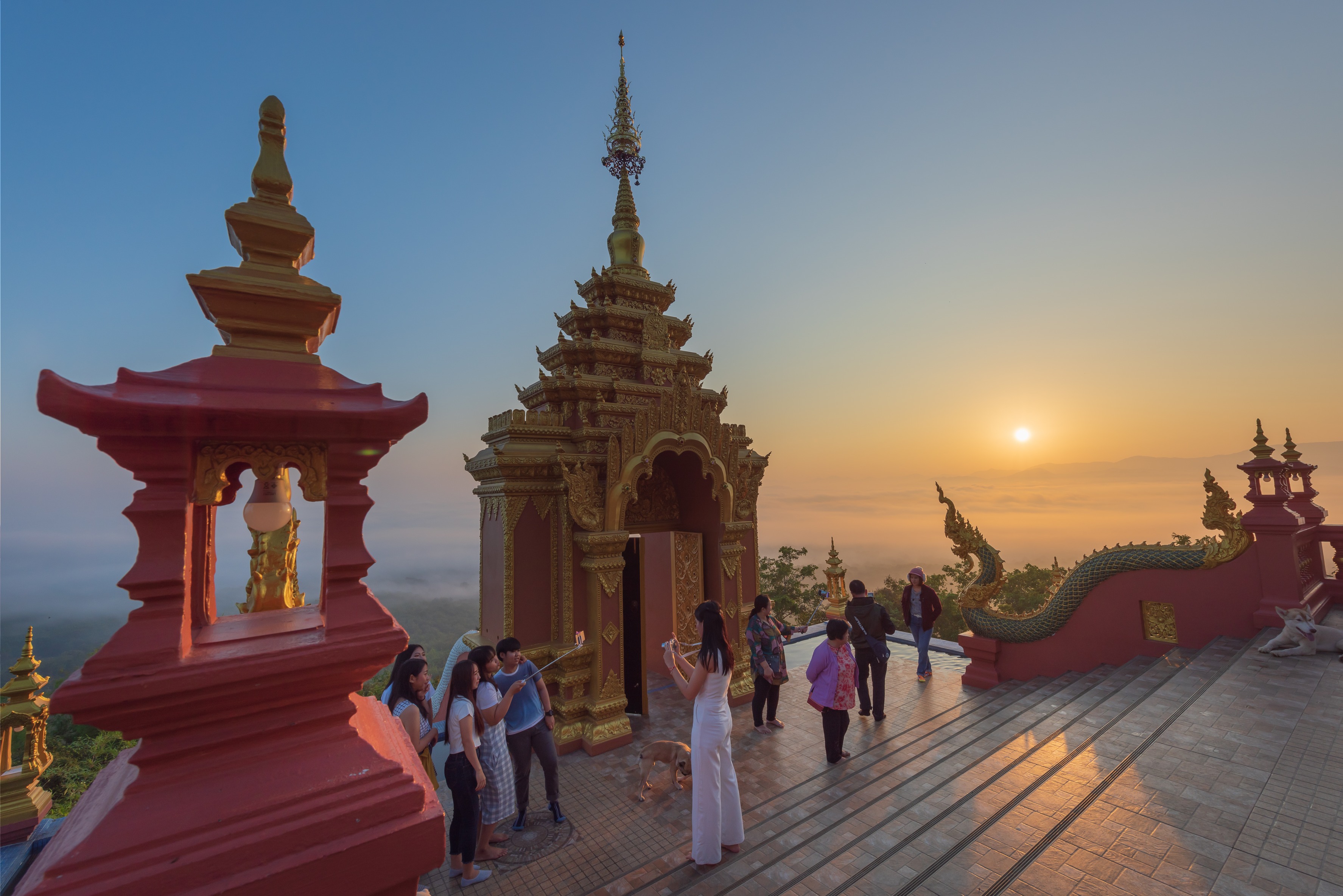
The access stairway is framed by two nagas, serpents with dragon heads serving as railings. Barefoot visitors then pass through the enclosure gate. Clothing covering shoulders and legs is required; a sarong lending service is available for female visitors.
The Viharn Luang
Completed in 1476, this viharn has the distinctive feature of being open to the winds, with no side partitions, unlike most assembly halls in northern Thailand. Its red three-tiered roof descends in a gentle slope. The wall paintings depict the Jataka, that is, the Buddha's previous lives. At the back of the viharn, an ornate pyramid-shaped structure, the khu, houses the Phra Chao Lan Tong: this Buddha statue carved in 1563 blends Sukhothai and Chiang Saen influences.
The main chedi
Behind the viharn rises a campanile-shaped chedi over 45 meters high. Its midnight-blue hue nuanced with yellow-gold geometric figures is unusual in Thai religious architecture. The faithful perform a ritual of three circumambulations around the chedi, hands joined, reciting prayers. On the lower wall, several bullet impacts still testify to the conflicts of the 17th century.
The Viharn Nam Taen and annexe chapels
The Viharn Nam Taen houses frescoes among Siam's oldest and has never undergone restoration. Three other polished teak wooden chapels frame the chedi: the Viharn Phra Sao Sila, the Viharn Ton Kaeo and the Viharn Phra Put.
The Viharn Phra Put and the camera obscura
The Viharn Phra Put, located south of the pagoda, merits a stop for a remarkable optical phenomenon: when the door is closed, a light ray passing through a small opening projects the inverted image of the chedi onto the interior wall. The effect is visible in clear weather, far less so under cloudy skies.
The Ho Phra Phuthabat chapel
Completed in the 13th century, Ho Phra Phuthabat is among the monastery's oldest structures. It houses an imprint of the Buddha's foot. Its access is traditionally forbidden to women. A camera obscura phenomenon comparable to that in the Viharn Phra Put can also be observed here through a small opening in the massive wooden door.
Practical information
The temple is open daily during daylight hours, from early morning until early evening. Entry is free, but donations are welcome. Plan 1.5 to 2.5 hours to tour all the viharns, observe the frescoes and complete the circumambulation of the chedi at a leisurely pace.
Covering clothing is required. Shoes are removed at the entrance to each chapel. Photographing the main statues may be restricted in certain viharns; it is best to inquire on site.
When to visit
The dry season, from November to February, offers the most pleasant conditions: moderate temperatures and bright light, essential for observing the camera obscura phenomenon in the Viharn Phra Put. Attendance is quieter on weekdays than weekends. Buddhist festivals bring an intense atmosphere but significant crowds; best avoided if you seek the contemplative calm of the site.
How to get there
The temple is located at Ko Kha, 18 km southwest of Lampang. There is no direct public transport. Two main options are available to the traveler:
The blue songthaew (shared van) departing from Lampang to Ko Kha, then a motorcycle taxi for the last three kilometers to the temple. The most economical solution.
A round-trip taxi from central Lampang, simpler if you are in a group or wish to continue to other sites.
In the surrounding area
Several sites complement a day at Ko Kha and around Lampang:
The Wat Phra Kaeo Don Tao, known for its chedi in Lampang itself.
The Baan Sao Nak house, a traditional teak residence.
The Wat Chaloem Phra Kiat, perched on a mountain ridge.
The Chae Son National Park, for its hot springs and waterfalls.
Frequently asked questions
Plan 1.5 to 2.5 hours to tour all the viharns, observe the frescoes and complete the circumambulation of the chedi.
Yes, shoulders and legs must be covered. A sarong lending service is available for female visitors at the entrance.
No. The Ho Phra Phuthabat chapel, which houses an imprint of the Buddha's foot, remains traditionally closed to women. The other buildings are open to all.
It occurs in the Viharn Phra Put and in the Ho Phra Phuthabat chapel in clear weather. A small opening in the door projects the inverted image of the chedi onto the interior wall. Favor a midday visit under clear skies.
To incorporate Wat Phra That Lampang Luang into a complete itinerary in the country's north, consult our suggestions for trips to Thailand.
Photos
Also discover
Interested in this visit?
We can include it in your personalised itinerary.