Wat Nong Wang
Wat Nong Wang
593 Thanon Klang Mueang, Tambon Nai Mueang, Amphoe Mueang Khon Kaen, Chang Wat Khon Kaen 40000, Thaïlande
The principal Buddhist monastery of Khon Kaen, Wat Nong Wang harbors a nine-level stupa-museum dedicated to Isan's heritage.
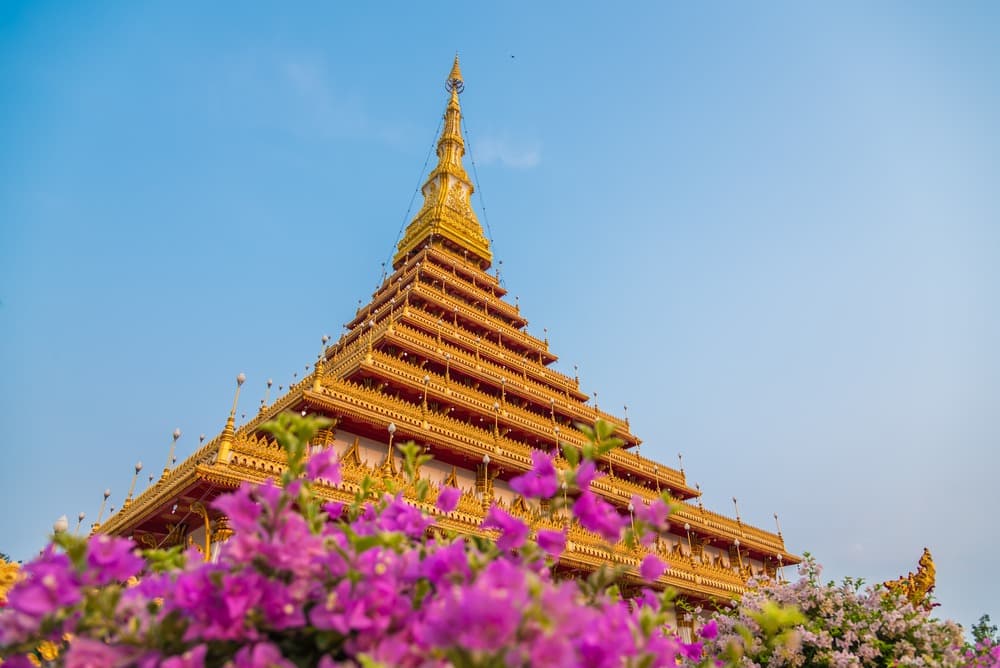
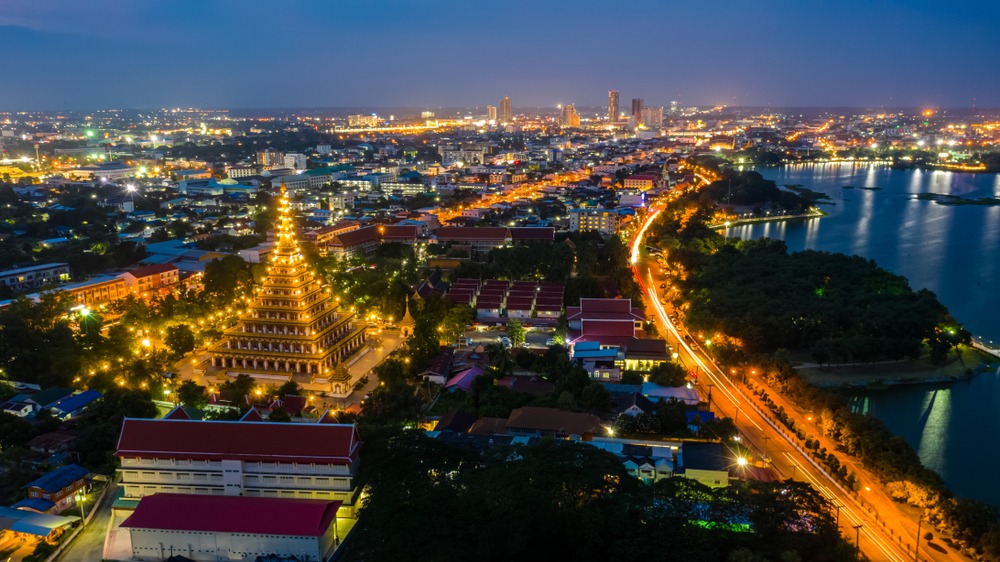
Wat Nong Wang is the principal Buddhist monastery of Khon Kaen, in the Isan region. It owes its renown to the Phra Mahathat Kaen Nakhon, a nine-level pyramidal stupa that dominates the south of the city and houses, floor by floor, a journey blending relics, sacred art, local legends and the city's history.
Why visit Wat Nong Wang
The site's appeal stems less from the temple itself than from its stupa-museum. Each level presents a distinct theme: Buddha relics, Isan folk arts, monastic training, Buddhist iconography, biography of the founding monk, ancient manuscripts. The visit thus combines moments of contemplation with discovery of the region's heritage, all crowned by a panorama over Khon Kaen and Bueng Kaen Nakhon lake from the top floor.
The monastery also serves a charitable mission: revenues contribute to funding public schools and a health center for modest residents of the neighborhood.
History
Wat Nong Wang was founded in 1789, during the reign of Rama I, who had just annexed the Northeast region to the Kingdom of Siam. The temple's creation coincided with that of the modern city of Khon Kaen.
In 1984, the monastery came under royal patronage, a status marking the beginning of its architectural development. It now comprises an ubosot (ordination hall), several viharas, the great stupa, a crematorium and monastic quarters.
The idea of a monumental stupa came from Luang Paw Koon Kantigo, a venerated monk throughout the region. The first stones of the Phra Mahathat Kaen Nakhon were laid in 1990, and the building was inaugurated in 1996. The date is significant: it celebrated both the 50th anniversary of King Bhumibol Adulyadej's reign and Khon Kaen's 200th anniversary. The nine levels of the stupa pay homage to Bhumibol, the ninth sovereign of the Chakri dynasty.
What to see floor by floor
The stupa's architecture
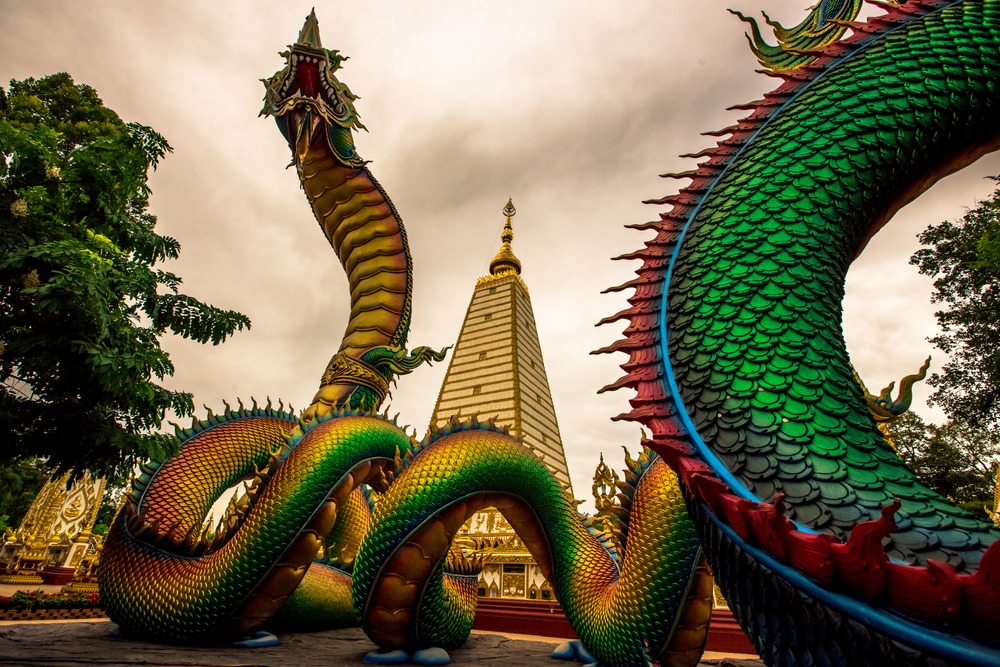
The Phra Mahathat Kaen Nakhon rests on a square base measuring 50 meters per side and rises to approximately 80 meters. Its pyramidal silhouette, which tapers progressively, differs from most Thai stupas. The roof is crowned with a chatra, the characteristic umbrella of Burmese Buddhist structures: the visual kinship with Rangoon's Shwedagon is intentional. At the entrance, multi-headed nagas guard the threshold.
Ground floor
At the center, relics attributed to the Buddha are preserved in a crystal sarcophagus topped with a nine-branched roof. Around it, 108 alms bowls evoke the Buddha's disciples. The walls recount the origins of Khon Kaen, its customs and the local legend of the four frangipani trees: four princes transformed into trees, felled, cast into the river, then restored to human form — a parable on the retribution of good deeds.
First floor
A cultural museum gathers basketry, pottery, books on palm leaves and traditional instruments. The frescoes evoke Isan taboos and the epic of Sinxay, hero of a classical Lao poem.
Second floor
Monastic training hall. The ornate doors and windows illustrate the fable of Nang Phom Hom, the "lady with perfumed hair."
Third floor
A collection of Buddhist iconographies, executed at different periods, allows comparison of regional styles. The murals retrace the life of Luang Paw Koon Kantigo: childhood on the farm, journey to Germany, launching the stupa construction.
Fourth floor
The frescoes abandon folklore here to follow the Buddha's ascetic path after enlightenment.
Fifth floor
Bronze statues of Luang Paw Koon Kantigo's preceptors, accompanied by a representation of the multi-armed Vishnu. The carved doors and windows unfold the story of Vessantara, one of the Buddha's previous lives.
Sixth floor
A bronze bell tower and sculpted wooden furniture occupy the hall. The openings tell the story of Prince Temi, the mute prince of the jataka tradition.
Seventh floor
Library of Buddhist manuscripts, some among the oldest preserved in the region.
Eighth floor
A central throne again shelters Buddha relics, before which the faithful come to meditate. The sculptures evoke the "formless heavens,
Photos
Also discover
Interested in this visit?
We can include it in your personalised itinerary.