Ubon Ratchathani
Ubon Ratchathani
At the confluence of the Mekong and Mun rivers, Ubon Ratchathani brings together forest temples, a candle festival and spectacular landscapes of deepest Isan.
At the confluence of the Mekong and Mun rivers, at Thailand's far eastern edge, Ubon Ratchathani watches over southern Isan. The "royal lotus city," as Ubon Ratchathani translates literally, combines forest temples, a candle festival and Mekong landscapes in a territory still rarely visited by international travelers.
At a Glance
- Why visit: Buddhist temples immersed in forest, candle festival in July, Mekong scenery and Pha Taem landscapes.
- Ideal duration: 3 to 4 days, or 5 days including Khong Chiam and Sam Phan Bok.
- Best time to visit: November to February for dry season, July for the Candle Festival.
- Traveler profile: spiritual seekers, Lao-Thai culture enthusiasts and off-the-beaten-path nature lovers.
- How to get there: direct flight from Bangkok (1h10) or overnight train.
Why Visit Ubon Ratchathani
Ubon Ratchathani occupies a unique place in southern Isan. As the region's fourth-largest city with over 200,000 inhabitants, it remains away from major tourist flows while concentrating dense religious heritage, an active silk craft scene and direct access to the Mekong.
Lao influence shows everywhere: in temple architecture, in tapestries, in cuisine. Buddhist temples flourish in forests like numerals on a multiplication table, and several monasteries open their doors to travelers interested in Theravada meditation.
The province also offers some of Thailand's most spectacular landscape features: the rock paintings of Pha Taem overlooking Laos, the Sam Phan Bok canyon on the Mekong, and the riverside beaches of Khong Chiam district. What to do in Ubon Ratchathani? Much more than an urban stopover: a genuine immersion into deepest Isan.
A Bit of History
Ubon Ratchathani's history is closely linked to Cambodia and Laos. The present-day city was established towards the end of the 18th century, when King Taksin the Great brought the northeast region under his control. For a long time it had been a Khmer dependency before falling under Ayutthaya's banner around 1300, when Ramathibodi I's troops defeated the Khmers.
In 1767, the Burmese ended Ayutthaya's reign. Phra Phutthayotfa Chulalok, assassinating King Taksin, took control of central Thailand. To unite the city of Ubon, then scattered into small tribal groups, he promised nobility titles to tribal chiefs who would pledge their allegiance to him. Of all these local chiefs, the one who gathered the largest colony was Chao Kham Phong, a nobleman originally from Laos who had fled the kingdom of Vientiane. In exchange for his loyalty, Rama I appointed him as governor.
The city also played a key role during World War II. When troops of the Japanese imperial army brought survivors of the Death Railway from Kanchanaburi, the inhabitants welcomed them warmly, and their help proved crucial in the soldiers' social reintegration. Thong Si Muang Park, at the city center, is a memorial built as a sign of recognition for this generosity.
What to See and Do in Ubon Ratchathani
The list of points of interest spans more than a page. Depending on your preferences, you can orient your stay toward religious heritage, Mekong landscapes, museums or the candle festival.
Religious Heritage
- Wat Nong Pah Pong: this 20th-century monastery sits deep in wild forest. The venerable monk Ajaan Mun intentionally chose this location for monastic life. Ajaan Mun's disciples follow Theravada Buddhism rules, notably forest wandering.
- Wat Phra That Nong Bua: 3 km outside the city stands this prestigious Buddhist temple. Devotees come to admire the white stupa with gleaming gold leaf reminiscent of another stupa—the Mahabodhi at Bodh-Gaya. The Indian temple marks the place where Lord Gautama attained enlightenment beneath a fig tree.
- Wat Thung Si Muang: this temple merits a visit for its setting on the Mun River's banks. Its wooden bell tower holds the height record in the country.
- Wat Pah Nanachat: opened in 1975, this temple-monastery houses a community of English-speaking monks from every continent. It stands beside Wat Nong Pah Pong, deep in forest, in an environment conducive to meditation.
- Wat Supattanaram: the province's first Dhammayut temple, its architecture blends Thai, Khmer and European styles.
Natural Heritage and the Mekong
- Pha Taem: this national park shelters rock paintings 3,000 to 4,000 years old, painted on a cliff overlooking the Mekong. The site offers one of the first vantage points to see the sun rise over Thailand.
- Sam Phan Bok: nicknamed the "Thai Grand Canyon," this labyrinth of rocks sculpted by the Mekong is discovered in dry season, when the river level drops and reveals over 3,000 natural basins.
- Khong Chiam: at the confluence of the Mun and Mekong rivers, this district offers the famous "two-color water" phenomenon and serves as a base for exploring the Laotian border.
- Hat Salung: this sandbank on the Mekong suits picnicking and lounging, with views of rural Laotian landscapes across the water.
- Hat Wat Tai: a small sandy island a hundred meters from the Mun River, animated by bars and restaurants in dry season.
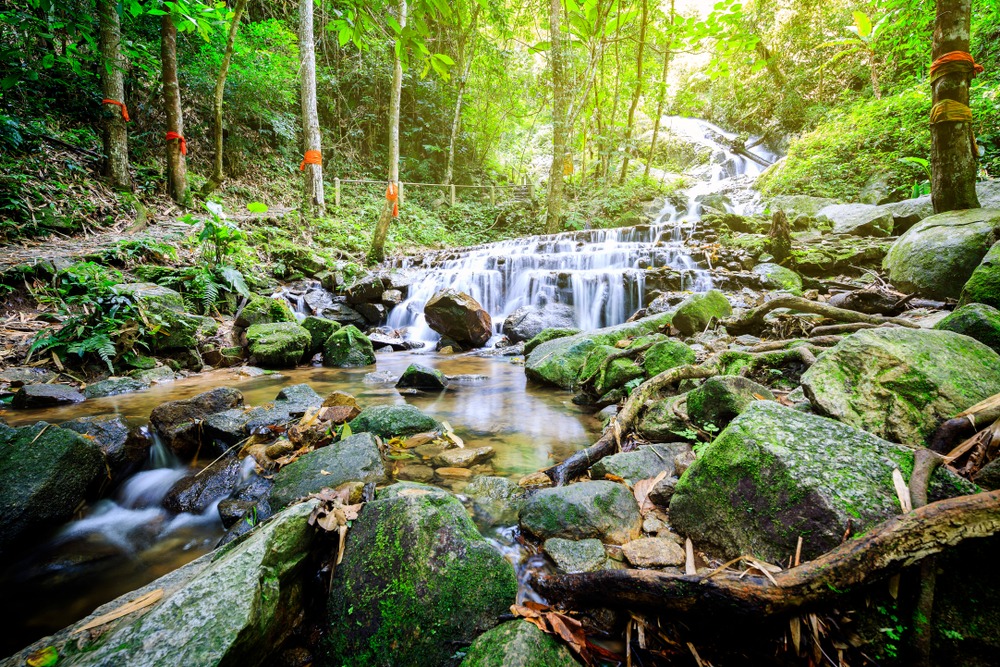
- Kaeng Tana National Park: 8,000 hectares of rock formations, waterfalls and visible wildlife (deer, macaques, boar).
Museums
- Ubon Ratchathani National Museum: housed in the former town hall, it provides a complete picture of Ubon's culture, music and artistic creation. The centerpiece is the Ardhanarishvara, an image of Shiva and Sati fused into one flesh, dated to the 9th century. The collection spans prehistoric rock art through the 20th century.
- Ubonnithat Culture Display Museum: more contemporary, it highlights herbalism, weaving, basketry, candle carving and Lao songs. You'll find it on the ground floor of the Ubon Ratchathani Art and Culture Center, on the Rajabhat University campus.
The Candle Festival
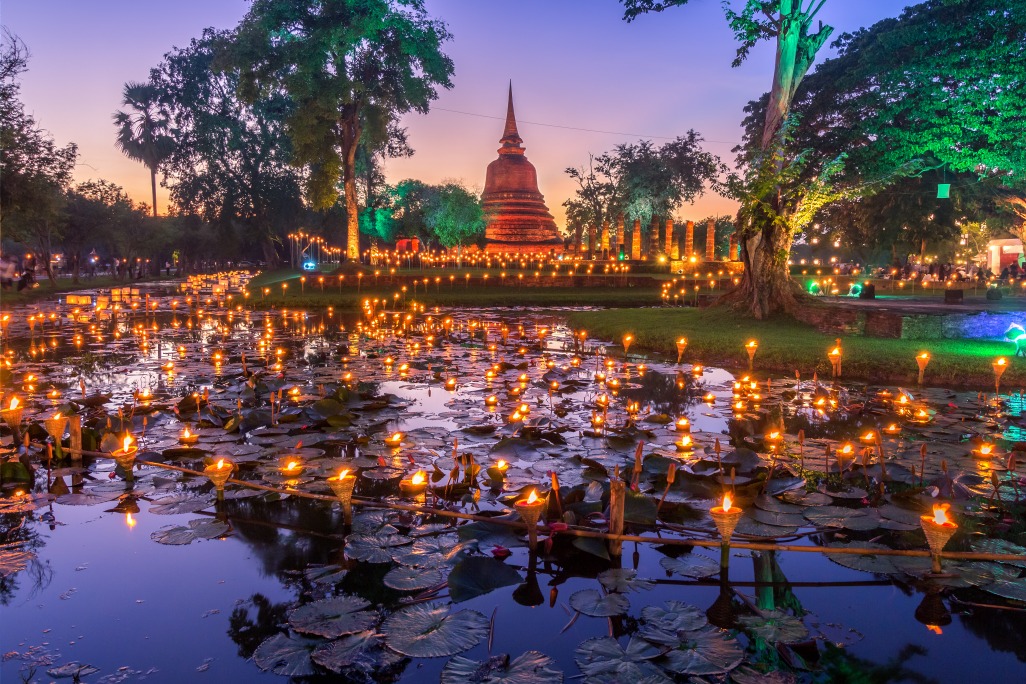
If your visit falls in July, don't miss Ubon's Candle Festival. This cultural event draws a considerable crowd. Floats decorated with giant candles parade through streets. Behind them walk dancers in folk dress; Thung Si Mueang, the city's central square, is brightened by a light and sound show.
The festival lasts two consecutive days: Wan Asanha Bucha, when Buddha gave his first sermon, and Wan Kao Pansa, which opens the Lenten period. Ubon is not Thailand's only city celebrating this festival, but its parade of carved candles remains the country's most famous.
Who Is This Destination For?
- Spiritual travelers: meditation in forest temples, immersion in Theravada Buddhism at Wat Pah Nanachat or Wat Nong Pah Pong.
- Culture enthusiasts: Lao influence, silk craftsmanship, museums and mixed religious architecture.
- Nature travelers: Pha Taem, Sam Phan Bok, Kaeng Tana, Mekong riverside beaches.
- Photographers: candle festival in July, sunrise at Pha Taem, canyon landscapes in dry season.
- Off-the-beaten-path travelers: Ubon remains one of Isan's largest cities least frequented by tourists, ideal for those wanting to escape the Bangkok-Chiang Mai-southern islands circuit.
Where to Stay in Ubon Ratchathani
Accommodation covers all budgets, concentrated mainly in the city center and along the Mun River.
- Budget (15–30 €): family guesthouses and hostels around the Night Market and station. Simple double room, air conditioning, wifi. Good option for travelers passing through before Sam Phan Bok.
- Mid-range (60–120 €): city center boutique hotels and riverside resorts. Decor inspired by Lao-Isan craftsmanship, pool, local restaurant. Good compromise for 3 to 4-night stays.
- Upscale (150 €+): lodges and resorts in the province, sometimes near Khong Chiam or Pha Taem, with Mekong views, spa and private excursions. Ideal for combining rest and exploration of natural sites.
For the July candle festival, book several months ahead: city center hotels fill quickly.
Insider Tips from Our Local Expert
Our local expert from Sawa Discovery shares recommendations drawn from the field:
- Visit Pha Taem at sunrise. Leave the city center around 4:30 a.m. to reach the viewpoint before dawn. The light on the rock paintings and Mekong is exceptional between 5:45 and 6:30 a.m.
- Sam Phan Bok is seasonal. The canyon is visible only from January to May, when the Mekong level drops. During the rainy season, it remains underwater.
- Respect Wat Pah Nanachat's rules. This monastery welcomes serious visitors but remains a place of practice. Covering clothing required, silence requested, photography prohibited during services.
- Ubon's Night Market. The Night Market on Ratchabut Road concentrates the best Isan cuisine stalls: som tam, gai yang, larb. Budget under 5 € for a full dinner.
- Ubon silk. Phaya Tan district workshops offer genuine hand-woven silk at far fairer prices than Bangkok tourist boutiques.
When to Visit Ubon Ratchathani
Ubon has a tropical climate with three distinct seasons. Temperatures remain high year-round, but the experience varies greatly depending on the period.
- November to February: dry and cool season, temperatures between 18 and 30°C. Ideal period for visiting temples and hiking in national parks.
- March to May: hot season, reaching 38–40°C in April. Sam Phan Bok is at its best, but heat makes daytime visits exhausting.
- June to October: rainy season, heavy but often brief showers. July concentrates the candle festival, a major reason to visit despite humidity. Landscapes are at their greenest.
For pleasant weather combined with cultural event, aiming for late November or early December remains the safest bet. To experience the Candle Festival, plan your stay around Wan Asanha Bucha dates (lunar calendar, typically mid-July).
How to Get to Ubon Ratchathani
By Air
Ubon Ratchathani Airport is served daily from Bangkok (Don Mueang and Suvarnabhumi) in 1 hour 10 minutes. A few weekly connections exist from Phuket and Chiang Mai. It's the fastest option and often the most economical when booking ahead.
By Train
The Bangkok-Ubon Ratchathani line offers several day and night trains from Hua Lamphong Station; count on 8 to 11 hours of travel. The overnight train with first-class berths remains an appreciated experience. Fares vary by class and season: check current prices on the official Thai railway website.
Locally
From the airport, 5 km from downtown, expect about 100–150 baht by taxi. The city is navigated by tuk-tuk, songthaew or rental car. For Pha Taem, Sam Phan Bok or Khong Chiam, car rental or a private driver is essential: public transport to natural sites remains sparse.
Also Worth Exploring
Ubon Ratchathani fits naturally into an Isan circuit. A few nearby destinations to combine:
- Khong Chiam (34 km): confluence of Mekong and Mun, base for Pha Taem.
- Phibun (7 km): local market and gateway to Kaeng Sapue rapids.
- Yasothon (149 km): famous for its Bun Bang Fai rocket festival in May.
- Nakhon Phanom (269 km): border town with Laos, on the Mekong.
- Khon Kaen (298 km): cultural capital of northeastern Isan.
- Nong Khai (398 km): gateway to Vientiane and Laos.
- Isan region: overview to build your complete itinerary.
Frequently asked questions
3 to 4 days are enough to discover the main temples, museums and a nearby natural site like Hat Salung. Plan for 5 to 6 days to include Pha Taem, Sam Phan Bok and Khong Chiam.
November to February for dry, cool weather. In July, the candle festival justifies a visit despite the rainy season. Sam Phan Bok is visible only from January to May.
The city is navigated by tuk-tuk, songthaew or taxi. For remote sites like Pha Taem or Sam Phan Bok, rent a car or book a private driver: public transport is virtually nonexistent there.
The Candle Festival is held each year around Wan Asanha Bucha and Wan Kao Pansa, typically mid-July according to the Buddhist lunar calendar. Exact dates are published by Thailand's Tourism Authority a few months ahead.
Hand-woven silk textiles, Lao craftsmanship, carved candles and silk handbags remain the most typical purchases. Favor Phaya Tan workshops for quality.
Yes. Wat Pah Nanachat welcomes English-speaking visitors interested in Theravada practice, and Wat Nong Pah Pong also receives serious laypeople. Covering clothing and silence are required.
Rather as a complement. It's a destination in deepest Isan, ideal on a second visit or for travelers seeking authenticity away from classic Bangkok-Chiang Mai-southern islands circuits.
The Chong Mek border post, about 90 km east, allows crossing into Laos toward Pakse. Allow 2 hours driving from Ubon, then local transport on the Laotian side.
Photos
Attractions in Ubon Ratchathani
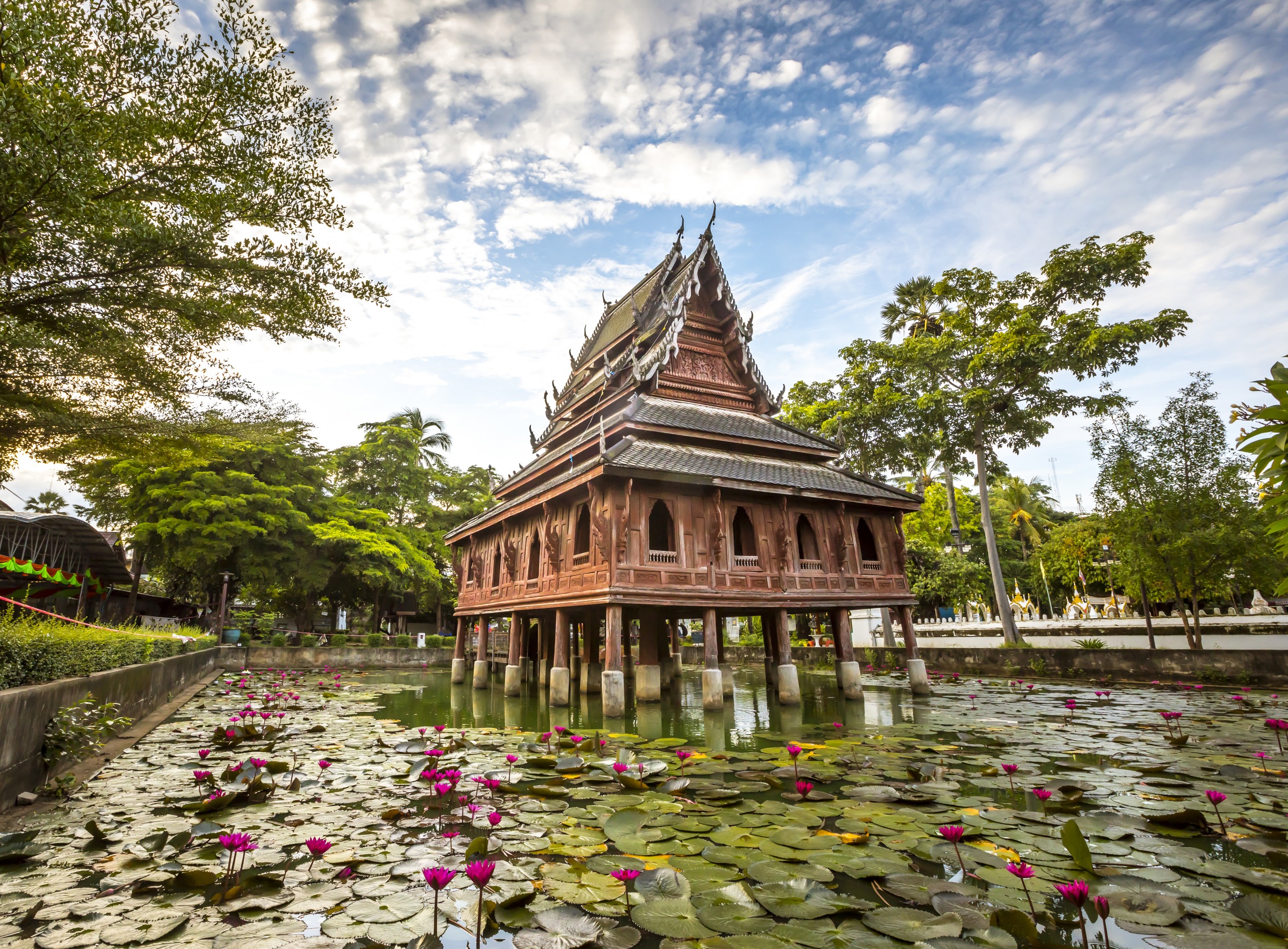
Wat Thung Si Mueang
Temple bouddhiste actif d'Ubon Ratchathani fondé sous Rama III, célèbre pour sa bibliothèque Ho Trai sur pilotis et sa relique de l'empreinte du Bouddha.
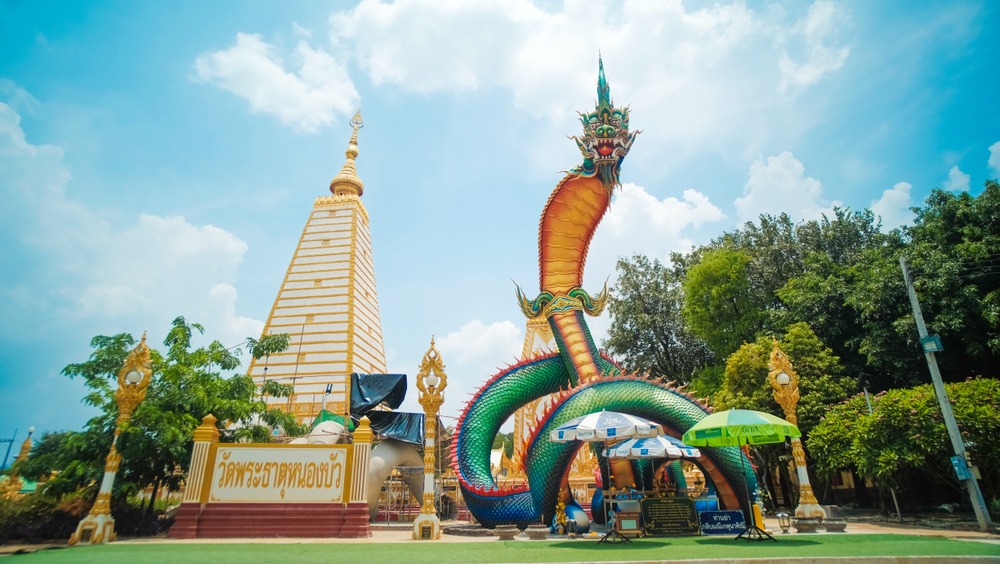
Wat Phra That Nong Bua
Le Wat Phra That Nong Bua, à Ubon Ratchathani, abrite un chedi de 56 m calqué sur la Mahabodhi indienne, orné de panneaux sculptés des Jataka.
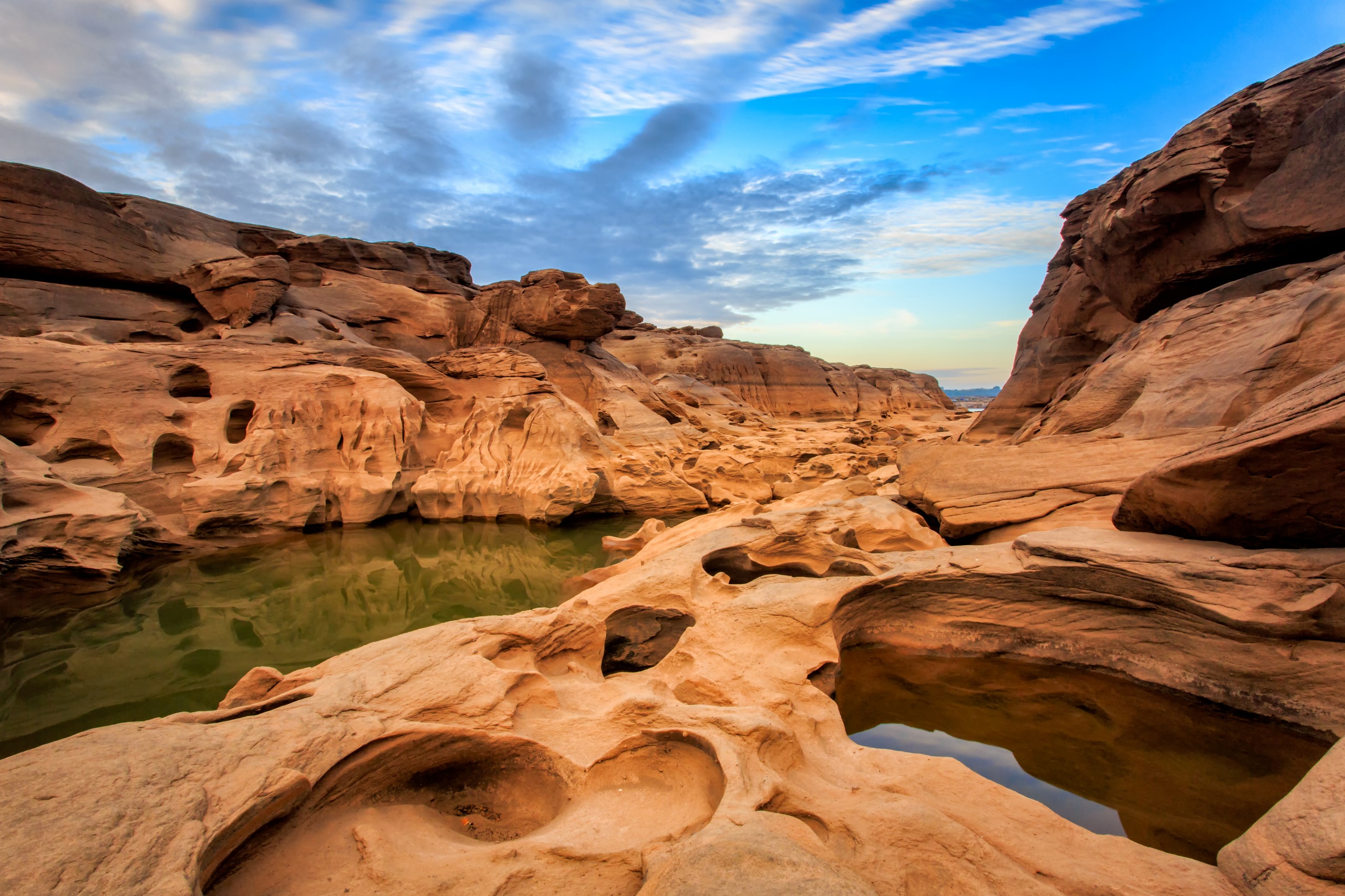
Sam Phan Bok
Surnommé le Grand Canyon de Thaïlande, Sam Phan Bok déploie sur les rives du Mékong un plateau rocheux creusé de milliers de cavités, accessible de décembre à avril.
Rivière Mun
Principal cours d'eau du nord-est thaïlandais, la rivière Mun traverse l'Isan sur 750 km avant de rejoindre le Mékong près d'Ubon Ratchathani.
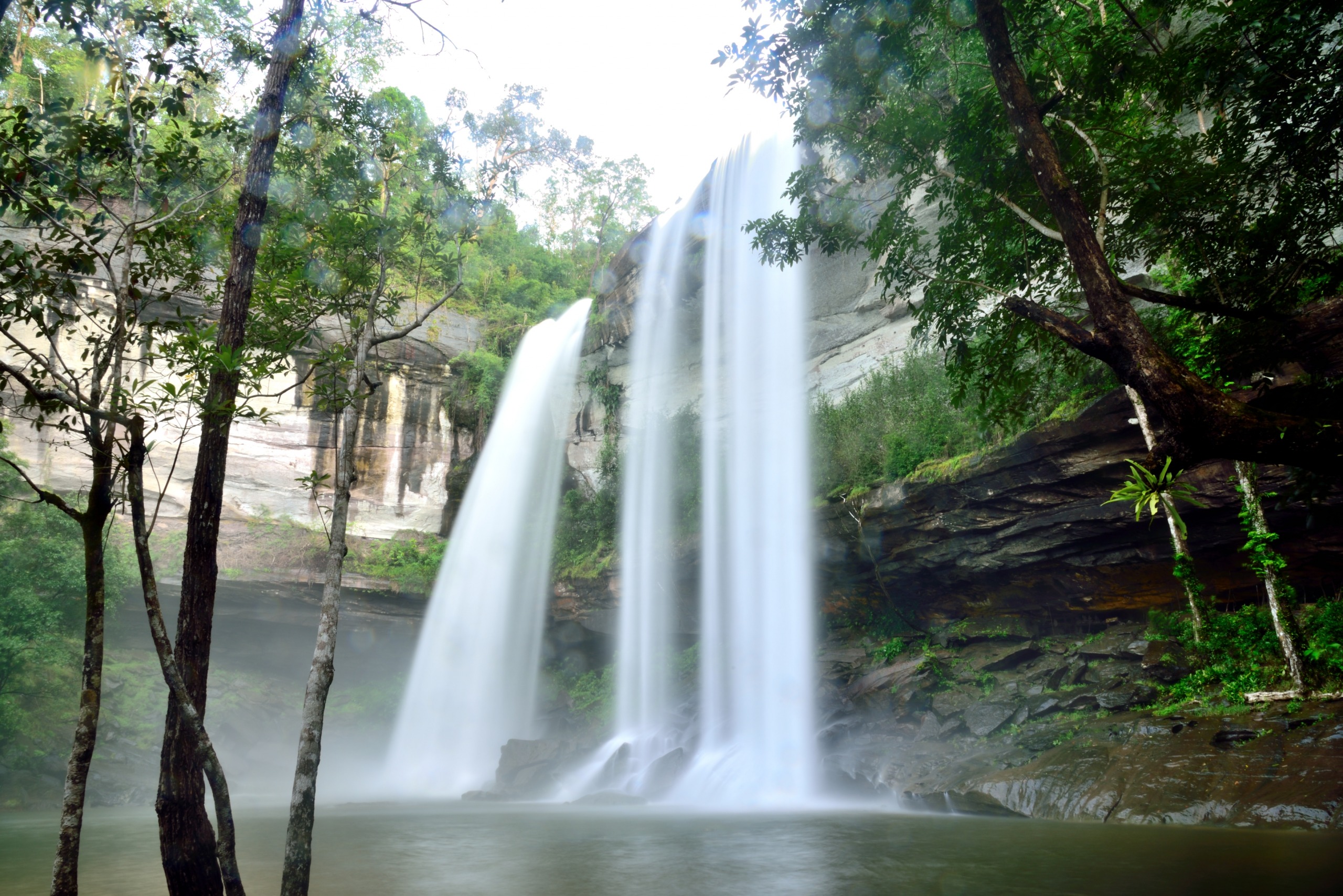
Le Parc National de Phu Chong Na Yoi
Aux confins de la Thaïlande, du Laos et du Cambodge, le Parc national de Phu Chong Na Yoi protège 686 km² de cascades, plateaux gréseux et forêts.
Want to discover this destination?
Our local advisors design your tailor-made trip.