Mun River
Mun River
Mun, Khong Chiam, Sirindhorn, Province d'Ubon Ratchathani 34350, Thaïlande
The principal waterway of northeastern Thailand, the Mun River flows through Isan for 750 km before meeting the Mekong near Ubon Ratchathani.
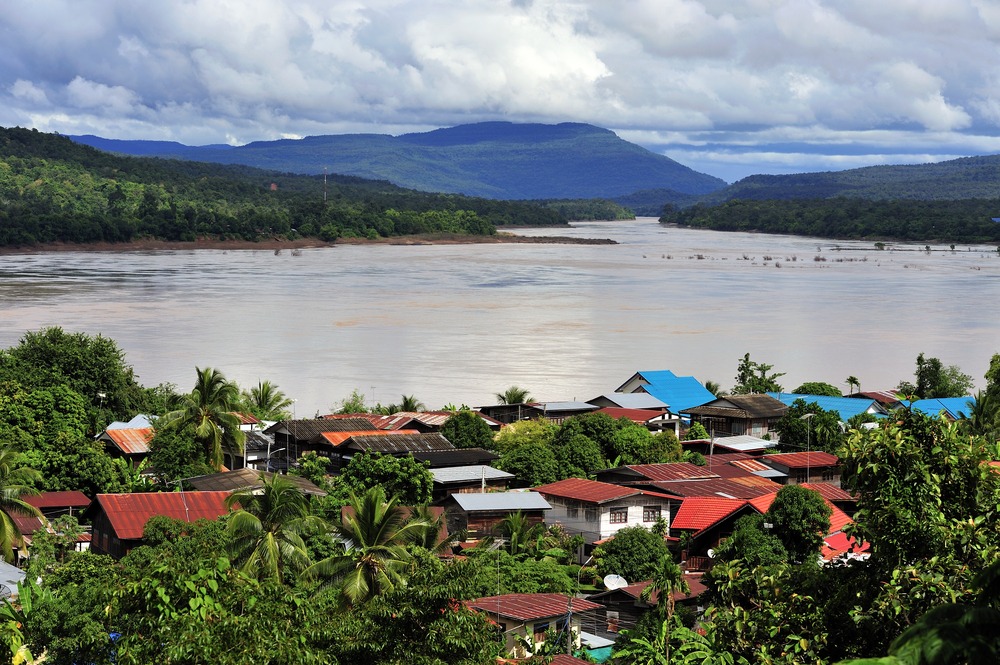
The Mun River (แม่น้ำมูล) is the principal waterway of northeastern Thailand, flowing through the Isan region for approximately 750 kilometers before joining the Mekong near the city of Ubon Ratchathani. As a major tributary, it irrigates much of the Khorat Plateau and serves as a geographical and cultural landmark for the provinces it traverses.
Why explore the Mun River
The Mun is not a conventional tourist attraction but rather a thread connecting you to the heart of Isan. Its watershed of 70,000 km² covers the Khorat Plateau, the nation's agricultural heartland devoted to rice cultivation. Travelers following its banks pass through rural landscapes largely untouched by international tourism, fishing villages, and wetlands where the fauna and flora characteristic of the Mekong Basin still thrive.
The primary appeal lies in the confluence with the Mekong, in Khong Chiam District: a notable geographical point where the waters of two rivers merge, giving rise to the local phenomenon called Mae Nam Song Si, the "river of two colors."
History and anecdote
During the Vietnam War, American soldiers stationed at Ubon Ratchathani air base nicknamed the Mun River "Moon River," simply due to the phonetic resemblance between Mun and Moon, though the two words share no semantic connection.
More recently, the Mun's story has been marked by the Pak Mun Dam, commissioned in 1994 just 5.5 km from its junction with the Mekong. The structure has generated enduring controversy: according to studies and NGO reports, the number of fish species present has declined sharply, some disappearing locally, and catches have fallen by more than 50%. In 2020, thousands of families, particularly in the Rasi Salai area, were still demanding compensation for the loss of agricultural land flooded by the reservoir. The dam remains one of the most discussed case studies in Thai hydraulic policy.
What to see and do along the Mun
The Mekong confluence at Khong Chiam: an equipped observation point where long-tail boat excursions with local fishermen allow you to witness the contrast of waters.
Pak Mun Dam: a visible structure from the road, worthwhile for understanding the river's complex history.
River fish markets in Ubon Ratchathani and riverside villages, where locally caught species are still sold.
The riverbanks near Ubon Ratchathani, partially developed for evening strolls.
Isan agricultural villages through which the river flows, in the provinces of Nakhon Ratchasima, Buriram, Surin, Sisaket, and Ubon Ratchathani.
The Mun still harbors the pla buek (Mekong giant catfish), softshell turtles, smooth-coated otters, and white-collared kingfishers. Bamboo groves and wild orchids persist along the banks, particularly upstream of the dam.
When to visit
Water flow varies considerably by season. During the monsoon, from June to October, the river reaches its highest levels and can overflow in low-lying areas. The dry season, from November to February, offers more pleasant conditions: manageable temperatures, clear skies, and accessible banks. March to May marks the hottest period, making outdoor activities less comfortable. To observe the two-color confluence at Khong Chiam, the late dry season (February–April) is best, when the Mun is clearer than the Mekong.
Practical information
Free access: the river can be explored from its banks, with several public and free access points.
Boat excursions: at Khong Chiam, expect moderate rates for one to two-hour trips to the confluence.
Recommended duration: half a day for the confluence and dam, a full day to combine with nearby attractions.
Equipment: hat, water, sun protection; closed-toe shoes if you venture onto sandy banks.
How to get there
The most practical access point is Ubon Ratchathani, connected to Bangkok by overnight train (approximately 10 to 12 hours), long-distance bus, or domestic flight (around 1 hour). From Ubon Ratchathani, Khong Chiam and the Mun-Mekong confluence are about 75 km to the east; songthaews, taxis, and car or scooter rentals will take you to the area in roughly one and a half hours by road.
Nearby attractions
Khong Chiam and the Mun-Mekong confluence, the region's highlight.
Pha Taem National Park, renowned for its prehistoric rock paintings overlooking the Mekong.
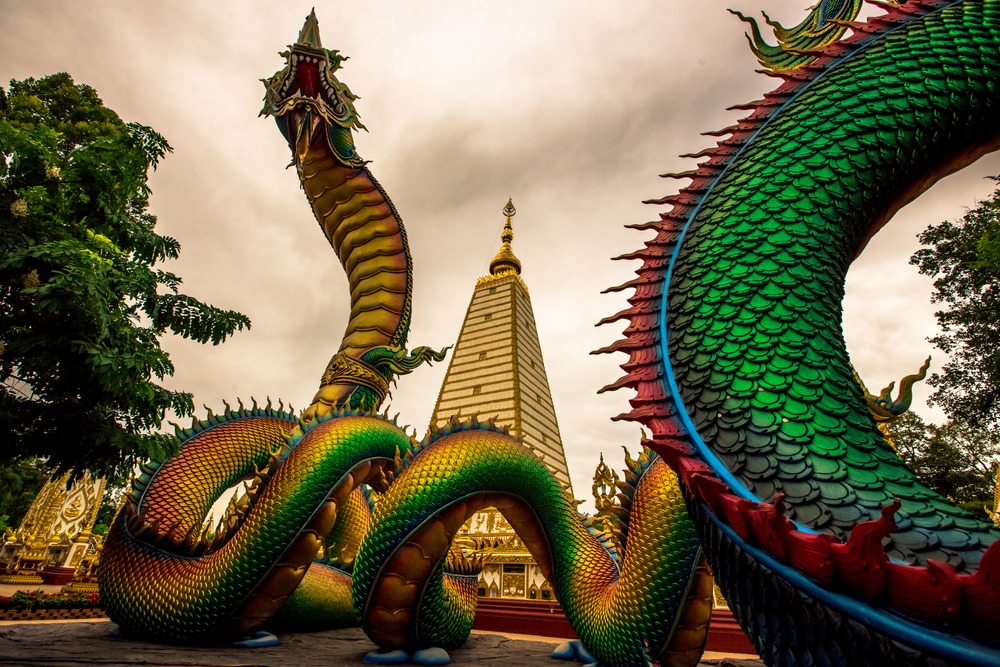
Wat Phra That Nong Bua, in Ubon Ratchathani, an Indian-style stupa worth visiting before or after your river excursion.
The silk and cotton weaving villages of the province, bearing witness to Isan's traditional craftsmanship.
Planning your next steps
The Mun River is part of a broader exploration of Isan, a region still underappreciated compared to Thailand's mainstream destinations. To craft an itinerary combining nature, heritage, and traditional villages, explore our suggestions for travel in Thailand.
Photos
Also discover
Interested in this visit?
We can include it in your personalised itinerary.