Ban Rak Thai
Ban Rak Thai
239, 1, Tambon Mok Cham Pae, Amphoe Mueang Mae Hong Son, Chang Wat Mae Hong Son 58000, Thaïlande
A highland village founded by Kuomintang supporters near Mae Hong Son, Ban Rak Thai cultivates tea and preserves a distinctive Yunnan legacy.
Ban Rak Thai, officially named Mae Aw, is a mountain village perched at 1,500 meters above sea level in Mae Hong Son province, close to the Burmese border. Founded in the early 20th century by Kuomintang supporters who fled China's Yunnan province, this town of roughly one thousand inhabitants preserves a Sino-Thai heritage visible in its rammed-earth architecture, its dialect tinged with Mandarin, and its green tea production that stretches across the surrounding hills.
Why visit Ban Rak Thai
Three main reasons motivate the journey to this remote village:
- A singular cultural identity: descendants of Chinese nationalist soldiers, the inhabitants have preserved Yunnan cuisine, traditional clay houses, and speech influenced by Mandarin, within a Thai environment.
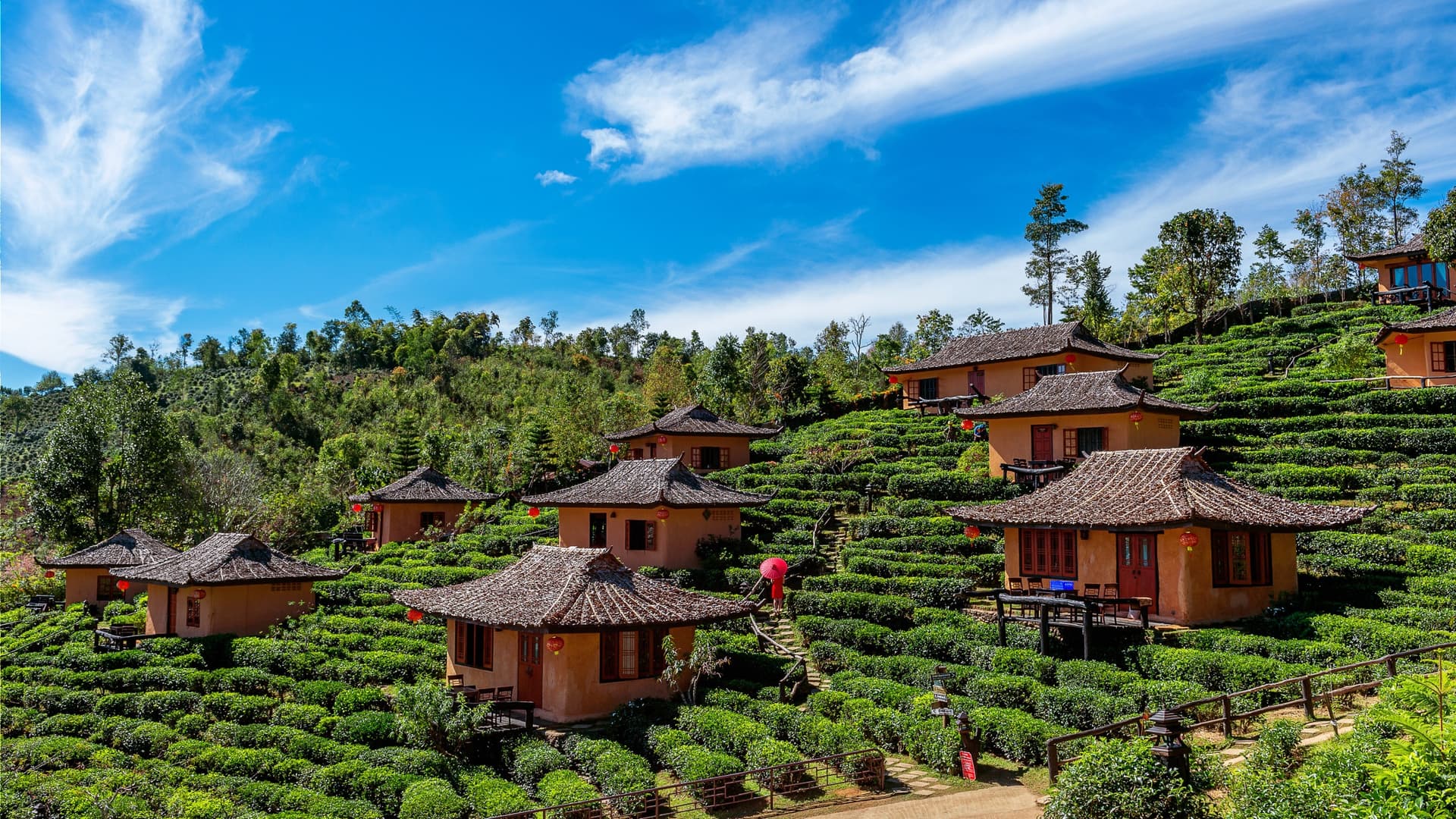
- A landscape of tea plantations: tea bushes standing 1 to 1.5 meters tall cover the slopes around the central lake, forming green curves typical of high-altitude terroirs.
- A peaceful rhythm: its location away from major tourist circuits preserves a calm atmosphere, ideal for a leisurely stop on the road through Mae Hong Son.
History of the village
The origins of Ban Rak Thai trace back to the aftermath of the Chinese Civil War. After the Communists came to power in 1949, Kuomintang supporters loyal to Jiang Jieshi (Chiang Kai-shek) fled Yunnan province and found refuge in the mountains of northern Thailand, just kilometers from the Burmese border. The village they founded took the official name Mae Aw, but Thai authorities renamed it Ban Rak Thai, meaning "village that loves Thailand."
This heritage remains evident today in several elements: low houses with rammed-earth walls recall rural Yunnan dwellings, the dialect spoken by elders preserves a Mandarin base, and local cuisine draws heavily from southwestern Chinese traditions. Tea cultivation, introduced by these early inhabitants, has become the village's economic mainstay.
What to see and do
The tea plantations
The hills around the village are entirely covered with tea bushes. Several estates welcome visitors and offer explanations of the production stages: pruning shrubs, hand harvesting, drying, and roasting. A local guide helps you understand the varieties cultivated, mainly green teas and oolongs in the Chinese tradition.
The lake and tea houses
In the village center, a small lake is bordered by tea houses and restaurants. It's the most frequented spot, particularly in the late afternoon, when mist rises over the water. The establishments serve local tea and Yunnan cuisine: braised pork trotters with mantou, stir-fried vegetables, noodles, and wines produced in the region with fruity notes.
Rammed-earth architecture
The village alleys allow you to observe traditional houses with ochre walls, some converted into guesthouses. Curved roofs and carpentry details attest to Chinese influence.
The Tea Tasting Festival
Each year in February, the village organizes a tea festival combining tastings, an agricultural produce fair, and street performances. It's the liveliest opportunity to discover local production and the village's Sino-Thai culture.
When to visit
The cool season, from mid-November to late March, is the most pleasant period. Days are mild and sunny, but evenings and mornings can be cold at 1,500 meters elevation: a sweater and jacket are essential. It's also the season when morning mist over the lake is most pronounced.
From June to October, the rainy season brings lush vegetation and a misty atmosphere appreciated by photographers. Showers are frequent but often brief, and the altitude maintains more moderate temperatures than in the plains.
April and May, drier but marked by agricultural burning in northern Thailand, are best avoided due to air pollution.
How to get there
Ban Rak Thai is located about 40 km northwest of Mae Hong Son and approximately 250 km from Chiang Mai via mountain road. Several options are available:
- From Mae Hong Son: yellow songthaews (shared taxis) serve the village during the day. Departure occurs once the vehicle is full, so plan for wait time.
- By rental car: the most flexible option, allowing you to combine Ban Rak Thai with other villages in the valley. The road is winding and demands careful driving.
- On an organized excursion: from Mae Hong Son or Chiang Mai, tours often include Ban Rak Thai over a day or two.
Mae Hong Son Airport is connected to Chiang Mai by regular flights (frequency varies by season).
Practical information
- Accommodation: several guesthouses in wood and rammed earth are available around the lake. Spending a night on site allows you to enjoy the morning atmosphere, quieter than daytime.
- Money: no ATM on site, bring cash from Mae Hong Son.
- Duration of visit: allow half a day for a day trip, a night for a more complete experience.
- Clothing: warm garments during cool season, raincoat during rainy season.
What to see nearby
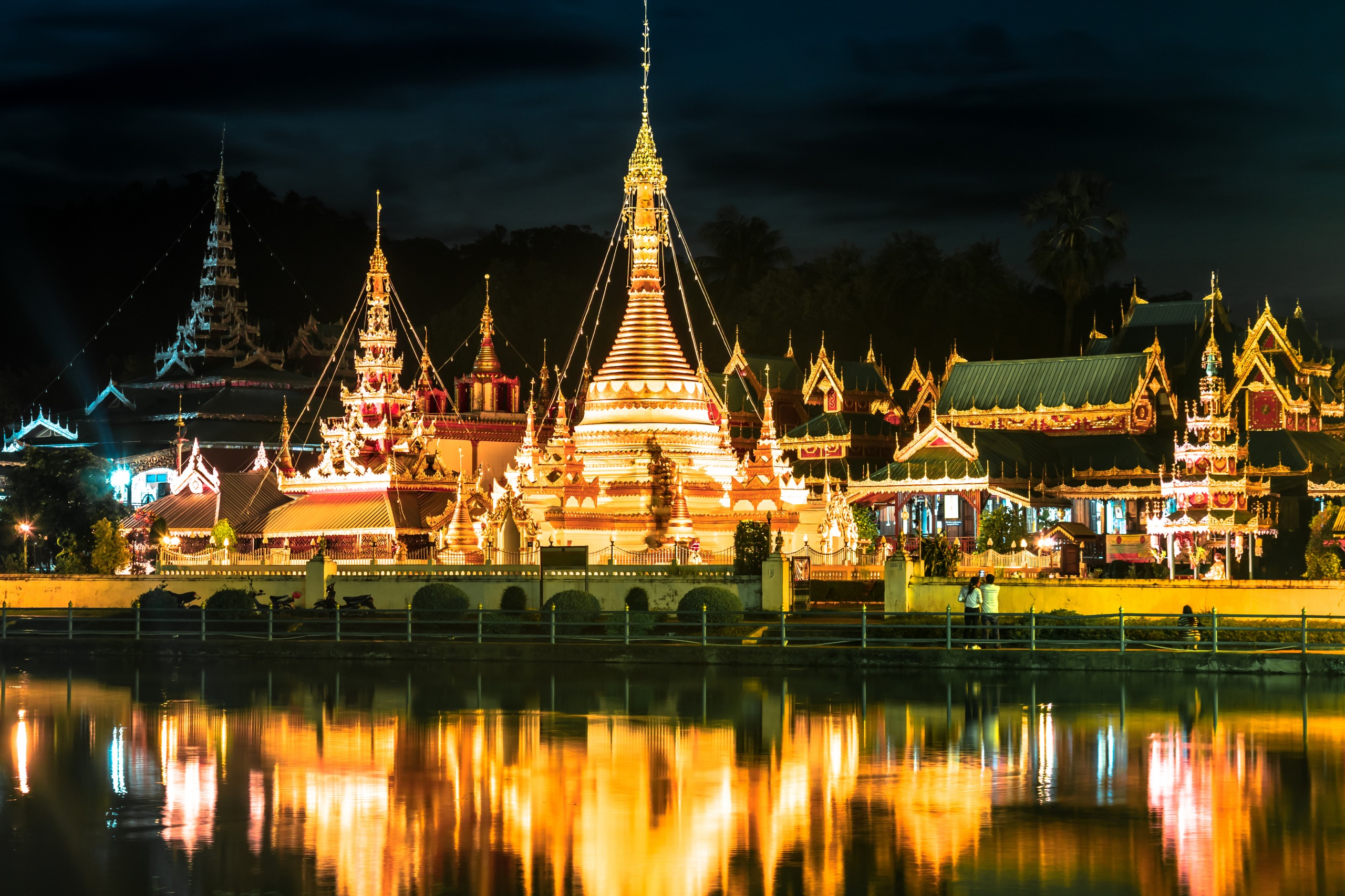
- Wat Chong Kham and Wat Chong Klang: the two iconic temples of Mae Hong Son, on the shores of Jong Kham Lake.
- Tham Lod Cave: a vast karst network traversed by a river, to be explored by raft.
- Wat Tham Pha Plong: a forest monastery accessible via a long staircase deep in nature.
Frequently asked questions
Count on approximately 250 km of mountain road, or 6 to 7 hours by car. The alternative is a Chiang Mai – Mae Hong Son flight, followed by a yellow songthaew or rental car for the last 40 kilometers.
The cool season, from mid-November to late March, offers the most pleasant temperatures and the characteristic morning mist over the lake. The rainy season (June-October) provides lush landscapes.
A night in a guesthouse by the lake allows you to see the village outside peak tourist hours and observe the mist at sunrise. This is the recommended option for those with time to spare.
Ban Rak Thai's cuisine draws from Yunnan traditions: braised pork trotters, mantou (Chinese steamed breads), noodles and stir-fried vegetables, accompanied by teas produced locally and regional wines.
No. The village is located in Mae Hong Son province, near the Burmese border to the west. The Golden Triangle refers to the border zone between Thailand, Laos, and Burma further east, north of Chiang Rai.
To integrate Ban Rak Thai into a complete itinerary in northern Thailand, consult our Thailand circuits.
Photos
Interested in this visit?
We can include it in your personalised itinerary.