Phae Muang Phi Forest Park
Phae Muang Phi Forest Park
56M6+PGJ, Nam Cham, Mueang Phrae District, Phrae 54000, Thaïlande
About ten kilometers from Phrae, Phae Muang Phi Forest Park features mushroom-shaped rocks sculpted by erosion across 27 hectares.
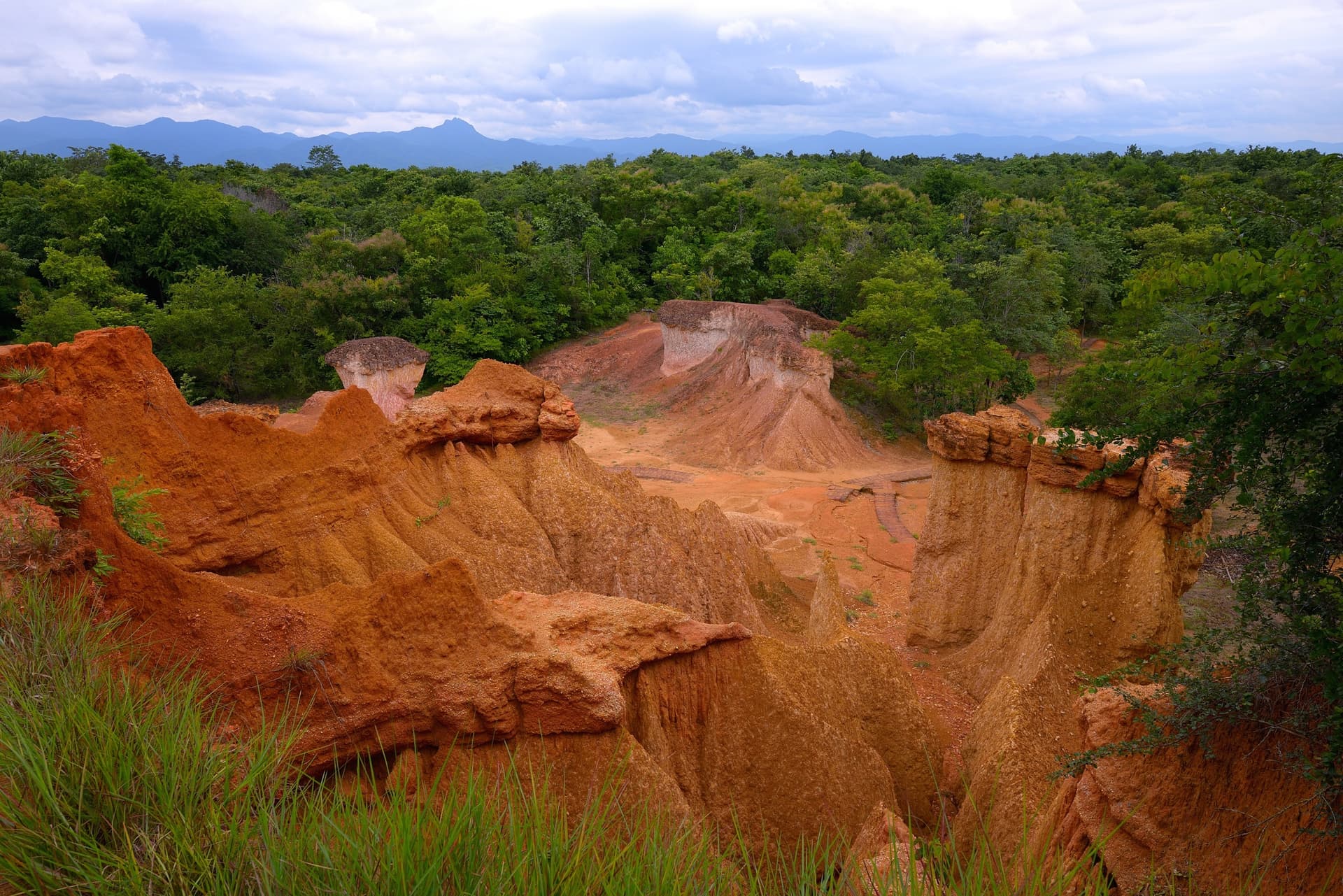
The Phae Muang Phi Forest Park draws its reputation from mushroom-shaped rock formations, sculpted by erosion across an arid plateau in northern Thailand. Located about ten kilometers from the center of Phrae, this geological site surprises with its stark contrast to the surrounding teak forests and rice paddies.
Why Visit Phae Muang Phi
The name "forest park" can be misleading: vegetation here is sparse, and the site's appeal is predominantly geological. Across 27 hectares, stone pillars topped with harder caps emerge from the ground like a fossil forest. The landscape evokes, on a smaller scale, the fairy chimneys of Cappadocia. A few plants adapted to dry soil and arid conditions complete this unusual scenery for the region.
The absence of an entrance fee and moderate visitor numbers make Phae Muang Phi an interesting stop for those traveling through Phrae province, still relatively untouched by mainstream tourist circuits.
History and Legend of the Site
The site was declared a forest park in March 1981 and placed under protection due to the uniqueness of its geological formations. The name Phae Muang Phi translates as "grove of the ghost city," a reference to a local legend.
According to this tale, an elderly woman searching for bamboo shoots became lost in the forest. There she discovered gold and silver ingots and was tempted to take them, but the guardian angel of the place prevented her from leaving until she renounced the treasure. She eventually let go of the riches and returned to her village safely. When the villagers learned of the wealth, they ventured into the forest despite her warnings: the forest engulfed them. The site's name honors these vanished villagers, whose spirits are said to haunt the rocks still.
What to See
The site consists mainly of a vast expanse dotted with mushroom rocks. Most measure between 70 and 90 centimeters high, but some formations reach several meters and dominate the landscape. Their characteristic silhouette results from differential erosion: wind and rain have decomposed the softer layers of sedimentary rock, leaving intact a more resistant cap that crowns each pillar.
Several trails allow visitors to navigate between the formations. One leads toward the Phra That Cho Hae Pass and offers views of the surrounding cliffs. The walk remains accessible, though the loose soil and lack of shade make the trek tiring during the hottest hours.
Near the parking area, a small refreshment stand offers light snacks. The site can be explored in a few hours and requires no special equipment, aside from sun protection.
Practical Information
The park does not charge an entrance fee, but a donation box at the entrance allows visitors to contribute to the maintenance of trails and facilities. Opening hours may vary by season; it is wise to check locally before visiting.
Bring plenty of water, a hat, and closed-toe shoes: the ground is sandy and rocky, and shade is scarce midday.
Best Time to Visit
The most pleasant period runs from December through February, when temperatures are cooler and the air drier. The rainy season, from June to October, makes trails slippery and can obscure the rock formations. March through May bring intense heat and, in places, agricultural burning smoke that reduces visibility across the entire northern region.
How to Get There
The park lies approximately 10 to 12 kilometers from central Phrae, and about 565 kilometers north of Bangkok via the national highway. Public transport service is limited: the easiest option is to hire a songthaew for the day from Phrae, or rent a vehicle. Expect a modest fare for a round trip with waiting time; it is customary to negotiate the price before departure.
Phrae itself is connected to Bangkok by overnight bus and by air via the regional airport, then by road from Chiang Mai or Lampang.
Nearby Attractions
Phrae province offers several sites to complement a visit to Phae Muang Phi:
Wat Chom Sawan, a Shan-style temple built of teak;
Wat Phra That Cho Hae, a major sanctuary in the province;
Phrae's teak forests, accessible on foot, by bicycle, or on horseback.
To extend the itinerary into neighboring Lampang province, Baan Sao Nak mansion and Wat Phra That Lampang Luang rank among the key stops.
Frequently asked questions
A tour of the main formations and round-trip along the trails typically takes between one and two hours. Allow more time if you head toward the trail leading to Phra That Cho Hae Pass.
The geological mechanism is similar — differential erosion leaving capped pillars — but the proportions are far more modest: most formations measure less than a meter, unlike the Turkish chimneys which rise several tens of meters.
Yes, the main trails are short and pose no technical difficulty. The lack of shade and heat remain the chief concerns when traveling with young children.
No. Access is free, and only donations are requested to maintain the site.
To incorporate Phae Muang Phi into a comprehensive itinerary across the north, see our Thailand travel suggestions.
Photos
Also discover
Wat Chom Sawan
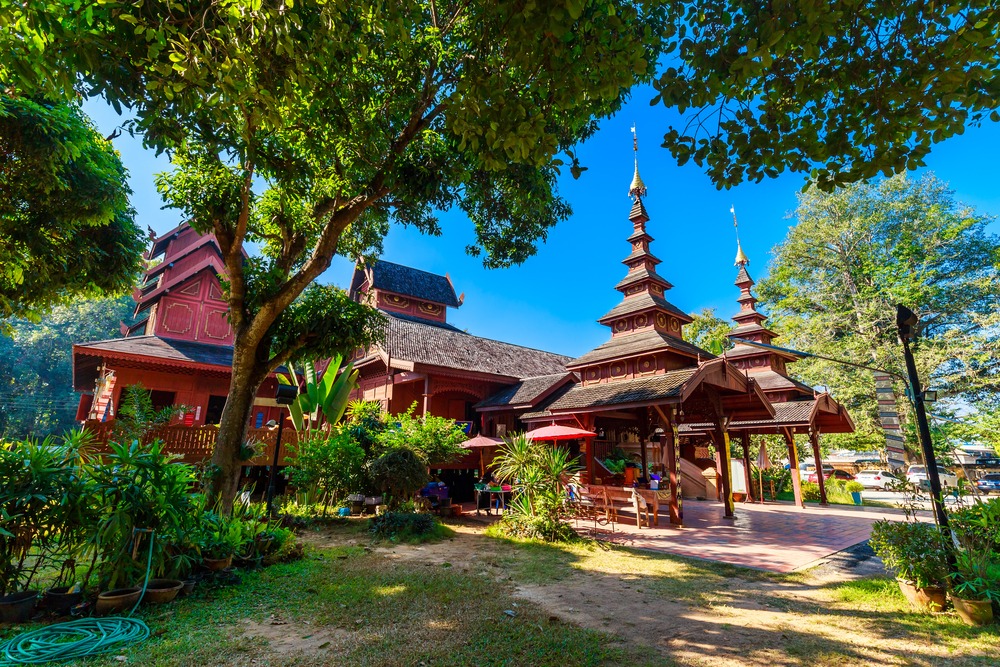
A teak temple in Thai Yai style completed in 1894 in Phrae, Wat Chom Sawan showcases Shan artistry in northern Thailand.
Phrae
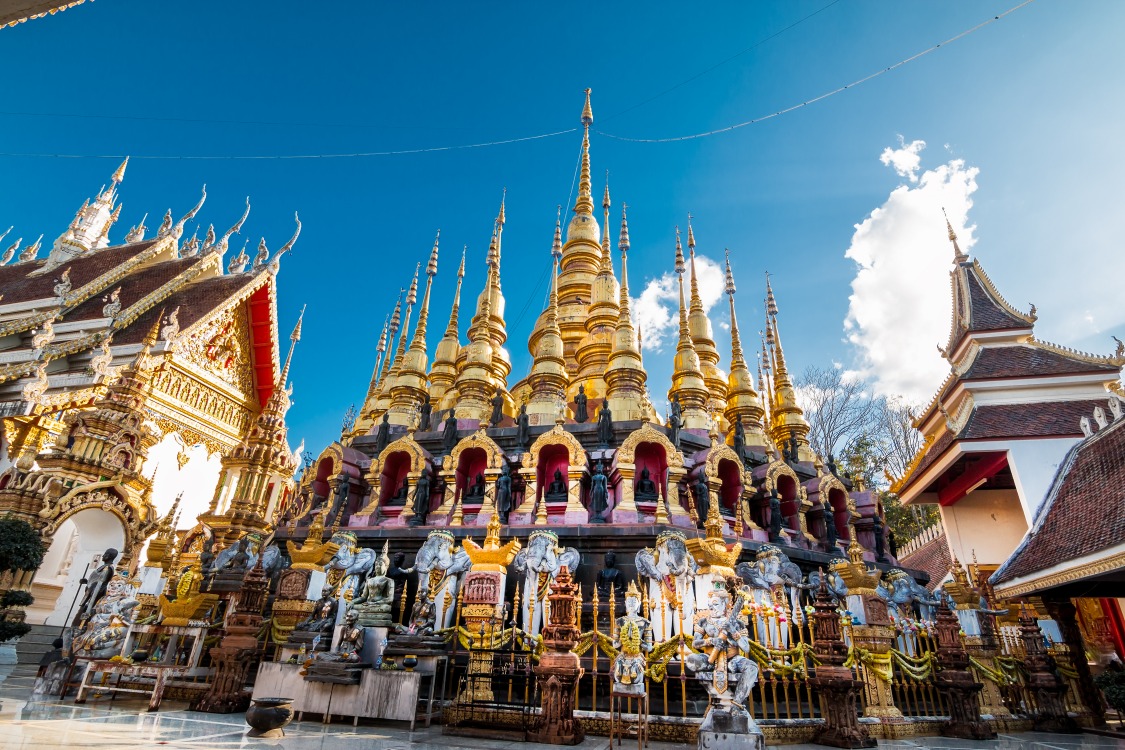
A historic city in northern Thailand, Phrae charms with its Lanna temples, colonial teak houses and Mo Hom indigo craftsmanship. An authentic stop away from mass tourism.
Wat Phra That Cho Hae
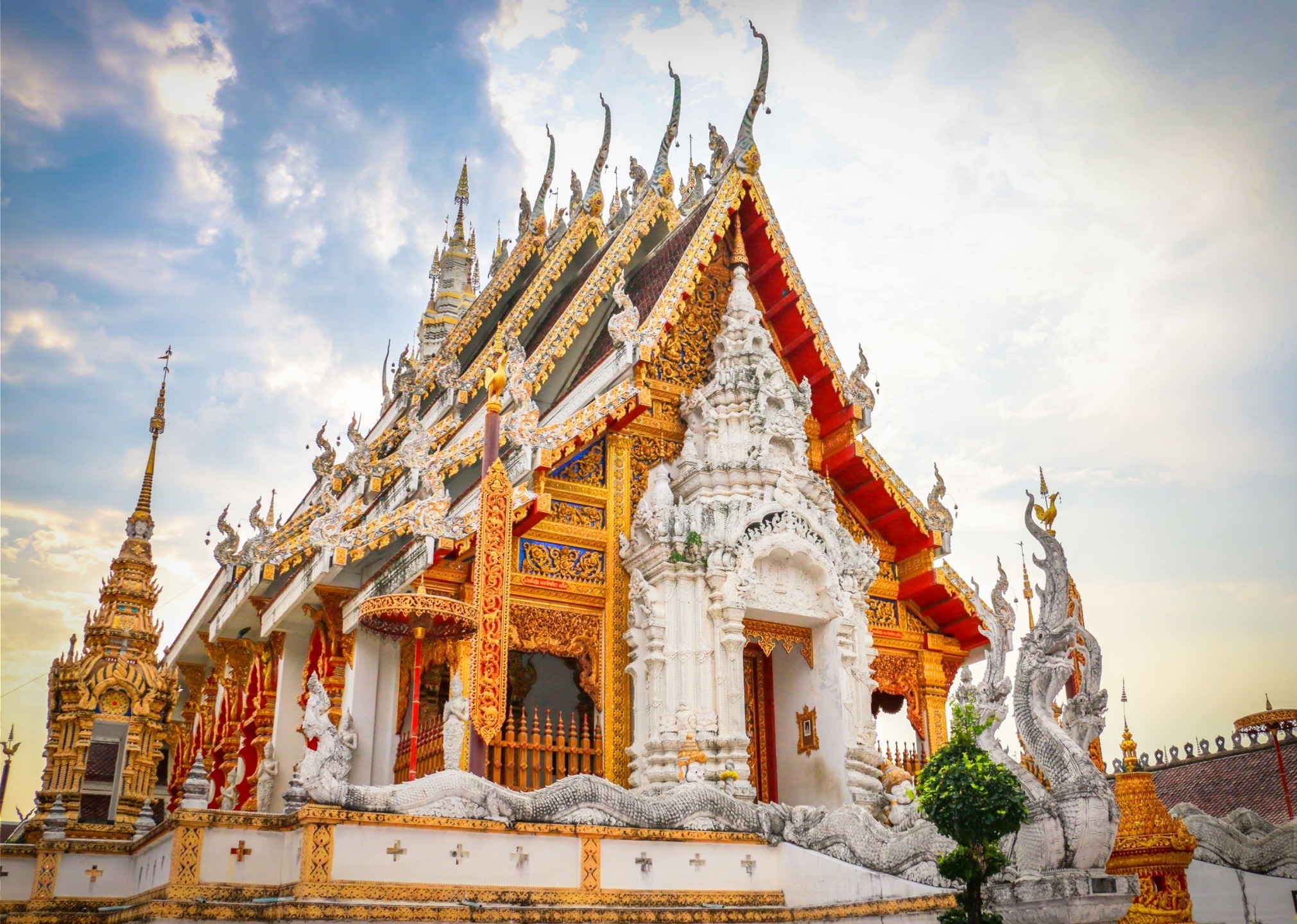
Perched on a forested hill southeast of Phrae, Wat Phra That Cho Hae houses a golden chedi standing 33 meters tall and shelters one of Northern Thailand's most revered Buddhist relics.
Interested in this visit?
We can include it in your personalised itinerary.