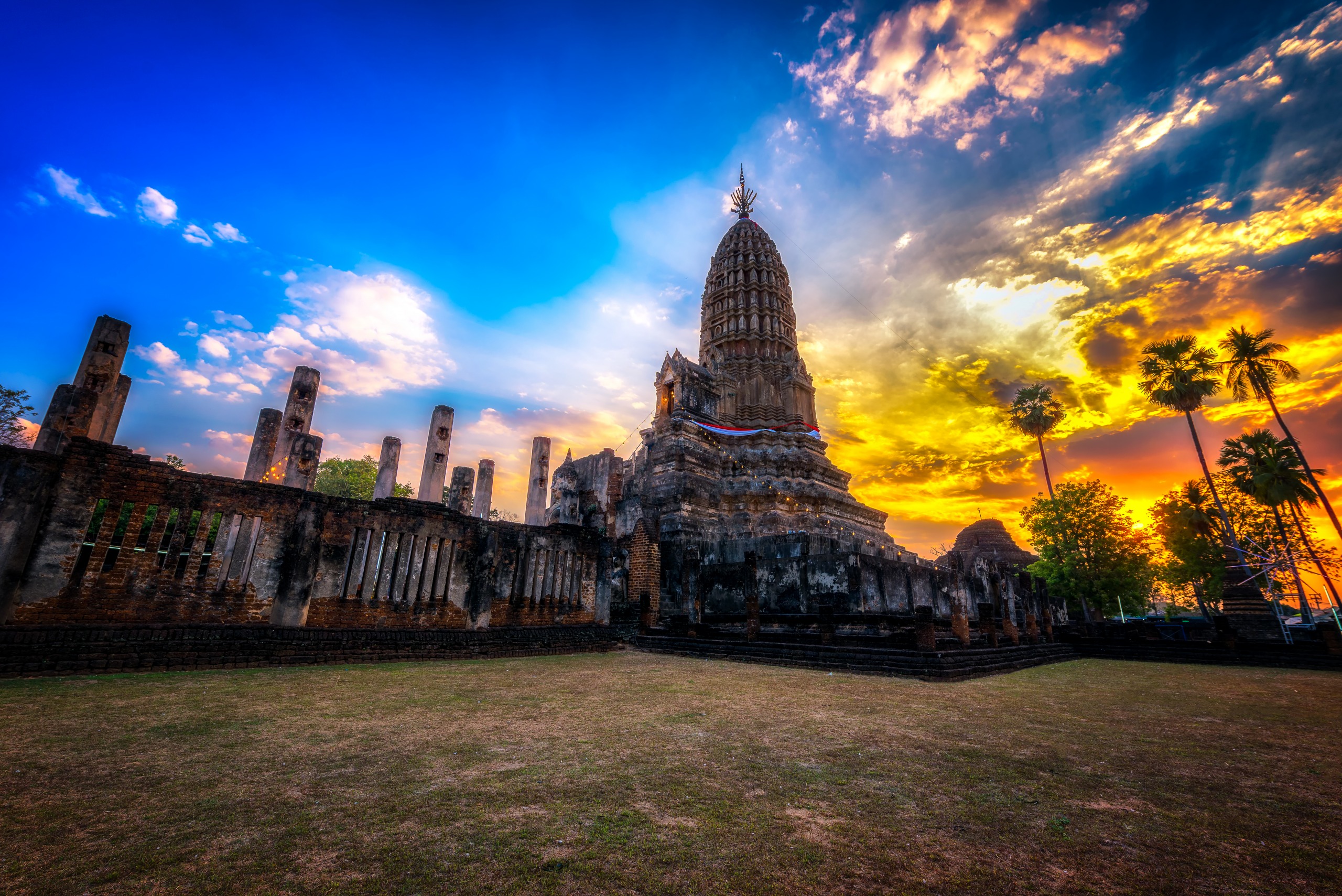
Prasat Phnom Rung
Prasat Phnom Rung
114, Tambon Ta Pek, Amphoe Chaloem Phra Kiat, Chang Wat Buri Ram 31110, Thaïlande
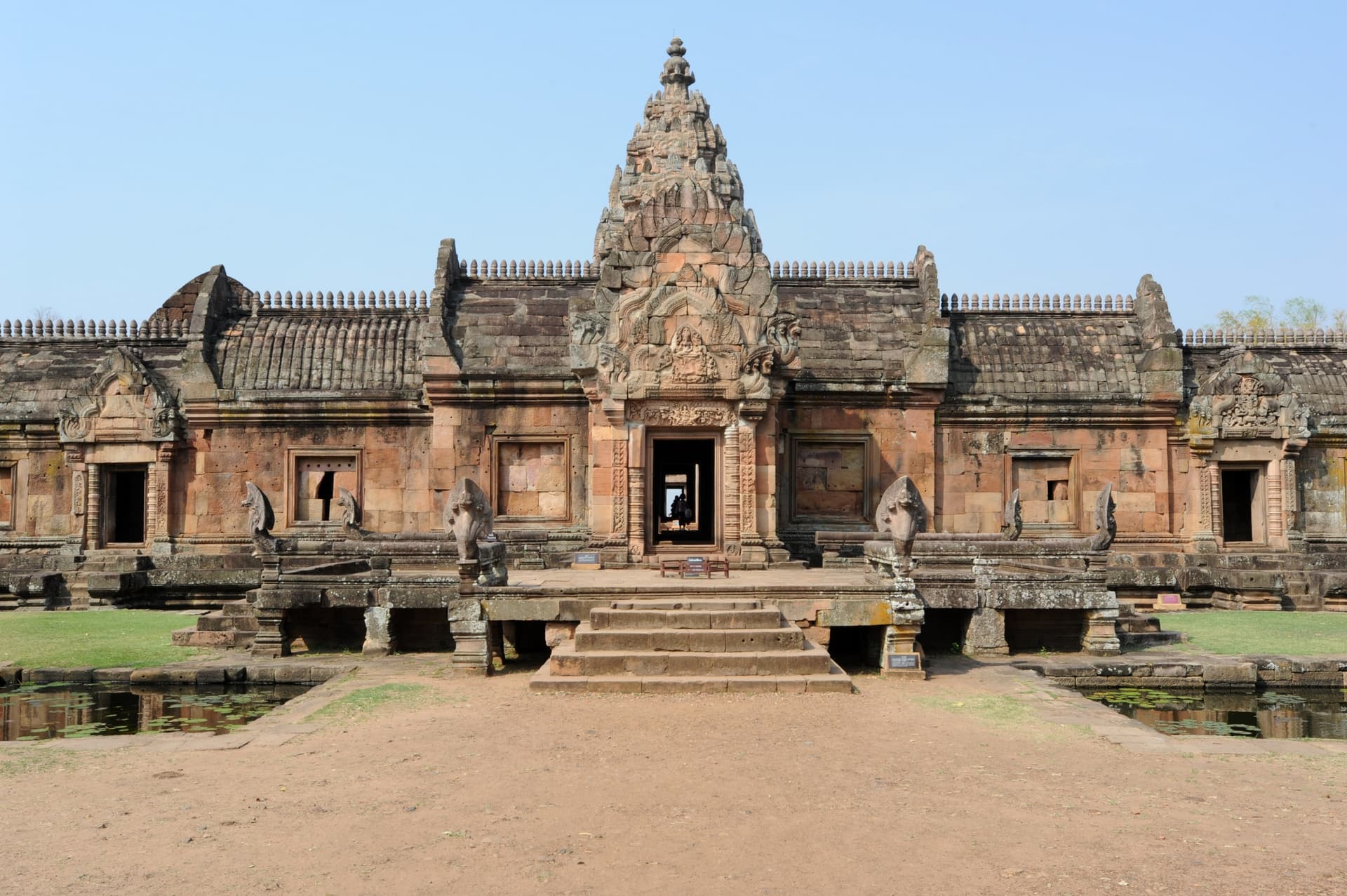
A Khmer sanctuary built atop an extinct volcano in Buriram, Prasat Phnom Rung impresses with its architecture, intricately carved lintels, and remarkable solar alignment.
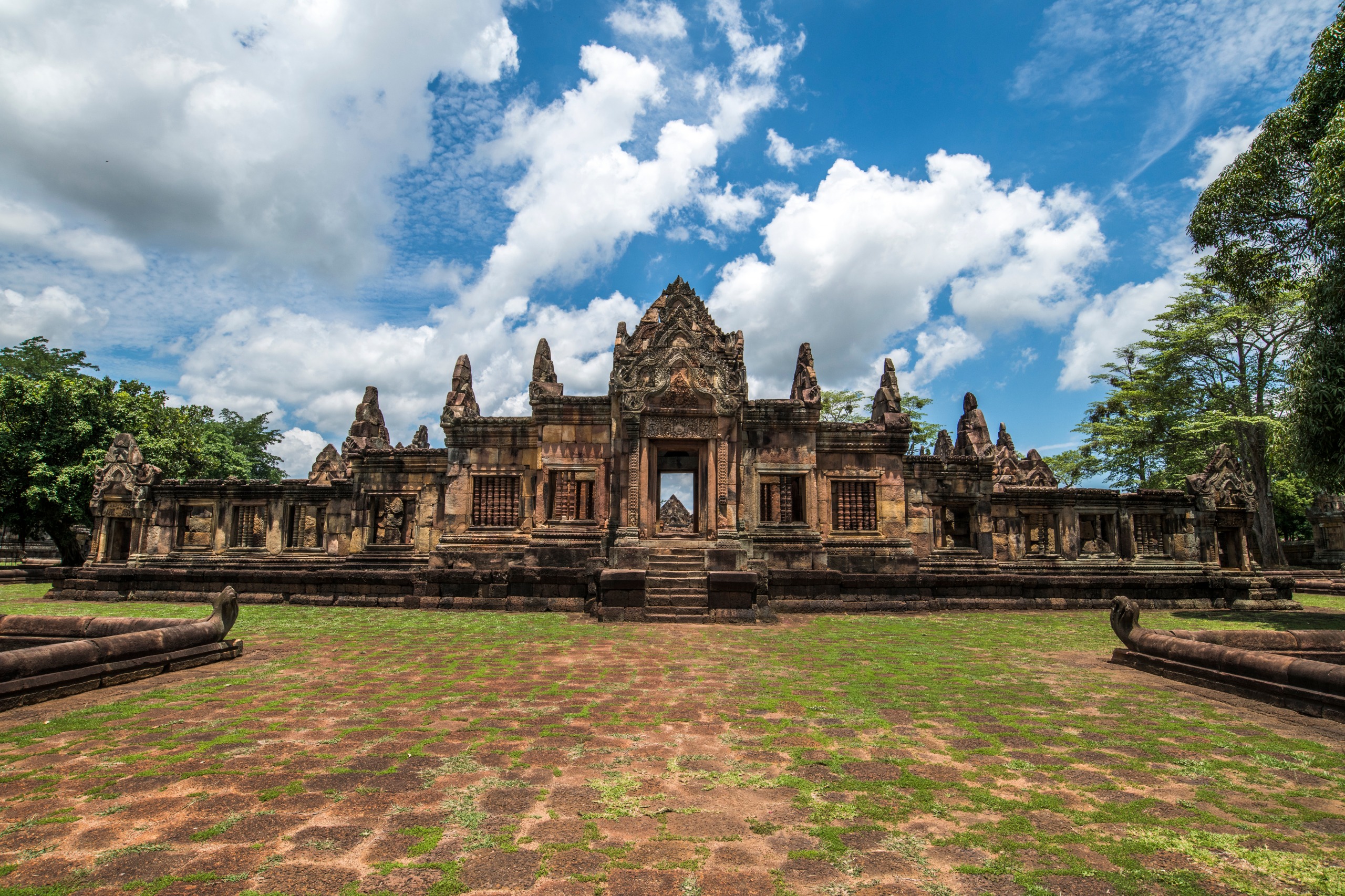
The Prasat Phnom Rung is a Khmer sanctuary situated at the summit of an extinct volcano in Buriram province, in northeastern Thailand. Built between the 10th and 13th centuries under the Mahidharapura dynasty, it represents one of the finest examples of Khmer architecture outside Cambodia, conceived as a replica of Shiva's celestial residence on Mount Kailash.
Why Visit Prasat Phnom Rung
The complex stands out for three rare characteristics. First, its elevation: perched on the summit of an extinct volcano called Khao Phnom Rung, it commands sweeping views across the Isan plains and symbolically recreates the sacred Hindu mountain. Second, its architectural coherence: despite spanning 300 years of construction, the entire ensemble forms a legible ascending procession from the outer court to the central tower-sanctuary. Finally, the solar alignment phenomenon: several times throughout the year, the rising or setting sun passes through the fifteen aligned doorways of the temple—a spectacle that draws visitors and photographers alike.
The site has been on UNESCO's tentative World Heritage list since 2019, with the nomination dossier originally filed in 2005.
History of the Sanctuary
The full name, Prasat Hin Phanom Rung, breaks down into « Prasat Hin » (stone palace) and « Phanom Rung », derived from the Khmer Vnam Rung meaning « large mountain ». The structure was a major center of Shivaite Hinduism, the state religion adopted by the Khmer Empire.
Foundations were laid at the dawn of the 10th century, as attested by Khmer inscriptions discovered on site. Construction then stretched over more than 300 years. The towers in Koh Ker style, located northeast of the main prang, date to the 10th century. The main prang, which rises above the entire complex, was built in the 12th century, contemporaneously with most of the sculptural motifs. By the 13th century, two rooms called bannalai (libraries) were added, signaling the emergence of literate culture at the site.
The complex subsequently fell into disuse. In the 1970s-1980s, Thailand's Department of Fine Arts undertook a 17-year restoration campaign that preserved the original volumes without alteration.
What to See on Site
The Processional Avenue and Naga Bridges
Approach to the sanctuary unfolds via a 160-meter paved avenue bordered by sandstone boundary stones. At the end, a staircase leads to the outer court, crossed by three naga bridges—mythical serpents with dragon heads positioned at their extremities. For Hindu believers, these bridges mark the passage between the earthly realm and the divine world.
The Main Tower (Main Prang)
Beyond the final naga bridge stands the primary sanctuary, constructed in pink sandstone in Angkor style (lotus-shaped form). Inside rest the lingam of Shiva and the yoni of Parvati, his consort. The pediments and gopuras (gateways) are adorned with finely carved sculptures dating largely to the 12th century.
The Lintel of Phra Narai
Above the eastern doorway appears the Phra Narai lintel, approximately 3 feet by 2 feet, depicting Vishnu reclining on a sea monster. This piece was stolen in the 1960s and acquired in 1967 by the Art Institute of Chicago from a Bangkok dealer, where it remained on display for two decades. The Thai government demanded its return, which was successfully negotiated in 1988 through the Alsdorf Foundation, which offered the museum an equivalent artifact in compensation. Above the lintel, Shiva with four arms is visible performing the dance of bliss.
Bas-reliefs and Other Sanctuaries
Bas-reliefs: battle elephants trampling soldiers, scenes from the Ramayana, evocations of Angkor's hierarchical order.
Prang Noi: a small cubic-plan sanctuary in Baphuon style, located within the inner court. This is the oldest structure of the complex.
Bannalai: two library halls added in the 13th century, one to the northeast and the other to the southeast of the main tower.
Practical Information
The historical park is open daily from morning until early evening. Entrance is charged at a moderate rate for foreign visitors and reduced rate for residents. A combination ticket allows you to visit both Prasat Phnom Rung and Prasat Muang Tam located 8 km away—a common and economical option. Plan for 1.5 to 2.5 hours to tour the entire complex. An English-speaking guide will help identify carved scenes, whose iconographic interpretation remains complex.
When to Go
The most comfortable season extends from November through February, with warm but dry days and cool evenings. Temperatures rise from March onward, peaking in April. The rainy season (June-October) greens the surroundings but may complicate travel.
To witness the solar alignment phenomenon through the temple's doorways, inquire about precise dates (typically in April, September, and around the solstices): a local festival marks these occasions.
How to Get There
The temple is not served by public transportation. From Buriram, two options predominate:
Private car with driver or day-long taxi hire—the most straightforward option, bookable in town or through your accommodation.
Motorcycle or scooter rental, available through many local hotels, for independent travelers.
Rental agencies concentrate near Buriram Airport. The neighboring Surin province offers an alternative departure base.
Nearby Attractions
The Isan region sees fewer visitors than Thailand's north or south, but offers several worthwhile stops:
Prasat Muang Tam: a Khmer sanctuary 8 km away, often combined with Phnom Rung on the same day.
Prasat Hin Phimai: one of Thailand's largest Khmer temples, roughly two hours' drive away.
Surin Elephant Festival: a major annual gathering in November, about 50 kilometers distant.
To extend your cultural exploration of Thailand, you may also visit the Chao Sam Phraya National Museum in Ayutthaya, or explore the landscapes of the Doi Phu Kha National Park in the north.
Frequently Asked Questions
Frequently asked questions
Allow 1.5 to 2.5 hours to walk the processional avenue, explore the main tower, and view the bas-reliefs. Combined with the neighboring Prasat Muang Tam sanctuary, plan for half a day to a full day.
Not yet. The World Heritage nomination dossier was filed in 2005 and the site has been on UNESCO's tentative list since 2019.
Several times annually, the rising or setting sun passes through the fifteen aligned doorways of the sanctuary. This phenomenon, related to the temple's east-west orientation, is celebrated locally with a festival.
No. The site is not served by public transport. You must arrange a private car with driver, hire a taxi for the day, or rent a motorcycle from Buriram or Surin.
The main prang, lotus-shaped, follows Angkor style and dates to the 12th century. The Prang Noi, smaller with a cubic plan, follows the earlier Baphuon style and is the oldest structure at the complex.
Plan Your Thailand Journey
Prasat Phnom Rung fits into an itinerary focused on the Khmer culture of northeastern Thailand, frequently combined with Buriram, Surin, and Phimai. To build a tailor-made route through this lesser-known region, explore our Thailand travel experiences.
Photos
Also discover
Prasat Hin Phimai
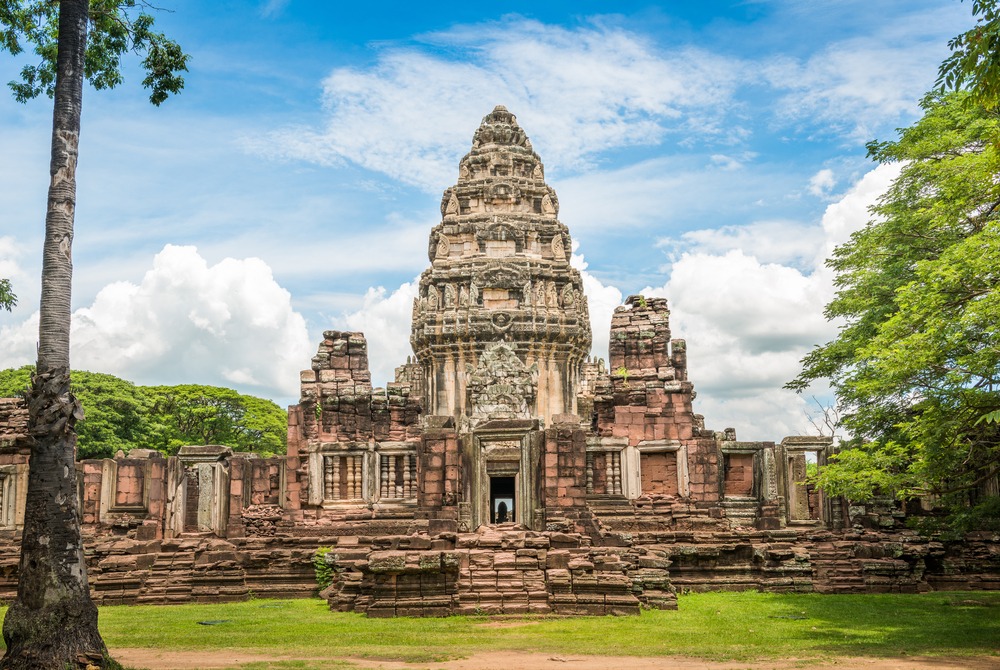
A vast 11th-century Khmer complex in Isaan, Prasat Hin Phimai preserves three prangs and a unique Hindu-Buddhist iconography found nowhere else in Thailand.
Prasat Muang Tam
Prasat Muang Tam is a Khmer temple located in Thailand in the province of Buriram (Isan), near the Cambodian border. Its architecture is reminiscent of the wonders of the Angkor monumental complex.
Interested in this visit?
We can include it in your personalised itinerary.