Wat Chaloem Phra Kiat
Wat Chaloem Phra Kiat
A royal sanctuary founded in 1849 near Lampang, Wat Chaloem Phra Kiat showcases white stupas lined along rocky ridges at 815 m altitude.
Perched on granite ridges at 815 metres altitude, Wat Chaloem Phra Kiat has dominated the Lampang valley since the mid-19th century. Its white stupas clinging to rocky outcrops and panoramic views over the surrounding bamboo forest make it one of northern Thailand's most distinctive sanctuaries.
Why Visit Wat Chaloem Phra Kiat
Three elements set this monastery apart from other northern Thai temples:
- A rare location: the white pagodas are perched on rocky cols, an architectural achievement unique in Thailand.
- An expansive panorama over the Lampang valley, rice paddies, and surrounding bamboo forest.
- A pilgrimage dimension tied to a revered Buddha footprint housed in the main viharn.
The site combines religious significance, hiking, and landscape photography. Plan to spend half a day here to fully enjoy the ascent and viewpoints.
Temple History
A Royal Foundation Honoring the Queen Mother
The temple's construction was ordered in 1849 by King Nangklao (Rama III), who wished to honour his mother, Queen Mother Sri Sulalai, a native of the Lampang region. The sovereign died two years after construction began. The building was finally completed in 1858, under the reign of Rama IV (Mongkut), the fourth king of the Chakri dynasty. The land previously housed a military fortress called Pom Thapthim, whose fortified walls still echo the appearance of a royal castle.
Multiple Names for a Single Sanctuary
The temple's official name is Wat Chaloem Phrakiat Phrachomklao Rachanuson, which translates to "The Great Glorious Temple." It is also known as Wat Phra Bat Pu Pha Daeng in Buddhist literature. Its status as a royal monastery reflects its direct connection to the reigning dynasty.
An Unprecedented Construction Project
The idea of building pagodas atop rocky peaks came from a local monk. Leading a team of 40 labourers, he organized the transport of materials—concrete, stone, bricks, metalwork—entirely by human effort, without beasts of burden. The architectural programme, conceived for Rama IV's bicentenary, demanded a decade of labour.
What to See
In the Lower Precinct
The sanctuary's lower section houses the main buildings:
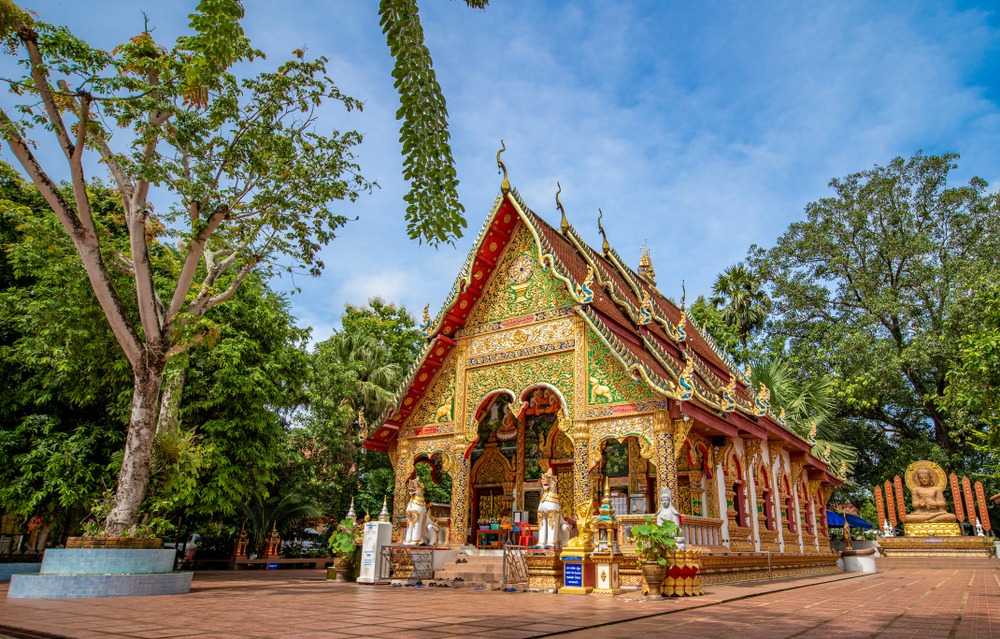
- The ubosot (ordination hall) blending Thai and Chinese architectural elements.
- Two viharns crowned with porcelain tiles.
- The main viharn, which houses a Buddha footprint on a stone slab, according to local tradition. Devotees come to pray before this sacred imprint.
- A large chedi as well as monastic quarters (access restricted).
The Summit and White Pagoda
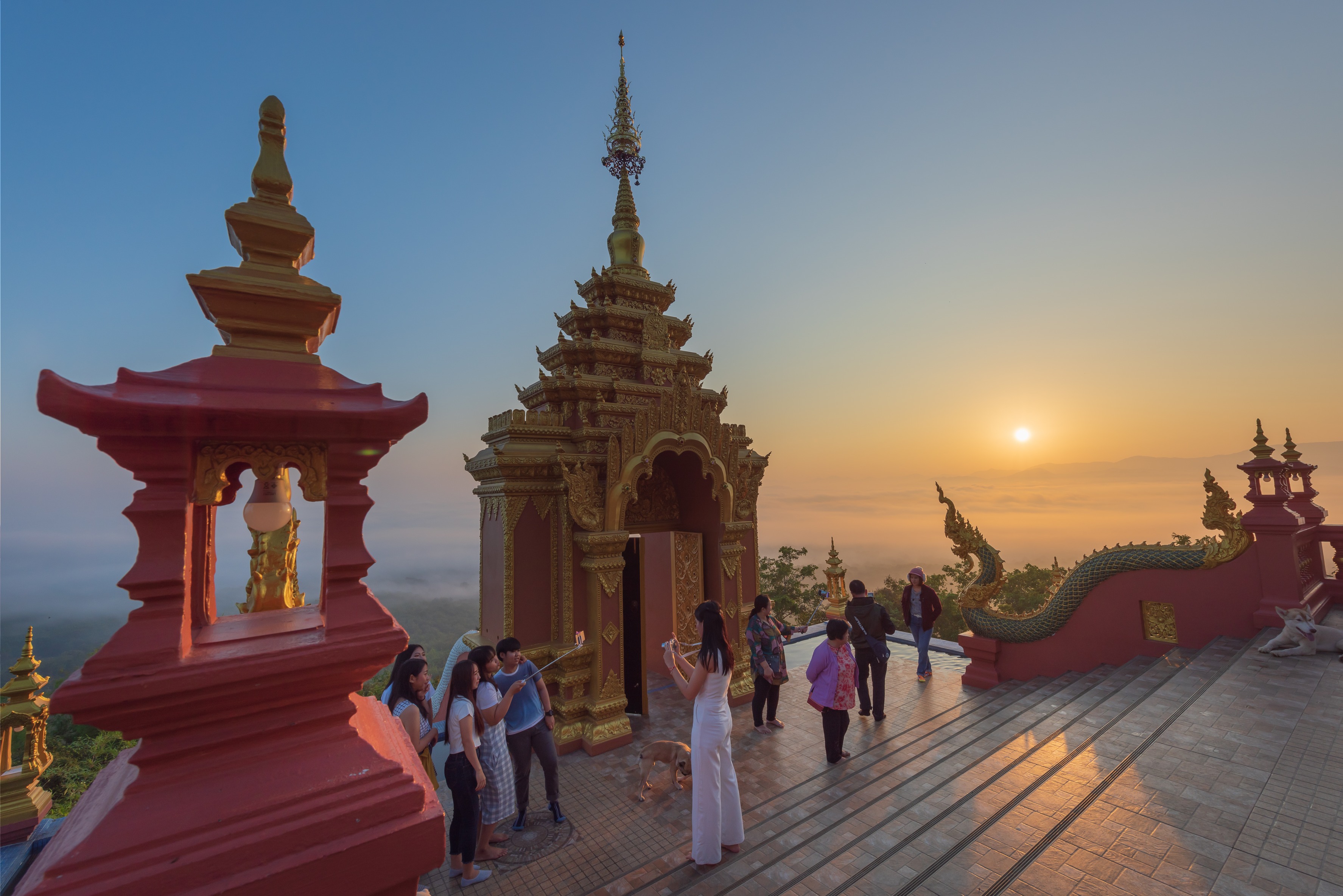
At the summit stands the white pagoda in Langka style, accompanied by a stele of Rama III oriented towards the Chao Phraya River. Several small white stupas dot the rocky ridges. An observation platform, situated beside the main stupa, opens onto the valley and surrounding villages. This is the site's most comprehensive viewpoint.
Practical Information
Admission and Hours
Access to the temple's lower section is generally free. The ascent to the summit, which passes through the Chae Son National Park perimeter, is subject to a fee: plan for a ticket for the songthaew (mandatory shared transport) plus an entrance fee to the park for foreign visitors. The total tariff remains modest, amounting to just a few euros. The site is open daily during daylight hours; check locally for exact times, which vary by season.
Visiting Tips
- Arrive early in the morning to avoid crowds and enjoy the mist over the valley.
- For photography, wait until 9–10 a.m., when the mist disperses.
- Bring sturdy walking shoes and plenty of water.
- Modest dress recommended (shoulders and knees covered) at religious sites.
When to Visit
The ascent is best undertaken during the cool season, from November to February. Temperatures are comfortable and skies generally clear. The rainy season (June to October) makes trails slippery and potentially hazardous on sections with metal steps. Morning remains the most pleasant time, before heat and humidity intensify.
How to Get There
The temple is located approximately 60 km from Lampang via Highway 1035, and roughly 120 km from Chiang Mai via a mountain secondary road. No public bus serves the site: a private vehicle with driver remains the most suitable option. Once there, the lower section of the site is accessible on foot from the car park. To reach the summit, you must take a songthaew (converted pickup truck) to an intermediate car park, from which a 800-metre trail departs: 400 metres of gentle ascent, followed by 400 metres of more demanding terrain with metal steps. Bamboo benches line the route for rest breaks.
Nearby
The Lampang region offers several natural extensions to this visit:
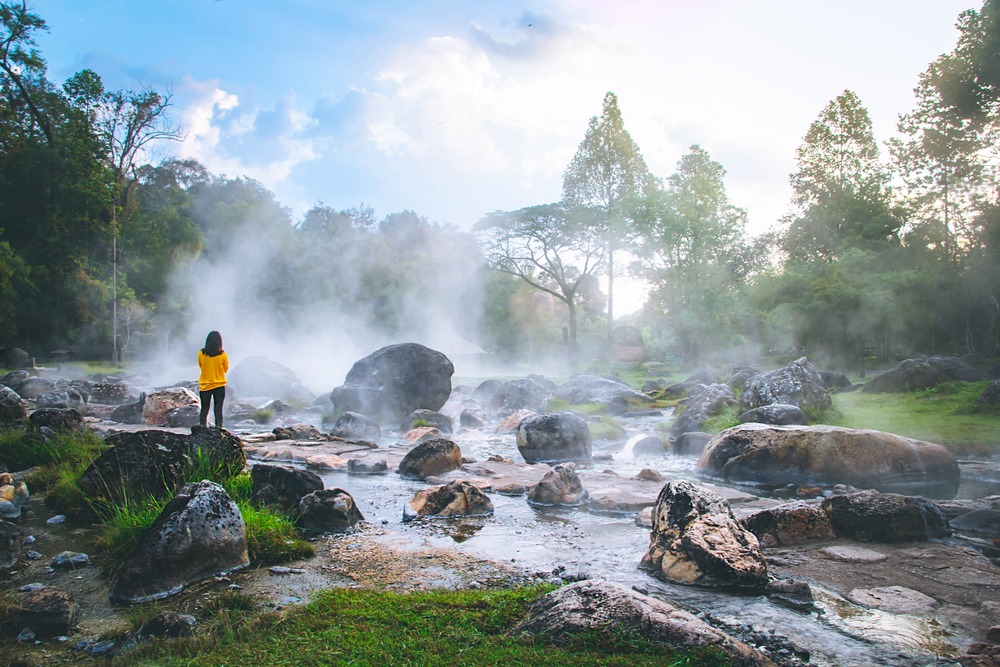
- Chae Son National Park, renowned for its hot springs and waterfalls.
- Wat Phra Kaeo Don Tao, another major historic temple in Lampang.
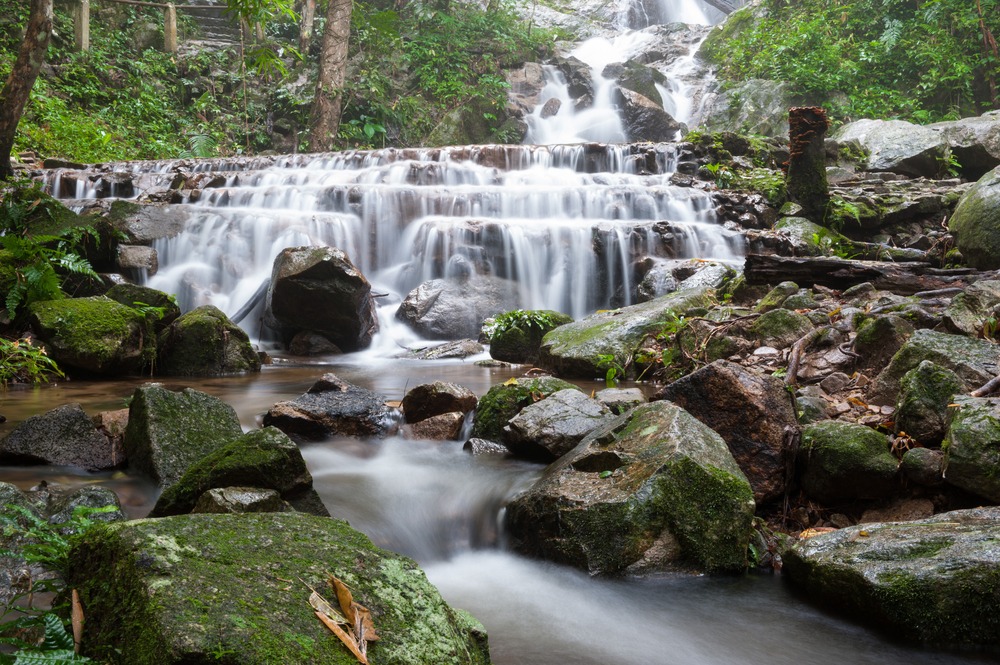
- Mae Kham Pong Waterfall, a refreshing stop for hikers.
- The city of Lampang, with its Talad Gao night market and the Dhanabadee ceramics museum.
Frequently asked questions
Access to the lower temple is generally free. The ascent to the summit involves a songthaew ticket and a national park entrance fee for foreign visitors, totalling a few euros.
November to February, during the cool season. Avoid the rainy season (June–October), when high-altitude trails can become hazardous. Morning remains the most pleasant time.
A songthaew provides transport from the entrance to an intermediate car park. From there, an 800-metre trail leads to the summit: 400 metres easy, then 400 metres more demanding with metal steps.
No, no buses serve the site. A private vehicle is necessary: approximately 60 km from Lampang via Highway 1035, or roughly 120 km from Chiang Mai via a secondary road.
The sanctuary peaks at 815 metres above sea level, which explains the cooler temperatures compared to the plains and the frequency of morning mists.
To incorporate Wat Chaloem Phra Kiat into a broader itinerary across northern Thailand, consult our Thailand travel suggestions.
Photos
Interested in this visit?
We can include it in your personalised itinerary.