Wat Chong Kham
Wat Chong Kham
Mae Hong Son's first temple founded in 1827, Wat Chong Kham combines tiered Burmese roofs, a white marble Buddha, and narrative murals from the Jataka tales.
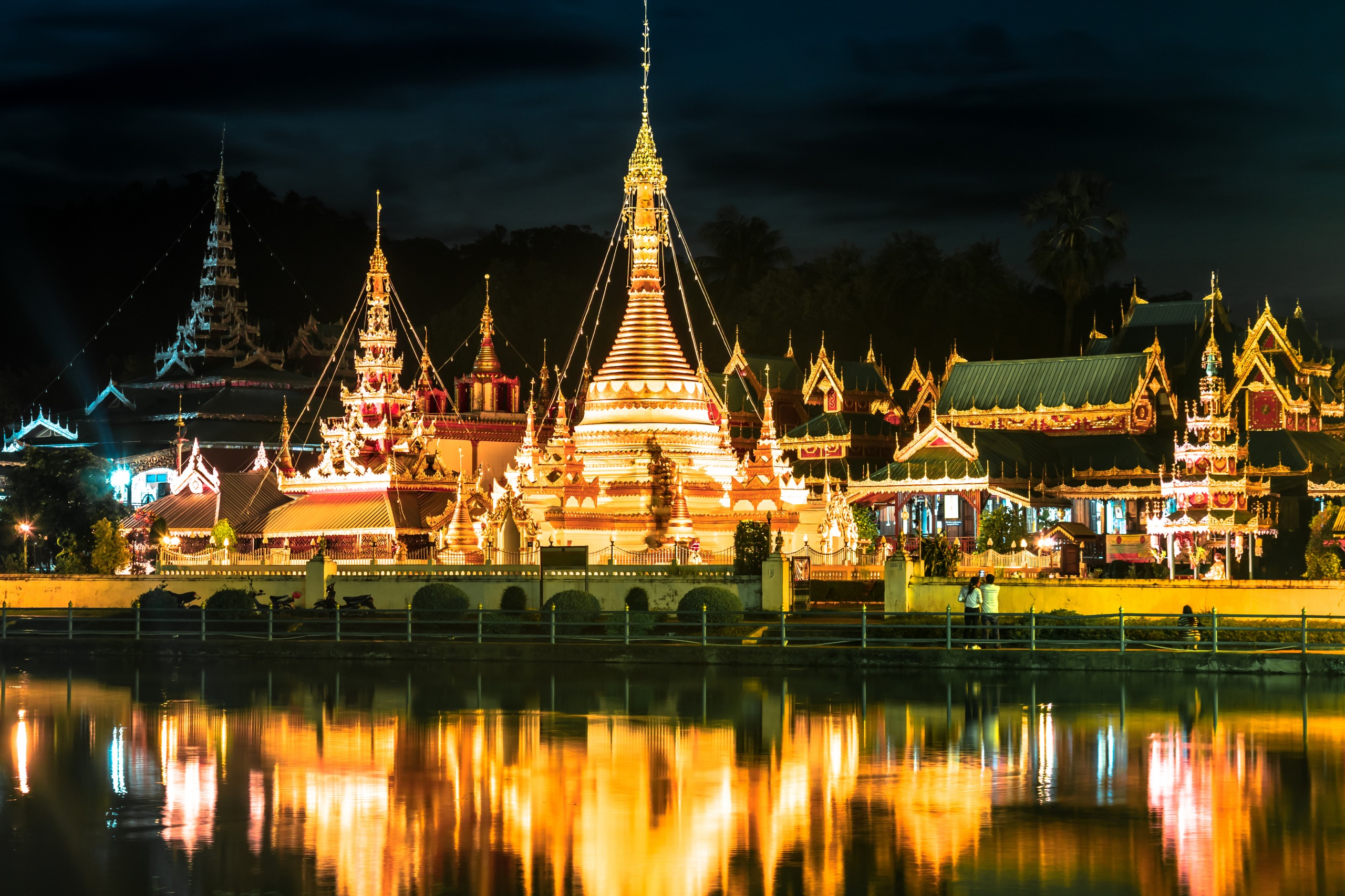
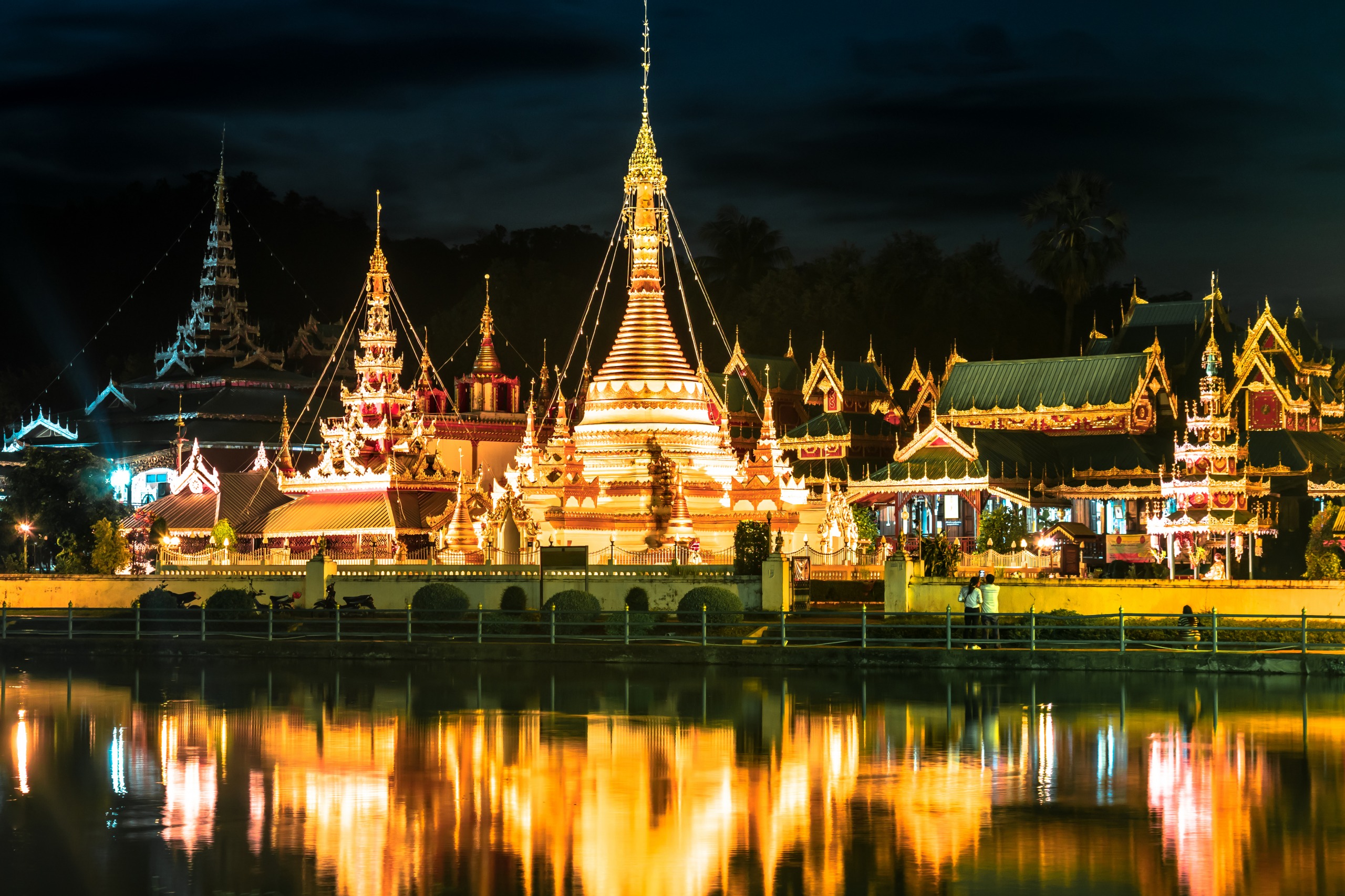
Nestled on the shores of Jong Kham Lake in central Mae Hong Son, Wat Chong Kham brings together a grand white marble Buddha, tiered Burmese roofs, and narrative murals. As the city's first place of worship, founded in 1827, it bears witness to the migration of the Yai Tai people from Myanmar's Shan State, and remains, alongside the neighbouring Wat Chong Klang, one of the finest examples of Shan art in Northern Thailand.
Why visit Wat Chong Kham
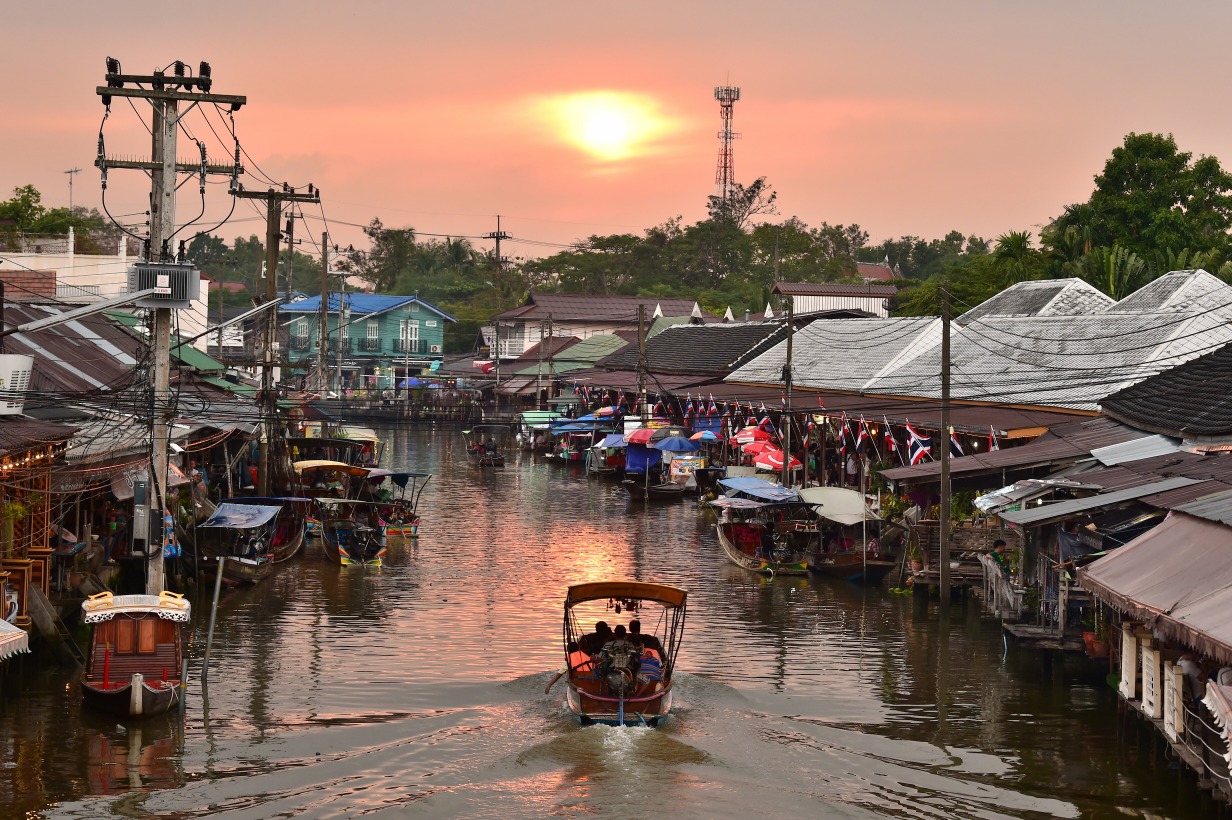
Wat Chong Kham concentrates several complementary attractions in a single location: Shan Burmese architecture recognizable by its pyatthat (seven-tiered superimposed roofs), a grand 4.85-metre marble Buddha in lotus position, and murals illustrating the Jataka, the Buddha's previous lives. Its location on the shores of Jong Kham Lake also makes it an ideal vantage point for observing local life, particularly in the late afternoon when markets set up around the water's edge.
The entire site can be explored in approximately one hour and easily combined with the adjoining Wat Chong Klang. The temple remains actively frequented by devotees, particularly during Buddhist festivals—a visit is a respectful observation of a living place of worship.
History and founding
The temple's foundations were laid in 1827 on the orders of King Phraya Singhanat Racha and Queen Chao Mae Nang Mia, the first sovereigns of Mae Hong Son. At that time, the Yai Tai people migrated from Myanmar's Shan State to Northern Thailand for commercial reasons. Phraya Singhanat Racha, himself a native of the Burmese region, granted them hospitality, and Shan craftsmen brought their distinctive architectural vocabulary to the temple's construction.
Throughout the 19th and 20th centuries, successive sovereigns expanded the complex. The current viharn dates to the mid-1930s. In 1984, the sanctuary was elevated to the status of a royal monastery, a distinction that affirmed its importance in the religious landscape of the north. As the original building was largely destroyed by fire, what you see today represents a reconstruction that has respected the original Burmese style.
What to see
The pyatthat roofs
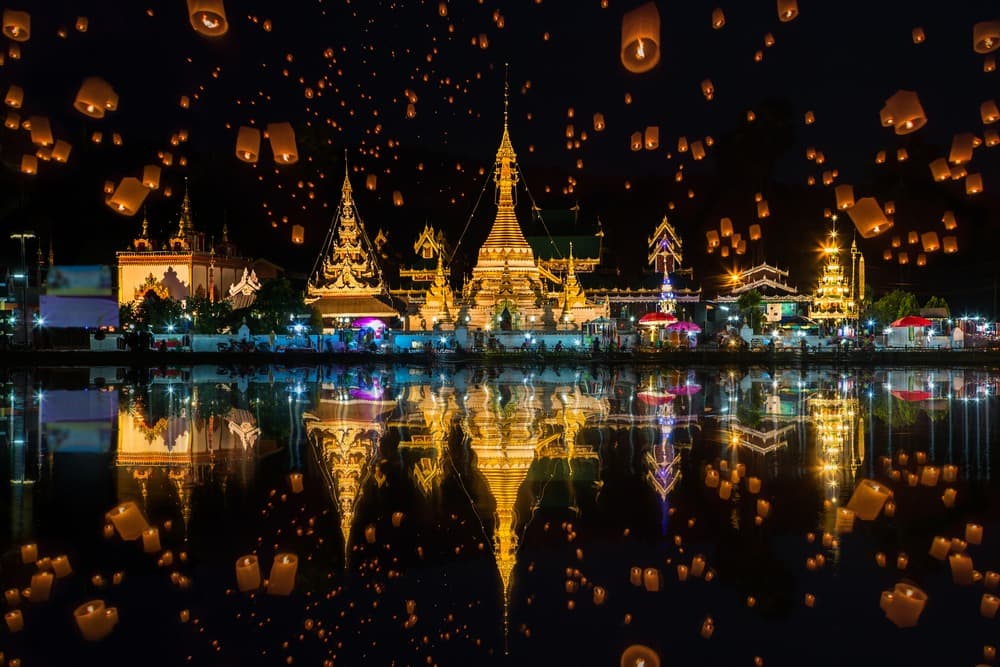
Hard to miss are the seven-tiered superimposed roofs that crown the temple. These tiered roofs, called pyatthat, are characteristic of Burmese architecture and reserved for religious and palatial buildings. Viewed from the opposite shore of the lake, they form a particularly distinctive silhouette.
The viharn and the Luang Po To Buddha
The centerpiece of the temple is the viharn, which houses the Luang Po To Buddha, a 4.85-metre white marble statue. The Buddha is depicted in lotus position with his right hand touching the ground: this is the gesture of the bhumisparsha mudra, the subjugation of Mara, evoking the moment of enlightenment. A second statue, an exact copy of the Phra Sri Sakyamuni at Bangkok's Wat Suthat, is also present in the sanctuary.
Murals and sala
The walls of the viharn are adorned with paintings illustrating the Jataka, edifying narratives of the Buddha's previous existences. Nearby, the sala—a meeting, study and residence hall—is distinguished by its intricate woodwork. A small museum houses wood carvings, including a series representing the eight wheels of life.
Practical information
Access to the temple is free, with donations appreciated for its upkeep. The sanctuary is generally open from early morning until sunset; it's advisable to check local hours, especially during ceremonies. As in all Buddhist temples in Thailand, wear clothing that covers your shoulders and knees, and remove your shoes before entering buildings.
Following Burmese customs observed on site, certain parts of the monastery are not accessible to women. This restriction is generally indicated at the entrance of the relevant areas.
When to visit
Mae Hong Son is best visited from November to February, during the cool and dry season, when temperatures remain pleasant and the famous morning mists cloak the surrounding valleys. From March to May, heat is intense and visibility sometimes reduced by agricultural fires. The rainy season, from June to October, makes mountain roads more demanding but offers very lush landscapes.
To experience the temple in its most animated atmosphere, aim for late afternoon: markets set up lakeside and lighting enhances the roofs. Buddhist festivals, such as Visakha Bucha (May-June) or the Loy Krathong Festival of Lights (November), feature particularly vibrant ceremonies.
How to get there
Wat Chong Kham is located in the heart of Mae Hong Son, on the southern shore of Jong Kham Lake. From most city accommodations, it's just a few minutes' walk away. From Pai or Mae Sariang, arrival is by bus, minivan, or car via the famous mountain road with its 1,864 curves. Once there, tuk-tuks and motorcycle taxis can take you to other temples and viewpoints around the city.
Nearby attractions
- Wat Chong Klang: twin temple adjoining Wat Chong Kham, best explored during the same visit.
- Ban Rak Thai: Yunnanese village on the Burmese border, known for its tea plantations.
- Tham Lod Cave: cave traversed by a river, on the route between Pai and Mae Hong Son.
- Mok Fah Waterfall: refreshing stop on the route towards Chiang Mai.
Frequently asked questions
Frequently asked questions
No, access is free. A donation box allows visitors to contribute voluntarily to the temple's upkeep.
Cover your shoulders and knees, as in all Buddhist temples in Thailand. You must also remove your shoes before entering buildings.
Allow approximately one hour for Wat Chong Kham alone, and a good half-day if you combine it with the neighbouring Wat Chong Klang and a tour around Jong Kham Lake.
The two temples are adjoining and share a Shan Burmese aesthetic. Wat Chong Kham, founded in 1827, is the city's oldest place of worship; Wat Chong Klang, slightly later, stands out for its collection of wooden figurines and glass paintings.
From November to February, during the cool and dry season. Temperatures are pleasant and the morning mists characteristic of the region create beautiful atmospheres around the temples.
Plan your trip
Wat Chong Kham fits naturally into an itinerary in Thailand's northwest, between Chiang Mai, Pai, and Mae Hong Son. To build a custom journey including this region, explore our Thailand travel packages.
Photos
Interested in this visit?
We can include it in your personalised itinerary.